'%3e%3cpath%20d='M34.1406%205.85938C30.3906%202.10547%2025.3047%200%2020%200C14.6953%200%209.60938%202.10547%205.85938%205.85938C2.10938%209.61328%200%2014.6953%200%2020C0%2025.3047%202.10547%2030.3906%205.85938%2034.1406C9.61328%2037.8906%2014.6953%2040%2020%2040C25.3047%2040%2030.3906%2037.8945%2034.1406%2034.1406C37.8906%2030.3906%2040%2025.3047%2040%2020C40%2014.6953%2037.8945%209.60938%2034.1406%205.85938ZM37.0117%2023.543H31.1602V13.5391H27.6328V19.9414C28.1211%2020.6914%2028.3711%2021.582%2028.3711%2022.5625V22.625C28.3711%2023.668%2028.1172%2024.6055%2027.6328%2025.4297V26.6094H36.082C33.4883%2032.9375%2027.2891%2037.3789%2020.0039%2037.3789C10.3711%2037.3789%202.62109%2029.6289%202.62109%2020C2.62109%2010.3711%2010.3711%202.62109%2020%202.62109C29.6289%202.62109%2037.3789%2010.3711%2037.3789%2020C37.3789%2021.1484%2037.2617%2022.2656%2037.0508%2023.3477C37.0391%2023.4141%2037.0234%2023.4766%2037.0117%2023.543Z'%20fill='white'/%3e%3cpath%20d='M22.3086%2018.5352C20.4336%2018.125%2019.9531%2017.8398%2019.9766%2017.1836V17.1406C19.9766%2016.6992%2020.3477%2016.2148%2021.4023%2016.2148C22.582%2016.2148%2023.8867%2016.6797%2025.0781%2017.4766L26.8516%2015.0195C25.4453%2013.8906%2023.707%2013.3398%2021.5547%2013.3398C18.5195%2013.3398%2016.4375%2015%2016.4063%2017.4766V17.5352C16.3633%2020.2617%2018.5859%2020.9805%2021.293%2021.6016C23.0391%2021.9766%2023.5703%2022.3164%2023.5703%2022.9609L23.5469%2022.9766C23.5469%2023.3906%2023.2578%2023.7031%2022.7852%2023.8359C22.5742%2023.9062%2022.1289%2023.9727%2021.5156%2023.9727C20.7617%2023.9727%2019.7539%2023.8633%2018.6328%2023.4844C18.0898%2023.2891%2017.4727%2023.0039%2016.8047%2022.6133L20.1406%2026.625C20.2813%2026.6602%2021.0977%2026.8516%2021.7734%2026.8516C25.0039%2026.8516%2027.0859%2025.2461%2027.1094%2022.6328V22.5703C27.1602%2020.1133%2025.2148%2019.1719%2022.3086%2018.5352Z'%20fill='white'/%3e%3cpath%20d='M5.24219%2013.5664V26.6133H8.75391V23.7578L10.2969%2021.9531L14.2031%2026.6133H18.3867L12.3555%2019.5195L17.4023%2013.5664H13.4531L8.75391%2019.0586V13.5664H5.24219Z'%20fill='white'/%3e%3c/g%3e%3cdefs%3e%3cclipPath%20id='clip0_97_2430'%3e%3crect%20width='40'%20height='40'%20fill='white'/%3e%3c/clipPath%3e%3c/defs%3e%3c/svg%3e)


- Great Basin region reaches Level 5 fire preparedness amid extreme heat conditions.
- Widemouth 2 Fire in Utah has burned over 97,000 acres with 10% containment.
- Utah and federal officials announced an $18 million recovery plan for Beaver's Cottonwood Fire.
KANOSH, Millard County — The Great Basin region is now at the highest fire preparedness level, as hot and dry conditions persist while access to firefighting resources thins.
The region, which includes large chunks of Utah, Idaho and Nevada, was raised to preparedness Level 5 on Thursday, which happens when fire risks remain high but "national resources are heavily committed." There's "increased wildfire activity and high demand for firefighting resources" at the moment, Utah and federal firefighters noted on social media.
While no red flag warnings are currently active in Utah, the National Weather Service issued a series of extreme heat warnings and heat advisories for many parts of the state, with temperatures forecast to reach triple digits in many communities to close out the workweek and start the weekend.
"It's hot and dry. The fuel conditions out there are just extreme," said Tony DeMasters, incident commender for Great Basin Team 2, which is currently overseeing the massive Widemouth 2 Fire, during a meeting with Gov. Spencer Cox and local leaders.
Tests showed vegetation is now drier than lumber sold at stores.
"Everything that is available to catch fire is catching fire. It's very explosive," he added. "Anything with a dust devil, any sort of small wind, any sort of ember has the probability of ignition. That probability of ignition has the probability of gaining many, many acres."
However, Utah isn't alone in its fire threats.
Cox pointed out that the Great Basin Team 2 was headed to Washington to fight fires in the Pacific Northwest when it was rerouted to the Widemouth 2 Fire as it blossomed under hot, dry and windy conditions.
"Which means they're not there, and there's just too much fire to go around," he said.
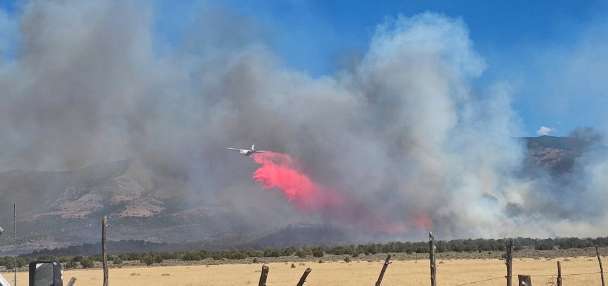
The Widemouth 2 Fire has now burned more than 97,000 acres within Fishlake National Forest, making it the state's third fire to surpass 90,000 acres in size this year. It's now 10% contained, partially because it has run up against recent burn scars.
Nearly 550 personnel are currently assigned to the lightning-caused fire. DeMasters said he expected crews could gain another 5% to 10% containment on Thursday as they gain ground "bit by bit."
Six structures have now been destroyed, two more than reported on Wednesday.
Nearly 800 fires have started in Utah this year, burning more than 486,000 acres. It's the second-most acreage burned since the state began collecting data.
Cottonwood Fire recovery fund launched
Utah and federal officials reached an $18 million agreement to begin the recovery from another massive fire that burned in the same national forest earlier this summer.
The U.S. Forest Service on Thursday announced it is committing $9.2 million to recovery efforts following the Cottonwood Fire, which burned over 97,400 acres in and around Fishlake National Forest east of Beaver, less than 50 miles south of the Widemouth 2 Fire.
Utah plans to match those funds, which will be used to begin repairs to homes, farms, roads and infrastructure damaged by both the fire and subsequent flash flooding.
The fire destroyed 150 structures, while the monsoon-fueled flooding of its burn scar affected approximately 200 homes in Beaver. A larger section of state Route 153 remains closed after being washed out by the flooding, while Eagle Point Resort announced this week that it will not open this winter.
"The Cottonwood Fire and subsequent monsoon flooding have deeply disrupted the communities who call these forests home," said Tom Schultz, chief of the federal agency, who traveled to Utah to make the announcement. "Today's investment helps us respond quickly and with care, reducing further harm, repairing critical infrastructure and restoring access to the places people rely on for their livelihoods, traditions, and well-being."
Schultz and Cox toured the damage in Beaver Thursday morning before they met with Millard County leaders and wildland fire leadership overseeing firefighting operations on the Widemouth 2 Fire.
With monsoons forecast to arrive next week, part of the discussion in Millard County centered around the same concerns, such as planning for flooding and securing recovery funding.
"We want to start the process before the fire is out," Cox said. "Mother Nature doesn't care about our time frames. We can be fighting a fire one minute and then fighting a flood the next minute. We have to be able to walk and chew gum at the same time."