'%3e%3cpath%20d='M34.1406%205.85938C30.3906%202.10547%2025.3047%200%2020%200C14.6953%200%209.60938%202.10547%205.85938%205.85938C2.10938%209.61328%200%2014.6953%200%2020C0%2025.3047%202.10547%2030.3906%205.85938%2034.1406C9.61328%2037.8906%2014.6953%2040%2020%2040C25.3047%2040%2030.3906%2037.8945%2034.1406%2034.1406C37.8906%2030.3906%2040%2025.3047%2040%2020C40%2014.6953%2037.8945%209.60938%2034.1406%205.85938ZM37.0117%2023.543H31.1602V13.5391H27.6328V19.9414C28.1211%2020.6914%2028.3711%2021.582%2028.3711%2022.5625V22.625C28.3711%2023.668%2028.1172%2024.6055%2027.6328%2025.4297V26.6094H36.082C33.4883%2032.9375%2027.2891%2037.3789%2020.0039%2037.3789C10.3711%2037.3789%202.62109%2029.6289%202.62109%2020C2.62109%2010.3711%2010.3711%202.62109%2020%202.62109C29.6289%202.62109%2037.3789%2010.3711%2037.3789%2020C37.3789%2021.1484%2037.2617%2022.2656%2037.0508%2023.3477C37.0391%2023.4141%2037.0234%2023.4766%2037.0117%2023.543Z'%20fill='white'/%3e%3cpath%20d='M22.3086%2018.5352C20.4336%2018.125%2019.9531%2017.8398%2019.9766%2017.1836V17.1406C19.9766%2016.6992%2020.3477%2016.2148%2021.4023%2016.2148C22.582%2016.2148%2023.8867%2016.6797%2025.0781%2017.4766L26.8516%2015.0195C25.4453%2013.8906%2023.707%2013.3398%2021.5547%2013.3398C18.5195%2013.3398%2016.4375%2015%2016.4063%2017.4766V17.5352C16.3633%2020.2617%2018.5859%2020.9805%2021.293%2021.6016C23.0391%2021.9766%2023.5703%2022.3164%2023.5703%2022.9609L23.5469%2022.9766C23.5469%2023.3906%2023.2578%2023.7031%2022.7852%2023.8359C22.5742%2023.9062%2022.1289%2023.9727%2021.5156%2023.9727C20.7617%2023.9727%2019.7539%2023.8633%2018.6328%2023.4844C18.0898%2023.2891%2017.4727%2023.0039%2016.8047%2022.6133L20.1406%2026.625C20.2813%2026.6602%2021.0977%2026.8516%2021.7734%2026.8516C25.0039%2026.8516%2027.0859%2025.2461%2027.1094%2022.6328V22.5703C27.1602%2020.1133%2025.2148%2019.1719%2022.3086%2018.5352Z'%20fill='white'/%3e%3cpath%20d='M5.24219%2013.5664V26.6133H8.75391V23.7578L10.2969%2021.9531L14.2031%2026.6133H18.3867L12.3555%2019.5195L17.4023%2013.5664H13.4531L8.75391%2019.0586V13.5664H5.24219Z'%20fill='white'/%3e%3c/g%3e%3cdefs%3e%3cclipPath%20id='clip0_97_2430'%3e%3crect%20width='40'%20height='40'%20fill='white'/%3e%3c/clipPath%3e%3c/defs%3e%3c/svg%3e)


- Dixie National Forest eases to Stage 1 fire restrictions after monsoonal rains.
- Recent precipitation improved vegetation moisture but also caused severe flooding in Utah.
- Hot, dry conditions are expected to return, potentially increasing fire risks again.
ST. GEORGE — Dixie National Forest is going back to Stage 1 fire restrictions, as monsoonal moisture in the past few weeks has helped ease some of the fire danger in southwestern Utah.
"Recent precipitation and reduced fire activity has allowed fire managers to lift the Stage 2 restrictions. This decision was made after evaluating fuel moisture levels and firefighting resource availability," the U.S. Forest Service said in a statement on Monday.
The agency's decision marks the first major reduction in fire restrictions since most of Utah's public lands shifted to Stage 2 restrictions in late June, as drought conditions intensified across the state and massive new fires broke out.
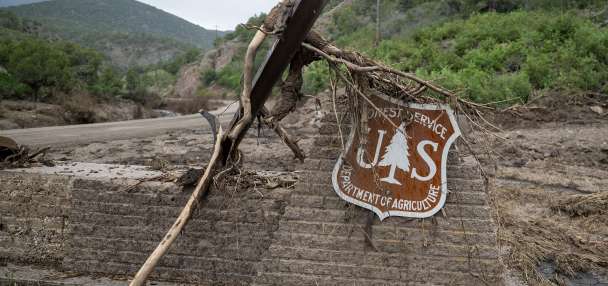
However, monsoonal storms have produced several inches of rain in parts of central and southern Utah this month, which has been both good and bad. It's produced devastating flooding, leading to an emergency declaration issued last week, but also improved vegetation moisture at places like Dixie National Forest, which stretches from the Utah-Nevada border to Capitol Reef National Park.
That's not to say there still isn't fire risk. Stage 1 restrictions only allow for campfires in permanent, metal or concrete fire pits or grates that the Forest Service has installed and maintained at campgrounds, picnic areas or other developed recreation sites.
Stoves and grills fueled by liquid or gas that can be turned on or off and a fully enclosed metal stove with a chimney that's at least 5 feet in length and has a mesh screen spark arrestor with a screen opening of ¼ inch or less are also permitted, as long as they are used in an area that's at least 10 feet away from all flammable materials.
Most other activities that can create a spark, like smoking or welding, must also be at least 10 feet from flammable materials.
Exploding targets, fireworks, pyrotechnics, blasting, explosives, firing tracer bullets or ammunition and operating an internal or external combustion engine without a spark arrestor device are still banned, the Forest Service adds.
At the same time, Utah is about to dry out once again, which could worsen fire conditions again.
Isolated monsoonal storms are forecast to continue across many of Utah's mountains through midweek, but hotter and drier conditions are in Utah's general forecast this week, said Shelby Law, a fire meteorologist with the Great Basin Coordination Center, in a fire forecast outlook on Monday.
"By the time we get into the weekend, everyone's going to be getting hotter. Most are going to be above 100 degrees," she said, adding that hot and dry conditions are likely to linger into the start of next week.
Many other Utah outdoor locations remain in Stage 2 fire restrictions. Monsoonal storms also sparked many of Utah's recent fires, which have been smaller than the fires that started in June.
Still, over 380,000 acres statewide this year, the most in a single year since 2018.