'%3e%3cpath%20d='M34.1406%205.85938C30.3906%202.10547%2025.3047%200%2020%200C14.6953%200%209.60938%202.10547%205.85938%205.85938C2.10938%209.61328%200%2014.6953%200%2020C0%2025.3047%202.10547%2030.3906%205.85938%2034.1406C9.61328%2037.8906%2014.6953%2040%2020%2040C25.3047%2040%2030.3906%2037.8945%2034.1406%2034.1406C37.8906%2030.3906%2040%2025.3047%2040%2020C40%2014.6953%2037.8945%209.60938%2034.1406%205.85938ZM37.0117%2023.543H31.1602V13.5391H27.6328V19.9414C28.1211%2020.6914%2028.3711%2021.582%2028.3711%2022.5625V22.625C28.3711%2023.668%2028.1172%2024.6055%2027.6328%2025.4297V26.6094H36.082C33.4883%2032.9375%2027.2891%2037.3789%2020.0039%2037.3789C10.3711%2037.3789%202.62109%2029.6289%202.62109%2020C2.62109%2010.3711%2010.3711%202.62109%2020%202.62109C29.6289%202.62109%2037.3789%2010.3711%2037.3789%2020C37.3789%2021.1484%2037.2617%2022.2656%2037.0508%2023.3477C37.0391%2023.4141%2037.0234%2023.4766%2037.0117%2023.543Z'%20fill='white'/%3e%3cpath%20d='M22.3086%2018.5352C20.4336%2018.125%2019.9531%2017.8398%2019.9766%2017.1836V17.1406C19.9766%2016.6992%2020.3477%2016.2148%2021.4023%2016.2148C22.582%2016.2148%2023.8867%2016.6797%2025.0781%2017.4766L26.8516%2015.0195C25.4453%2013.8906%2023.707%2013.3398%2021.5547%2013.3398C18.5195%2013.3398%2016.4375%2015%2016.4063%2017.4766V17.5352C16.3633%2020.2617%2018.5859%2020.9805%2021.293%2021.6016C23.0391%2021.9766%2023.5703%2022.3164%2023.5703%2022.9609L23.5469%2022.9766C23.5469%2023.3906%2023.2578%2023.7031%2022.7852%2023.8359C22.5742%2023.9062%2022.1289%2023.9727%2021.5156%2023.9727C20.7617%2023.9727%2019.7539%2023.8633%2018.6328%2023.4844C18.0898%2023.2891%2017.4727%2023.0039%2016.8047%2022.6133L20.1406%2026.625C20.2813%2026.6602%2021.0977%2026.8516%2021.7734%2026.8516C25.0039%2026.8516%2027.0859%2025.2461%2027.1094%2022.6328V22.5703C27.1602%2020.1133%2025.2148%2019.1719%2022.3086%2018.5352Z'%20fill='white'/%3e%3cpath%20d='M5.24219%2013.5664V26.6133H8.75391V23.7578L10.2969%2021.9531L14.2031%2026.6133H18.3867L12.3555%2019.5195L17.4023%2013.5664H13.4531L8.75391%2019.0586V13.5664H5.24219Z'%20fill='white'/%3e%3c/g%3e%3cdefs%3e%3cclipPath%20id='clip0_97_2430'%3e%3crect%20width='40'%20height='40'%20fill='white'/%3e%3c/clipPath%3e%3c/defs%3e%3c/svg%3e)




Estimated read time: 4-5 minutes
- San Juan Record ends its 111-year print run transitioning to online journalism.
- Editor Bill Boyle emphasizes increased quality and reach through digital platforms.
- Website sjrnews.com had over half a million visitors in one month alone.
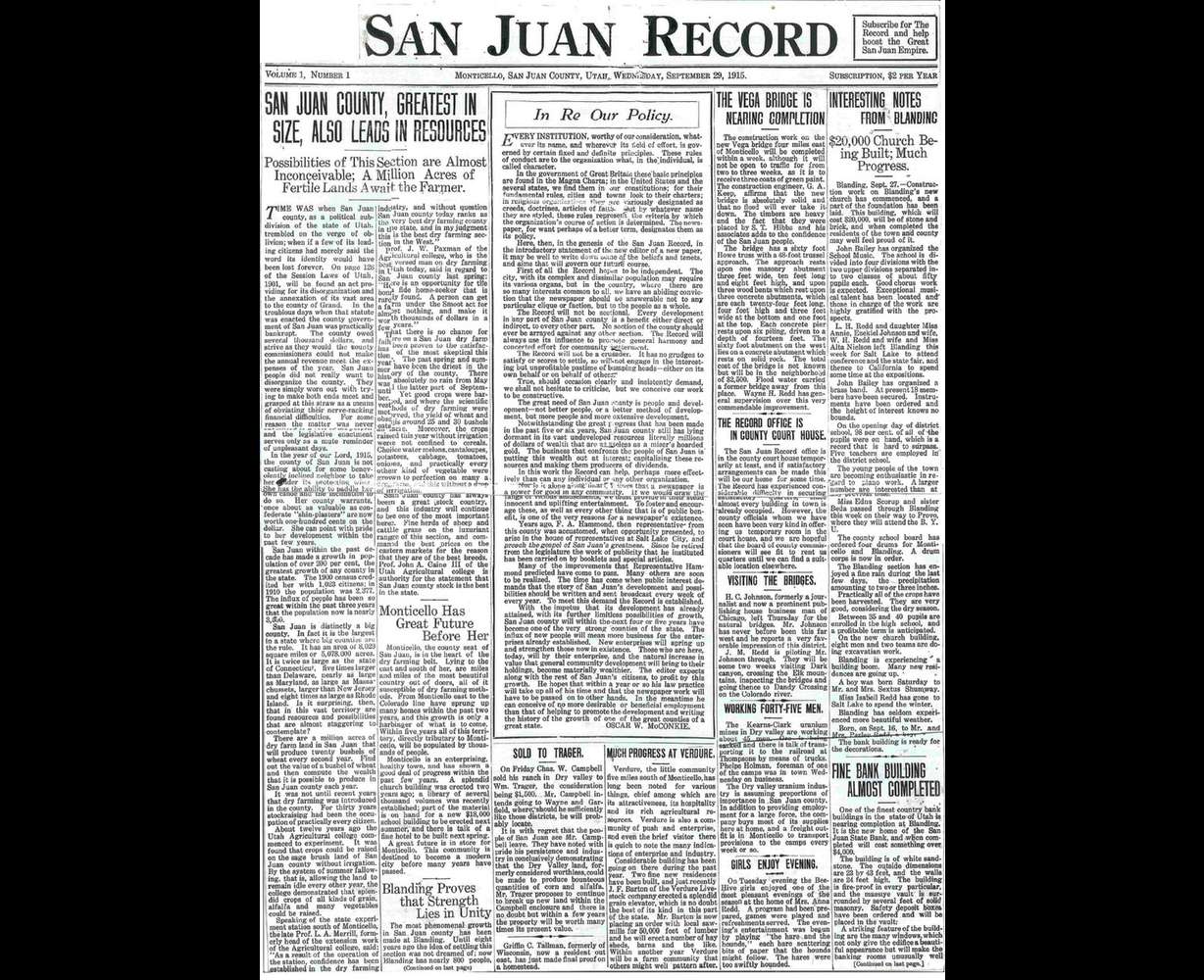
MONTICELLO — For 111 years, the news of San Juan County has arrived on paper. This week, that tradition comes to an end.
The San Juan Record printed its final weekly edition Wednesday, closing the print chapter of a newspaper that has documented life in southeastern Utah without missing a week since its founding in 1915.
But Editor and Publisher Bill Boyle was quick to emphasize that the news itself is not going away.
In fact, he hopes the change to focus strictly online will ultimately mean more local journalism, delivered faster and to more people.
"We really hope to not just survive, but to increase the quality and reach of our journalism. It is a tough thing in a rural area," said Boyle.
For generations, the San Juan Record has chronicled city council meetings, school activities, high school sports, births, deaths, elections, celebrations, controversies and the everyday lives of the people who call San Juan County home.
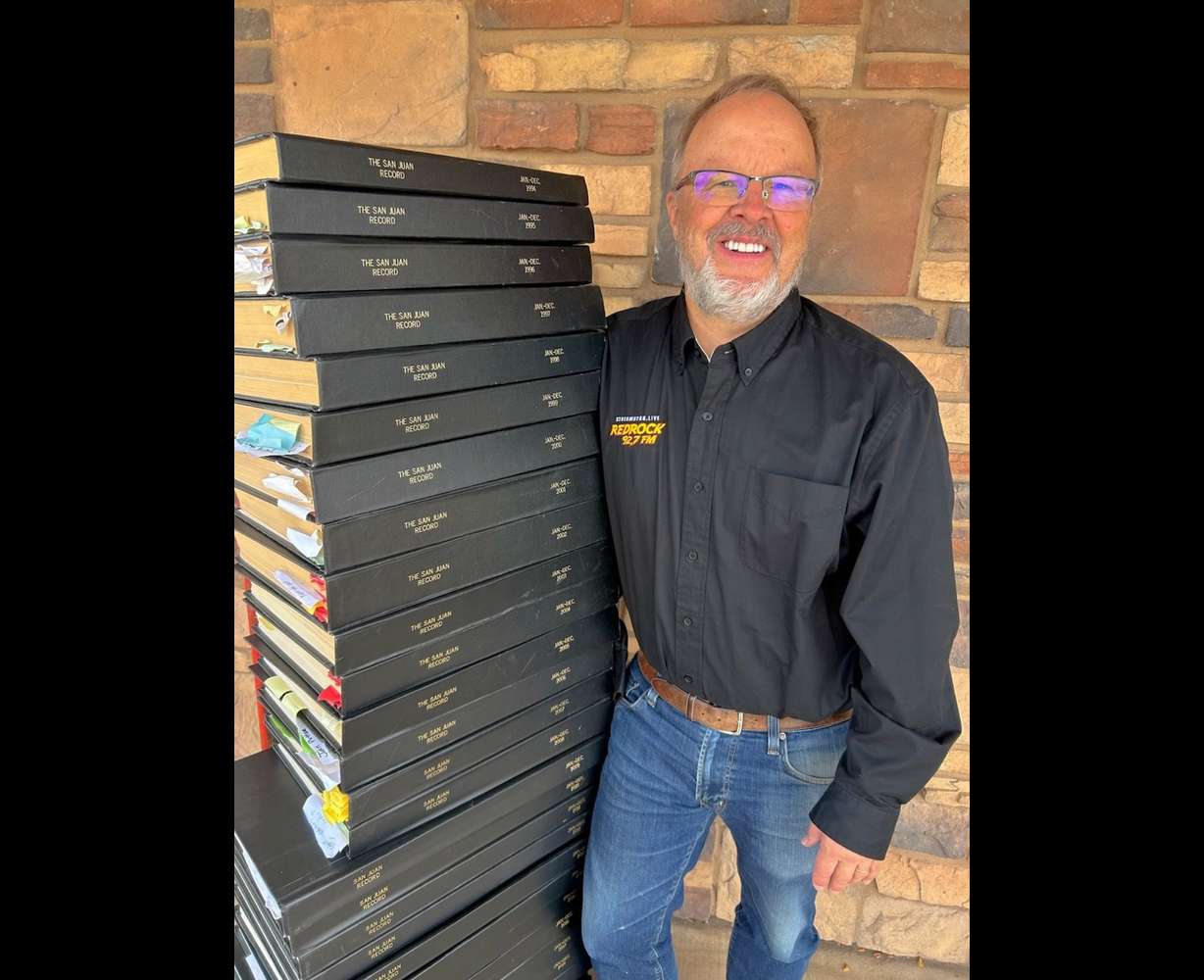
Now, the paper is changing the way it delivers that information.
Boyle said the decision to stop printing was not made lightly.
It prints its newspaper in Santa Fe, New Mexico, then transports it hundreds of miles back to San Juan County. From there, the papers have to be distributed to subscribers.
"The cost of printing and transportation and postage and delivery make it tough on that side," said Boyle.
There is another challenge, too.
A weekly newspaper is, by definition, limited by time and space.
Editors must decide which stories can fit, which photographs can run, which government meeting needs more room, and which local event gets a few paragraphs instead of a full story.
Those limitations disappear, or at least become much less restrictive, online.
Boyle said its website, sjrnews.com, had more than half a million visitors in July alone.
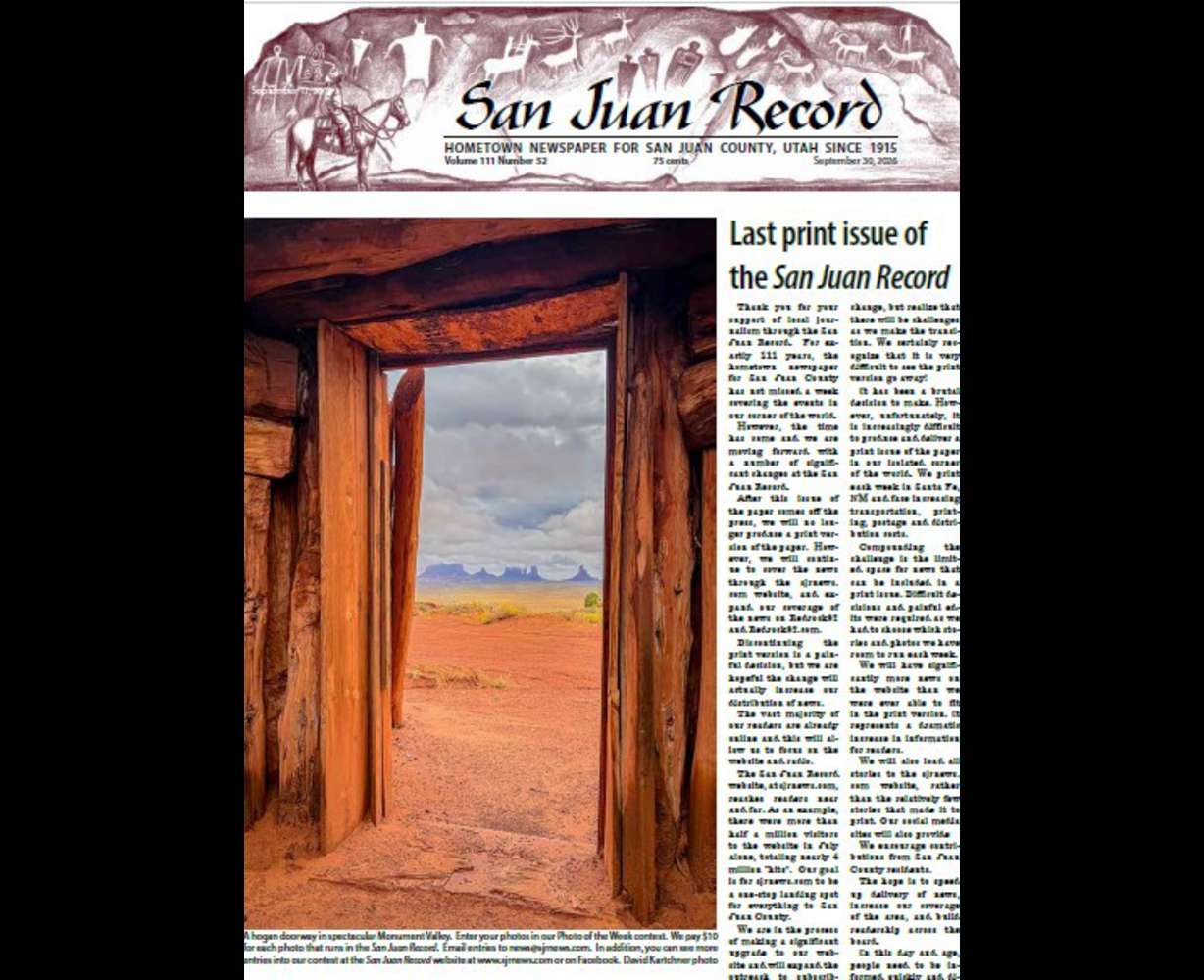
The newspaper plans to make the website the primary home for its journalism, with daily updates and breaking-news alerts.
"We've had significant success with our website," said Boyle. "I don't think people realize how much the website is used. We focused on print. Now we're going to focus on the website."
For Boyle, the transition is about more than saving money. It is about changing what a local newspaper can do for its readers.
A story that happens on a Thursday no longer has to wait until the following Wednesday to appear in print.
"You can't wait until the next week to pick up a paper. You want it on your phone right here, right now or on your desktop," said Boyle.
Subscribers will still receive a weekly summary of local news, continuing a tradition that has lasted for more than a century. The difference is that the weekly summary will arrive electronically rather than in a printed newspaper.
The San Juan Record also plans to expand its use of its radio station RedRock92 and RedRock92.com, giving the organization another way to distribute local news beyond the county.
Boyle said the goal is to build on what the organization already does rather than simply replace one format with another.
"We really hope to not just survive, but to increase the quality and reach of our journalism," he said.
He feels that mission is particularly important in a rural community. Across rural America, communities have faced the loss of local newspapers and the decline of local reporting. Boyle said he is determined that San Juan County will not become one of those communities.
"They talk about news deserts, and I am determined not to have a news desert in southeastern Utah," he said. "I just have a wholehearted belief in the importance of an independent, journalistic effort doing the best we can and in tough circumstances. It has been a foundational trademark of democracy from the earliest days of good journalism, and we are determined to do our best to continue."
Still, Boyle knows there is something being lost. For many long-time readers, the newspaper wasn't simply a delivery mechanism for information. It was a Wednesday morning ritual, something tangible that showed up in the mailbox that you fold, leave on the kitchen table or cut a photo or article from to save.
"Us boomers, this is how we absorb information, and it's going to be very difficult to our most loyal subscribers. That's a challenge," he said.
The decision was kept relatively quiet until the announcement, with employees and a few key advertisers informed ahead of time.
Once the news became public Wednesday morning, Boyle said the phones began ringing.
"There's mixed reaction, of course," he said. "It's a bittersweet day. This is a painful change. There's no doubt about it. But we are celebrating here. You may hear in the background we're getting the paper out the door, and everyone is glad they're not inserting and tying and labeling and bundling and shipping anymore after today."
After 111 years, the presses have stopped. But in San Juan County, the news will keep coming.
"We are very hopeful we'll be able to deliver a product to people just like we have for 111 years," said Boyle. "It's just going to be electronic rather than in print."