'%3e%3cpath%20d='M34.1406%205.85938C30.3906%202.10547%2025.3047%200%2020%200C14.6953%200%209.60938%202.10547%205.85938%205.85938C2.10938%209.61328%200%2014.6953%200%2020C0%2025.3047%202.10547%2030.3906%205.85938%2034.1406C9.61328%2037.8906%2014.6953%2040%2020%2040C25.3047%2040%2030.3906%2037.8945%2034.1406%2034.1406C37.8906%2030.3906%2040%2025.3047%2040%2020C40%2014.6953%2037.8945%209.60938%2034.1406%205.85938ZM37.0117%2023.543H31.1602V13.5391H27.6328V19.9414C28.1211%2020.6914%2028.3711%2021.582%2028.3711%2022.5625V22.625C28.3711%2023.668%2028.1172%2024.6055%2027.6328%2025.4297V26.6094H36.082C33.4883%2032.9375%2027.2891%2037.3789%2020.0039%2037.3789C10.3711%2037.3789%202.62109%2029.6289%202.62109%2020C2.62109%2010.3711%2010.3711%202.62109%2020%202.62109C29.6289%202.62109%2037.3789%2010.3711%2037.3789%2020C37.3789%2021.1484%2037.2617%2022.2656%2037.0508%2023.3477C37.0391%2023.4141%2037.0234%2023.4766%2037.0117%2023.543Z'%20fill='white'/%3e%3cpath%20d='M22.3086%2018.5352C20.4336%2018.125%2019.9531%2017.8398%2019.9766%2017.1836V17.1406C19.9766%2016.6992%2020.3477%2016.2148%2021.4023%2016.2148C22.582%2016.2148%2023.8867%2016.6797%2025.0781%2017.4766L26.8516%2015.0195C25.4453%2013.8906%2023.707%2013.3398%2021.5547%2013.3398C18.5195%2013.3398%2016.4375%2015%2016.4063%2017.4766V17.5352C16.3633%2020.2617%2018.5859%2020.9805%2021.293%2021.6016C23.0391%2021.9766%2023.5703%2022.3164%2023.5703%2022.9609L23.5469%2022.9766C23.5469%2023.3906%2023.2578%2023.7031%2022.7852%2023.8359C22.5742%2023.9062%2022.1289%2023.9727%2021.5156%2023.9727C20.7617%2023.9727%2019.7539%2023.8633%2018.6328%2023.4844C18.0898%2023.2891%2017.4727%2023.0039%2016.8047%2022.6133L20.1406%2026.625C20.2813%2026.6602%2021.0977%2026.8516%2021.7734%2026.8516C25.0039%2026.8516%2027.0859%2025.2461%2027.1094%2022.6328V22.5703C27.1602%2020.1133%2025.2148%2019.1719%2022.3086%2018.5352Z'%20fill='white'/%3e%3cpath%20d='M5.24219%2013.5664V26.6133H8.75391V23.7578L10.2969%2021.9531L14.2031%2026.6133H18.3867L12.3555%2019.5195L17.4023%2013.5664H13.4531L8.75391%2019.0586V13.5664H5.24219Z'%20fill='white'/%3e%3c/g%3e%3cdefs%3e%3cclipPath%20id='clip0_97_2430'%3e%3crect%20width='40'%20height='40'%20fill='white'/%3e%3c/clipPath%3e%3c/defs%3e%3c/svg%3e)


- Salt Lake County begins implementing Miami-inspired solutions for homelessness and criminal justice.
- Steve Leifman collaborates with local officials to improve outcomes and reduce recidivism.
- Officials emphasize collaboration and creativity in funding amid Salt Lake's unique challenges.
SALT LAKE CITY — Utah's most populous county is ready to begin implementing changes in how it addresses homelessness and criminal justice, months after receiving 25 recommendations on ways to improve its system from a former judge credited with turning around Miami's situation.
Salt Lake county and city leaders met with Gov. Spencer Cox and other "several key stakeholders" on Tuesday, amid the first week of launching the new county's behavioral health and justice project, said Salt Lake County Mayor Jenny Wilson.
Steve Leifman, founder of the Leifman Group, who has worked with the county for over a year now, joined the meetings as they discussed turning concepts into action. The reforms he championed as a Miami judge helped the city reduce recidivism and its jail population while improving other areas in crime and homelessness.
That's what Salt Lake County hopes to accomplish as it begins to implement the recommendations Leifman found in the county's current system.
"What's really reassuring to me is the commitment across party lines to solutions and the interest of people who get up every day and care about this work," Wilson said, adding that better collaboration can create better outcomes for individuals in crisis while also benefiting taxpayers by reducing redundancies in systems.
State and local officials have fixated on the Miami model since touring Miami-Dade County in 2022, finding potential solutions to rising challenges in and around Utah's capital city. Salt Lake County eventually began working with Leifman when they learned he was seeking to take his concepts to other cities and states.
There are some similarities between the two, but also differences, said Salt Lake City Mayor Erin Mendenhall. The Florida county has a tax that goes toward housing and service needs, which triggered matching federal dollars from a program that no longer exists, she explained.
That forces Salt Lake and Utah leaders to be creative in piecing together funds, but there are many systems in place and players at the table that may help the area's transformation go more smoothly.
Some of that is making sure people with co-occurring conditions, meaning they have multiple behavioral health conditions at the same time, aren't disqualified from help, said Tyler Clancy, Utah's homelessness coordinator. Improvements in sharing existing data are also needed, officials noted.
These are some of the initial tactics that will be considered first. Other recommendations that could be implemented early include rewriting 911 scripts to ask about emergency mental health episodes to improve responses to certain situations.
That's on top of existing work to improve housing stock, including those dealing with severe mental illness.
Some that could take longer include screening children for trauma and getting them help as early as possible to get ahead of them potentially falling into the criminal justice system later in life.
Salt Lake County estimates it will take 10 years to implement the program. It's too early to know if it will make many fiscal or legislative asks tied to the program in the next legislative session, Wilson said.
The county approved a tax increase tied to bonds associated with the program last year.
"The findings were really reassuring for the most part," Wilson said. "We learned that we are one of the states that has the deepest investment with a lot of services and a lot of support. We also learned that there's some disconnection."
Handling a negative reputation
The county's homelessness situation has somewhat improved from 2025 to 2026, according to data from the state's point-in-time count held in January. Salt Lake County had a slight 1% decrease in year-over-year homeless population, while the state also experienced a slight dip.
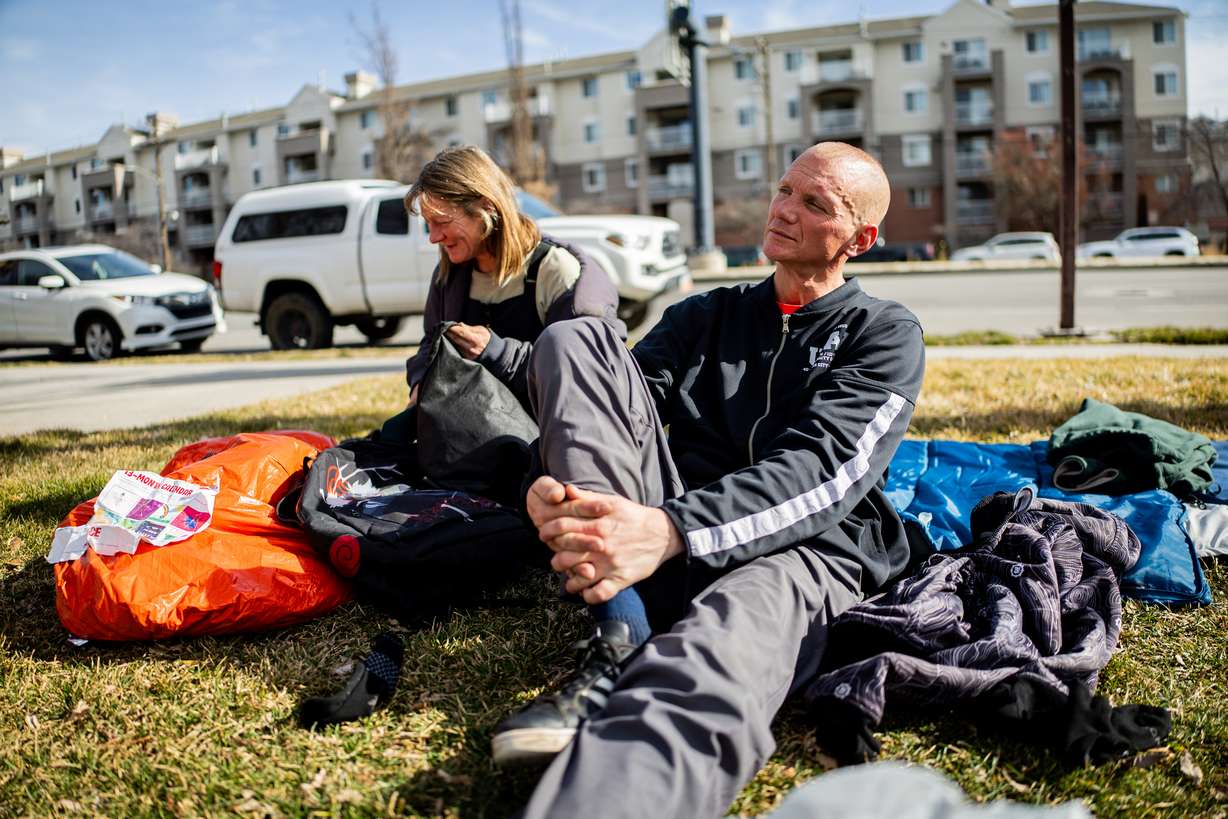
While small, it was the first decrease since 2019. Yet, the area still faces a negative reputation, which was recently refueled within the national podcast sphere.
Comedians Shane Gillis, Mark Norman and Ari Shaffir called Salt Lake City "bad for homeless" while talking about homelessness across the country on the "Joe Rogan Experience" last week.
"When I started standup in Salt Lake, I thought was like, 'This is the best city. This is the cleanest, nicest city,'" Gillis said. "I was telling my buddies like, 'Wait till you see how nice this is.' And we landed, it was like 10 homeless guys chasing us."
Norman said it's the opposite of BYU, which he called a "utopia." The conversation ultimately turned into a debate on whether states are doing anything to solve homelessness or cash in from it.
Local and state officials have seen the clip, which has been spread around on social media over the past few days, with several asserting that nothing is being done to address Salt Lake's situation.
Some officials believe Gillis was joking or exaggerating the story to increase the juxtaposition of the city that he pitched to his friends. Others contend that it's been at least a year since Gillis performed in Salt Lake City.
Tuesday's program launch is just the latest step in handling a complex situation, many of which have happened since Gillis's last Salt Lake City performance, Clancy said. He believes there have been improvements in policing since then, too.
However, he also sees the clip as a reminder that the work isn't over.
"I think we can, on one hand, talk about public safety and always find ways to improve," Clancy said. "At the same time, we can recognize that there are many individuals on our streets who need help, so I think it's holding ourselves accountable ... in making sure we're helping folks on their path to recovery and to healing, and we can maintain public safety at the same time."