'%3e%3cpath%20d='M34.1406%205.85938C30.3906%202.10547%2025.3047%200%2020%200C14.6953%200%209.60938%202.10547%205.85938%205.85938C2.10938%209.61328%200%2014.6953%200%2020C0%2025.3047%202.10547%2030.3906%205.85938%2034.1406C9.61328%2037.8906%2014.6953%2040%2020%2040C25.3047%2040%2030.3906%2037.8945%2034.1406%2034.1406C37.8906%2030.3906%2040%2025.3047%2040%2020C40%2014.6953%2037.8945%209.60938%2034.1406%205.85938ZM37.0117%2023.543H31.1602V13.5391H27.6328V19.9414C28.1211%2020.6914%2028.3711%2021.582%2028.3711%2022.5625V22.625C28.3711%2023.668%2028.1172%2024.6055%2027.6328%2025.4297V26.6094H36.082C33.4883%2032.9375%2027.2891%2037.3789%2020.0039%2037.3789C10.3711%2037.3789%202.62109%2029.6289%202.62109%2020C2.62109%2010.3711%2010.3711%202.62109%2020%202.62109C29.6289%202.62109%2037.3789%2010.3711%2037.3789%2020C37.3789%2021.1484%2037.2617%2022.2656%2037.0508%2023.3477C37.0391%2023.4141%2037.0234%2023.4766%2037.0117%2023.543Z'%20fill='white'/%3e%3cpath%20d='M22.3086%2018.5352C20.4336%2018.125%2019.9531%2017.8398%2019.9766%2017.1836V17.1406C19.9766%2016.6992%2020.3477%2016.2148%2021.4023%2016.2148C22.582%2016.2148%2023.8867%2016.6797%2025.0781%2017.4766L26.8516%2015.0195C25.4453%2013.8906%2023.707%2013.3398%2021.5547%2013.3398C18.5195%2013.3398%2016.4375%2015%2016.4063%2017.4766V17.5352C16.3633%2020.2617%2018.5859%2020.9805%2021.293%2021.6016C23.0391%2021.9766%2023.5703%2022.3164%2023.5703%2022.9609L23.5469%2022.9766C23.5469%2023.3906%2023.2578%2023.7031%2022.7852%2023.8359C22.5742%2023.9062%2022.1289%2023.9727%2021.5156%2023.9727C20.7617%2023.9727%2019.7539%2023.8633%2018.6328%2023.4844C18.0898%2023.2891%2017.4727%2023.0039%2016.8047%2022.6133L20.1406%2026.625C20.2813%2026.6602%2021.0977%2026.8516%2021.7734%2026.8516C25.0039%2026.8516%2027.0859%2025.2461%2027.1094%2022.6328V22.5703C27.1602%2020.1133%2025.2148%2019.1719%2022.3086%2018.5352Z'%20fill='white'/%3e%3cpath%20d='M5.24219%2013.5664V26.6133H8.75391V23.7578L10.2969%2021.9531L14.2031%2026.6133H18.3867L12.3555%2019.5195L17.4023%2013.5664H13.4531L8.75391%2019.0586V13.5664H5.24219Z'%20fill='white'/%3e%3c/g%3e%3cdefs%3e%3cclipPath%20id='clip0_97_2430'%3e%3crect%20width='40'%20height='40'%20fill='white'/%3e%3c/clipPath%3e%3c/defs%3e%3c/svg%3e)



- Utah's 2026 Point-in-Time Count revealed a 1.6% decline in homelessness.
- Salt Lake County saw a 1% decrease while Mountainland reported a 15% drop.
- Statewide emergency shelter utilization decreased from 84% in 2025 to 74% in 2026.
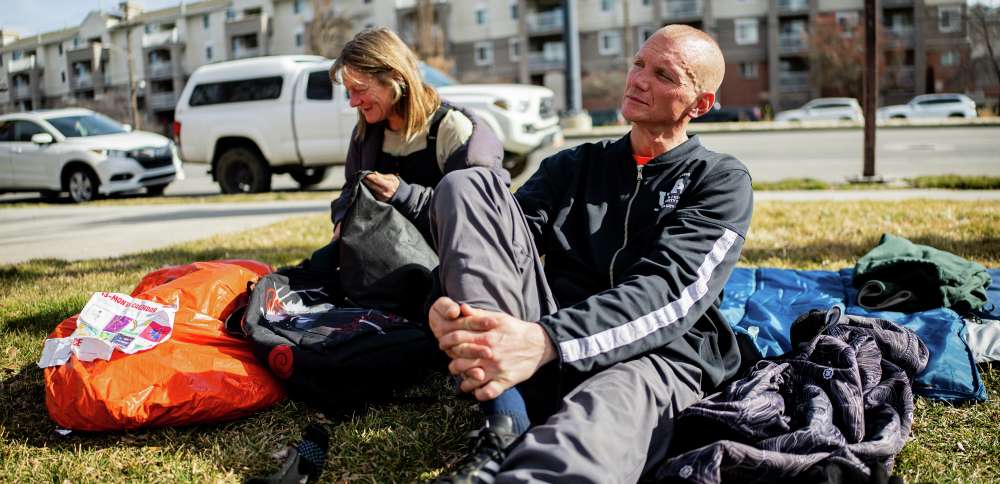
SALT LAKE CITY — Utah already released some data showing a slight decrease in overall statewide homelessness, but newly released data highlights how decreases were reported across all three of the state's Continuums of Care regions.
A little more than 4,500 Utahns were experiencing homelessness during the 2026 Point-in-Time Count, down 1.6% from last year's count. While small, it was celebrated in March as being the first year-over-year decrease since 2019.
The number of people experiencing chronic homelessness also fell by 6.7%, while unsheltered homelessness dropped by nearly 10%.
This year's statewide decline included a small, 24-person decrease within the Salt Lake Valley Coalition to End Homelessness, representing Salt Lake County's homelessness, according to the full report released this week. A little more than 2,800 people were experiencing homelessness within the Salt Lake County area, and the drop represented approximately a 1% decrease.
The largest percentage decrease came within the Mountainland Continuum of Care, which addresses homelessness within Utah, Summit and Wasatch counties. Its homelessness population fell under 250, a 15% decrease from 2025's count.
A little more than 1,400 people experiencing homelessness within the Balance of State Continuum of Care system, which handles homelessness across the state's other 25 counties. That's three fewer than last year.
"Homelessness is not a one-size-fits-all problem, and our response can't be either. An effective, accountable system meets people where they are and gives them the individualized support they need to exit homelessness and build lasting stability," said Tyler Clancy, Utah's homeless coordinator, in a statement on Tuesday.
The numbers are based on a count of everyone experiencing homelessness in Utah, which takes place every January. All three Continuum of Care regions also conduct a housing inventory count, which outlines emergency shelter, transitional housing and other housing resources that are available.
Statewide emergency shelter utilization dropped from about 84% in 2025 to 74% this year, the report found. Even though the number of beds that were utilized increased slightly, the number of beds available also rose from 3,573 to 4,046.
Permanent supportive housing rose from 88% to 93%, while other permanent housing decreased from 96% to 92%. The number of rapid rehousing beds remains in high demand, at 100% capacity. Transitional housing also experienced a slight year-over-year utilization increase, increasing to 81% in 2026.
Emergency shelter utilization dropped the most in Salt Lake County, falling from nearly 90% in 2025 to 79% in 2026.
Some of that is tied to hundreds of new beds that were made available, but this winter's warmth also may have factored. While it wreaked havoc on the statewide snowpack, it was beneficial in terms of code blue days, reducing code blue days from 120 during the previous winter to 68 this winter, state officials noted.
There were still some increases in the system, such as increases in young adults (ages 18-24), youth experiencing unsheltered homelessness and adults aged 65 or older, which state homelessness experts say will require more work to solve. Most of these, they say, underscore "the growing housing and service needs" of Utah's aging population.
Still, Salt Lake County Mayor Jenny Wilson believes the numbers also show progress amid efforts that state and local leaders have enacted in recent years to address homelessness.
"This year's numbers show our interventions are working," she said in a statement. "We are focusing resources where they matter most, and the results are showing up. We still have more work to do, especially for young adults and older residents. Salt Lake County will keep pushing until every person in this county has a stable place to live."