'%3e%3cpath%20d='M34.1406%205.85938C30.3906%202.10547%2025.3047%200%2020%200C14.6953%200%209.60938%202.10547%205.85938%205.85938C2.10938%209.61328%200%2014.6953%200%2020C0%2025.3047%202.10547%2030.3906%205.85938%2034.1406C9.61328%2037.8906%2014.6953%2040%2020%2040C25.3047%2040%2030.3906%2037.8945%2034.1406%2034.1406C37.8906%2030.3906%2040%2025.3047%2040%2020C40%2014.6953%2037.8945%209.60938%2034.1406%205.85938ZM37.0117%2023.543H31.1602V13.5391H27.6328V19.9414C28.1211%2020.6914%2028.3711%2021.582%2028.3711%2022.5625V22.625C28.3711%2023.668%2028.1172%2024.6055%2027.6328%2025.4297V26.6094H36.082C33.4883%2032.9375%2027.2891%2037.3789%2020.0039%2037.3789C10.3711%2037.3789%202.62109%2029.6289%202.62109%2020C2.62109%2010.3711%2010.3711%202.62109%2020%202.62109C29.6289%202.62109%2037.3789%2010.3711%2037.3789%2020C37.3789%2021.1484%2037.2617%2022.2656%2037.0508%2023.3477C37.0391%2023.4141%2037.0234%2023.4766%2037.0117%2023.543Z'%20fill='white'/%3e%3cpath%20d='M22.3086%2018.5352C20.4336%2018.125%2019.9531%2017.8398%2019.9766%2017.1836V17.1406C19.9766%2016.6992%2020.3477%2016.2148%2021.4023%2016.2148C22.582%2016.2148%2023.8867%2016.6797%2025.0781%2017.4766L26.8516%2015.0195C25.4453%2013.8906%2023.707%2013.3398%2021.5547%2013.3398C18.5195%2013.3398%2016.4375%2015%2016.4063%2017.4766V17.5352C16.3633%2020.2617%2018.5859%2020.9805%2021.293%2021.6016C23.0391%2021.9766%2023.5703%2022.3164%2023.5703%2022.9609L23.5469%2022.9766C23.5469%2023.3906%2023.2578%2023.7031%2022.7852%2023.8359C22.5742%2023.9062%2022.1289%2023.9727%2021.5156%2023.9727C20.7617%2023.9727%2019.7539%2023.8633%2018.6328%2023.4844C18.0898%2023.2891%2017.4727%2023.0039%2016.8047%2022.6133L20.1406%2026.625C20.2813%2026.6602%2021.0977%2026.8516%2021.7734%2026.8516C25.0039%2026.8516%2027.0859%2025.2461%2027.1094%2022.6328V22.5703C27.1602%2020.1133%2025.2148%2019.1719%2022.3086%2018.5352Z'%20fill='white'/%3e%3cpath%20d='M5.24219%2013.5664V26.6133H8.75391V23.7578L10.2969%2021.9531L14.2031%2026.6133H18.3867L12.3555%2019.5195L17.4023%2013.5664H13.4531L8.75391%2019.0586V13.5664H5.24219Z'%20fill='white'/%3e%3c/g%3e%3cdefs%3e%3cclipPath%20id='clip0_97_2430'%3e%3crect%20width='40'%20height='40'%20fill='white'/%3e%3c/clipPath%3e%3c/defs%3e%3c/svg%3e)


Estimated read time: 5-6 minutes
- Five Utah men participated in the 2026 World Nomad Games' kok-boru event.
- Kok-boru, Kyrgyzstan's national sport, involves passing a goat carcass on horseback.
- Team USA, including Utahns, faced Russia and Kyrgyzstan, losing both matches.
BISHKEK, Kyrgyzstan — The 2026 World Nomad Games have just wrapped up, and five men from Utah participated in an event that not many know about — kok-boru.
Kok-boru translates to "gray wolf" and is a tradition that goes back thousands of years, where participants pass a goat carcass around while riding horseback, with the goal of trying to score by throwing the goat into the opposing team's goal. It's the official national equestrian sport of Kyrgyzstan, which hosted the games that began Aug. 31 and end on Sunday.
KSL spoke with John Fosgren, 50, of Cornish, and Brian Ewell, 49, of Genola, who are two of the athletes from Utah who represented Team USA in the event. Both spoke to the sacred tradition of kok-boru, adding what an honor it was to represent the United States.
"It's a very primitive sport that started with the nomads up here who would have wolves come in and attack their goat and sheep herds," Forsgren explained. "They would then go kill the wolf, and it was a big honor to be the one who brought it back. So, they would fight for the wolf on the way back to see who got the credit. It's just kind of morphed into using a goat carcass instead of a wolf."
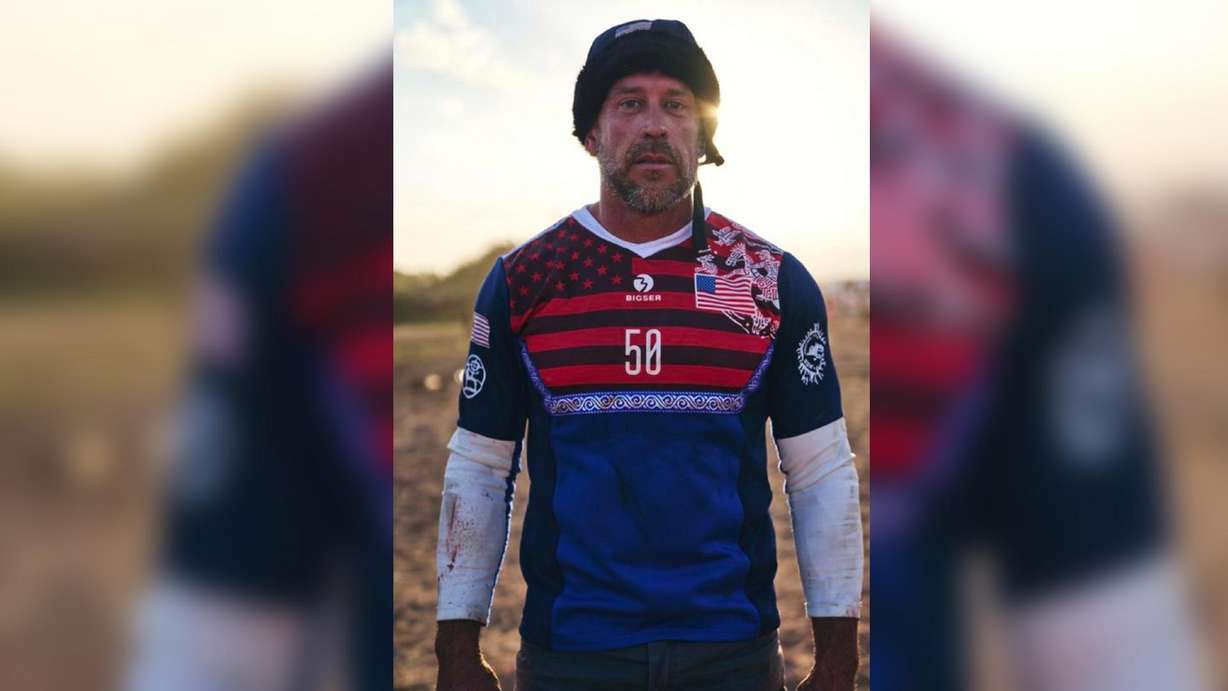
Ewell said that even with how "gruesome" kok-boru may sound, he was pleased to see the level of respect players of the sport have for the goat.
"They're very respectful about it, and they have a big party after the games with the goat and eat the goat so nothing goes to waste," Ewell said. "They seem very respectful of the goat during the whole game."
This was the sixth World Nomad Games event, and Kyrgyzstan first launched them in 2014 to showcase the traditional sports and cultures of Central Asia's nomadic people. It now hosts 106 countries, and the United States has had a team participate since the inaugural event.
Many of the events at the games feature horses, highlighting that nomadic peoples were among the first to domesticate them. Some events at the World Nomad Games include long-distance horse racing, wrestling on horseback and horseback archery. There is even a game where competitors pick up coins while galloping at full speed.
Both Fosgren and Ewell grew up around horses. In fact, Fosgren has a daughter who runs an equine therapy service out of the family's home, and Ewell said he very much considers himself a "cowboy."
Oddly enough, however, it wasn't on the ranch where the two were introduced to kok-boru, but in the gym.
"I've got a good friend named Ladd Howell who I've worked out with occasionally, and we were working out one day and talking about it, their experiences with the sport, and it sounded intriguing," Ewell said.
Fosgren said he had heard about the sport from his daughter, but about four months ago, he saw a guy doing an athletic move he had never seen before.
"It was Ladd, and I went to talk to him about the move he was doing, and he invited me to come play," Fosgren recalled. "I was like, 'They let 50-year-olds start new careers?' and he's like, 'Yeah, you're strong enough, and you can ride. Let's do it!' So, here I am."
Being fit and able to ride a horse was a good start for Fosgren and Ewell, but they said that they weren't fully prepared for what they'd experience at the World Nomad Games.
"The horses they have out here are unreal," Fosgren said. "They're definitely bred to be war horses. At home, our horses are bred to be cow horses or race horses. These horses are bred to go to war, and it's in them, and it's awesome."
"The best sport you can compare it to is horse polo, rugby and football all at the same time," Ewell added. "Trying to pick an item up off the ground as you're moving on your horse, then leaning down, grabbing it, pulling it up — just the whole thing is an art. Really, it takes a lot of practice, coordination, strength and a lot of good timing with your horse."
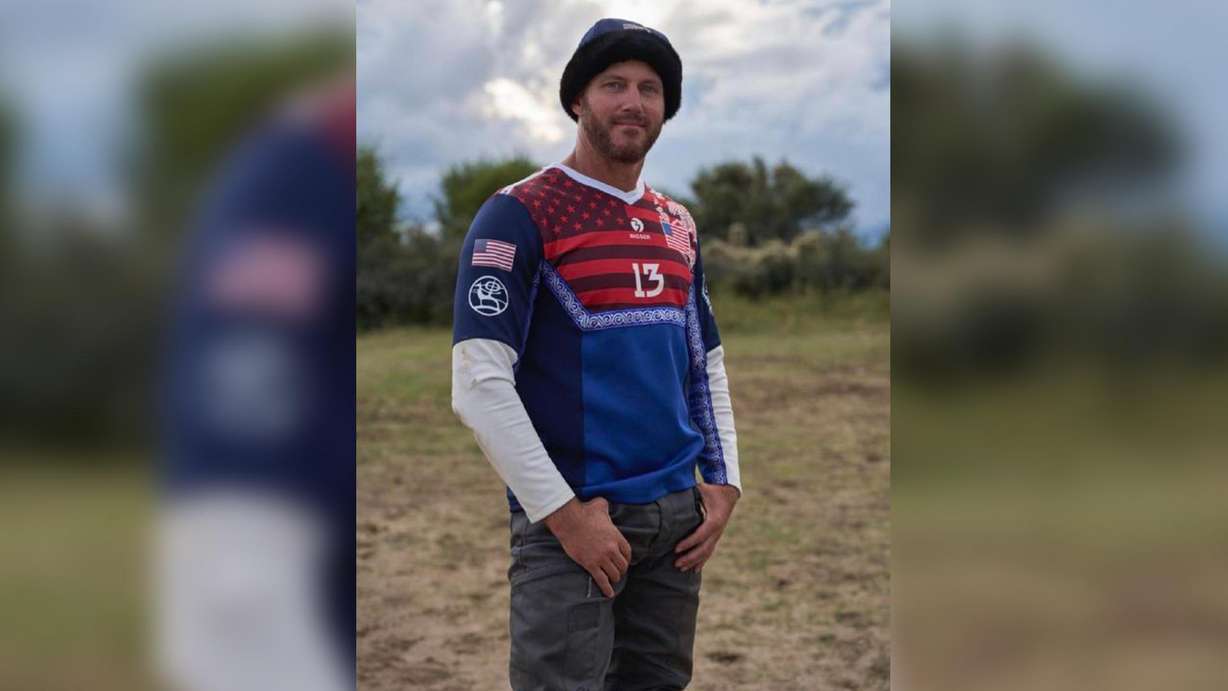
Team USA consisted of nine players, with the three others from Utah being Ladd Howell, of Logan, Afton Caldwell, of Lehi, and Jase Nisveta, of Garland. The team arrived in Kyrgyzstan a week before the games began to practice. Ewell said he experienced a mild injury on his hand from a horse throwing his head back and grazing him with its teeth.
Ready or not, they were there to represent the United States.
The team first faced Russia, losing17-6. They went on to play against Kyrgyzstan, losing 16-7.
At the time of this interview, the team was just about to play their third game against Uzbekistan. Both Ewell and Fosgren said that playing against Kyrgyzstan in their national sport —in their home country —was both an honor and a challenge.
"It was such an honor to play with those guys," Fosgren said. "They're the best in the world, and they were so nice to us. You kind of felt like that little kid getting stiff-armed by a giant, and you're throwing punches and you just can't reach, but they were so nice to us. It was just an honor to play against the best in the world."
Ewell said that Team USA playing against Kyrgyzstan is akin to the NBA Dream Team playing against a developmental league. Even with the wide range in level of play, he said it was an honor to represent the United States.
"It makes you emotional when you're sitting there on your horse ready to march into the stadium representing the United States," Ewell said. "You look around, and you see your teammates, and you see on the back of your teammates 'USA' and that you're representing the United States of America. It's an incredible experience.
"We came here to represent the United States of America very well," he added. "We also wanted to represent is our cowboy culture, and we want to represent is Christianity and make sure that we are good representatives of our Christian faith."
The World Nomad Games take place every two years, and Fosgren and Ewell said that if the opportunity presented itself to them again, they would absolutely do it again.