'%3e%3cpath%20d='M34.1406%205.85938C30.3906%202.10547%2025.3047%200%2020%200C14.6953%200%209.60938%202.10547%205.85938%205.85938C2.10938%209.61328%200%2014.6953%200%2020C0%2025.3047%202.10547%2030.3906%205.85938%2034.1406C9.61328%2037.8906%2014.6953%2040%2020%2040C25.3047%2040%2030.3906%2037.8945%2034.1406%2034.1406C37.8906%2030.3906%2040%2025.3047%2040%2020C40%2014.6953%2037.8945%209.60938%2034.1406%205.85938ZM37.0117%2023.543H31.1602V13.5391H27.6328V19.9414C28.1211%2020.6914%2028.3711%2021.582%2028.3711%2022.5625V22.625C28.3711%2023.668%2028.1172%2024.6055%2027.6328%2025.4297V26.6094H36.082C33.4883%2032.9375%2027.2891%2037.3789%2020.0039%2037.3789C10.3711%2037.3789%202.62109%2029.6289%202.62109%2020C2.62109%2010.3711%2010.3711%202.62109%2020%202.62109C29.6289%202.62109%2037.3789%2010.3711%2037.3789%2020C37.3789%2021.1484%2037.2617%2022.2656%2037.0508%2023.3477C37.0391%2023.4141%2037.0234%2023.4766%2037.0117%2023.543Z'%20fill='white'/%3e%3cpath%20d='M22.3086%2018.5352C20.4336%2018.125%2019.9531%2017.8398%2019.9766%2017.1836V17.1406C19.9766%2016.6992%2020.3477%2016.2148%2021.4023%2016.2148C22.582%2016.2148%2023.8867%2016.6797%2025.0781%2017.4766L26.8516%2015.0195C25.4453%2013.8906%2023.707%2013.3398%2021.5547%2013.3398C18.5195%2013.3398%2016.4375%2015%2016.4063%2017.4766V17.5352C16.3633%2020.2617%2018.5859%2020.9805%2021.293%2021.6016C23.0391%2021.9766%2023.5703%2022.3164%2023.5703%2022.9609L23.5469%2022.9766C23.5469%2023.3906%2023.2578%2023.7031%2022.7852%2023.8359C22.5742%2023.9062%2022.1289%2023.9727%2021.5156%2023.9727C20.7617%2023.9727%2019.7539%2023.8633%2018.6328%2023.4844C18.0898%2023.2891%2017.4727%2023.0039%2016.8047%2022.6133L20.1406%2026.625C20.2813%2026.6602%2021.0977%2026.8516%2021.7734%2026.8516C25.0039%2026.8516%2027.0859%2025.2461%2027.1094%2022.6328V22.5703C27.1602%2020.1133%2025.2148%2019.1719%2022.3086%2018.5352Z'%20fill='white'/%3e%3cpath%20d='M5.24219%2013.5664V26.6133H8.75391V23.7578L10.2969%2021.9531L14.2031%2026.6133H18.3867L12.3555%2019.5195L17.4023%2013.5664H13.4531L8.75391%2019.0586V13.5664H5.24219Z'%20fill='white'/%3e%3c/g%3e%3cdefs%3e%3cclipPath%20id='clip0_97_2430'%3e%3crect%20width='40'%20height='40'%20fill='white'/%3e%3c/clipPath%3e%3c/defs%3e%3c/svg%3e)




- A federal watchdog deemed President Donald Trump's $810 million funding cuts unconstitutional.
- The Government Accountability Office stated cuts require congressional approval per the Impoundment Control Act.
- Sen. Susan Collins, R-Maine, criticized the Office of Management and Budget for withholding funds; Congress may seek legal remedies.
SALT LAKE CITY — An internal federal watchdog has ruled President Donald Trump's decision to cancel roughly $810 million in federal funding was unconstitutional, escalating a fight between the White House and congressional appropriators over who holds budget authority.
In a letter sent to Vice President JD Vance and top Congress members on Tuesday, the nonpartisan Government Accountability Office concluded that the administration's unilateral spending cuts went beyond its constitutional authority. Trump issued the cuts through a process called pocket rescissions, a rarely used and legally questionable procedure that allows the president to cancel government funding without congressional approval.
The office ruled that any spending cut proposed by the administration must be approved by Congress, citing "legislative history of the (Impoundment Control Act), Supreme Court precedent, and the overarching constitutional framework" that the office says "compel this conclusion."
Congress passed the act in 1974 to prevent presidents from unilaterally withholding funds that were already approved by appropriators. The law cites Congress' "power of the purse," which gives lawmakers the power to approve a budget and appropriate the funds. The executive branch is then responsible for administering the funds.
Now, Maine Sen. Susan Collins, the top Republican appropriator in the Senate, has accused the Office of Management and Budget of "intentionally" withholding the funds for months so it could effectively cancel it altogether.
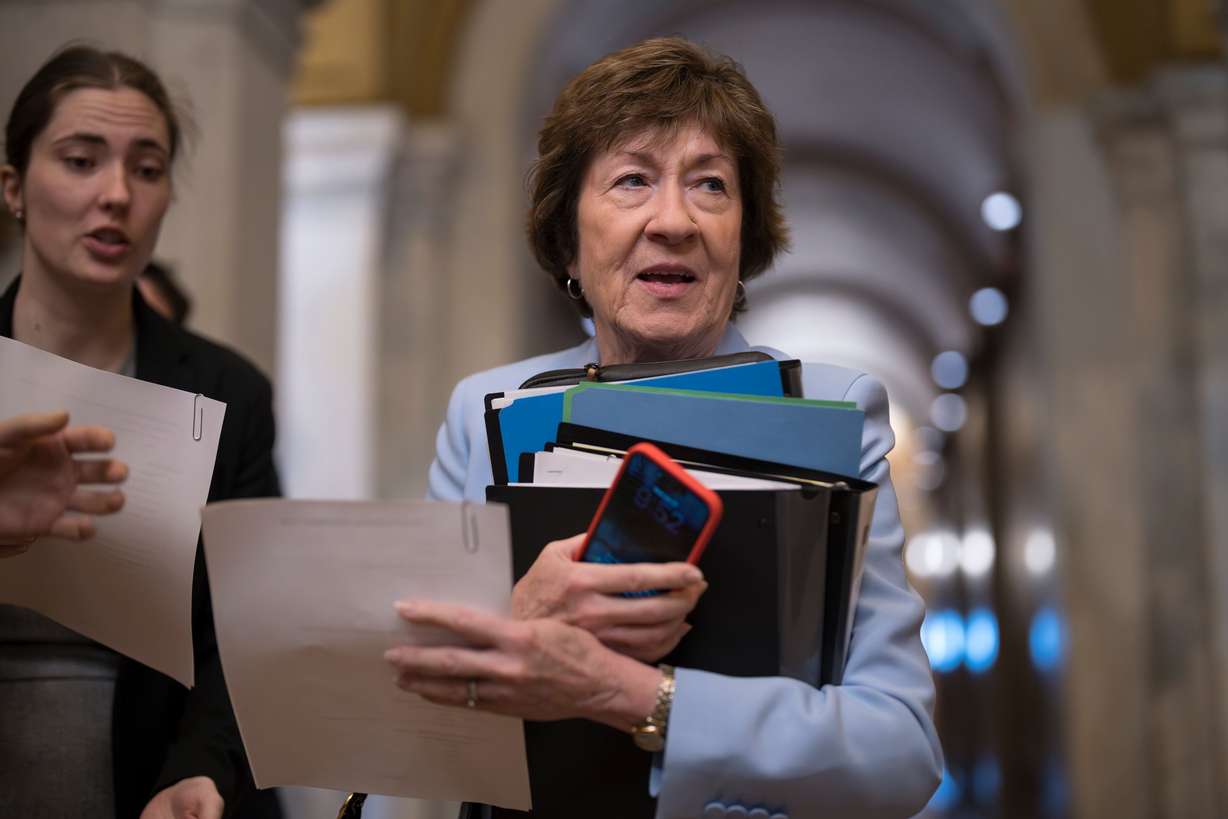
"This move shows that (the office) intentionally withheld these funds for months to execute this unlawful cancellation of appropriations that were approved on a bipartisan basis and signed into law," Collins said in a statement. "Not only is the delay itself an impoundment that was not reported to Congress, but also it is a usurpation of Congress's appropriations powers. (The Office of Management and Budget) is an agency of the executive branch. It does not get to decide which programs are worth funding."
Pocket rescissions included cuts to immigration programs
The White House can withhold funding unilaterally for 45 days before it is compelled to unfreeze the appropriations. By using pocket rescissions, Trump can circumvent lawmakers because the request comes so close to the end of the fiscal year, which is scheduled to end on Oct. 1.
The Trump administration similarly issued a pocket rescissions package last year, marking the first time a president had done so in nearly 50 years. Top appropriators were caught flat-footed by both decisions, igniting fury on both sides of the aisle.
"That job belongs to Congress, not the executive branch," Utah Sen. John Curtis said of the latest rescissions package.
The rescissions package issued by the White House over the weekend included spending cuts to immigration programs and nongovernmental organizations that provide services to refugees, asylees, and other noncitizens; organizations that provide welfare such as mental health services and cultural orientation to undocumented immigrants; the Department of Education's Special Programs for Migrant Students; the Community Relations Services within the Justice Department; and "wasteful, duplicative, and sometimes outright harmful and blatantly ideological grant funding" within the Department of Health and Human Services, among other cuts.
The White House defended its legal authority to cancel the funding, accusing the office of becoming a "hyper partisan" organization in recent years.
"(The office) changed its long-time opinion on this very issue from the 1970s when they specifically noted the tool was available to the president," Office of Budget and Management Chairman Russ Vought said in a social media post on Tuesday. "They make their legal assessments based on whether Democrats are in the White House."
It's not clear how much power Congress may have to claw the money back. However, Collins has hinted at inserting language in upcoming appropriations bills to prevent future pocket rescissions or opening the door to legal challenges if the White House challenges that authority.