'%3e%3cpath%20d='M34.1406%205.85938C30.3906%202.10547%2025.3047%200%2020%200C14.6953%200%209.60938%202.10547%205.85938%205.85938C2.10938%209.61328%200%2014.6953%200%2020C0%2025.3047%202.10547%2030.3906%205.85938%2034.1406C9.61328%2037.8906%2014.6953%2040%2020%2040C25.3047%2040%2030.3906%2037.8945%2034.1406%2034.1406C37.8906%2030.3906%2040%2025.3047%2040%2020C40%2014.6953%2037.8945%209.60938%2034.1406%205.85938ZM37.0117%2023.543H31.1602V13.5391H27.6328V19.9414C28.1211%2020.6914%2028.3711%2021.582%2028.3711%2022.5625V22.625C28.3711%2023.668%2028.1172%2024.6055%2027.6328%2025.4297V26.6094H36.082C33.4883%2032.9375%2027.2891%2037.3789%2020.0039%2037.3789C10.3711%2037.3789%202.62109%2029.6289%202.62109%2020C2.62109%2010.3711%2010.3711%202.62109%2020%202.62109C29.6289%202.62109%2037.3789%2010.3711%2037.3789%2020C37.3789%2021.1484%2037.2617%2022.2656%2037.0508%2023.3477C37.0391%2023.4141%2037.0234%2023.4766%2037.0117%2023.543Z'%20fill='white'/%3e%3cpath%20d='M22.3086%2018.5352C20.4336%2018.125%2019.9531%2017.8398%2019.9766%2017.1836V17.1406C19.9766%2016.6992%2020.3477%2016.2148%2021.4023%2016.2148C22.582%2016.2148%2023.8867%2016.6797%2025.0781%2017.4766L26.8516%2015.0195C25.4453%2013.8906%2023.707%2013.3398%2021.5547%2013.3398C18.5195%2013.3398%2016.4375%2015%2016.4063%2017.4766V17.5352C16.3633%2020.2617%2018.5859%2020.9805%2021.293%2021.6016C23.0391%2021.9766%2023.5703%2022.3164%2023.5703%2022.9609L23.5469%2022.9766C23.5469%2023.3906%2023.2578%2023.7031%2022.7852%2023.8359C22.5742%2023.9062%2022.1289%2023.9727%2021.5156%2023.9727C20.7617%2023.9727%2019.7539%2023.8633%2018.6328%2023.4844C18.0898%2023.2891%2017.4727%2023.0039%2016.8047%2022.6133L20.1406%2026.625C20.2813%2026.6602%2021.0977%2026.8516%2021.7734%2026.8516C25.0039%2026.8516%2027.0859%2025.2461%2027.1094%2022.6328V22.5703C27.1602%2020.1133%2025.2148%2019.1719%2022.3086%2018.5352Z'%20fill='white'/%3e%3cpath%20d='M5.24219%2013.5664V26.6133H8.75391V23.7578L10.2969%2021.9531L14.2031%2026.6133H18.3867L12.3555%2019.5195L17.4023%2013.5664H13.4531L8.75391%2019.0586V13.5664H5.24219Z'%20fill='white'/%3e%3c/g%3e%3cdefs%3e%3cclipPath%20id='clip0_97_2430'%3e%3crect%20width='40'%20height='40'%20fill='white'/%3e%3c/clipPath%3e%3c/defs%3e%3c/svg%3e)


- Utah's FrontRunner 2X project advances to the engineering phase for $1.3 billion funding.
- Sen. Curtis emphasizes public transit's role in handling temple open house and Olympics.
- Transit-oriented development aims to boost housing affordability and support Utah's growth.
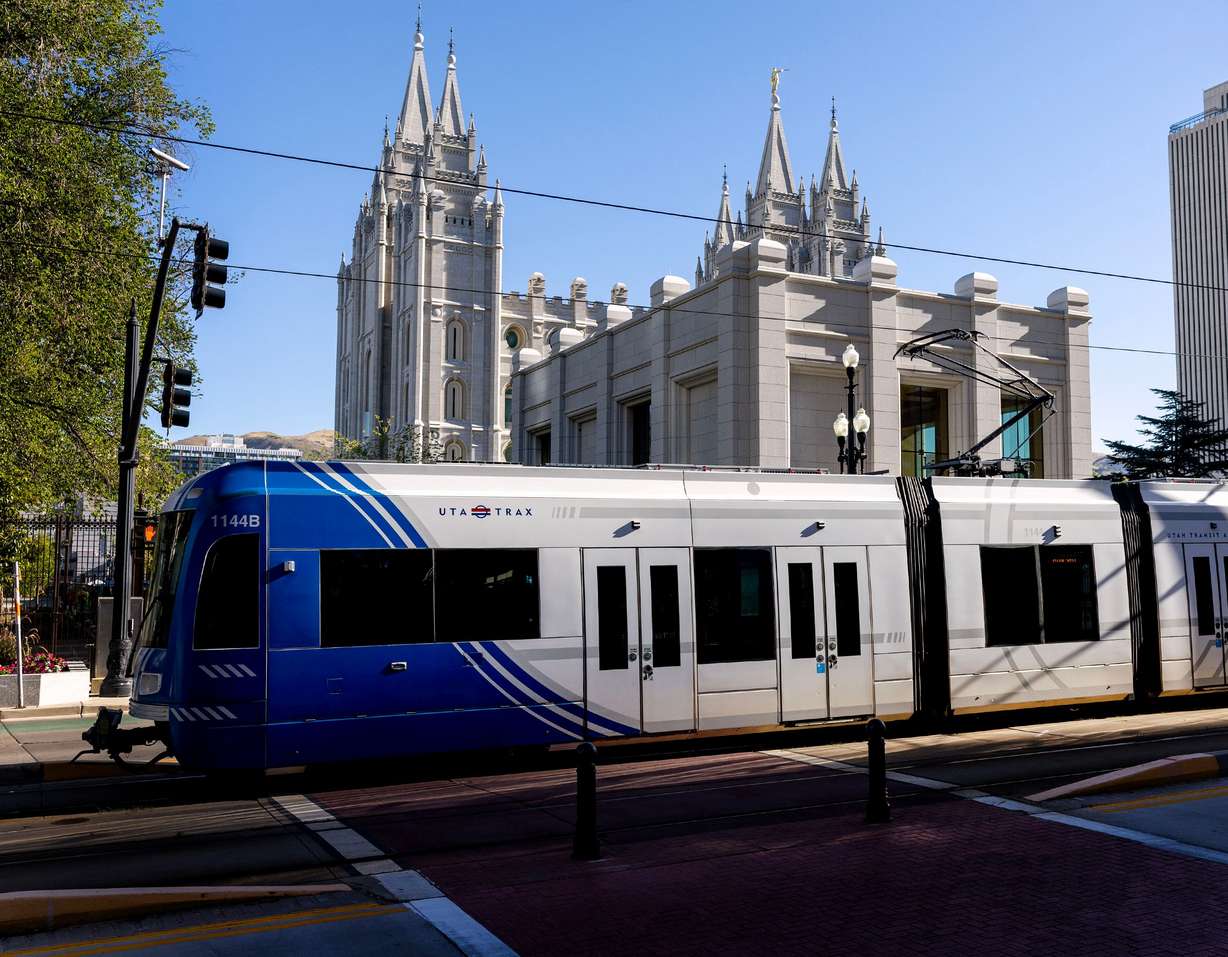
SALT LAKE CITY — As Utah prepares to host millions of visitors for the Salt Lake Temple open house and the 2034 Winter Olympics, its railways are undergoing a major change.
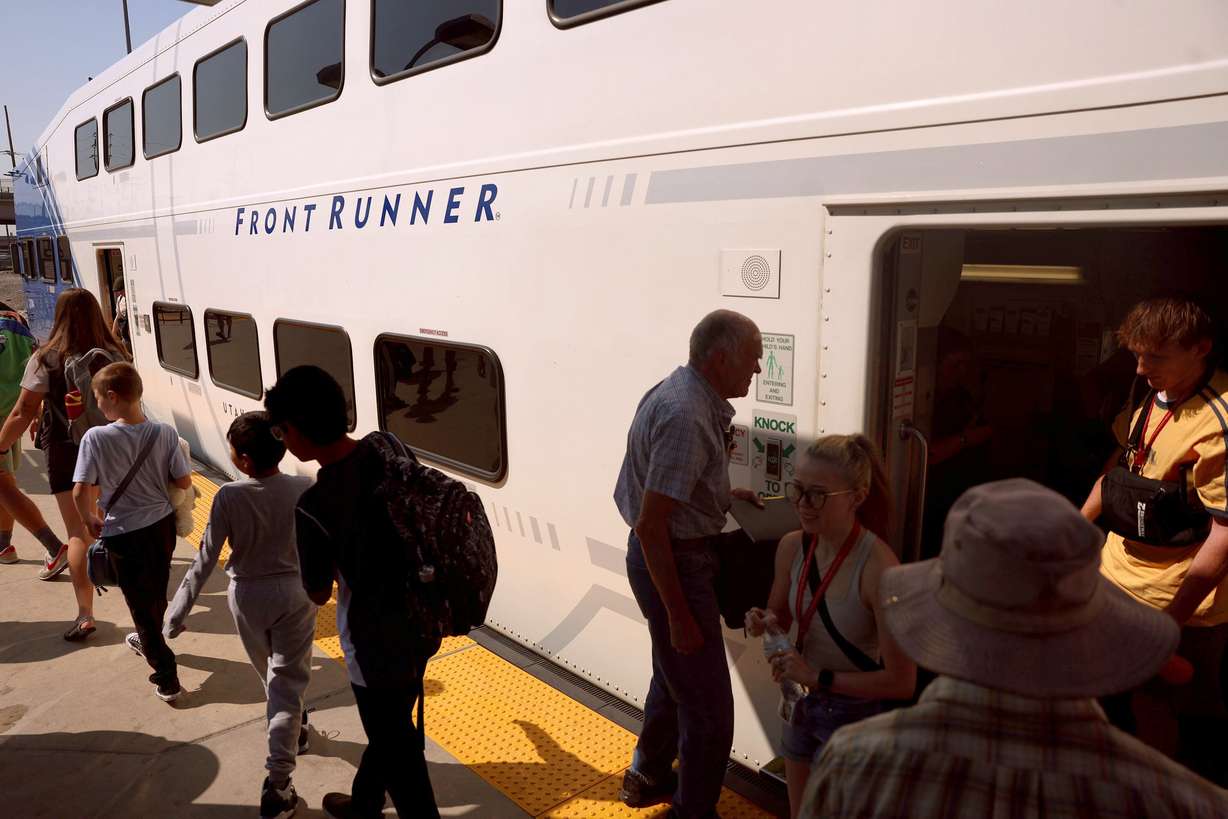
The Federal Transit Administration recently approved the FrontRunner 2X project to enter the engineering phase, moving it one step closer to securing nearly $1.3 billion in federal funding. The project will add 26.1 miles of double tracks in 11 locations in Utah, which would support trains running every 15 minutes during high-traffic hours and every 30 minutes throughout the rest of the day.
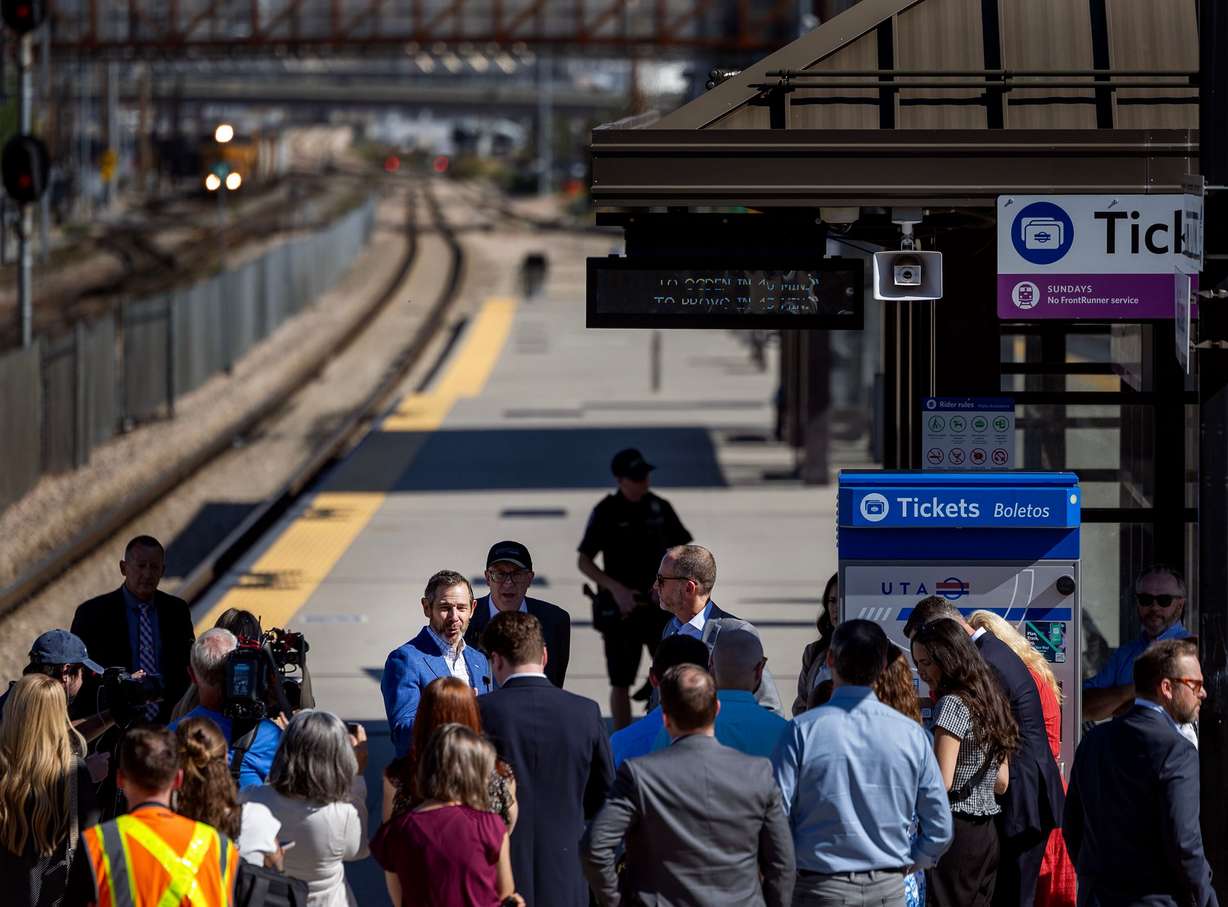
"The difference between waiting an hour or 15 minutes is a big deal," said Utah Sen. John Curtis on Wednesday during a discussion with leaders of the Wasatch Front Regional Council. "If it's coming every 15 minutes versus every hour, you almost don't even need to check a schedule, right? You know, in your worst case, you're going to be waiting 14 minutes, and that's a very different thing for people than waiting 50 minutes."
Curtis, known for his use of public transit while serving as the mayor of Provo, has helped move forward several pieces of legislation to support improvement in Utah's public transit. The upcoming open house and Olympics create "a real urgency" for transit renovation, Curtis said during a stop in Salt Lake City.
"We've done a whole bunch, and there's a lot ahead of us to do," Curtis said to the Deseret News. "The rapid growth that we're expecting as a state, with the temple open house, the Olympics, demands that we get this right. And so part of what we're doing today is looking ahead and making sure that we're not only good for today, but good for the future."
In addition to supporting an influx of visitors, expansion in public transit could benefit Utah residents both on and off the train tracks.
Public transit development will improve housing affordability in Utah
The growth of housing development around public transit, supported by the Build Housing, Unlock Benefits and Services Act, is expected to boost affordability for Utah residents.
"I think it's fair to say if we went around the state, we would hear affordability and housing, affordability and housing everywhere we went," Curtis said. "This bill and the other things that we're talking about hit those directly on the head."
The bill provides funding and speeds up the construction timelines for projects that promote transit-oriented development, a style of city planning that places housing, shopping sites, jobs and entertainment venues near public transit locations.
Federal support will bring transit-oriented development "in at an affordable level," Curtis said, because putting residents near public facilities means "all of their costs come down."
"Utah is growing quickly, and that growth must be paired with smart, coordinated transportation planning and more attainable housing," Curtis said in a press release, adding that the Build HUBS Act "helps us maximize transportation investments, makes better use of public land, and empowers local leaders to use existing infrastructure programs more effectively to build housing where it matters and makes sense."
Legislation is moving forward to support transit renovation in growing cities
The current process for how the federal government evaluates transit projects seeking funding through the Federal Transit Administration's Capital Investment Grants program bases funding on existing population density ridership, meaning cities just starting to grow are at a disadvantage in trying to secure financial support.
"Ridership numbers don't necessarily reflect the needs of the community," Curtis said. "If it's just strictly rider-based, and ridership is important, then we miss those communities who have done two things: planned and are growing."
The Promoting Access to Transit in High-Growth Communities Act, introduced by Curtis, moves to reform this process and allow cities that are just starting to grow greater resources to receive funding for proactive construction that matches predicted population growth.
Between 2015 and 2025, Utah's population increased by 17.9%, according to USA Facts, and the state's population is projected to be more than 5 million by 2050, with much of the growth concentrated in urban Wasatch Front areas.
"We're faced with this enormous growth in the popularity of the state," Curtis said. "And we all know with the Olympics coming that the demands are going to be even higher, which puts pressure on us not just to do what we've done here, but to just keep going."
Companion legislation for the PATH Act was introduced in the House by Utah Reps. Burgess Owens and Mike Kennedy.
Curtis says transit growth will benefit everyone
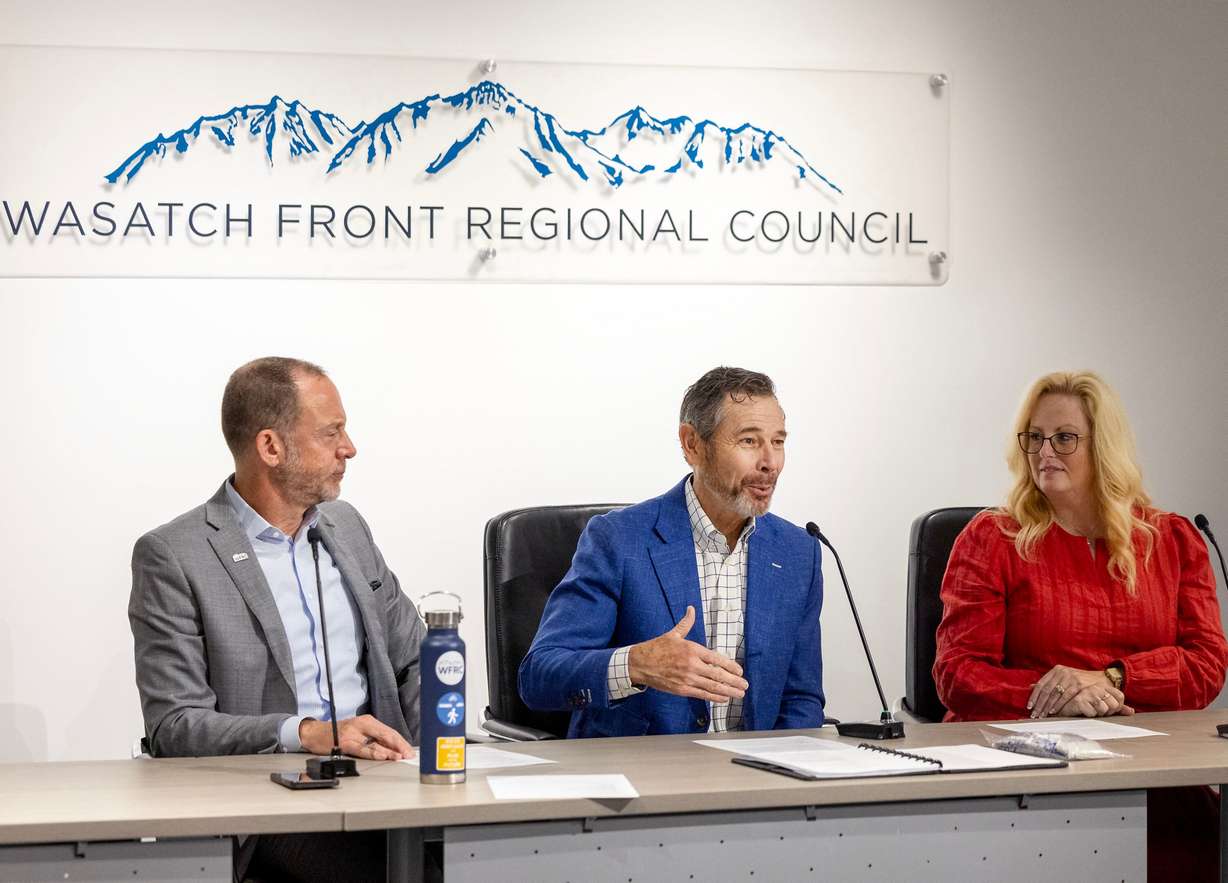
Curtis said legislation to support transit development will move forward "rather quickly" and produce widespread benefit, even for residents who do not regularly use public transit.
"Even if people don't like transit, they need to realize that every person that rides transit is a car not on the street, so even if you never use transit, you're one of the beneficiaries of it simply because the other people do," Curtis said. "So let's get it done."