'%3e%3cpath%20d='M34.1406%205.85938C30.3906%202.10547%2025.3047%200%2020%200C14.6953%200%209.60938%202.10547%205.85938%205.85938C2.10938%209.61328%200%2014.6953%200%2020C0%2025.3047%202.10547%2030.3906%205.85938%2034.1406C9.61328%2037.8906%2014.6953%2040%2020%2040C25.3047%2040%2030.3906%2037.8945%2034.1406%2034.1406C37.8906%2030.3906%2040%2025.3047%2040%2020C40%2014.6953%2037.8945%209.60938%2034.1406%205.85938ZM37.0117%2023.543H31.1602V13.5391H27.6328V19.9414C28.1211%2020.6914%2028.3711%2021.582%2028.3711%2022.5625V22.625C28.3711%2023.668%2028.1172%2024.6055%2027.6328%2025.4297V26.6094H36.082C33.4883%2032.9375%2027.2891%2037.3789%2020.0039%2037.3789C10.3711%2037.3789%202.62109%2029.6289%202.62109%2020C2.62109%2010.3711%2010.3711%202.62109%2020%202.62109C29.6289%202.62109%2037.3789%2010.3711%2037.3789%2020C37.3789%2021.1484%2037.2617%2022.2656%2037.0508%2023.3477C37.0391%2023.4141%2037.0234%2023.4766%2037.0117%2023.543Z'%20fill='white'/%3e%3cpath%20d='M22.3086%2018.5352C20.4336%2018.125%2019.9531%2017.8398%2019.9766%2017.1836V17.1406C19.9766%2016.6992%2020.3477%2016.2148%2021.4023%2016.2148C22.582%2016.2148%2023.8867%2016.6797%2025.0781%2017.4766L26.8516%2015.0195C25.4453%2013.8906%2023.707%2013.3398%2021.5547%2013.3398C18.5195%2013.3398%2016.4375%2015%2016.4063%2017.4766V17.5352C16.3633%2020.2617%2018.5859%2020.9805%2021.293%2021.6016C23.0391%2021.9766%2023.5703%2022.3164%2023.5703%2022.9609L23.5469%2022.9766C23.5469%2023.3906%2023.2578%2023.7031%2022.7852%2023.8359C22.5742%2023.9062%2022.1289%2023.9727%2021.5156%2023.9727C20.7617%2023.9727%2019.7539%2023.8633%2018.6328%2023.4844C18.0898%2023.2891%2017.4727%2023.0039%2016.8047%2022.6133L20.1406%2026.625C20.2813%2026.6602%2021.0977%2026.8516%2021.7734%2026.8516C25.0039%2026.8516%2027.0859%2025.2461%2027.1094%2022.6328V22.5703C27.1602%2020.1133%2025.2148%2019.1719%2022.3086%2018.5352Z'%20fill='white'/%3e%3cpath%20d='M5.24219%2013.5664V26.6133H8.75391V23.7578L10.2969%2021.9531L14.2031%2026.6133H18.3867L12.3555%2019.5195L17.4023%2013.5664H13.4531L8.75391%2019.0586V13.5664H5.24219Z'%20fill='white'/%3e%3c/g%3e%3cdefs%3e%3cclipPath%20id='clip0_97_2430'%3e%3crect%20width='40'%20height='40'%20fill='white'/%3e%3c/clipPath%3e%3c/defs%3e%3c/svg%3e)



- Salt Lake City plans a first infrastructure phase for the Rio Grande District, preliminarily estimated at $14.5 million.
- The project includes new roads, arts alley and a 'festival street' for future events.
- Concerns about funding and traffic safety were discussed by city leaders as planning continues.
SALT LAKE CITY — The space between the Rio Grande Depot and Salt Lake City's railroad corridor is essentially a "clean slate," as Salt Lake City Council Chairman Alejandro Puy puts it.
There are a few remaining buildings. Some of those are vacant, and those that are still in use are scattered across completely undeveloped land. It's relatively quiet and starkly different from the growing downtown core to the east.
Salt Lake City hopes that USA Climbing's planned new training facility could ignite a bold new vision for the space, and the city's vision is that housing, commercial spaces, hotels and parking structures might wrap around it in the coming years.
The Salt Lake City Community Reinvestment Agency's board, composed of members of the City Council, endorsed a Rio Grande vision plan nearly two years ago, calling for dense development with ground-floor activation that essentially allows for downtown to spill out further south and west of its current boundaries.
A new zoning map was approved earlier this year.
"In some ways, it's going to be a mini city," Puy said, describing its planned future.
However, getting there will require new infrastructure, and Salt Lake City now has a preliminary estimated cost for the first phase of that buildout.
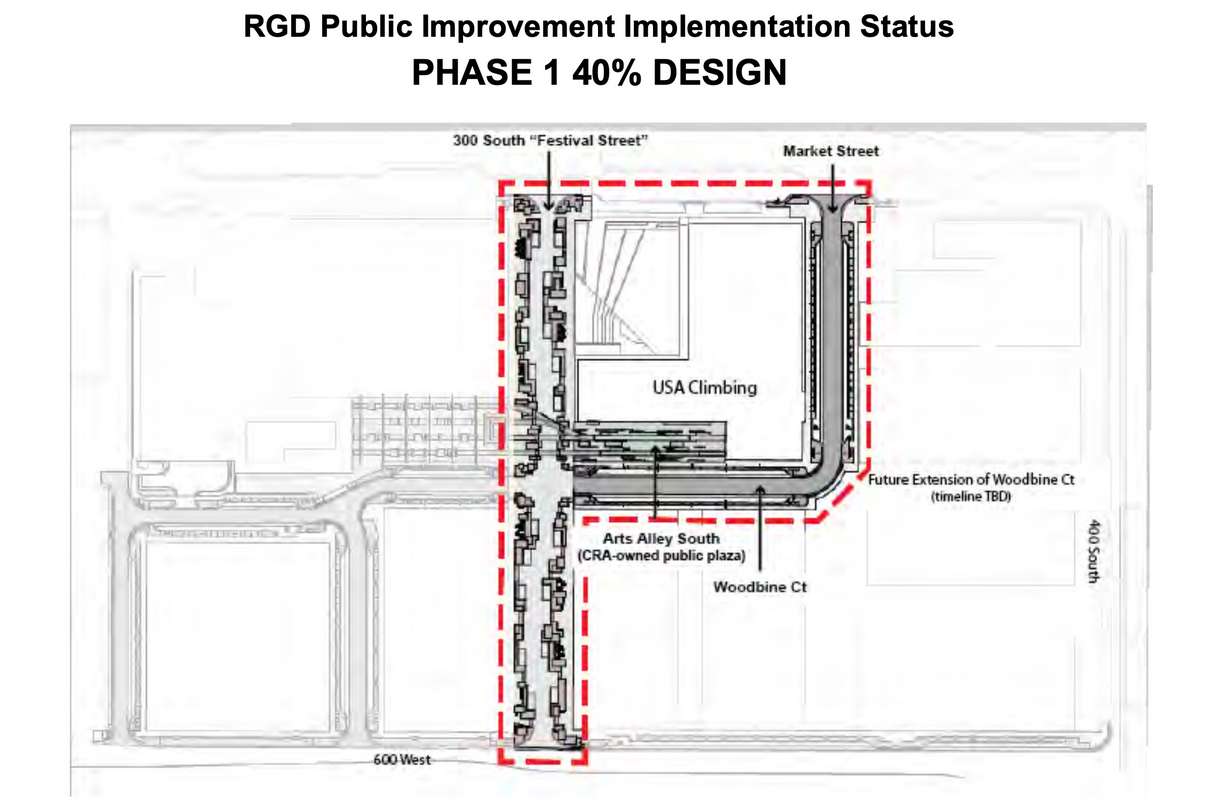
The initial estimate is that it will cost a little more than $14.5 million to develop two new roads and an arts alley, as well as reconstruct 300 South in the area into a future "festival street," among other things.
The city's estimate comes with a 20% contingency, as the phase is still only 40% complete, the earliest level to calculate potential construction costs, said Wayne Mills, senior project manager for the Reinvestment Agency, as he updated board members on Tuesday.
Building out the district
The phase is one of two, centering around USA Climbing's planned facility. The governing body of the growing Olympic sport is still fundraising, but could break ground as early as next spring, he said.
"They're going through the building permit review process," he said, noting that having the permits can help speed up fundraising. "They are actively pursuing and moving as fast as they can."
Phase 1 Rio Grande Infrastructure Plans
- Two new public streets — Market Street and Woodbine Court — would run south and west of the facility. Meanwhile, 300 South would be reconstructed between 500 West and 600 West for a "festival street."
- An "arts alley" would be added between the facility and Woodbine Court, creating a "passive hangout space" in the area for future residents and visitors to mingle near a ground-floor cafe planned at the facility.
- Other "backbone infastructure" to support the future district will also be included.
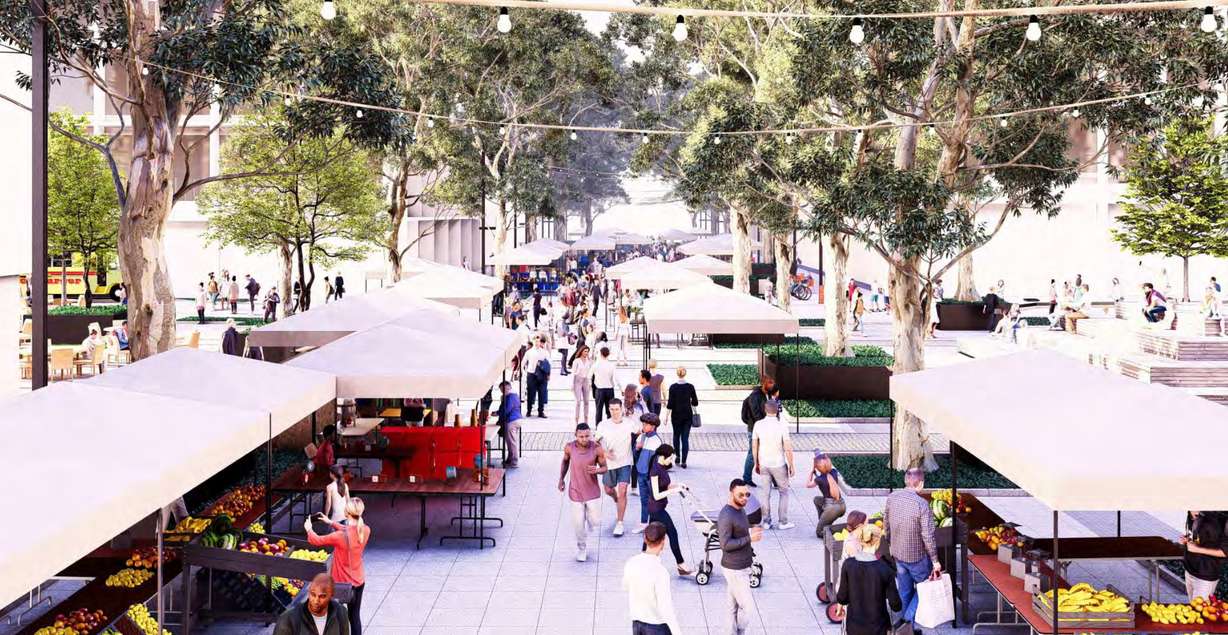
The city is still debating the name of the festival street because there are few other concepts like it being considered in the city right now, but Mills explained that it would essentially be a "unique shared space" with non-linear travel lanes shared by automobiles, bikes and pedestrians.
It's designed for travel, but also to hold future street festivals, hence the name. "Significant" tree canopy and landscaping, as well as catenary lights overhead, would add to the experience.
"We're just telling people it's a really cool plaza you can drive on for the time being," he said. "This street really provides a unique place that we can be creative in our design."
The next steps
The board has already committed a little more than $5 million toward the project, but city planners believe the project is eligible to receive up to $7.6 million from a revenue bond and another $1 million from developer impact fees.
It adds up to approximately $13.7 million, a little more than $800,000 shy of the current project estimate.
That's where Tuesday's conversation soured somewhat. City Council Vice Chairwoman Erika Carlsen pointed out that the agency's budget is already tight a few months into the fiscal year and there are other needs that could come up.
With a second phase on the horizon, the board appeared weary of piling on costs. The agency could reallocate existing funds or explore city contributions or also find ways to reduce the project cost in engineering, Mills said.
The board also discussed a few creative options on Tuesday, including fees and other funding mechanisms once developments are in place. The agency still owns approximately 11 acres in the area, with three sites that could soon be solicited for new development, he added.
Those are all options the board may consider as the planning concepts get closer to construction.
A few board members also voiced concerns about traffic safety on the planned festival street, especially when it is shared by different transportation modes.
"I worry that we're going to have a lot of conflict between those three, and I have legitimate concerns about public safety," Puy said, adding that he wants to make sure that the vision plans match the city's safety goals to reduce transportation fatalities.
That may also be fine-tuned in the future.
Salt Lake City isn't alone in redeveloping the land west of the Rio Grande Depot, which is still closed for renovations and seismic retrofitting.
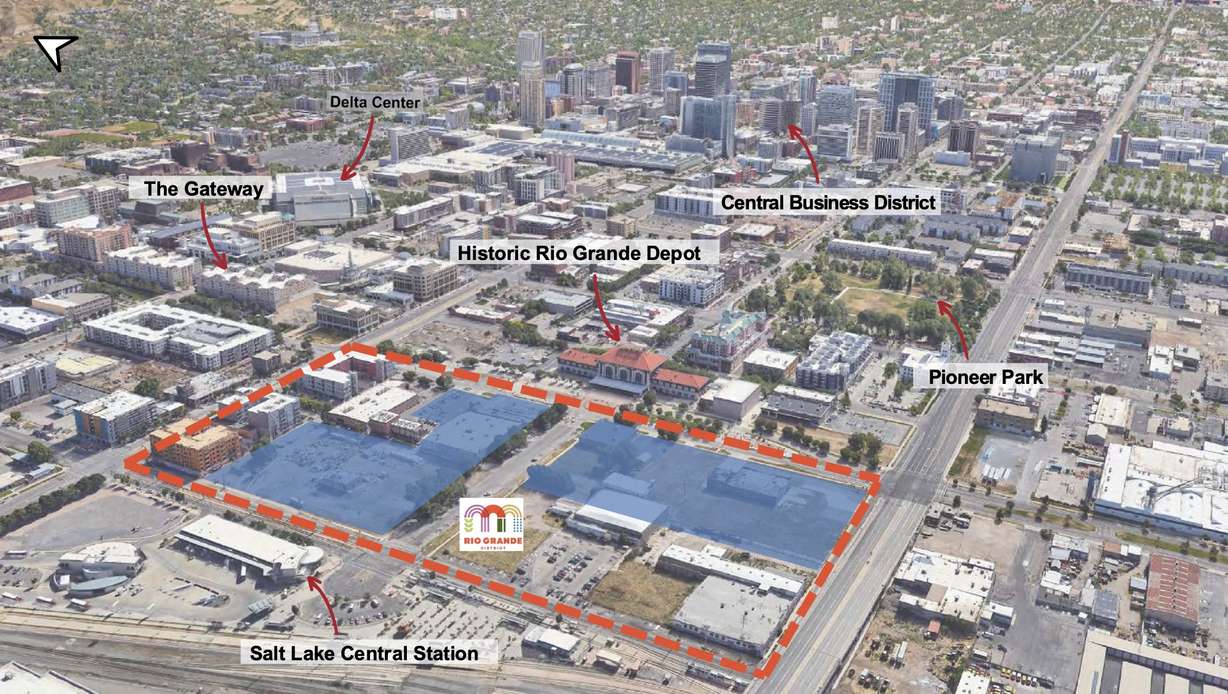
State leaders transferred ownership of the building to the University of Utah earlier this year. It's still unclear how it will be used, but the university has acquired some of the land in the area over the past few years for future development.
Utah Transit Authority is also planning to redevelop Salt Lake Central Station to add more mixed development. It has worked with Salt Lake City to blend it into the city's plans.
There are no clear timetables for all of those developments to come together, as the "mini city" comes together.