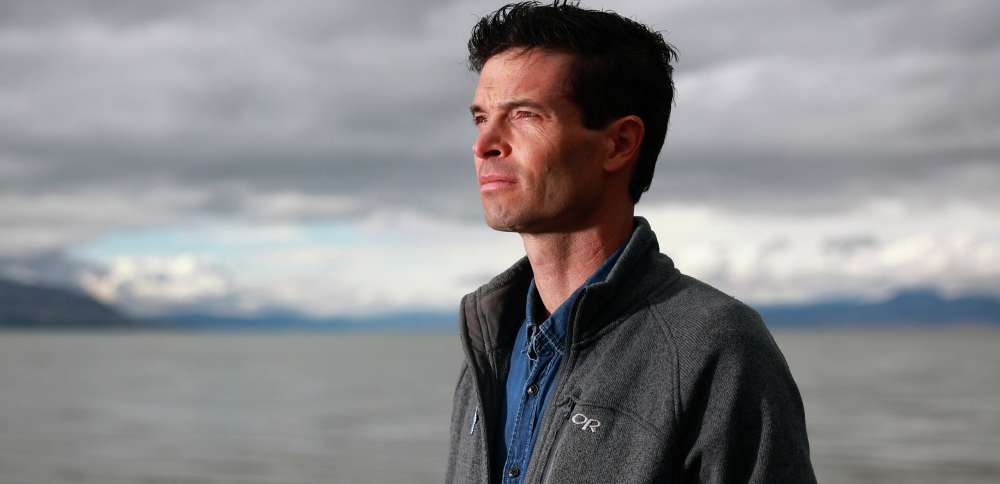
- Ben Abbott, BYU ecology professor, is dedicated to saving the Great Salt Lake.
- He emphasizes reducing water usage by 40% to prevent ecological and economic disaster.
- Utah aims to restore the lake by 2034, backed by political and financial support.
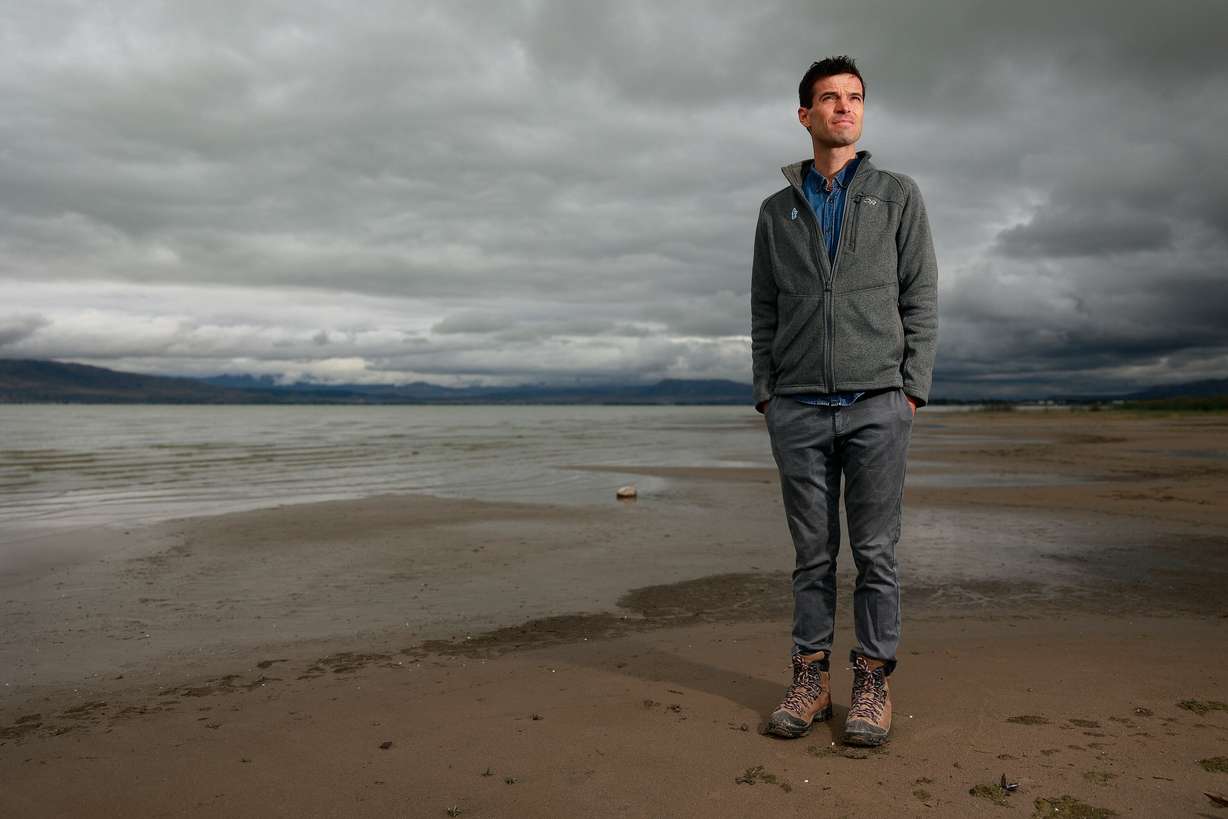
SALT LAKE CITY — Ben Abbott answers to many titles: BYU ecology professor, executive director of Grow the Flow, board member of Great Salt Lake Rising, father of four.
But if in five, or 10, or 15 years from now, the Great Salt Lake is still with us, he'll be forever known as the guy who, like the Dutch boy in the fable, kept his finger in the dike until the rest of us got our act together and saved the third largest saline sea on the planet.
There is nowhere this man won't go, no one he won't talk to, no stone he'll leave unturned, when the subject is saving the lake — and ourselves — from catastrophe. The list includes me. A week ago I emailed Ben and asked if he had a minute to talk. His reply: Sure, when can you get here?
I met him at his office in the BYU Life Sciences Building right after he'd taught a class of 150 students, and right before he was off to the UVU campus to participate in a panel discussion about the Great Salt Lake. He also agreed to meet with our photographers at Utah Lake for a photo shoot.
Ask him why he makes himself so available, why he never says no, and he has two reasons. One is because he's inspired by all the people who are joining the cause to save the lake, from the politicians, to the thousands of people at the grass roots level, to major support from philanthropists. The other is because he believes it is our divine responsibility to take good care of the place God has given us to live.
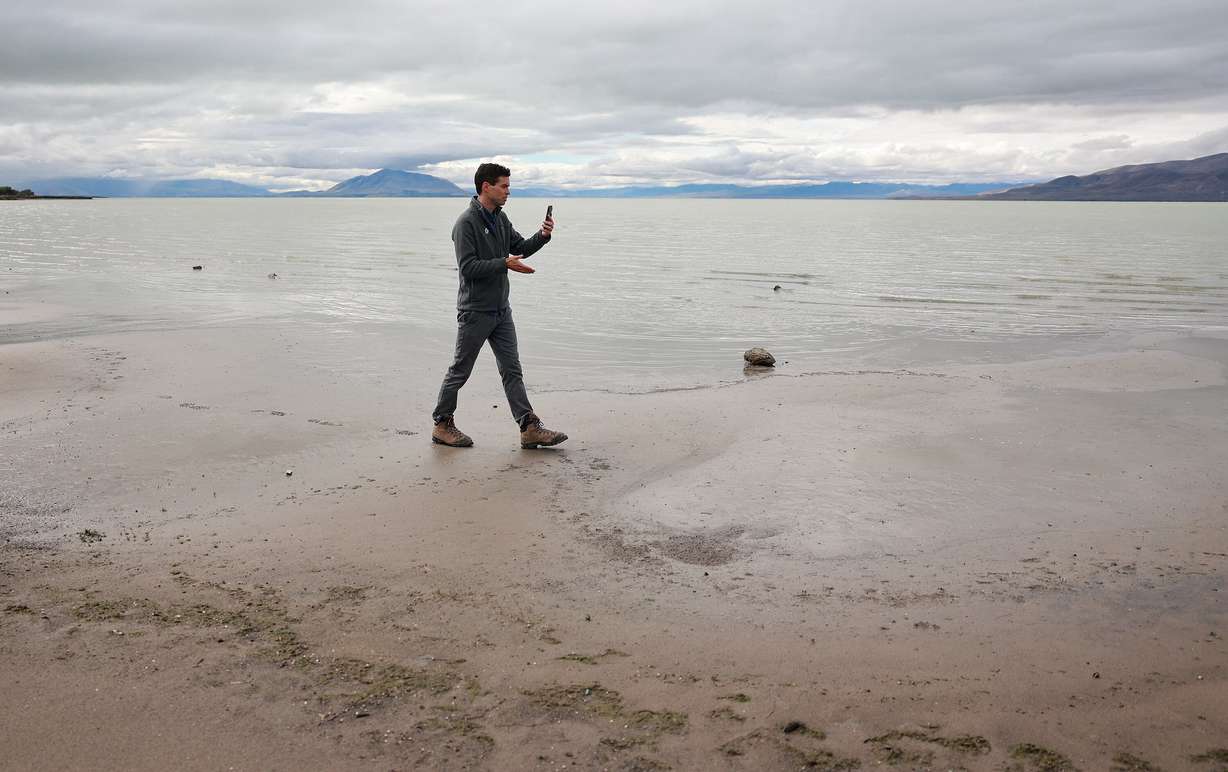
But the main reason is because, as a scientist, he knows too much.
If we let the lake go, if we lose it like so much loose change, he understands more than almost everyone just how bad it will be: the dust storms that will ruin our health and cause us to move; the rise in temperatures; the loss of the brine shrimp industry that produces half the world's supply of table shrimp; the disappearance of 12 million migratory birds who will have nowhere to land, and — neither last nor least — a lot less of The Greatest Snow on Earth for us to ski on.
He could go on.
There are those who disagree with these dire forecasts, who contend that losing a salty lake can't be that consequential. When they do, Ben points to places like Iran and Uzbekistan, and closer to home in California, where salt lakes have disappeared or been reduced to a fraction of their former selves, resulting in precisely the kinds of problems he's forecasting.
"Here's a cold dose of reality," he says, "There was a lake just like the Great Salt Lake in Iran. Lake Urmia was the biggest lake in the Middle East. But after international sanctions were levied on Iran because of its nuclear program, the government diverted the rivers and in just 12 years the lake dried up. Now they have seen regional climate change, temperatures have gotten higher, they've had to abandon tons of fields, wells have gone dry, toxic dust from the lake bed has caused clusters of cancer and neurodegenerative and cardiovascular disease."
While not yet at Lake Urmia levels, the Great Salt Lake, currently just 30% full and 15 feet below optimum height, is still nowhere close to where it should be. To get there, "we have to live within our water means," is how Ben puts it, which means reducing water usage by 40%.
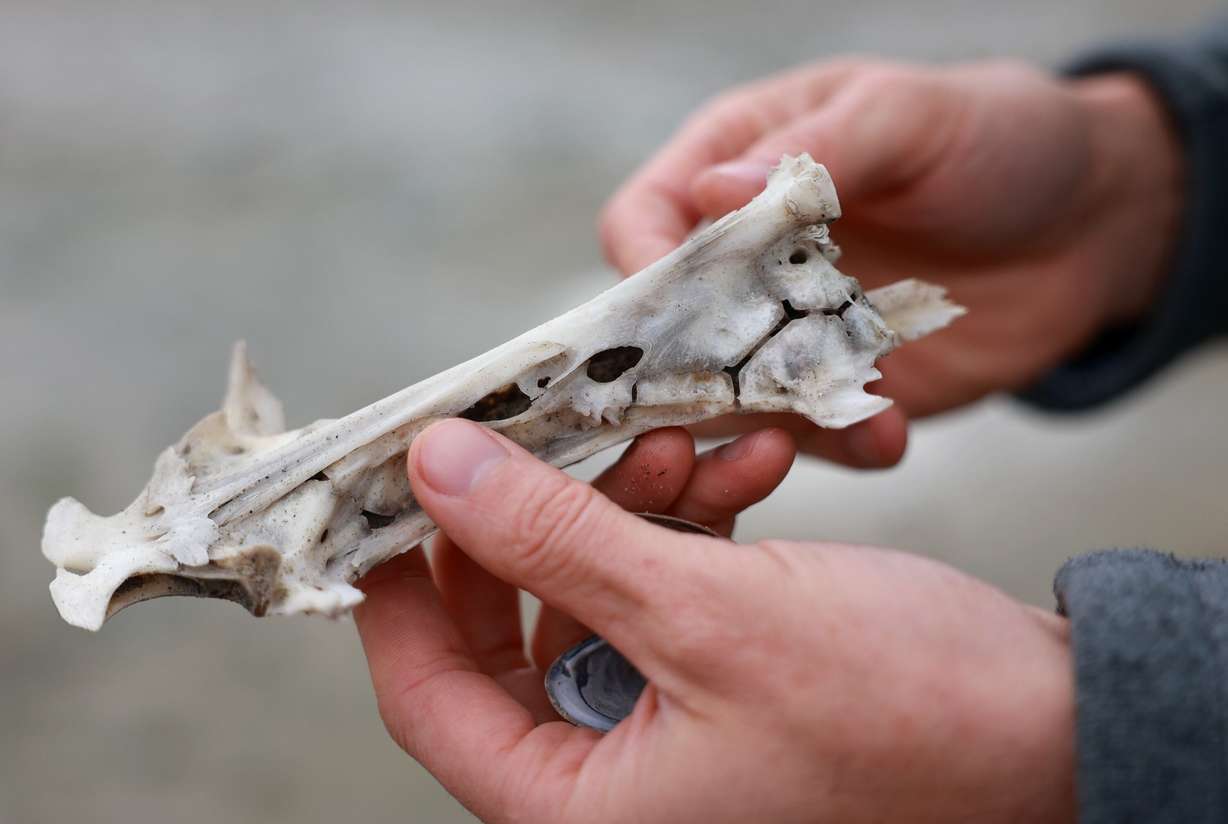
That is no small ask, but the ecologist is encouraged by the growing synergy among the political, philanthropic and public sectors. The state's politicians have set a goal to restore the lake to healthy levels by the 2034 Winter Olympics, the federal government has committed at least $1 billion to the effort, philanthropists are adding their names — Marriott, Eccles, Miller, Romney, et al — and their millions. And on the local level farmers, homeowners and municipalities are indicating they are receptive to compensation-for-conservation programs.
"Nobody has the resources we have in this area, and I'm not talking primarily about financial resources," Ben says, citing a Harvard study that "shows that Utah has the highest levels of societal trust out of any state in the country."
"Are we the kind of people that are going to do it?" he asks. "Or are we going to throw up our hands and say, 'Oh, it's too hard. I'm going to focus on what the next iPhone can do.' No, I really believe we have the ingredients for the world's first saline lake rescue. Right in our own backyard we have a chance to pull off something brand new in the whole Earth system. This is the story we'll be able to tell when the world shows up for the Olympics in 2034, how we pulled together and we did it. No community has ever successfully restored a saline lake. Utah will be the first."
The water evangelist has spoken.