'%3e%3cpath%20d='M34.1406%205.85938C30.3906%202.10547%2025.3047%200%2020%200C14.6953%200%209.60938%202.10547%205.85938%205.85938C2.10938%209.61328%200%2014.6953%200%2020C0%2025.3047%202.10547%2030.3906%205.85938%2034.1406C9.61328%2037.8906%2014.6953%2040%2020%2040C25.3047%2040%2030.3906%2037.8945%2034.1406%2034.1406C37.8906%2030.3906%2040%2025.3047%2040%2020C40%2014.6953%2037.8945%209.60938%2034.1406%205.85938ZM37.0117%2023.543H31.1602V13.5391H27.6328V19.9414C28.1211%2020.6914%2028.3711%2021.582%2028.3711%2022.5625V22.625C28.3711%2023.668%2028.1172%2024.6055%2027.6328%2025.4297V26.6094H36.082C33.4883%2032.9375%2027.2891%2037.3789%2020.0039%2037.3789C10.3711%2037.3789%202.62109%2029.6289%202.62109%2020C2.62109%2010.3711%2010.3711%202.62109%2020%202.62109C29.6289%202.62109%2037.3789%2010.3711%2037.3789%2020C37.3789%2021.1484%2037.2617%2022.2656%2037.0508%2023.3477C37.0391%2023.4141%2037.0234%2023.4766%2037.0117%2023.543Z'%20fill='white'/%3e%3cpath%20d='M22.3086%2018.5352C20.4336%2018.125%2019.9531%2017.8398%2019.9766%2017.1836V17.1406C19.9766%2016.6992%2020.3477%2016.2148%2021.4023%2016.2148C22.582%2016.2148%2023.8867%2016.6797%2025.0781%2017.4766L26.8516%2015.0195C25.4453%2013.8906%2023.707%2013.3398%2021.5547%2013.3398C18.5195%2013.3398%2016.4375%2015%2016.4063%2017.4766V17.5352C16.3633%2020.2617%2018.5859%2020.9805%2021.293%2021.6016C23.0391%2021.9766%2023.5703%2022.3164%2023.5703%2022.9609L23.5469%2022.9766C23.5469%2023.3906%2023.2578%2023.7031%2022.7852%2023.8359C22.5742%2023.9062%2022.1289%2023.9727%2021.5156%2023.9727C20.7617%2023.9727%2019.7539%2023.8633%2018.6328%2023.4844C18.0898%2023.2891%2017.4727%2023.0039%2016.8047%2022.6133L20.1406%2026.625C20.2813%2026.6602%2021.0977%2026.8516%2021.7734%2026.8516C25.0039%2026.8516%2027.0859%2025.2461%2027.1094%2022.6328V22.5703C27.1602%2020.1133%2025.2148%2019.1719%2022.3086%2018.5352Z'%20fill='white'/%3e%3cpath%20d='M5.24219%2013.5664V26.6133H8.75391V23.7578L10.2969%2021.9531L14.2031%2026.6133H18.3867L12.3555%2019.5195L17.4023%2013.5664H13.4531L8.75391%2019.0586V13.5664H5.24219Z'%20fill='white'/%3e%3c/g%3e%3cdefs%3e%3cclipPath%20id='clip0_97_2430'%3e%3crect%20width='40'%20height='40'%20fill='white'/%3e%3c/clipPath%3e%3c/defs%3e%3c/svg%3e)


Estimated read time: 2-3 minutes
- Great Salt Lake dust poses health risks, costing Utahns $115 million annually.
- Mitigation costs range from $3.3 million to $448 million per square mile.
- Efforts could total $3.2 billion to $31 billion for 70 square miles.
SALT LAKE CITY — Dust from the bed of Great Salt Lake could become increasingly dangerous and expensive if we don't take action now. That's according to a study conducted by researchers at the University of Utah's Wilkes Center for Climate Science & Policy.
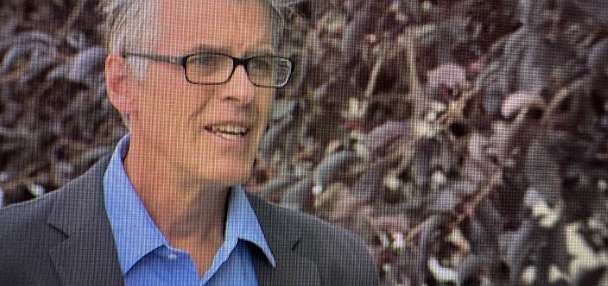
John C. Lin, the center's scientific director and a professor in the department of atmospheric sciences, said the research team looked at a number of factors. Among the key findings, Tooele County is hit with the highest average exposure of Great Salt Lake dust, followed by Salt Lake County.
"We looked at where the dust goes using a very precise computer model, looking at where the dust sources are and the wind patterns. And then we sort of mesh that with where people live," Lin explained.
Researchers will take a closer look at what kinds of pollutants are found in different areas of the lakebed and concentration in a later study. Health costs tied to continued lake decline were also found to be high for Utahns collectively, costing around $115 million annually.
"There are documented cases of exposure leading to missing school and missing work," Lin said. "Those all can translate into real dollar amounts."
When it comes to mitigating the spread of GSL dust, however, prices could soar into the billions if treated over decades.
"We looked at a lot of different menu options, from engineering solutions, to periodic flooding the playa, to growing vegetation to put in structures to slow down the wind," Lin explained.
Researchers closely compared costs of similar efforts around Owens Lake and Salton Sea, both in California, which have also seen growing exposed lakebeds over the years. Costs to employ similar measures around Great Salt Lake could range from $3.3 million to $448 million per square mile over a 50-year period, which could then balloon to $3.2 billion to more than $31 billion when applied to 70 square miles of identified active hotspots.
Related:
Company believes drone cloud seeding tech could help restore the Great Salt Lake in the future
As the woes of the Great Salt Lake continue to deepen, a California-based company believes its next-generation cloud seeding technology may be part of the solution."It's not cheap," Lin said, adding that the ideal solution should include a concerted effort by everyone to restore Great Salt Lake as much as possible. "It's not necessarily all or nothing. We can also imagine you get as much water to the lake as possible to stabilize the lake level, covering a lot of dust hotspots, but that could still leave a few hanging in there, exposing certain parts of the Wasatch Front to the dust."
Still, Lin believes it can be done.
"Fortunately, there's a lot of people who care about the lake," he said. "I'm still kind of hopeful."