'%3e%3cpath%20d='M34.1406%205.85938C30.3906%202.10547%2025.3047%200%2020%200C14.6953%200%209.60938%202.10547%205.85938%205.85938C2.10938%209.61328%200%2014.6953%200%2020C0%2025.3047%202.10547%2030.3906%205.85938%2034.1406C9.61328%2037.8906%2014.6953%2040%2020%2040C25.3047%2040%2030.3906%2037.8945%2034.1406%2034.1406C37.8906%2030.3906%2040%2025.3047%2040%2020C40%2014.6953%2037.8945%209.60938%2034.1406%205.85938ZM37.0117%2023.543H31.1602V13.5391H27.6328V19.9414C28.1211%2020.6914%2028.3711%2021.582%2028.3711%2022.5625V22.625C28.3711%2023.668%2028.1172%2024.6055%2027.6328%2025.4297V26.6094H36.082C33.4883%2032.9375%2027.2891%2037.3789%2020.0039%2037.3789C10.3711%2037.3789%202.62109%2029.6289%202.62109%2020C2.62109%2010.3711%2010.3711%202.62109%2020%202.62109C29.6289%202.62109%2037.3789%2010.3711%2037.3789%2020C37.3789%2021.1484%2037.2617%2022.2656%2037.0508%2023.3477C37.0391%2023.4141%2037.0234%2023.4766%2037.0117%2023.543Z'%20fill='white'/%3e%3cpath%20d='M22.3086%2018.5352C20.4336%2018.125%2019.9531%2017.8398%2019.9766%2017.1836V17.1406C19.9766%2016.6992%2020.3477%2016.2148%2021.4023%2016.2148C22.582%2016.2148%2023.8867%2016.6797%2025.0781%2017.4766L26.8516%2015.0195C25.4453%2013.8906%2023.707%2013.3398%2021.5547%2013.3398C18.5195%2013.3398%2016.4375%2015%2016.4063%2017.4766V17.5352C16.3633%2020.2617%2018.5859%2020.9805%2021.293%2021.6016C23.0391%2021.9766%2023.5703%2022.3164%2023.5703%2022.9609L23.5469%2022.9766C23.5469%2023.3906%2023.2578%2023.7031%2022.7852%2023.8359C22.5742%2023.9062%2022.1289%2023.9727%2021.5156%2023.9727C20.7617%2023.9727%2019.7539%2023.8633%2018.6328%2023.4844C18.0898%2023.2891%2017.4727%2023.0039%2016.8047%2022.6133L20.1406%2026.625C20.2813%2026.6602%2021.0977%2026.8516%2021.7734%2026.8516C25.0039%2026.8516%2027.0859%2025.2461%2027.1094%2022.6328V22.5703C27.1602%2020.1133%2025.2148%2019.1719%2022.3086%2018.5352Z'%20fill='white'/%3e%3cpath%20d='M5.24219%2013.5664V26.6133H8.75391V23.7578L10.2969%2021.9531L14.2031%2026.6133H18.3867L12.3555%2019.5195L17.4023%2013.5664H13.4531L8.75391%2019.0586V13.5664H5.24219Z'%20fill='white'/%3e%3c/g%3e%3cdefs%3e%3cclipPath%20id='clip0_97_2430'%3e%3crect%20width='40'%20height='40'%20fill='white'/%3e%3c/clipPath%3e%3c/defs%3e%3c/svg%3e)


- Motorcyclists' movements, often seen as aggressive, may be defensive for safety reasons.
- Utah recorded 72 motorcyclist deaths in 2025, the deadliest year for riders.
- Bryce Weir advocates for defensive riding and driver awareness to prevent accidents.
SALT LAKE CITY — A motorcyclist's movements may look aggressive, impatient or unpredictable from inside a vehicle; however, from the motorcycle seat, motorcycle safety advocates say that movement may actually be defensive.
Understanding why motorcyclists move the way they do could help drivers recognize danger sooner, motorcycle safety advocates say.
The risks of riding have become increasingly deadly in Utah. According to the Utah Department of Public Safety, 72 motorcyclists were killed on Utah roads in 2025, making it the deadliest year for riders in state history.
The department cited factors involving both riders and drivers, including inadequate training, missing motorcycle endorsements, failure to yield, unsafe lane changes and speed. Jason Mettmann of the Utah Highway Safety Office also cited driver errors such as failure to yield, unsafe lane changes and speeding.
'Ride like you're invisible'
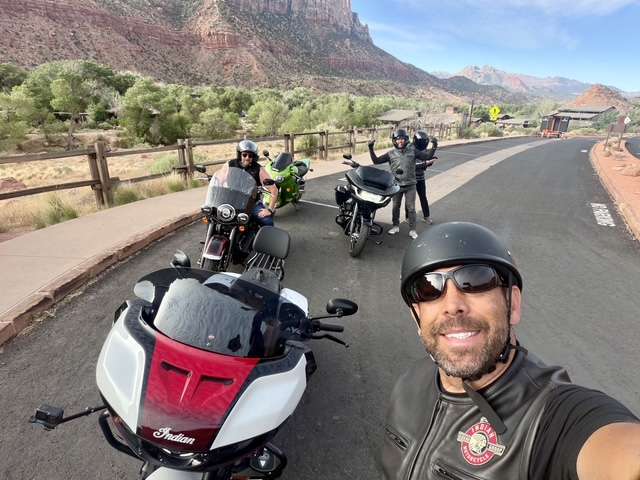
"For riders, a big thing is riding like you're invisible," said Bryce Weir, a Utah law enforcement officer and lead motorcyclist of the Bonneville Indian Motorcycle Riders Group.
"Riders need to assume that they're invisible, they're not being seen, and act accordingly," Weir said.
Unlike drivers, who are generally taught to stay near the center of a lane, motorcyclists who complete motorcycle safety courses, such as the Motorcycle Safety Foundation's Basic Ridercourse, are taught to adjust their lane position based on traffic, visibility and road conditions.
"I think drivers misunderstand motorcycles," Weir said. "Where they go, position their motorcycle, has specific intent, trying to be visible, trying to avoid the hazards on the road."
Because motorcycles are smaller than other vehicles, they can disappear into blind spots and be more difficult for drivers to judge the rider's speed and distance away. A rider who is considering nearby blind spots may shift within a lane to stay visible in a mirror, move away from a vehicle traveling too closely beside them, to create an escape route in case of unpredictable movement in traffic, or avoid hazards on the road.
Drivers may never notice the possible hazards that challenge a rider, including potholes, gravel, sand, uneven pavement and construction debris. At highway speeds, some of these hazards may be thrown into the air by other vehicles. Rocks, pieces of tires and other debris kicked up by cars, trucks and semitrailers can strike a rider directly.
Intersections
Intersections are especially dangerous because they bring vehicles into a rider's path from multiple directions, Weir said. Drivers turning left may misjudge a motorcycle's speed or distance, while others may pull into traffic from stop signs, parking lots or driveways.
Even eye contact is no guarantee a driver has recognized a motorcycle.
"I've looked at people; it looks like they're looking at me, like, 'OK, we've seen each other. We're good,' and then they proceed to turn right in front of me or right into me," Weir said.
As riders approach an intersection, they may slow down, adjust their lane position or create more space around themselves. At the same time, they are watching vehicle wheels, turn signals and the direction drivers are looking.
"One of our things is really big on always planning on the dangers around you," Weir said. "'If this happens, then what would I do? If this happens, how would I respond to that?'"
He said drivers often become so focused on reaching a destination that they stop fully evaluating the traffic around them.
"I think people get caught up in where they're trying to go, and they prioritize that," he said.
Weir encouraged drivers to pause before turning, merging or changing lanes by checking mirrors, looking over a shoulder and taking another moment to specifically search for motorcycles.
"Take that extra second and look," Weir said. "Spot the motorcycles around you and act accordingly."
Drivers should also avoid sudden maneuvers when they miss a turn or realize they are in the wrong lane.
"Even if I miss a lane turn, go up to the next intersection, make the turn, circle back," Weir said. "That quick decision to, 'Hey, you know, I'll go up this extra block and just make that turn instead of trying to cut over,' could be the difference between a life being saved."
For a driver, missing a turn may mean losing a few minutes. For a rider traveling in a blind spot or alongside the vehicle, a sudden lane change can leave almost no time to react and cost them their life.
Spotted Riding Right
After seeing the rise in motorcycle deaths and injuries in Utah, Weir created Spotted Riding Right, a campaign that recognizes safe riding habits and encourages riders to use proper equipment, ride defensively and make decisions that help them return home safely.
"The whole purpose and goal, my thinking was if we can just get one rider to go out, use defensive good driving, to use appropriate equipment and be safe, and live to ride again next year," Weir said. "I want to see all these great riders out again riding next year."
Riders are responsible for their training, speed, visibility and decisions on the road. But even the most defensive rider cannot control whether a driver checks a blind spot, waits before turning or abandons a last-second lane change.
"We all want to go home safely at the end of the night," Weir said.