'%3e%3cpath%20d='M34.1406%205.85938C30.3906%202.10547%2025.3047%200%2020%200C14.6953%200%209.60938%202.10547%205.85938%205.85938C2.10938%209.61328%200%2014.6953%200%2020C0%2025.3047%202.10547%2030.3906%205.85938%2034.1406C9.61328%2037.8906%2014.6953%2040%2020%2040C25.3047%2040%2030.3906%2037.8945%2034.1406%2034.1406C37.8906%2030.3906%2040%2025.3047%2040%2020C40%2014.6953%2037.8945%209.60938%2034.1406%205.85938ZM37.0117%2023.543H31.1602V13.5391H27.6328V19.9414C28.1211%2020.6914%2028.3711%2021.582%2028.3711%2022.5625V22.625C28.3711%2023.668%2028.1172%2024.6055%2027.6328%2025.4297V26.6094H36.082C33.4883%2032.9375%2027.2891%2037.3789%2020.0039%2037.3789C10.3711%2037.3789%202.62109%2029.6289%202.62109%2020C2.62109%2010.3711%2010.3711%202.62109%2020%202.62109C29.6289%202.62109%2037.3789%2010.3711%2037.3789%2020C37.3789%2021.1484%2037.2617%2022.2656%2037.0508%2023.3477C37.0391%2023.4141%2037.0234%2023.4766%2037.0117%2023.543Z'%20fill='white'/%3e%3cpath%20d='M22.3086%2018.5352C20.4336%2018.125%2019.9531%2017.8398%2019.9766%2017.1836V17.1406C19.9766%2016.6992%2020.3477%2016.2148%2021.4023%2016.2148C22.582%2016.2148%2023.8867%2016.6797%2025.0781%2017.4766L26.8516%2015.0195C25.4453%2013.8906%2023.707%2013.3398%2021.5547%2013.3398C18.5195%2013.3398%2016.4375%2015%2016.4063%2017.4766V17.5352C16.3633%2020.2617%2018.5859%2020.9805%2021.293%2021.6016C23.0391%2021.9766%2023.5703%2022.3164%2023.5703%2022.9609L23.5469%2022.9766C23.5469%2023.3906%2023.2578%2023.7031%2022.7852%2023.8359C22.5742%2023.9062%2022.1289%2023.9727%2021.5156%2023.9727C20.7617%2023.9727%2019.7539%2023.8633%2018.6328%2023.4844C18.0898%2023.2891%2017.4727%2023.0039%2016.8047%2022.6133L20.1406%2026.625C20.2813%2026.6602%2021.0977%2026.8516%2021.7734%2026.8516C25.0039%2026.8516%2027.0859%2025.2461%2027.1094%2022.6328V22.5703C27.1602%2020.1133%2025.2148%2019.1719%2022.3086%2018.5352Z'%20fill='white'/%3e%3cpath%20d='M5.24219%2013.5664V26.6133H8.75391V23.7578L10.2969%2021.9531L14.2031%2026.6133H18.3867L12.3555%2019.5195L17.4023%2013.5664H13.4531L8.75391%2019.0586V13.5664H5.24219Z'%20fill='white'/%3e%3c/g%3e%3cdefs%3e%3cclipPath%20id='clip0_97_2430'%3e%3crect%20width='40'%20height='40'%20fill='white'/%3e%3c/clipPath%3e%3c/defs%3e%3c/svg%3e)






Estimated read time: 2-3 minutes
This archived news story is available only for your personal, non-commercial use. Information in the story may be outdated or superseded by additional information. Reading or replaying the story in its archived form does not constitute a republication of the story.
PROVO — Approximately 30 students from Brigham Young University and Weber State University are digging up artifacts from a 1,000-year-old Fremont village not far from the shores of Utah Lake.
The site is in an area known as the Hinckley Mounds archaeological site in west Provo. The artifacts that the students are digging up and those unearthed in the past tell them a lot about the people who lived there.
"We've been finding some projectile points, tools, things like that," said Londyn Winter, a senior at WSU taking part in the archaeological dig this summer.
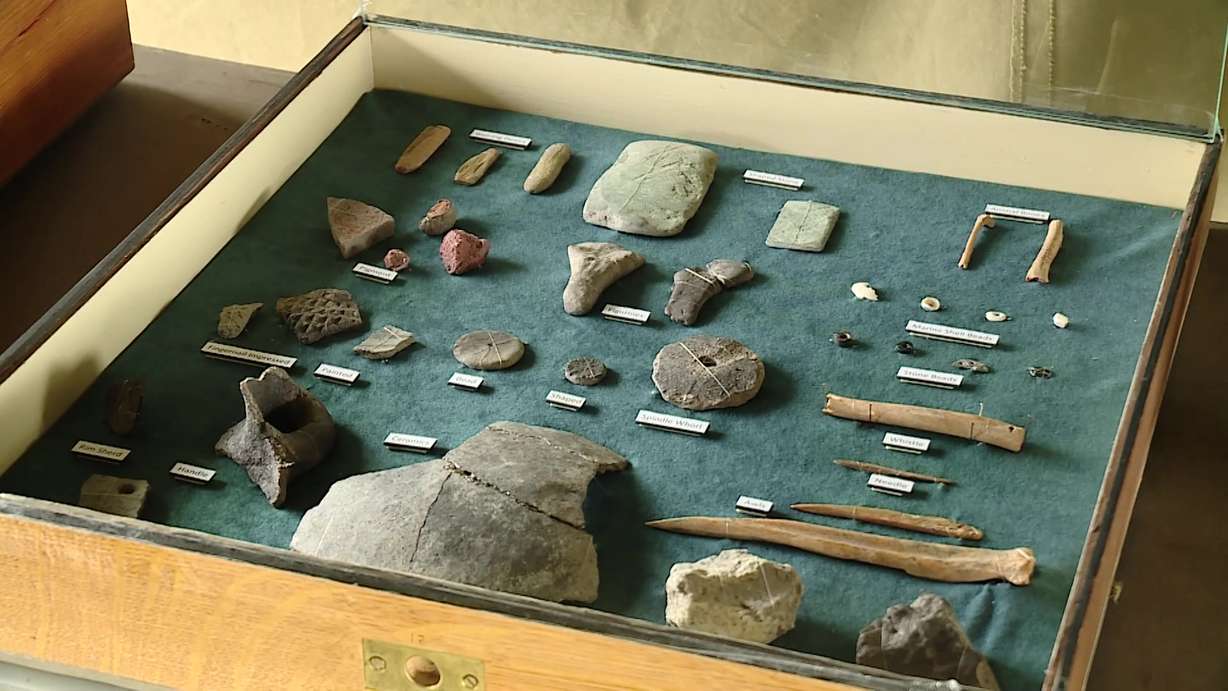
Artifacts found in the pit houses tell the archaeologists and their students that the Indigenous people lived in tiny houses, farmed corn, and hunted and fished in this area that used to be the Provo River Delta.
Winter is attracted to archaeology because of the connections to humans from the past.
"Humans are just so interesting," Winter said. "Like, how we have gotten to this point in our lives and our civilization, and how we got here from there."
They're excavating a small part of a Fremont village with pit homes built into the ground.
"There were four posts that held up as superstructure, and then on that, they would leave the beams and put other material on it," said Mike Searcy, BYU Professor of Anthropology, describing what the pit house would have looked like.
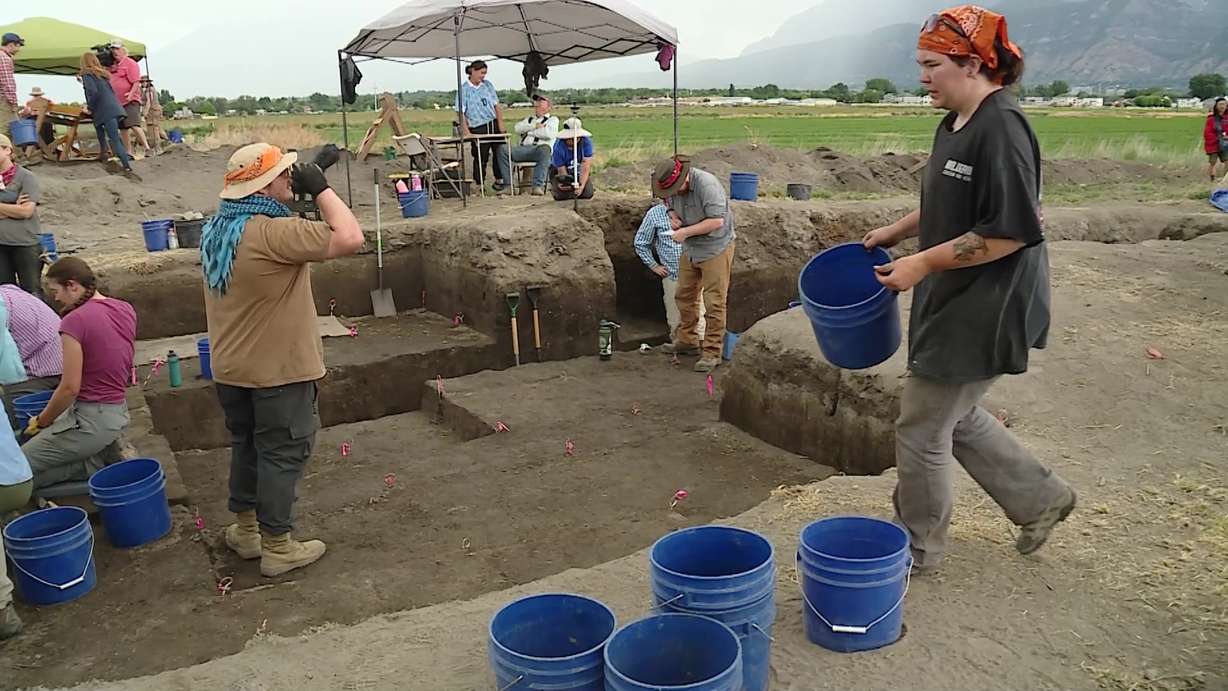
They believe around 1000 Fremont Indians occupied the village for approximately 300 to 400 years. Right now, it's an anthropology lab for these students.
This is just an immersive experience for the students to learn side-by-side with the professors and to dig on an actual site that will yield accurate data that will eventually be published," Searcy said.
"It's a lot of work," Winter said. "It's tiring, but it's really rewarding."
Archaeologists have been digging in the Hinckley Mounds area for nearly 100 years. This summer, the students and their professors excavate eight hours a day, 40 hours a week for seven weeks.