Estimated read time: 5-6 minutes
This archived news story is available only for your personal, non-commercial use. Information in the story may be outdated or superseded by additional information. Reading or replaying the story in its archived form does not constitute a republication of the story.
CASCADE TOWNSHIP, Mich. — It's an increasingly familiar sight in U.S. cities and suburbs: A van pulls up to the curb. Workers wearing gloves, masks and other protective gear strap on backpack-type mechanisms with plastic hoses, similar to leaf blowers.
Revving up the motors, they drench trees, bushes and even house walls with pesticides targeting an age-old menace: mosquitoes.
The winged, spindly-legged bloodsuckers have long been the bane of backyard barbecues and, in tropical nations, carriers of serious disease. Now, with climate change widening the insect's range and lengthening its prime season, more Americans are resorting to the booming industry of professional yard spraying.
"If you like to be outside, it certainly makes it more pleasant not to be swatting mosquitos and worrying about all the issues," said Marty Marino, a recent customer in Michigan's Cascade Township, a bedroom community near Grand Rapids.
But the chemical bombardment is beginning to worry scientists who fear over-use of pesticides is harming pollinators and worsening a growing threat to birds that eat insects.
"The materials these companies spray kill all bugs," said Lynn Goldman, an environmental health professor at George Washington University and former assistant administrator for toxic substances at the U.S. Environmental Protection Agency.
"That includes bees, butterflies and all kinds of beneficial bugs that maybe people don't love but should," Goldman said. "It's not good to have this kind of indiscriminate killing, messing up the whole ecosystem."
More than 40% of insect species worldwide are threatened with extinction, including some pollinator bees and butterflies, according to the journal Biological Conservation.
Spraying companies, which have been multiplying with the surging demand, say they try to minimize pollinator losses but acknowledge there's collateral damage.
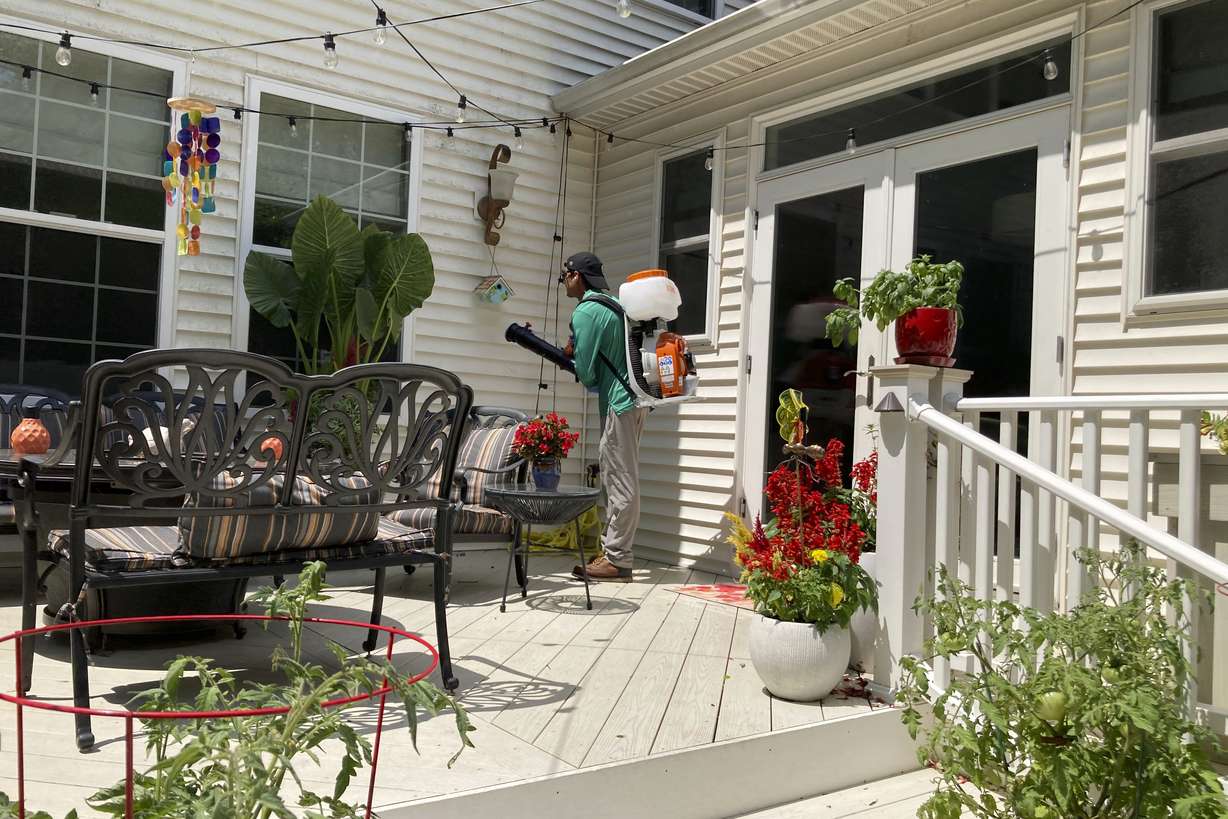
Mosquito Joe, which treated Marino's yard and those of several neighbors on a humid July morning, avoids spraying on windy days when poisons would blow onto flowering plants that attract bees, said Lou Schager, president of the company based in Virginia Beach, Virginia.
"We need our pollinators," said David Price, the company's director of technical services. "They're incredibly important. But at the same time, we need to eliminate mosquitoes that (carry) diseases."
In 2020, the U.S. Centers for Disease Control and Prevention reported "dramatic" increases in illnesses spread by mosquitoes and other blood feeders. Zika, Chikungunya and West Nile viruses have turned up in the U.S. And Asian tiger and yellow fever types of mosquitoes that originated in the tropics are now common in Southern states and have begun afflicting Southern California.
With climate change, Michigan's mosquito season is about a month longer at the beginning and the end than a few decades ago, as warm-weather varieties increasingly turn up, entomology professor Edward Walker of Michigan State University said.
Meanwhile, the revenue from mosquito spraying has soared, according to Pest Control Technology, a trade publication. Exterminators are adding mosquitoes to their traditional services and new companies are making mosquitoes their primary focus.
Overall industry totals weren't available. But more than 70% of pest control companies surveyed last year offered the service, up from 38% in 2014. It generated nearly one-fifth of company revenue in 2021.
A Zika outbreak that began in 2015 and spread to more than 80 countries helped fuel the surge in the business, said Daniel Markowski, technical adviser to the American Mosquito Control Association, a 1,200-member nonprofit group.
"It was all over the media," said Markowski, and "made a lot of pest control companies say, 'Holy cow, I could make a lot of money with residential services.'"
Established in 2010, Mosquito Joe now has 173 franchises in 39 states, Schager said.
Many companies use a "residual barrier" strategy, spraying pesticide around the perimeter of a property that typically lasts several weeks. When mosquitoes settle on the bushes or trees, they get a lethal dose.
For yard treatments, companies typically use pyrethrins — bug-killing substances produced by chrysanthemum flowers — or synthetic imitators called pyrethroids.
The federal government says the chemicals are safe for humans when used as directed and mostly nontoxic to birds. But they're deadly to fish and bees, and harm birds indirectly by killing insects they feed on, Goldman said.
A drop-off of 3 billion North American birds in recent decades has consisted largely of insect eaters, from the whip-poor-will to redwing blackbirds and barn swallows.
EPA says it is seeking more information about pollinator harm as part of a periodic review of pyrethrins and pyrethroids and could order labeling changes if needed.
Critics also contend homeowners are falling for company sales pitches when simpler methods, such as emptying stagnant water sources and running electric fans, would keep mosquitoes away.
The mosquito control association says companies should first clear out mosquito breeding areas and spray only when an inspection shows it's needed, instead of on a set schedule.
"If I'm doing my job, you won't need my mosquito service over time," said Dan Killingsworth, operations director for Environmental Security Pest Control, based in Panama City Beach, Florida. "If I can reduce mosquitoes on your property to where they're no longer a problem, we can potentially eliminate that service."
Many companies don't go to such lengths, Markowski said. "They'll just come out and spray your property and leave."
Schager said his company limits its insecticide use and usually sprays every three to four weeks, arguing that regular treatments are needed to disrupt breeding cycles.
Marino, the Michigan homeowner, says he's trying an optional spray of water mixed with "essential oils" from plants such as garlic, lemongrass, peppermint and rosemary, which are less harmful to other insects. About 10% of Mosquito Joe's clientele use this option, although most prefer the longer-lasting pyrethroids, Price said.
The company charges around $90 per treatment with pyrethroids, while oils cost about 20% more, he said.
"One of our dogs likes to eat wood chips from the landscaping," Marino said. "If there's the synthetic insecticide on it, that's a great concern."