'%3e%3cpath%20d='M34.1406%205.85938C30.3906%202.10547%2025.3047%200%2020%200C14.6953%200%209.60938%202.10547%205.85938%205.85938C2.10938%209.61328%200%2014.6953%200%2020C0%2025.3047%202.10547%2030.3906%205.85938%2034.1406C9.61328%2037.8906%2014.6953%2040%2020%2040C25.3047%2040%2030.3906%2037.8945%2034.1406%2034.1406C37.8906%2030.3906%2040%2025.3047%2040%2020C40%2014.6953%2037.8945%209.60938%2034.1406%205.85938ZM37.0117%2023.543H31.1602V13.5391H27.6328V19.9414C28.1211%2020.6914%2028.3711%2021.582%2028.3711%2022.5625V22.625C28.3711%2023.668%2028.1172%2024.6055%2027.6328%2025.4297V26.6094H36.082C33.4883%2032.9375%2027.2891%2037.3789%2020.0039%2037.3789C10.3711%2037.3789%202.62109%2029.6289%202.62109%2020C2.62109%2010.3711%2010.3711%202.62109%2020%202.62109C29.6289%202.62109%2037.3789%2010.3711%2037.3789%2020C37.3789%2021.1484%2037.2617%2022.2656%2037.0508%2023.3477C37.0391%2023.4141%2037.0234%2023.4766%2037.0117%2023.543Z'%20fill='white'/%3e%3cpath%20d='M22.3086%2018.5352C20.4336%2018.125%2019.9531%2017.8398%2019.9766%2017.1836V17.1406C19.9766%2016.6992%2020.3477%2016.2148%2021.4023%2016.2148C22.582%2016.2148%2023.8867%2016.6797%2025.0781%2017.4766L26.8516%2015.0195C25.4453%2013.8906%2023.707%2013.3398%2021.5547%2013.3398C18.5195%2013.3398%2016.4375%2015%2016.4063%2017.4766V17.5352C16.3633%2020.2617%2018.5859%2020.9805%2021.293%2021.6016C23.0391%2021.9766%2023.5703%2022.3164%2023.5703%2022.9609L23.5469%2022.9766C23.5469%2023.3906%2023.2578%2023.7031%2022.7852%2023.8359C22.5742%2023.9062%2022.1289%2023.9727%2021.5156%2023.9727C20.7617%2023.9727%2019.7539%2023.8633%2018.6328%2023.4844C18.0898%2023.2891%2017.4727%2023.0039%2016.8047%2022.6133L20.1406%2026.625C20.2813%2026.6602%2021.0977%2026.8516%2021.7734%2026.8516C25.0039%2026.8516%2027.0859%2025.2461%2027.1094%2022.6328V22.5703C27.1602%2020.1133%2025.2148%2019.1719%2022.3086%2018.5352Z'%20fill='white'/%3e%3cpath%20d='M5.24219%2013.5664V26.6133H8.75391V23.7578L10.2969%2021.9531L14.2031%2026.6133H18.3867L12.3555%2019.5195L17.4023%2013.5664H13.4531L8.75391%2019.0586V13.5664H5.24219Z'%20fill='white'/%3e%3c/g%3e%3cdefs%3e%3cclipPath%20id='clip0_97_2430'%3e%3crect%20width='40'%20height='40'%20fill='white'/%3e%3c/clipPath%3e%3c/defs%3e%3c/svg%3e)


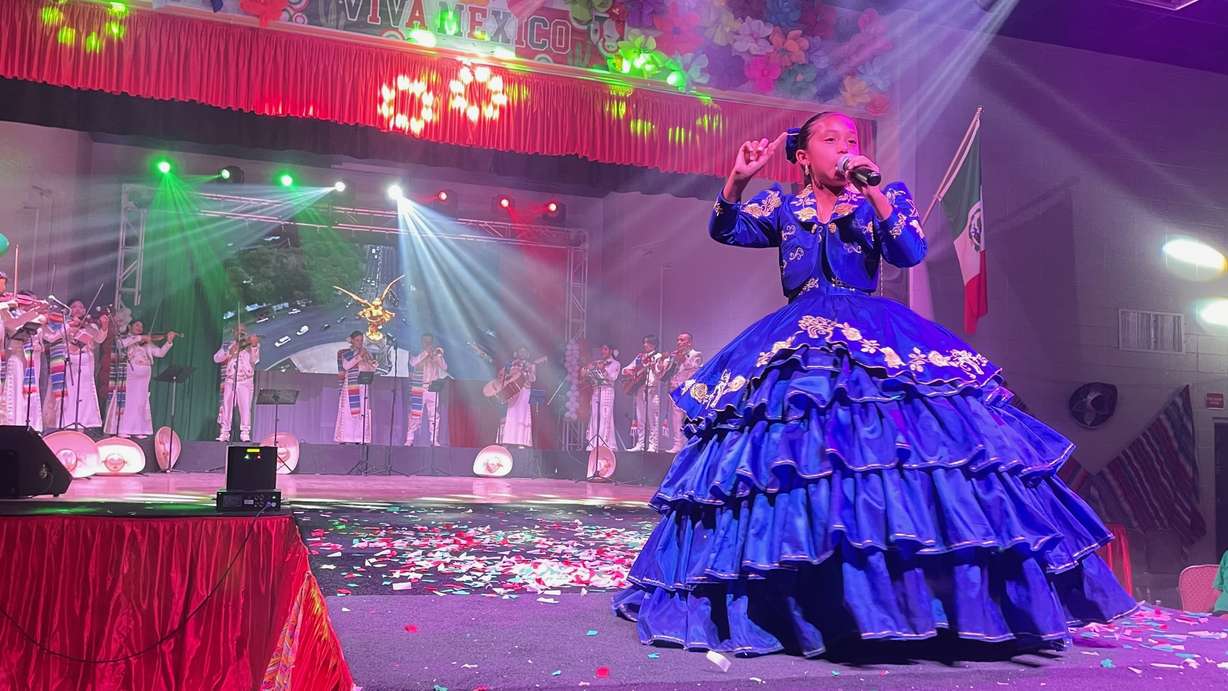
- Utah's Mexican community celebrated Mexican Independence Day at the Mexican Civic Center.
- The event featured El Grito, the reenactment of the 1810 call to arms against Spanish colonial rule, and traditional Mexican dancing and music.
- Participants stressed the importance of the event as a means of preserving Mexican identity.
SALT LAKE CITY — Alondra Silvestre's Mexican roots still pull at her, though she was born in the United States.
"My parents raised me and my sister with my Mexican culture. We grew up speaking Spanish," she said. Now living in Utah, her dad's originally from Mexico City and her mom's from the Mexican state of Hidalgo.
Her sentiments brought Silvestre to the Mexican Civic Center Tuesday night, where hundreds gathered for a reenactment of El Grito, the public call on Sept. 16, 1810, by Miguel Hidalgo y Costilla, a Mexican priest, to rise up against Spanish colonial rule. Though the Spanish didn't recognize Mexico as a sovereign nation until 1821, Sept. 16 — Wednesday — is Mexican Independence Day, and the civic center activities underscore its importance to Utah's Mexican community, even amid the federal government crackdown on immigrants, many from Mexico.
"It's our national party. It's a moment when Mexicans unite and celebrate our history, our past, our common future," said Antonio Cruz Dias, acting consul general of the Mexican Consulate in Salt Lake City and a participant in Tuesday's celebration.
While some may bristle at the notion of marking Mexican independence on U.S. soil, Cruz doesn't see it that way.
"I think you can be very American, enjoy the advantages the country offers, the melting pot, without losing your Mexican identity," he said. "The Italians never lose their roots, nor the Greeks. I think you can be very American and love and work for the country without losing your roots, your heritage or your history."
Likewise, Gloria Arredondo, originally from Mexico though she grew up in the United States, sees events like the Civic Center celebration as a means of connecting younger generations in the United States with their Mexican roots lest they fade away.
"Our children, they grow up here with the systems in the schools, so they're Americans. We just don't want them to forget where they come from. It's important to know your roots," she said.
'Todos somos americanos'
Brandy Farmer, for her part, noted that the Americas are a vast area that encompass many people, not just those in the United States. She's the Mexican Civic Center president.
"All the way from Alaska and Canada down to the tip of South America — we're all Americans," she said. "So I always say — I say it in Spanish — 'Todos somos americanos.' ... You're here because you want to be here for some reason or the other, and so we're all Americans, and that's what we want everyone to understand."
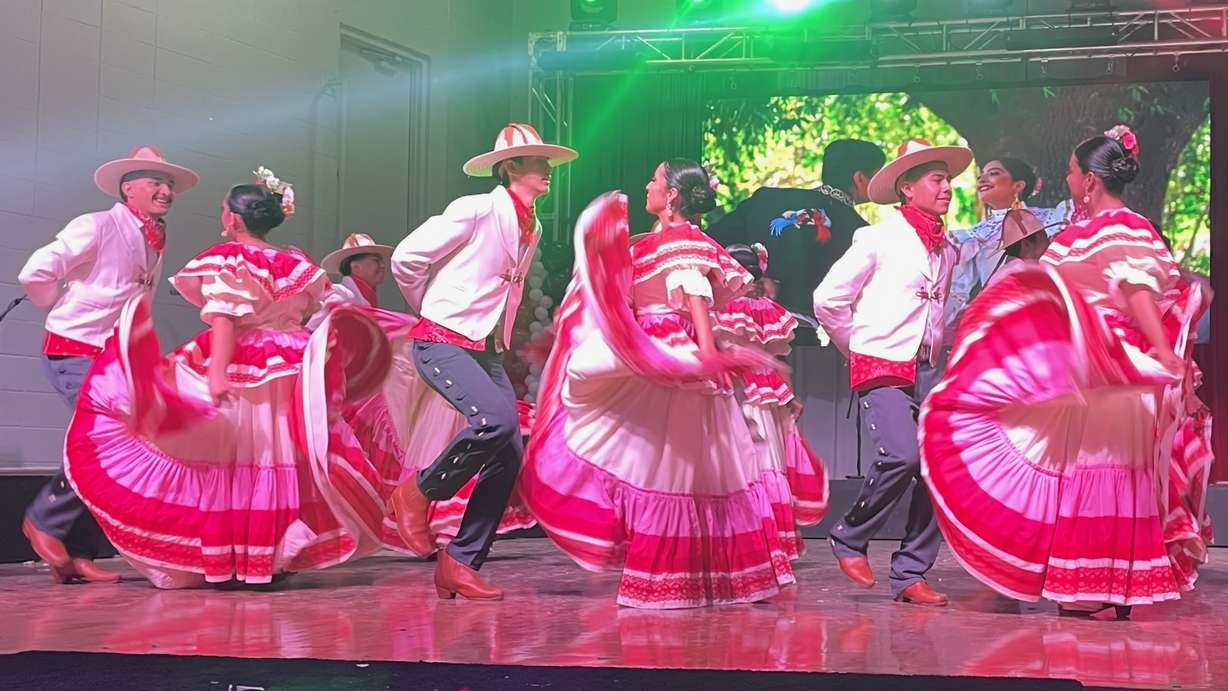
The current political climate surrounding immigration figured little in Tuesday's festive activities, which featured traditional dancing, mariachi music, banda music and other cultural staples of Mexico.
"It's a really big thing to feel connected," said Amy Osorio, a member, along with Silvestre, of an Aztec dance group, Nican Axcan, that performed Tuesday. She feels equally Mexican and American, she said, and participates in the dance group in part because she worries about losing her Mexican connection.
Read more:

Voces de Utah
Looking for more news from Utah's Latino community? Visit our Voces de Utah section for more stories, events and features.As part of the celebration, Cruz reenacted El Grito from the Mexican Civic Center stage, Hidalgo y Costilla's famous call to arms back in 1810.
"Long live the Mexican community in Utah," Cruz shouted in a call-and-response with the audience. "Long live the heroes who brought us our homeland and liberty. Long live Mexico! Long live Mexico! Long live Mexico!"
Hispanic Heritage Month started Tuesday and goes through Oct. 15, and many activities are slated around Utah to celebrate Latino culture in the United States. The celebratory month coincides with the independence days of Costa Rica, El Salvador, Guatemala, Honduras and Nicaragua on Sept. 15; Mexican Independence Day on Sept. 16; and Chilean Independence Day on Sept. 18.

Related stories
Most recent Voces de Utah stories
Related topics
 Tim Vandenack