


Estimated read time: 4-5 minutes
- Medlir Mema likens AI to a "gray rhino," urging ethical anticipation.
- Utah's AI policy includes a regulatory sandbox to balance innovation and safety.
- Panelists emphasize human-centered AI regulation and address liability concerns in Utah.
OREM — Medlir Mema, director of the AI Ethics and Governance Institute, described artificial intelligence as a "gray rhino problem" during a Regulatory Reform Summit on artificial intelligence Thursday at Utah Valley University.
"Imagine the gray rhino," he started. "When you think about a rhino generally, it is this big beast that doesn't look like it runs very fast — until it's right in front of you."
AI, like a gray rhino, is a predictable event, but it moves deceptively fast, he said.
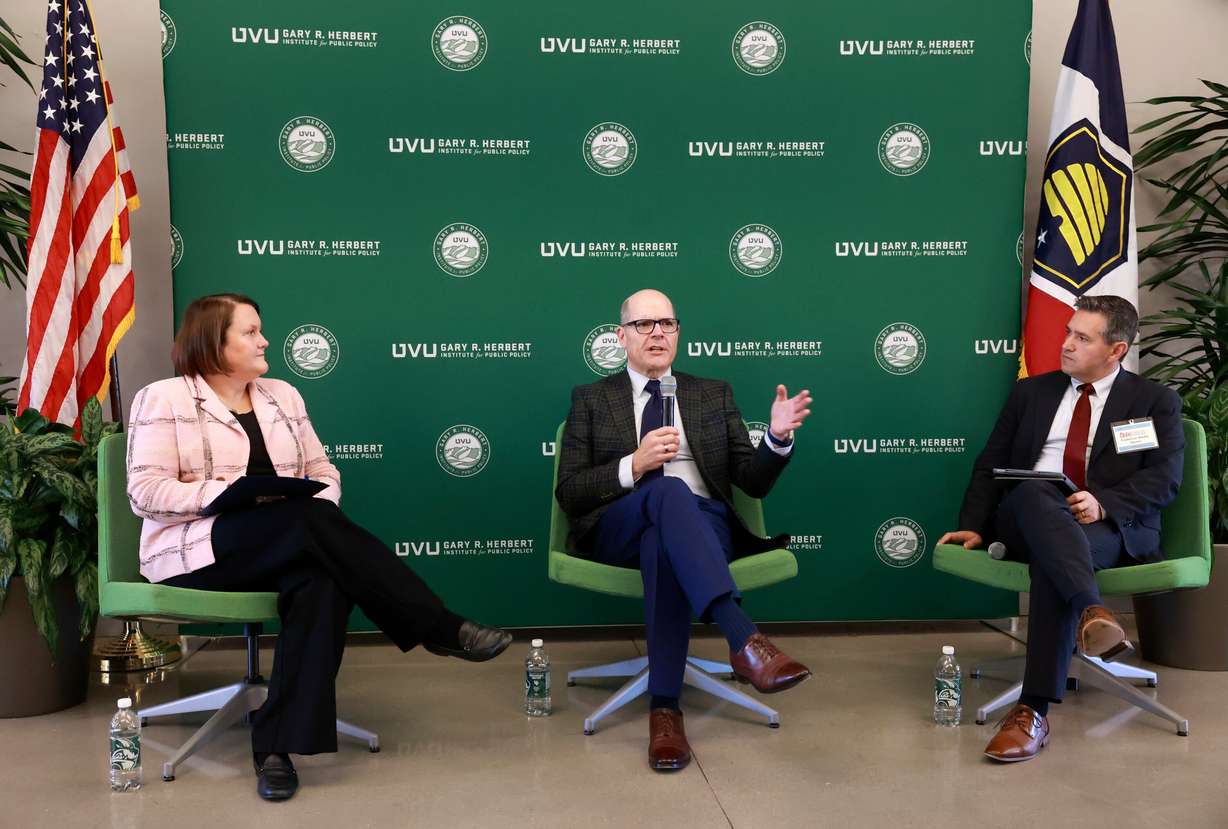
"It's moved so quickly in front of our eyes that our moral and ethical bearings, from a societal perspective, have not been able to anticipate the potential risks, upsides, and harms that AI brings," he added.
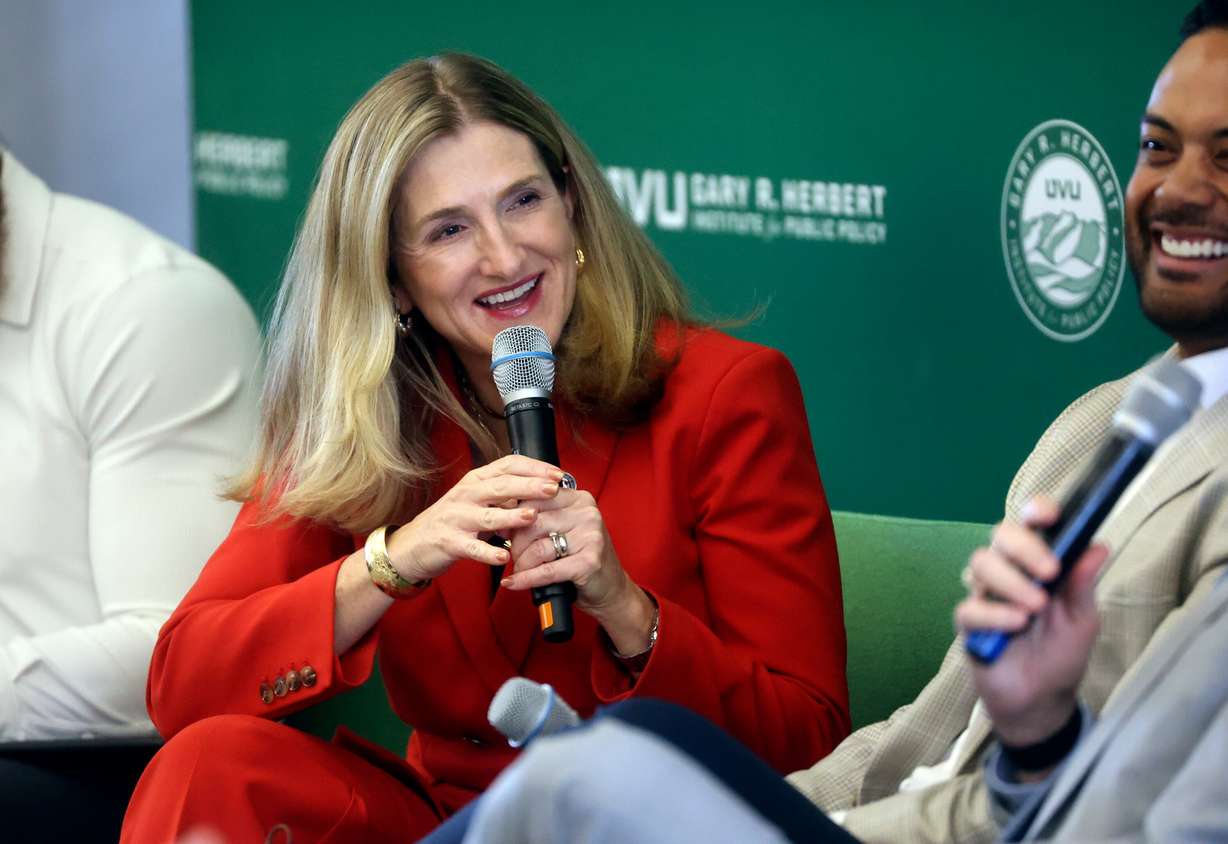
Rep. Celeste Maloy, who hosted Thursday's summit at Utah Valley University, called AI the "final frontier in regulation" — one of the only areas that is left almost completely unregulated. At the summit, Utah leaders and experts discussed how to regulate the unregulated — and how to anticipate the gray rhino.
'I think Utah has done a few things the right way'
"What is the Utah approach?" asked state Rep. Doug Fiefia, R-Herriman, a panelist at the summit.
"I think, for one, we're not anti-technology, but also we're not naive about the potential harms," he said. "I think Utah has done a few things the right way." He pointed to the creation of the Office of AI Policy in 2024, overseen by Zach Boyd and Utah Department of Commerce Commissioner Margaret Busse.
Busse, also a panelist, described the office's responsibilities in two ways: develop policy around emerging issues and operate as a regulatory sandbox.
The sandbox, Busse said, allows AI companies developing new technology to request temporary regulatory changes.
"The office can then work with the relevant regulators, most of whom reside within the Department of Commerce, and get some temporary regulatory relief as we allow these companies to pilot their company's product or service," Busse said. "And so that's become a very fruitful way for us to learn."
Brandon Amacher, UVU Emerging Tech Policy Lab director and panelist, said the creation of the Office of AI Policy — and its sandbox approach — demonstrates "a very encouraging level of humility."
"It allows for us to not necessarily stifle innovation or the benefits that we can get from them while we find where those problems are and attempt to address them," he said.
Many panelists also praised Gov. Spencer Cox's current Pro-Human Initiative, which launched Dec. 2, 2025.
The initiative aims for every AI decision to be tested against two questions: Does it serve humankind, and does it promote human flourishing? Panelists at the summit said the human-forward thinking is exactly the mindset legislators need to be in when creating regulatory policy for the state.
'How does it benefit the human?'
"The one question I ask myself in my role, as it relates to AI, is how does this benefit the human?" said Fiefia. "And I think sometimes that question is left out of the room in making some big decisions."
Fiefia's AI Companion Chatbot Safety Act (HB438), which requires disclosure that chatbots aren't human and other protections for minors, reflects Utah's human-centric regulatory thinking — though it has yet to pass as law.
Bennett Borden, data scientist and founder and CEO of Clarion AI Partners, said liability is another area in which the state needs to start acting now.
"This is one of the biggest challenges we have," he said.
Borden's conversation with Mema was moderated by Deseret News editor Sarah Weaver.
He gave an example of buying something from the store that harms his child.
"I have this whole avenue of product liability that I can go through," he said. "You can't do that with software.
"If you look at most of the regulation around AI, it is not the developer of the model; it is the deployer of the model. It's you that is responsible," he added, saying the system needed to change.
California and Colorado are already deploying legislation which requires developers of powerful AI models to publish safety frameworks and report serious safety incidents.
"There has to be a way to get that liability spread more evenly where it's supposed to be," he added. "I think this technology is a new kind of technology that almost meets product-like liability."
Deputy Attorney General Stewart Young offered a more realistic approach — one rooted in the fiscal power of AI companies.
"These companies have trillions of dollars, and my concern is regulation alone is not going to necessarily move the needle," he said. "It's not necessarily going to make sure that it protects our children."
Young, who leads the AG's criminal unit, then proposed strengthening criminal law, especially for AI companies that end up causing harm.
"The feds aren't going to do it, I can guarantee you," he added. "Right now, the Department of Justice is struggling. And so the states need to lead out on this criminal arena."







