'%3e%3cpath%20d='M34.1406%205.85938C30.3906%202.10547%2025.3047%200%2020%200C14.6953%200%209.60938%202.10547%205.85938%205.85938C2.10938%209.61328%200%2014.6953%200%2020C0%2025.3047%202.10547%2030.3906%205.85938%2034.1406C9.61328%2037.8906%2014.6953%2040%2020%2040C25.3047%2040%2030.3906%2037.8945%2034.1406%2034.1406C37.8906%2030.3906%2040%2025.3047%2040%2020C40%2014.6953%2037.8945%209.60938%2034.1406%205.85938ZM37.0117%2023.543H31.1602V13.5391H27.6328V19.9414C28.1211%2020.6914%2028.3711%2021.582%2028.3711%2022.5625V22.625C28.3711%2023.668%2028.1172%2024.6055%2027.6328%2025.4297V26.6094H36.082C33.4883%2032.9375%2027.2891%2037.3789%2020.0039%2037.3789C10.3711%2037.3789%202.62109%2029.6289%202.62109%2020C2.62109%2010.3711%2010.3711%202.62109%2020%202.62109C29.6289%202.62109%2037.3789%2010.3711%2037.3789%2020C37.3789%2021.1484%2037.2617%2022.2656%2037.0508%2023.3477C37.0391%2023.4141%2037.0234%2023.4766%2037.0117%2023.543Z'%20fill='white'/%3e%3cpath%20d='M22.3086%2018.5352C20.4336%2018.125%2019.9531%2017.8398%2019.9766%2017.1836V17.1406C19.9766%2016.6992%2020.3477%2016.2148%2021.4023%2016.2148C22.582%2016.2148%2023.8867%2016.6797%2025.0781%2017.4766L26.8516%2015.0195C25.4453%2013.8906%2023.707%2013.3398%2021.5547%2013.3398C18.5195%2013.3398%2016.4375%2015%2016.4063%2017.4766V17.5352C16.3633%2020.2617%2018.5859%2020.9805%2021.293%2021.6016C23.0391%2021.9766%2023.5703%2022.3164%2023.5703%2022.9609L23.5469%2022.9766C23.5469%2023.3906%2023.2578%2023.7031%2022.7852%2023.8359C22.5742%2023.9062%2022.1289%2023.9727%2021.5156%2023.9727C20.7617%2023.9727%2019.7539%2023.8633%2018.6328%2023.4844C18.0898%2023.2891%2017.4727%2023.0039%2016.8047%2022.6133L20.1406%2026.625C20.2813%2026.6602%2021.0977%2026.8516%2021.7734%2026.8516C25.0039%2026.8516%2027.0859%2025.2461%2027.1094%2022.6328V22.5703C27.1602%2020.1133%2025.2148%2019.1719%2022.3086%2018.5352Z'%20fill='white'/%3e%3cpath%20d='M5.24219%2013.5664V26.6133H8.75391V23.7578L10.2969%2021.9531L14.2031%2026.6133H18.3867L12.3555%2019.5195L17.4023%2013.5664H13.4531L8.75391%2019.0586V13.5664H5.24219Z'%20fill='white'/%3e%3c/g%3e%3cdefs%3e%3cclipPath%20id='clip0_97_2430'%3e%3crect%20width='40'%20height='40'%20fill='white'/%3e%3c/clipPath%3e%3c/defs%3e%3c/svg%3e)



Estimated read time: 3-4 minutes
- Utah State University researchers are studying Peter Sinks' extreme cold temperatures.
- They installed 16 sensors to track cold air movement in the mountain basin.
- Findings may improve weather forecasting and aid agriculture in Utah's cold regions.
LOGAN — Known as the coldest place in Utah every winter and one of the coldest places in the lower 48 states, Peter Sinks is now the focus of a Utah State University research project aimed at understanding why temperatures there drop so dramatically.
Two USU researchers are gathering new data from the area, using additional weather sensors to study how cold air moves through the mountain basin and why it repeatedly becomes Utah's coldest spot.
Peter Sinks is a natural limestone basin, shaped like a giant bowl, sitting at 8,164 feet in elevation. It has recorded some of Utah's most extreme cold temperatures for decades.
It's not the only cold spot in the state. Nearby Lower Sink is a cold air pool basin, but smaller. Middle Sink is between the two, not too far off U.S. 89. It, too, traps cold air pools. But Peter Sinks is usually the coldest, about three miles off the highway and tucked in another basin.
Peter Sinks has recorded extreme cold
Feb. 1, 1985, the temperature at Peter Sinks plunged to 69.3 degrees below zero. That's the second-coldest temperature ever recorded in the lower 48 states. The lowest was -69.7°F at Roger's Pass, Montana, in January 1954. A sensor did record minus 70.5 degrees at Peter Sinks, but that reading was not considered official.
"Here is the Peter Sink, and here you can see our monitoring system," said Andras Dobos, a visiting scholar from Hungary, as he pointed to a laptop monitor.
The researchers are studying what happens when cold air settles into the basin. For years, two weather stations have measured temperatures at the top of the rim of the basin, and another sensor at the bottom.
"And it's actually interesting because that's the deepest part. But oftentimes it's coldest here," said Timothy Wright, a graduate research assistant at USU, also pointing to a color-coded model on the laptop.
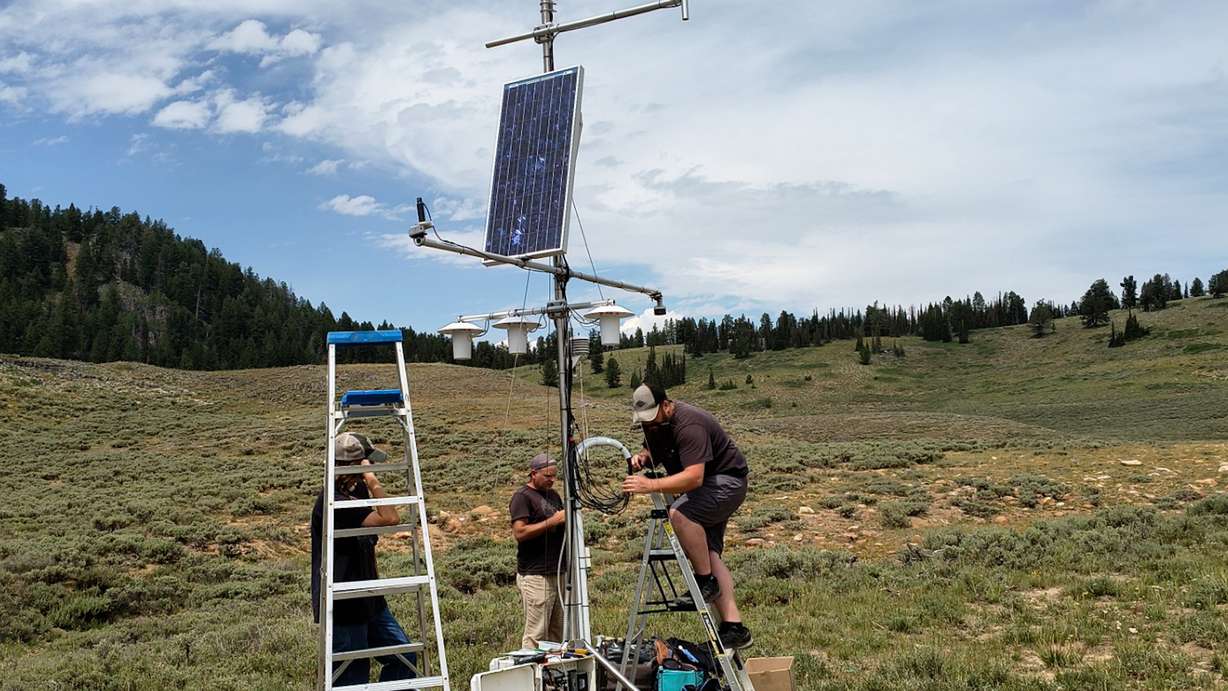
Wright said the two existing stations have provided a substantial amount of information, but they only offer a limited picture of the conditions throughout the basin.
"So we have a lot of data, but that's just the bottom of the top," Wright said.
New sensors provide a closer look
To get a more complete picture, the researchers have added sensors along the slope between the rim and the basin floor, as well as in the two other nearby basins.
"Installed, I think, 16 measurement points," Dobos said.
The additional sensors give researchers a cross section of temperature measurements, allowing them to track how cold air moves into the basin and pools at the bottom. They can also examine how temperatures change along the slope and how the cold air breaks up as the day begins to warm.
By comparing the readings, the researchers hope to better understand the conditions that repeatedly make Peter Sinks the coldest spot in Utah.
Research could have applications beyond Peter Sinks
They also said what they learn could have applications well beyond the mountain basin.
"What we learn in this natural laboratory, we can extend that to the human area as well," Dobos said.
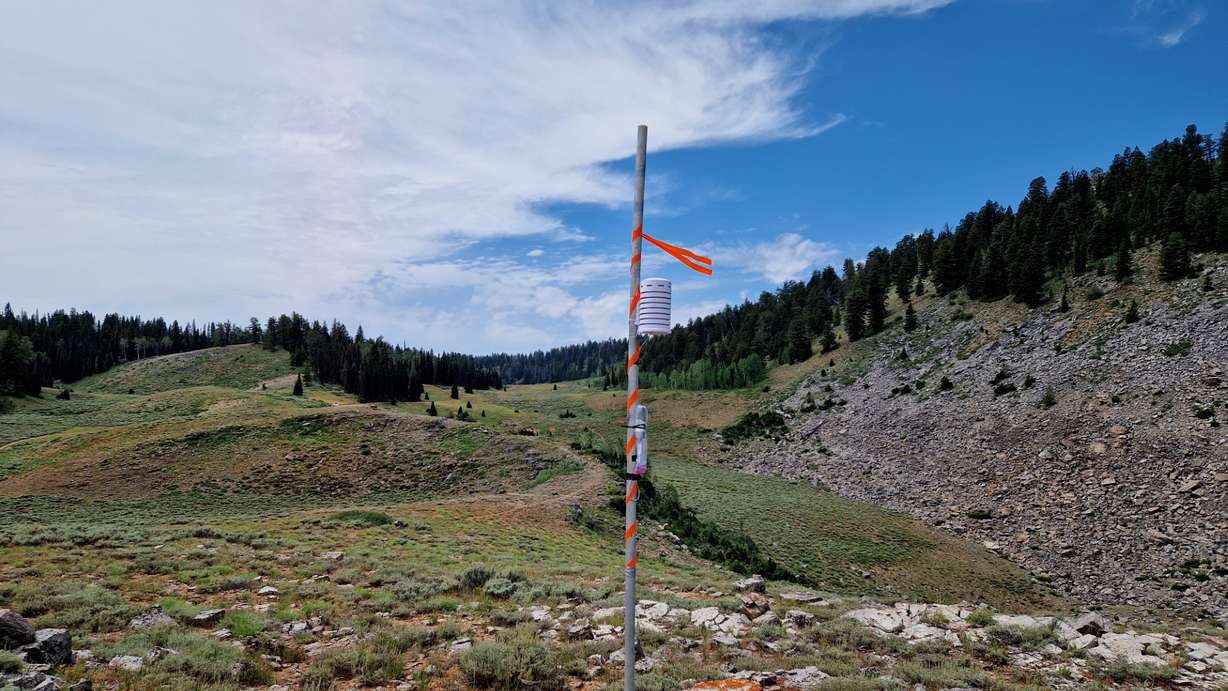
The researchers hope to apply their findings to improve weather forecasting, particularly when it comes to temperature inversions in the Cache Valley and Salt Lake Valley. The information could also help farmers and agricultural operations better understand frost and the risk of freezing crops.
The research may even provide insight into how development affects local weather conditions, including what happens to a microclimate when a subdivision is built and the natural landscape is altered.
Both Dobos and Wright are focusing their study window with the Utah Climate Center at USU for one year from July 2026 to July 2027, though the study will be ongoing.
A link to the rim and the bottom temperature sensors can be viewed on the Peter Sinks webpage.