'%3e%3cpath%20d='M34.1406%205.85938C30.3906%202.10547%2025.3047%200%2020%200C14.6953%200%209.60938%202.10547%205.85938%205.85938C2.10938%209.61328%200%2014.6953%200%2020C0%2025.3047%202.10547%2030.3906%205.85938%2034.1406C9.61328%2037.8906%2014.6953%2040%2020%2040C25.3047%2040%2030.3906%2037.8945%2034.1406%2034.1406C37.8906%2030.3906%2040%2025.3047%2040%2020C40%2014.6953%2037.8945%209.60938%2034.1406%205.85938ZM37.0117%2023.543H31.1602V13.5391H27.6328V19.9414C28.1211%2020.6914%2028.3711%2021.582%2028.3711%2022.5625V22.625C28.3711%2023.668%2028.1172%2024.6055%2027.6328%2025.4297V26.6094H36.082C33.4883%2032.9375%2027.2891%2037.3789%2020.0039%2037.3789C10.3711%2037.3789%202.62109%2029.6289%202.62109%2020C2.62109%2010.3711%2010.3711%202.62109%2020%202.62109C29.6289%202.62109%2037.3789%2010.3711%2037.3789%2020C37.3789%2021.1484%2037.2617%2022.2656%2037.0508%2023.3477C37.0391%2023.4141%2037.0234%2023.4766%2037.0117%2023.543Z'%20fill='white'/%3e%3cpath%20d='M22.3086%2018.5352C20.4336%2018.125%2019.9531%2017.8398%2019.9766%2017.1836V17.1406C19.9766%2016.6992%2020.3477%2016.2148%2021.4023%2016.2148C22.582%2016.2148%2023.8867%2016.6797%2025.0781%2017.4766L26.8516%2015.0195C25.4453%2013.8906%2023.707%2013.3398%2021.5547%2013.3398C18.5195%2013.3398%2016.4375%2015%2016.4063%2017.4766V17.5352C16.3633%2020.2617%2018.5859%2020.9805%2021.293%2021.6016C23.0391%2021.9766%2023.5703%2022.3164%2023.5703%2022.9609L23.5469%2022.9766C23.5469%2023.3906%2023.2578%2023.7031%2022.7852%2023.8359C22.5742%2023.9062%2022.1289%2023.9727%2021.5156%2023.9727C20.7617%2023.9727%2019.7539%2023.8633%2018.6328%2023.4844C18.0898%2023.2891%2017.4727%2023.0039%2016.8047%2022.6133L20.1406%2026.625C20.2813%2026.6602%2021.0977%2026.8516%2021.7734%2026.8516C25.0039%2026.8516%2027.0859%2025.2461%2027.1094%2022.6328V22.5703C27.1602%2020.1133%2025.2148%2019.1719%2022.3086%2018.5352Z'%20fill='white'/%3e%3cpath%20d='M5.24219%2013.5664V26.6133H8.75391V23.7578L10.2969%2021.9531L14.2031%2026.6133H18.3867L12.3555%2019.5195L17.4023%2013.5664H13.4531L8.75391%2019.0586V13.5664H5.24219Z'%20fill='white'/%3e%3c/g%3e%3cdefs%3e%3cclipPath%20id='clip0_97_2430'%3e%3crect%20width='40'%20height='40'%20fill='white'/%3e%3c/clipPath%3e%3c/defs%3e%3c/svg%3e)


Estimated read time: 2-3 minutes
This archived news story is available only for your personal, non-commercial use. Information in the story may be outdated or superseded by additional information. Reading or replaying the story in its archived form does not constitute a republication of the story.
Ed Yeates reporting A long suspected hideout in the body for HIV may be the most insidious masquerade yet. For the first time, BYU and Johns Hopkins researchers have removed an elegant cell that allows the AIDS-producing virus to sit in waiting like a Trojan Horse.
HIV, the virus that triggers AIDS, may be more diverse and difficult to control than researchers had ever envisioned.
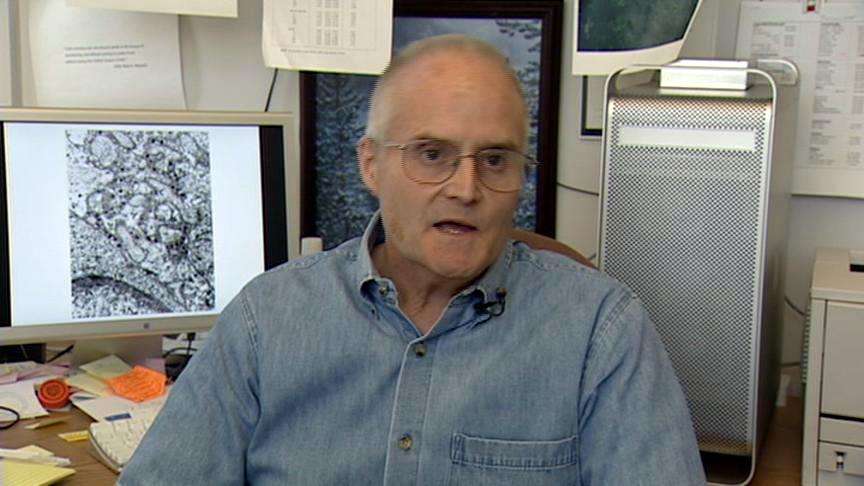
The AIDS virus is hiding in an elegant, very rare cell in the body. It's one Dr. Greg Burton refers to as the Cinderella cell. Biochemist Burton and biologist Keith Crandall say this latest Brigham Young /Johns Hopkins study reveals what could be the most cunning trick yet.
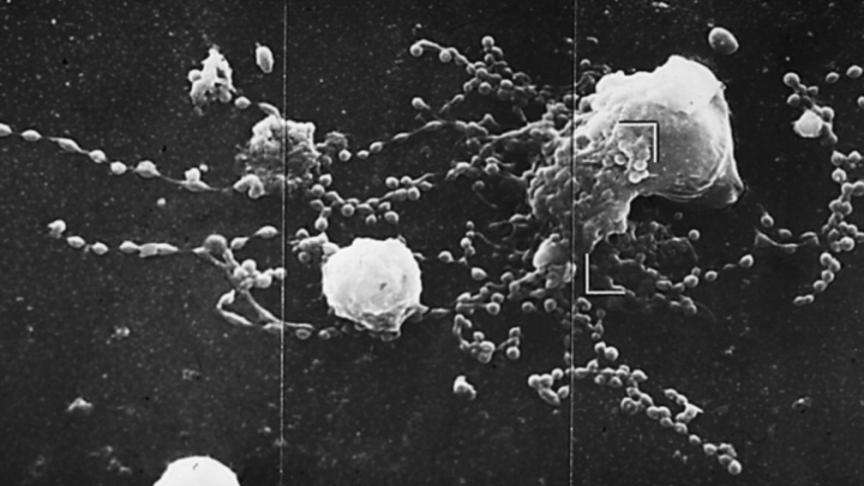
From electron microscope photos, courtesy of Andras Szakal, the rare follicular dendritic cells can be seen. They're like branch libraries, retaining on octopus like tentacles bits and pieces of agents the immune system needs to remember and build antibodies against when needed.
But wouldn't you know it! HIV has learned how hide here, waiting, while they're not infecting anything. That is, until a cell rubs against the arms, checking to see what the library has saved from other infections. Burton says, "It's almost like they come up and have an intimate embrace, and in the process of that embrace, there's a knife that goes in the back of that cell that now is going to become infected."
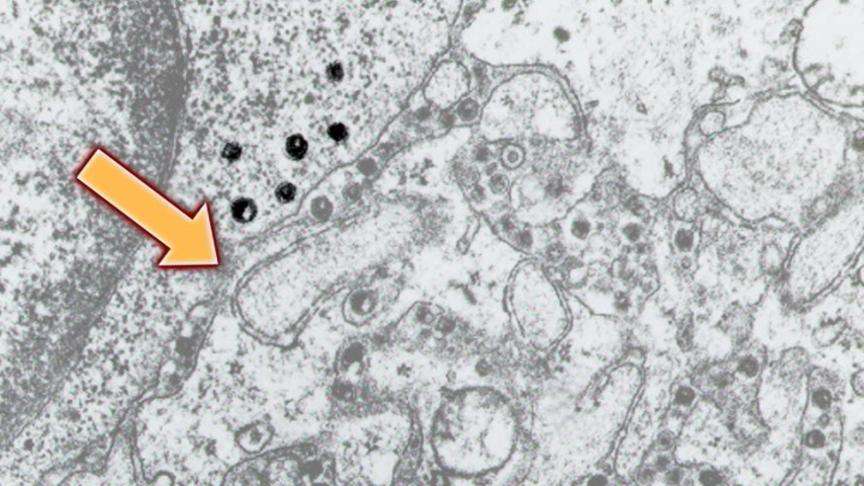
Now, from this rare so-called library cell it trusts implicitly to stay on guard, the worst invader of all is passed on unknowingly. "This is the first study in which people have gone in and actually taken out these cells and characterized the virus on the individual cells from the different sites where they live," Burton says.
These hiding places are called reservoirs. Researchers now want to explore ways to attack the virus in the very pockets where they hide. The BYU-Johns Hopkins study will appear in the June issue of the Journal of Virology.
E-mail: eyeates@ksl.com