'%3e%3cpath%20d='M34.1406%205.85938C30.3906%202.10547%2025.3047%200%2020%200C14.6953%200%209.60938%202.10547%205.85938%205.85938C2.10938%209.61328%200%2014.6953%200%2020C0%2025.3047%202.10547%2030.3906%205.85938%2034.1406C9.61328%2037.8906%2014.6953%2040%2020%2040C25.3047%2040%2030.3906%2037.8945%2034.1406%2034.1406C37.8906%2030.3906%2040%2025.3047%2040%2020C40%2014.6953%2037.8945%209.60938%2034.1406%205.85938ZM37.0117%2023.543H31.1602V13.5391H27.6328V19.9414C28.1211%2020.6914%2028.3711%2021.582%2028.3711%2022.5625V22.625C28.3711%2023.668%2028.1172%2024.6055%2027.6328%2025.4297V26.6094H36.082C33.4883%2032.9375%2027.2891%2037.3789%2020.0039%2037.3789C10.3711%2037.3789%202.62109%2029.6289%202.62109%2020C2.62109%2010.3711%2010.3711%202.62109%2020%202.62109C29.6289%202.62109%2037.3789%2010.3711%2037.3789%2020C37.3789%2021.1484%2037.2617%2022.2656%2037.0508%2023.3477C37.0391%2023.4141%2037.0234%2023.4766%2037.0117%2023.543Z'%20fill='white'/%3e%3cpath%20d='M22.3086%2018.5352C20.4336%2018.125%2019.9531%2017.8398%2019.9766%2017.1836V17.1406C19.9766%2016.6992%2020.3477%2016.2148%2021.4023%2016.2148C22.582%2016.2148%2023.8867%2016.6797%2025.0781%2017.4766L26.8516%2015.0195C25.4453%2013.8906%2023.707%2013.3398%2021.5547%2013.3398C18.5195%2013.3398%2016.4375%2015%2016.4063%2017.4766V17.5352C16.3633%2020.2617%2018.5859%2020.9805%2021.293%2021.6016C23.0391%2021.9766%2023.5703%2022.3164%2023.5703%2022.9609L23.5469%2022.9766C23.5469%2023.3906%2023.2578%2023.7031%2022.7852%2023.8359C22.5742%2023.9062%2022.1289%2023.9727%2021.5156%2023.9727C20.7617%2023.9727%2019.7539%2023.8633%2018.6328%2023.4844C18.0898%2023.2891%2017.4727%2023.0039%2016.8047%2022.6133L20.1406%2026.625C20.2813%2026.6602%2021.0977%2026.8516%2021.7734%2026.8516C25.0039%2026.8516%2027.0859%2025.2461%2027.1094%2022.6328V22.5703C27.1602%2020.1133%2025.2148%2019.1719%2022.3086%2018.5352Z'%20fill='white'/%3e%3cpath%20d='M5.24219%2013.5664V26.6133H8.75391V23.7578L10.2969%2021.9531L14.2031%2026.6133H18.3867L12.3555%2019.5195L17.4023%2013.5664H13.4531L8.75391%2019.0586V13.5664H5.24219Z'%20fill='white'/%3e%3c/g%3e%3cdefs%3e%3cclipPath%20id='clip0_97_2430'%3e%3crect%20width='40'%20height='40'%20fill='white'/%3e%3c/clipPath%3e%3c/defs%3e%3c/svg%3e)


Estimated read time: 3-4 minutes
- A leader in Utah's Muslim community has reached out to the Council on American-Islamic Relations, or CAIR, about creating a chapter here.
- Shuaib Din, imam of the Utah Islamic Center, said an advocacy operation is needed to defend the community's interests.
- The violent July 13 knife attack on a Muslim man, allegedly because of his religion, spurred the efforts.
SALT LAKE CITY — Spurred by a knife attack earlier this month on a Muslim kiosk operator at a West Valley City mall, a Muslim leader in Utah says the state needs an advocacy group to defend the Islamic community's interests.
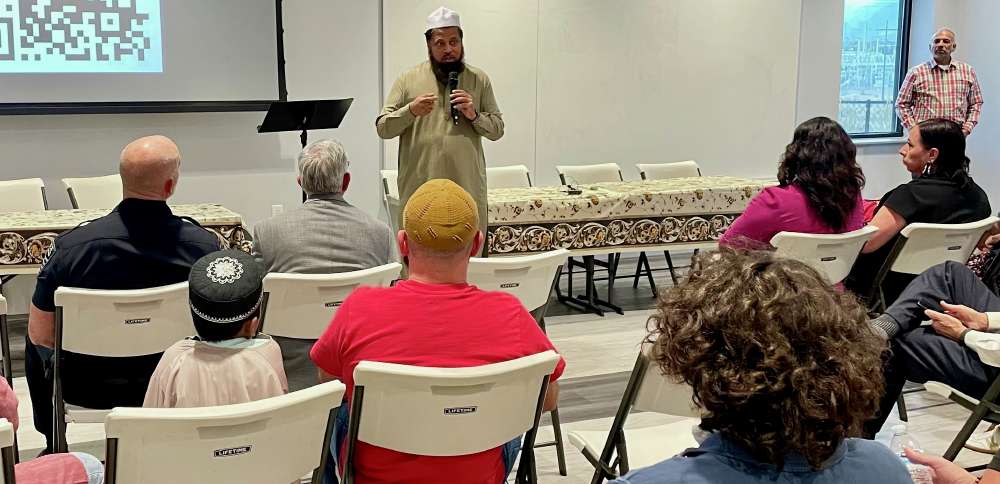
Shuaib Din, the imam of the West Jordan-based Islamic Community Center, has reached out to representatives of the Washington, D.C.-based Council on American-Islamic Relations, or CAIR, about opening a chapter in Utah. A rep from the group, Edward Ahmed Mitchell, traveled to Utah last week and took part in a gathering to draw attention to the dangers the Muslim community here can face.
"Basically to ensure that our civil rights are protected and not violated," Din said Tuesday. "It's just an idea thing right now. It would be nice to have a CAIR chapter here in Utah because there's definitely a need for it."
He's already talked to CAIR officials about the possibility, and they are supportive. But more work needs to be done to spread the word to the Islamic community around the state about the importance of taking proactive steps to defend the community's interests. Din also suspects a fundraising initiative would be needed to generate money to help launch a branch here.
"It's a long road, it's not an easy task," he said. CAIR operates 25 chapters or satellite offices around the country.
The July 13 attack on Syed Sohail was perhaps the most violent incident targeting a member of the Muslim community in Utah because of their religion. His alleged attacker, Peter Michael Larsen, faces two counts of attempted aggravated murder in the case. He went after Sohail because of his religion and to send an anti-Muslim message, according to court documents, and the suspect's attempted aggravated murder charges carry hate crime enhancements.
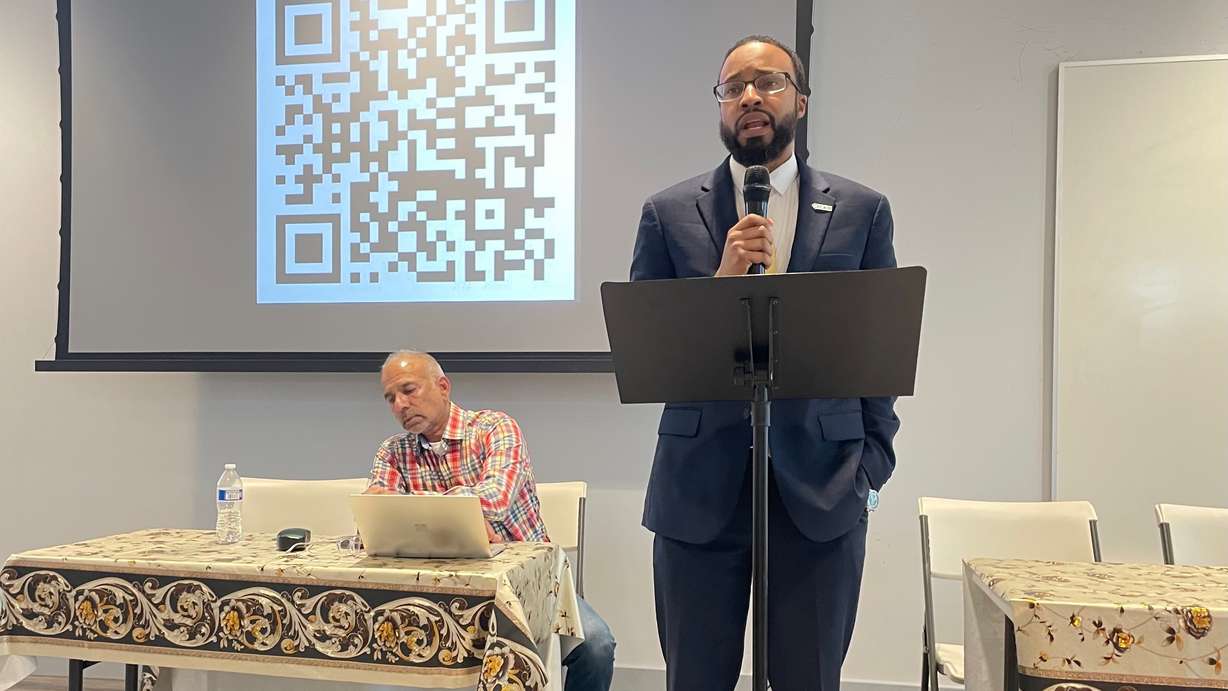
"Utah is one of the states we absolutely do want to expand to soon, especially in light of the horrific hate crime that occurred there a few weeks ago," said Ahmed Mitchell, deputy director of CAIR. "We're not ready to officially open anything yet, but we had very good conversations during our visit to Utah, and we look forward to coming back to get this off the ground in the coming months, God willing."
CAIR is to the Muslim community, Ahmed Mitchell said, what the NAACP is to the African American community. CAIR chapters, he said, help with grassroots organizing, educate the communities where they're located about the American Muslim population, work with state and local officials and respond when hate incidents occur.
"The community should not have to go out there and protect and save itself. That's the job of civil rights attorneys and experts who know what the law is, how to enforce the law and know how to fight these battles in the court of law and the court of public opinion," he said.
The Islamic Community Center, Din noted, is a religious organization, not a civil rights entity. Several other mosques and organizations focused on the Muslim community also operate in Utah.
Read more:

Multicultural Utah
Looking for more news about the different cultures that call Utah home? Visit our Multicultural Utah section for more stories, events and features.The discrimination the Muslim community can face, focus of some of the speakers' comments at the July 22 town hall gathering, takes varied forms. While the July 13 attack is an extreme example, Din said Muslim children can face taunting at schools, and Ahmed Mitchell noted job discrimination some can face, among other things.
"What we've learned from the local community leadership there is that anti-Muslim incidents happen far more than are acceptable and far more than we even realize," Ahmed Mitchell said.
In response to the July 13 attack, Utah Sen. Luz Escamilla, D-Salt Lake City, said she plans to pursue legislation in the 2027 session aimed at combatting hate crimes.

Related stories
Most recent Religion stories
Related topics
 Tim Vandenack