'%3e%3cpath%20d='M34.1406%205.85938C30.3906%202.10547%2025.3047%200%2020%200C14.6953%200%209.60938%202.10547%205.85938%205.85938C2.10938%209.61328%200%2014.6953%200%2020C0%2025.3047%202.10547%2030.3906%205.85938%2034.1406C9.61328%2037.8906%2014.6953%2040%2020%2040C25.3047%2040%2030.3906%2037.8945%2034.1406%2034.1406C37.8906%2030.3906%2040%2025.3047%2040%2020C40%2014.6953%2037.8945%209.60938%2034.1406%205.85938ZM37.0117%2023.543H31.1602V13.5391H27.6328V19.9414C28.1211%2020.6914%2028.3711%2021.582%2028.3711%2022.5625V22.625C28.3711%2023.668%2028.1172%2024.6055%2027.6328%2025.4297V26.6094H36.082C33.4883%2032.9375%2027.2891%2037.3789%2020.0039%2037.3789C10.3711%2037.3789%202.62109%2029.6289%202.62109%2020C2.62109%2010.3711%2010.3711%202.62109%2020%202.62109C29.6289%202.62109%2037.3789%2010.3711%2037.3789%2020C37.3789%2021.1484%2037.2617%2022.2656%2037.0508%2023.3477C37.0391%2023.4141%2037.0234%2023.4766%2037.0117%2023.543Z'%20fill='white'/%3e%3cpath%20d='M22.3086%2018.5352C20.4336%2018.125%2019.9531%2017.8398%2019.9766%2017.1836V17.1406C19.9766%2016.6992%2020.3477%2016.2148%2021.4023%2016.2148C22.582%2016.2148%2023.8867%2016.6797%2025.0781%2017.4766L26.8516%2015.0195C25.4453%2013.8906%2023.707%2013.3398%2021.5547%2013.3398C18.5195%2013.3398%2016.4375%2015%2016.4063%2017.4766V17.5352C16.3633%2020.2617%2018.5859%2020.9805%2021.293%2021.6016C23.0391%2021.9766%2023.5703%2022.3164%2023.5703%2022.9609L23.5469%2022.9766C23.5469%2023.3906%2023.2578%2023.7031%2022.7852%2023.8359C22.5742%2023.9062%2022.1289%2023.9727%2021.5156%2023.9727C20.7617%2023.9727%2019.7539%2023.8633%2018.6328%2023.4844C18.0898%2023.2891%2017.4727%2023.0039%2016.8047%2022.6133L20.1406%2026.625C20.2813%2026.6602%2021.0977%2026.8516%2021.7734%2026.8516C25.0039%2026.8516%2027.0859%2025.2461%2027.1094%2022.6328V22.5703C27.1602%2020.1133%2025.2148%2019.1719%2022.3086%2018.5352Z'%20fill='white'/%3e%3cpath%20d='M5.24219%2013.5664V26.6133H8.75391V23.7578L10.2969%2021.9531L14.2031%2026.6133H18.3867L12.3555%2019.5195L17.4023%2013.5664H13.4531L8.75391%2019.0586V13.5664H5.24219Z'%20fill='white'/%3e%3c/g%3e%3cdefs%3e%3cclipPath%20id='clip0_97_2430'%3e%3crect%20width='40'%20height='40'%20fill='white'/%3e%3c/clipPath%3e%3c/defs%3e%3c/svg%3e)


- Salt Lake City unveiled two new historical markers as part of an initiative to expand the range of topics covered by such monuments.
- One marker commemorates Thomas Coleman, a Black man who was lynched in 1866.
- The other highlights the Sun Tavern, instrumental to the LGBTQ+ community as it asserted its place in the city in the 1970s.
SALT LAKE CITY — Numerous historical markers are already scattered around Utah, variously denoting key moments in the state's settlement and buildings, roads and more notable in Utah's growth.
Welcome two more.
Salt Lake City launched a pilot program last year to broaden the range of topics, events and people commemorated, installing two new markers last week as part of the initiative. One of them remembers Thomas Coleman, a Black man lynched in Salt Lake City in 1866, and the other touts the history of the Sun Tavern, "a vital community hub" for the LGBTQ+ community as it asserted its place in the city in the 1970s.
Many stories rooted in the settlement of Utah following the arrival of the first pioneers here in 1847 "are well represented in our existing monuments around the city," said Salt Lake City Councilman Chris Wharton, the brainchild behind the initiative. "But there are other really compelling and interesting stories that exist, too. So I wanted to ... have a way for community members to tell those stories."
The historical marker to Coleman is located on the southwest corner of 300 North and North Main, catty-corner to the grounds of the Utah State Capitol and near the site where the man's body was found after his lynching. The Sun Tavern marker sits on the west side of North 400 West, south of South Temple and west of the Delta Center, near where the original tavern, since torn down, was once located.
The Sema Hadithi African American Heritage and Culture Foundation, a non-profit organization focused on researching the history of Utah's African ancestral families, pursued installation of the Coleman marker. The group faced "rejection after rejection" in its efforts to find a site for a memorial before getting support via the Salt Lake City initiative, according to a Sema Hadithi Facebook post on Monday.
The marker is meant to "teach Utahns our true history," the post reads. "Our motto is 'Unity through historical truth.' How can we be united unless and until we discuss not the falsehoods of history but the truths of history?"
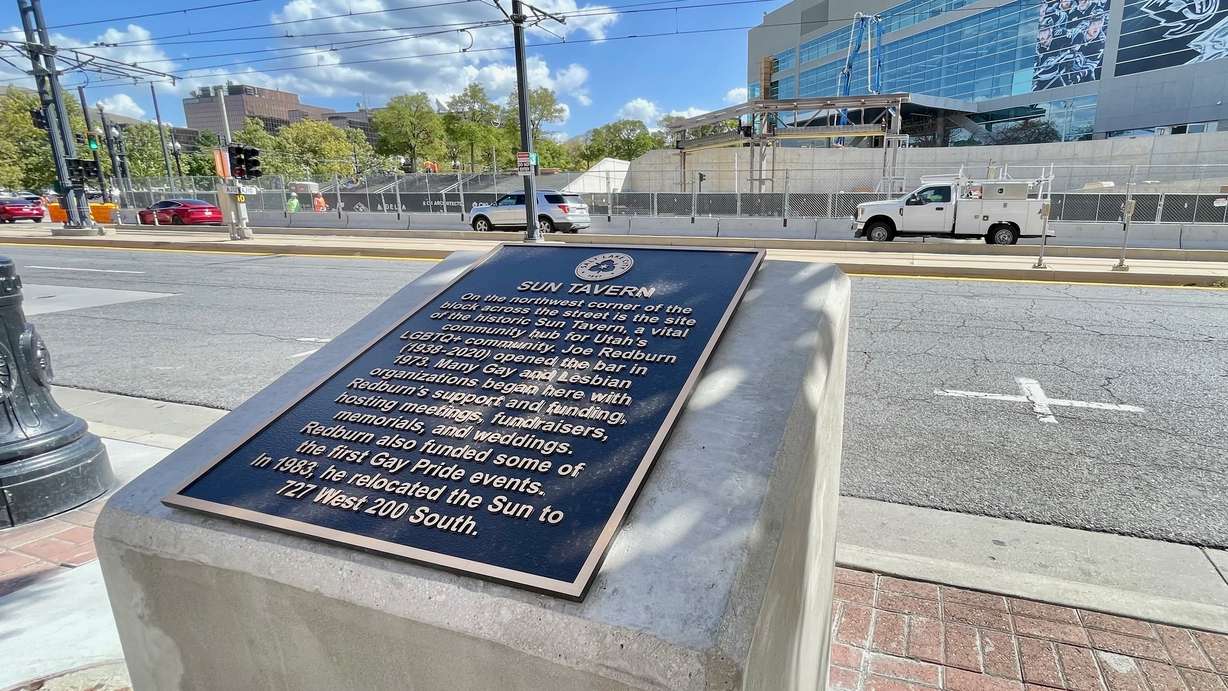
The Mildred Berryman Institute for LGBTIQ2S+ Utah History sought installation of the Sun Tavern marker.
"The Sun Tavern is an important reminder that gay, lesbian and bisexual Utahns were building community, creating gathering places and organizing for greater visibility and acceptance long before today's more familiar milestones," said Randall Hoffman, co-founder of the institute. Joe Redburn opened the locale in 1973 and it "became a de facto community center where Utahns could socialize, find connection and simply be themselves at a time when safe public spaces were scarce."
The two markers, plaques sitting atop concrete stands, respectively recount the history of Coleman and the Sun Tavern. Wharton said those two markers are the only ones that will be installed as part of the $30,000 initiative, though he hopes to continue the effort and add more.
"I don't know when the next opportunity will come up to find additional funding. But I am going to be looking for that opportunity going forward," he said.
The office of Salt Lake City Mayor Erin Mendenhall collected proposals for markers and the Salt Lake City Human Rights Commission made the selections, according to Wharton. The two new markers were formally unveiled on Aug. 25.
'A public warning'
Coleman was lynched "as a public warning against race mixing," according to the man's history, posted on a University of Utah website featuring the history of Black members of The Church of Jesus Christ of Latter-day Saints.
A newspaper reported at the time that Thomas "was 'found in company of a white woman' and then speculated that a 'rival friend' of the woman must have taken vengeance on Thomas after learning of their rendezvous," reads the account on the University of Utah website. A sign on his body when found read, in part, "Take warning. Leave white women alone."
Read more:

Multicultural Utah
Looking for more news about the different cultures that call Utah home? Visit our Multicultural Utah section for more stories, events and features.A coroner's report, though, said the culprits behind his killing were never identified.
"In either case, the public dumping of Thomas's body with the attached placard were clearly calculated to enforce racial segregation and terrorize those who might contemplate violating it," reads the historical account.

Photos
Most recent Utah stories
Related topics
 Tim Vandenack