'%3e%3cpath%20d='M34.1406%205.85938C30.3906%202.10547%2025.3047%200%2020%200C14.6953%200%209.60938%202.10547%205.85938%205.85938C2.10938%209.61328%200%2014.6953%200%2020C0%2025.3047%202.10547%2030.3906%205.85938%2034.1406C9.61328%2037.8906%2014.6953%2040%2020%2040C25.3047%2040%2030.3906%2037.8945%2034.1406%2034.1406C37.8906%2030.3906%2040%2025.3047%2040%2020C40%2014.6953%2037.8945%209.60938%2034.1406%205.85938ZM37.0117%2023.543H31.1602V13.5391H27.6328V19.9414C28.1211%2020.6914%2028.3711%2021.582%2028.3711%2022.5625V22.625C28.3711%2023.668%2028.1172%2024.6055%2027.6328%2025.4297V26.6094H36.082C33.4883%2032.9375%2027.2891%2037.3789%2020.0039%2037.3789C10.3711%2037.3789%202.62109%2029.6289%202.62109%2020C2.62109%2010.3711%2010.3711%202.62109%2020%202.62109C29.6289%202.62109%2037.3789%2010.3711%2037.3789%2020C37.3789%2021.1484%2037.2617%2022.2656%2037.0508%2023.3477C37.0391%2023.4141%2037.0234%2023.4766%2037.0117%2023.543Z'%20fill='white'/%3e%3cpath%20d='M22.3086%2018.5352C20.4336%2018.125%2019.9531%2017.8398%2019.9766%2017.1836V17.1406C19.9766%2016.6992%2020.3477%2016.2148%2021.4023%2016.2148C22.582%2016.2148%2023.8867%2016.6797%2025.0781%2017.4766L26.8516%2015.0195C25.4453%2013.8906%2023.707%2013.3398%2021.5547%2013.3398C18.5195%2013.3398%2016.4375%2015%2016.4063%2017.4766V17.5352C16.3633%2020.2617%2018.5859%2020.9805%2021.293%2021.6016C23.0391%2021.9766%2023.5703%2022.3164%2023.5703%2022.9609L23.5469%2022.9766C23.5469%2023.3906%2023.2578%2023.7031%2022.7852%2023.8359C22.5742%2023.9062%2022.1289%2023.9727%2021.5156%2023.9727C20.7617%2023.9727%2019.7539%2023.8633%2018.6328%2023.4844C18.0898%2023.2891%2017.4727%2023.0039%2016.8047%2022.6133L20.1406%2026.625C20.2813%2026.6602%2021.0977%2026.8516%2021.7734%2026.8516C25.0039%2026.8516%2027.0859%2025.2461%2027.1094%2022.6328V22.5703C27.1602%2020.1133%2025.2148%2019.1719%2022.3086%2018.5352Z'%20fill='white'/%3e%3cpath%20d='M5.24219%2013.5664V26.6133H8.75391V23.7578L10.2969%2021.9531L14.2031%2026.6133H18.3867L12.3555%2019.5195L17.4023%2013.5664H13.4531L8.75391%2019.0586V13.5664H5.24219Z'%20fill='white'/%3e%3c/g%3e%3cdefs%3e%3cclipPath%20id='clip0_97_2430'%3e%3crect%20width='40'%20height='40'%20fill='white'/%3e%3c/clipPath%3e%3c/defs%3e%3c/svg%3e)


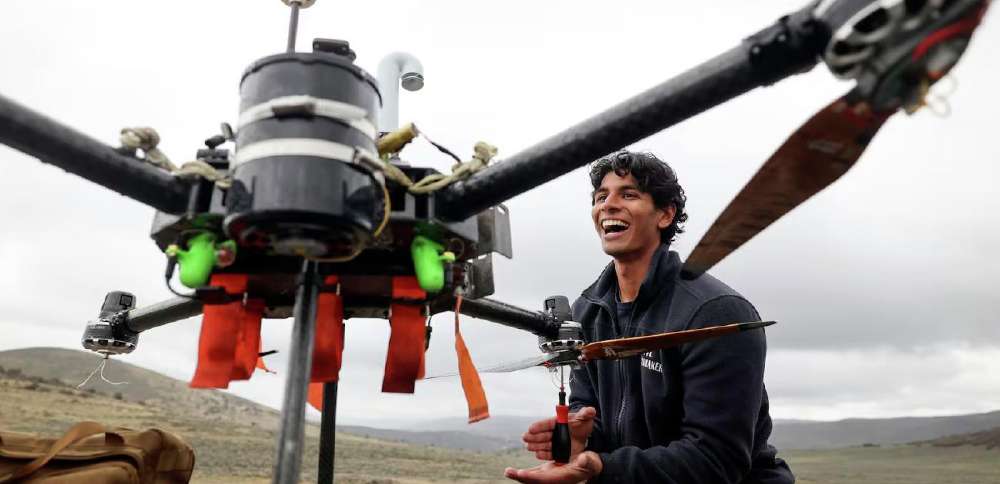
- Rainmaker, a drone-powered cloud seeding company, aims to tackle the West's water crisis.
- Founder Augustus Doricko emphasizes cloud seeding's potential to increase precipitation by 15%.
- Utah's robust cloud-seeding program, backed by $5 million, relies heavily on Rainmaker.
SALT LAKE CITY — Humans have drilled the Earth in search of water for thousands of years. Now, they're excavating the sky.
Rainmaker, a drone-powered cloud seeding company, is attempting to solve the West's deepening water crisis by inducing precipitation.
Water scarcity across the American desert has intensified slowly over the past century, compounded by explosive population growth and drought. In 1922 when the Colorado River's water was first allocated, 9 million people lived in the continental states west of Texas. In 2026, the West's population has ballooned to 78 million.
As a result, reservoirs built as back-up for dry years have steadily drained, with each arid state asking for more of the river than is sustainable to give.
Augustus Doricko, Rainmaker's 26-year-old founder and CEO, learned about the issue while working with farmers across Texas. Water conservation and increased efficiency only took people so far for so long. The reservoirs are draining; aquifers are running out.
A realization settled on him: "We have to make more water."
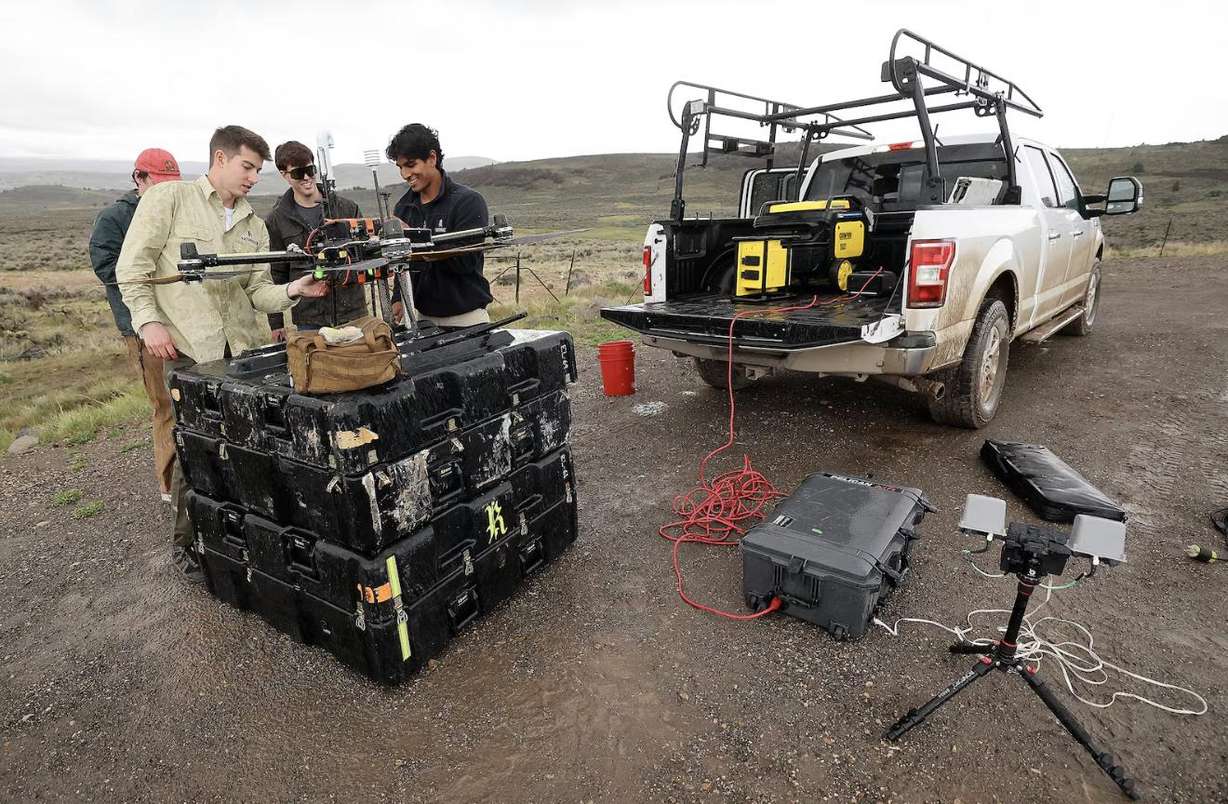
Three years after Doricko launched his cloud-seeding business, I sat across from him in Rainmaker's two-story headquarters in El Segundo, California. Samurai swords hung from the wall near the front door; large TVs with real-time radar showed drones moving precisely through Utah's mountains.
Those cloud-adapted drones were designed atop these rows of cluttered wooden desks. The operation, quietly buzzing with determination on a Wednesday afternoon, does a majority of its work in Utah. In 2023, state lawmakers put an annual $5 million bet on cloud seeding to increase snowpack, which accounts for 95% of the state's drinking water.
Utah has developed the most robust operational cloud-seeding program in the U.S., Jonathan Jennings, a meteorologist with Utah's Division of Water Resources, said. And Rainmaker is its heart.
What is cloud seeding? Does it work?
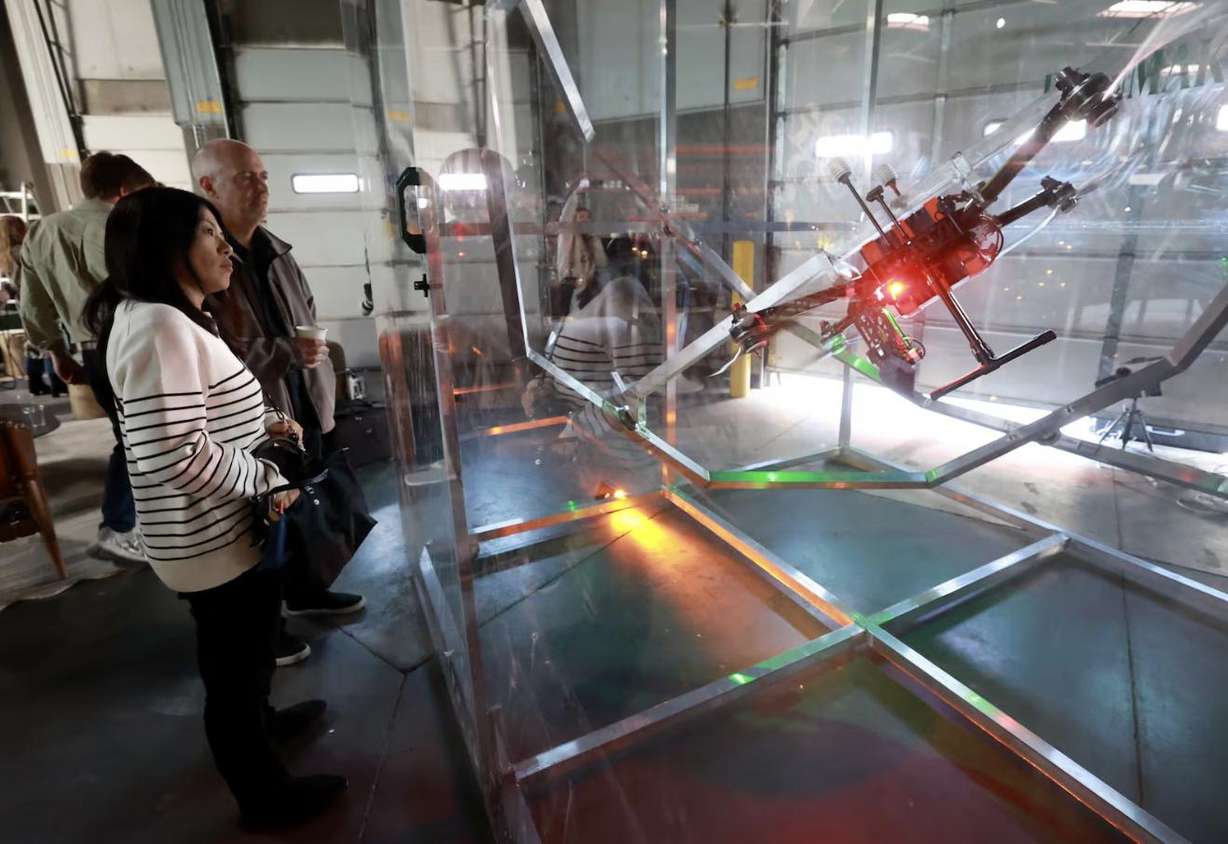
Cloud seeding technology has been around for more than 80 years. It does not create clouds; it encourages precipitation in already-existing clouds by adding tiny particles to help water droplets freeze and form snow or rain.
So far, silver iodide has proven to be the most effective cloud seeding substance, since its crystals closely match ice's structure. The simple compound is both naturally occurring and can be produced in a lab.
Numerous studies have found that silver iodide concentrations in areas that were consistently cloud seeded, though slightly above natural background levels, are much lower than EPA safety limits.
One study conducted at the University of Wisconsin found that the same area would need to be seeded for 10,000 years before it would see an accumulated effect. However, Utah still funds an environmental study to monitor silver iodide levels.
Utah's Division of Water Resources reports that cloud seeding adds at least 180,000 acre-feet of increased streamflow annually during spring runoff. Cloud seeding can likely boost precipitation by 15%.
Rainmaker began with Genesis 1
Augustus Doricko's cloud-seeding empire began in the spring of 2023, as he read Genesis 1:26-28.
He'd been debating whether he should start another groundwater company when his eyes passed over those verses.
"It's where Adam is given dominion over the Earth, the seas and the skies," said Doricko, who belongs to the Eastern Orthodox Church. "And at that point, what struck me was that we essentially have no dominion over the seas and the skies."
"God's mandate for us to be good stewards, both for our own sake and creation's, thereby glorifying him, has been totally abdicated. We have the technology to better manage the skies, to prevent droughts and disasters, to prevent famines, but we're not using it," he said. "So starting Rainmaker happened when I read that verse."

But before that, Rainmaker began at a gym in Texas
Doricko was studying physics at UC Berkeley when COVID-19 shut the world down.
Social distancing, forced business closures and stay-at-home orders made life in pandemic-era California difficult. Since the doors to campus and his local gym were locked, Doricko moved to Fort Worth, Texas, and started working as a personal trainer.
At the gym, he met Jason Flynt, one of the biggest water-well drillers in Dallas. They began talking about water, and by Dec. 2021, they co-founded Terra Seco Solutions, which was "basically like TurboTax for farmers to report their water usage."
Through developing Terra Seco Solutions, Doricko began to understand the difficult state of water in the West.
"All of the aquifers are running out for the most part. We're getting less snow every year. The reservoirs are more and more empty. It's not good," he told me.
Farmers told Doricko about cloud seeding. Like Utah, Texas began cloud seeding in the 1950s. However, instead of focusing on snow, Texas tries to increase rainfall. For about thirty years, Texan rain enhancers have flown planes, with burning silver iodide dispensers mounted on the wings, through thunderstorms.
The one issue, which has prevented cloud seeding from gaining serious momentum, is its difficulty to validate. But an academic study conducted in 2017 offered a solution: use radar to differentiate between man-made and natural precipitation.
"If I fly the drone in a line and only see snow in that line, then you know it's man-made," he explained.
So Doricko set off to validate cloud seeding with his own drones.