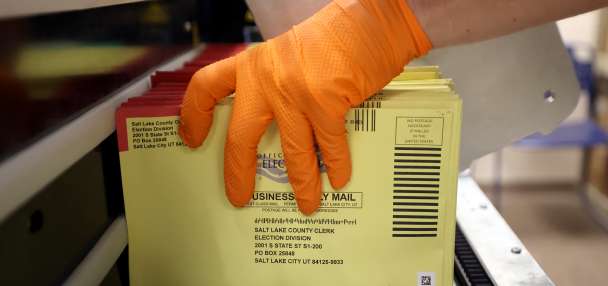

- Democrats are poised to gain control of Congress, with Utah's new 1st Congressional District seen as key.
- Expert J. Miles Coleman predicts Democrats will challenge President Donald Trump's agenda and set 2028 narratives.
- Former Rep. Ben McAdams, heavily favored in the 1st Congressional District race, aligns with Democrats to counter Trump's policies post-redistricting.
SALT LAKE CITY — A final rating for the 2026 midterm elections found Democrats poised to take control of the lower chamber of Congress by a 21-seat margin, with Utah's 1st Congressional District considered a safe Democratic pick up.
The analysis from University of Virginia's Center for Politics bolsters Democratic predictions of a "blue wave" and bodes ill for President Donald Trump, who has asked voters to act as if he is on the ballot ahead of his last two years in office.
Emboldened by anti-Trump backlash, a Democratic House majority could target Trump administration members and thwart the remainder of Trump's agenda, according to J. Miles Coleman, editor at the Center for Politics' Crystal Ball.
"Really the big theme of this will be, from the Democratic perspective, to stop any bad legislation or hold investigations with an eye toward setting the narrative for 2028," Coleman told the Deseret News.
Also atop the priority list for Democrats is reversing Trump's second-term legacy as quickly as possible, according to former Rep. Ben McAdams, who is heavily favored to beat Republican nominee Riley Owen in the 1st District race.
On the campaign trail, McAdams has made his party's message his own, prioritizing affordability and promising to halt military action in Iran, end tariffs and undo Trump's signature legislative achievement: the "big beautiful bill."
Utah's new blue district
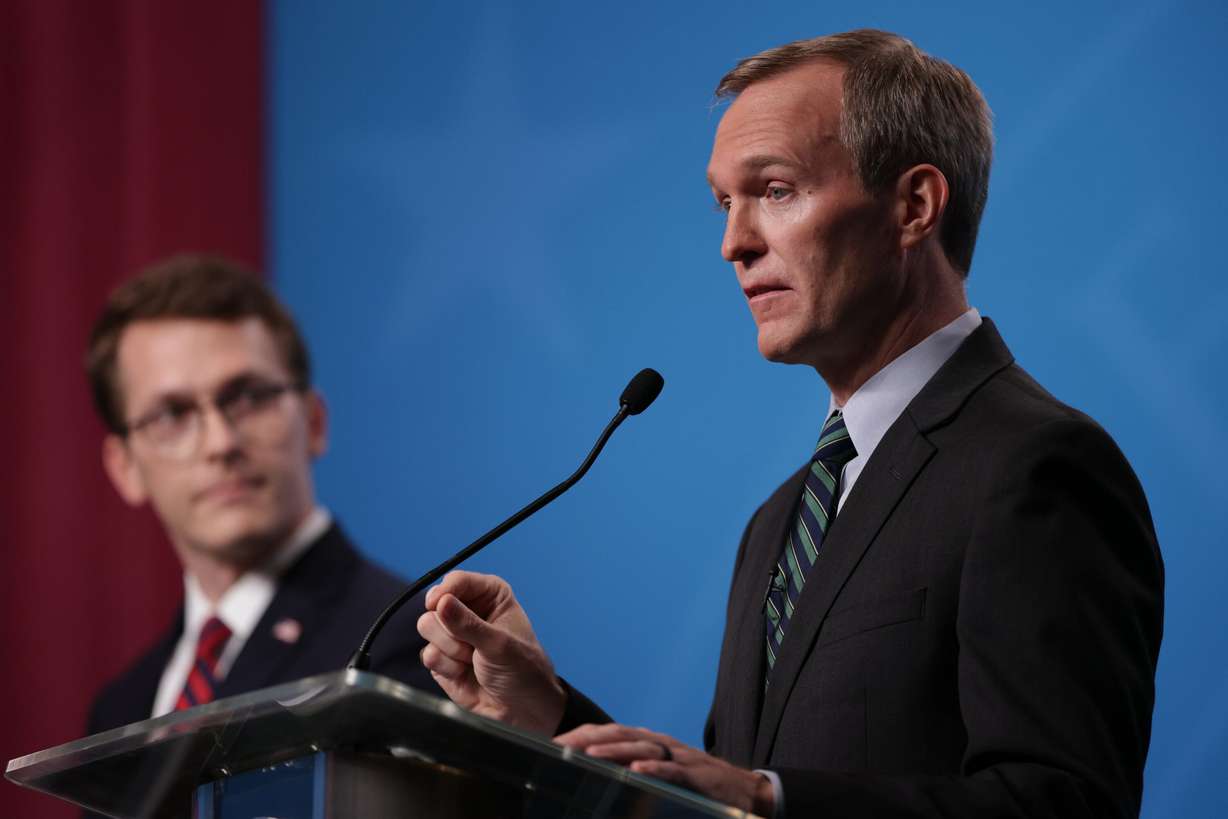
McAdams is an unexpected addition to what national Democrats hope is a clear rebuke of Trump in swing districts across the country, as well as in some seats previously considered safe because of mid-cycle redistricting.
As blatant efforts to game electoral boundaries netted several seats for Texas Republicans and California Democrats in 2025, a yearslong lawsuit made Utah a surprise player in the battle for congressional control.
A district judge ruled last summer that the state Legislature had violated the Utah Constitution by repealing and replacing a ballot initiative approved by voters to create a redistricting commission and anti-gerrymandering criteria.
After rejecting lawmakers' attempt to abide by the original law, the court ordered officials to adopt a map drafted by nonprofit activists, centered around a Salt Lake County district that Kamala Harris won by 24 percentage points.
McAdams easily won a crowded Democratic primary in June. Running against self-described progressives and democratic socialists, McAdams painted himself as a pragmatist but struck a different tone than he had in his past House bids.
Whereas McAdams expressed his anti-abortion views in 2020, now he touts endorsements from abortion advocates. In 2019, he was one of the last to sign on to impeaching Trump; now he repeatedly emphasizes Trump's corruption.
The district's revamped demographics have produced an entirely different set of political considerations for McAdams, Coleman said. In 2018, when McAdams won in a GOP-leaning district, his focus was appealing to the middle.
"He will probably be more mindful of his left flank now than running in a competitive general election," Coleman said of McAdams. "I'm sure he's going to have to be more of a reliable party-line vote at least."
A post-Trump landscape?
Election night results could also reshape the political landscape for Republicans. A serious loss could be pinned on Trump and his administration's less popular policies, removing pressure for Republicans to support Trump.
The Crystal Ball prognosis predicted that Democrats would also take the U.S. Senate, despite a map that was originally ruled to favor Republicans. This could mean Democratic upset victories in states as red as Alaska, Kansas and Texas.
Former Arizona Sen. Jeff Flake, a Republican who repudiated his party's standard-bearer early in Trump's first term, declared on Monday he thought the election would prove the final straw for Republicans who had embraced Trump.
Republicans do not have to look far for a precedent, according to James Curry, a professor of political science at Notre Dame. In 2006, with President George W. Bush stuck in an unpopular war, Republicans lost both chambers of Congress.
This loss marked the beginning of the end for the Bush-era Republican Party, Curry said. Likewise, a poor showing at the polls could indicate the beginning of the end for the Trump era of GOP politics after more than a decade of dominance.
"(Tuesday) night is potentially the type of night that can solidify a different incentive structure for congressional Republicans," he told the Deseret News. "It means there's more incentive to try to keep their distance from (Trump)."
'A huge win for Democrats'
Of course, if there is one thing Trump's reign has revealed, it is that political polling cannot always be trusted to be accurate. A political realignment has made working-class Republicans more difficult to reach by traditional methods.
But whether midterm races fit the historical pattern of losses for the party in power, or whether surveys have once again overstated GOP weaknesses, there is at least one gain the Democratic Party can feel certain about, Curry said.
"The fact that the Democrats can count on picking up a seat in Utah is important for the national picture," he said. "That was a huge win for Democrats nationally that the map got drawn in Utah and this relatively safe blue seat got put in."
From what Curry has seen of McAdams 2.0, it does not look like Democratic leadership will have to worry about a "defector" from the Beehive State as they look to turn their midterm momentum into pain for the Trump administration.