
- Education Secretary Linda McMahon praised American Preparatory Academy for promoting patriotism.
- McMahon's initiatives focus on unity merit over diversity equity inclusion in education.
- Critics argue her policies may neglect complex historical issues like slavery and segregation.
SALT LAKE CITY — Education Secretary Linda McMahon stood with a hand to her chest, mouthing the words as Utah's most diverse public school filled the air with a ringing rendition of the first and last stanzas of "The Star-Spangled Banner."
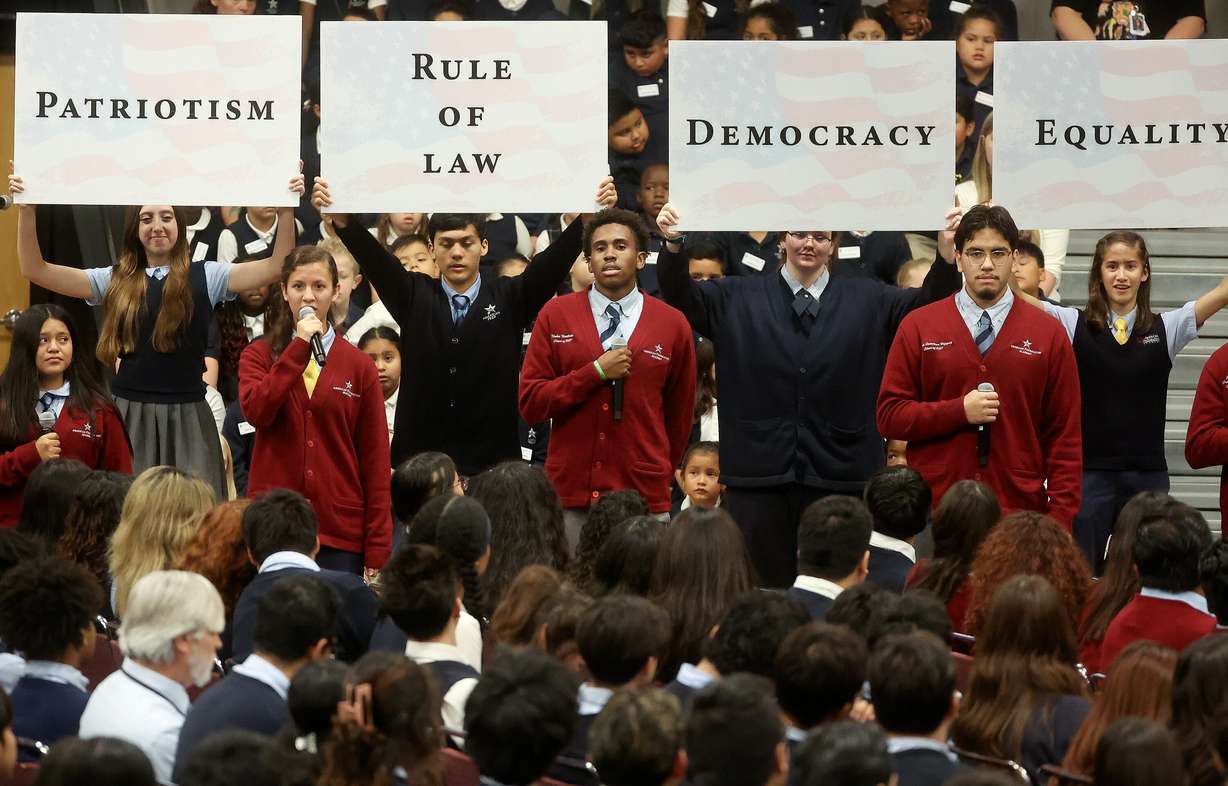
The top education official in the country looked around, impressed as the auditorium of roughly 1,200 charter students then recited "My American Duty," a homage to patriotism, rule of law, democracy, equality and liberty.
Before her was an example of what President Donald Trump had tasked her with incentivizing — institutions of learning that place national unity and American exceptionalism at the center of civics instruction.
Only one problem: In an era when culture war quarrels increasingly color conversations about the classroom, few things have become as polarizing as pride in the United States of America, and its place in the world.
A Deseret News-Hinckley Institute of Politics poll conducted by Morning Consult in June found 97% of Utah Republicans are proud to be an American compared to 44% of Democrats, a 53 percentage-point gap.
McMahon's call to condition grant money on programs promoting "principles of a patriotic education," including an understanding of "the founders' religious beliefs," has prompted pushback from Democratic lawmakers.
Mandate the Pledge?
Congressional Democrats fretted the move would elevate schools endorsing a specific interpretation of U.S. history at the expense of courses featuring discussions about complex periods like slavery and segregation.
Progressive commentators likewise criticized a Dear Colleague Letter McMahon issued last month, urging teachers and administrators to give students routine opportunities to repeat the Pledge of Allegiance.
As McMahon nears the end of her 50-state tour, she said she has been saddened by the number of schools opting out of the practice. This is part of a trend, she said, that the Trump administration hopes to reverse.
"We want to teach our failures and our victories and our principles that make the United States the most extraordinary nation on Earth," McMahon said in her prepared "The Next 250: K-12 Education" remarks.
McMahon does not expect Trump to try to mandate the Pledge of Allegiance because the president believes those decisions belong to states, she told the Deseret News. An attempt to do so would also likely be met by a legal challenge.
Still, the administration wants to foster a sense that all 50 states belong to one republic, McMahon told the Deseret News, through the "Patriotic Education Supplemental Priority" grants, which took effect in June.
Utah's most diverse school
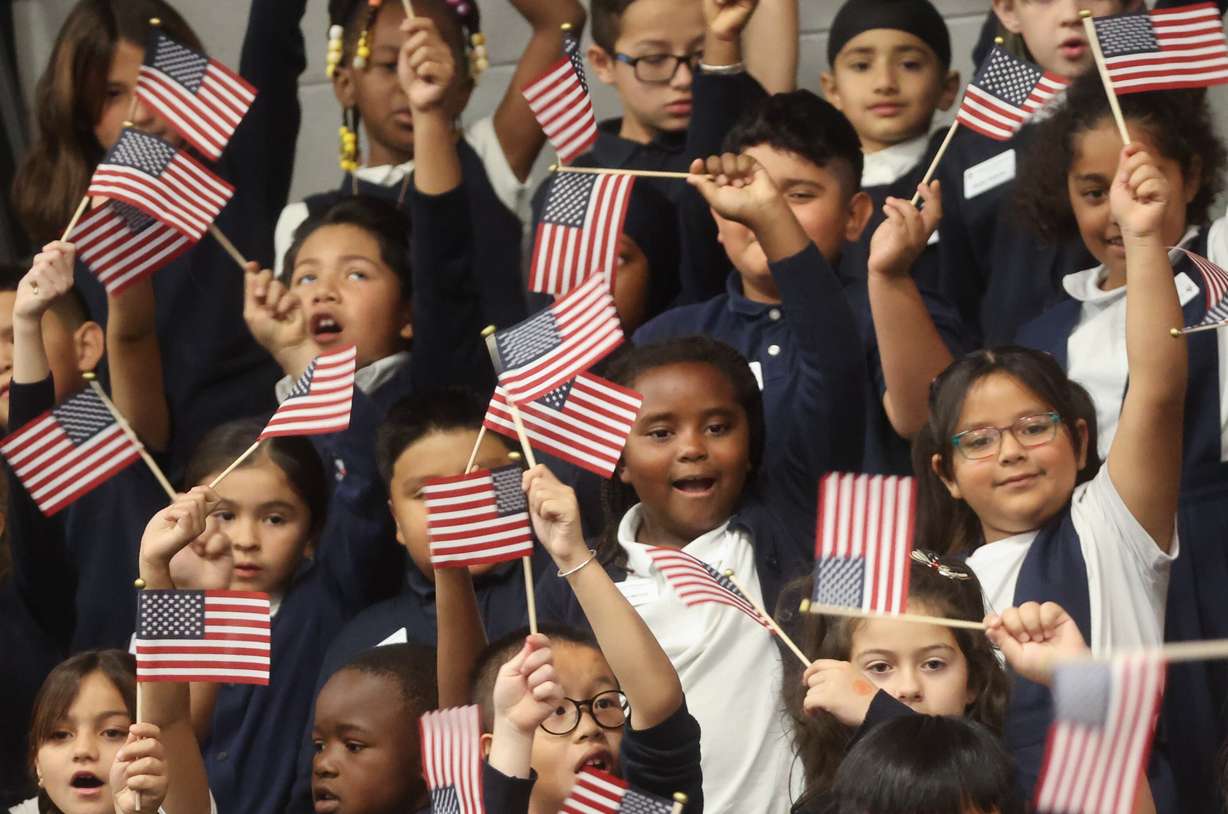
Splits over shared identity felt distant on Tuesday at the West Valley City campus of American Preparatory Academy, as the crowd of uniformed pupils, some wearing hijab and kippah, sang "This is My Country."
Around 22% of the students are refugees or immigrants, according to self-reporting from parents to the school.
The breakdown of the student body, ranging from kindergarten to 12th grade, is 91% racial or ethnic minority and 55% current or former English learners, with 18 languages besides English spoken by enrollees.
The average rate of minority students in the West Valley City School District is 60% and neighboring Granite School District is 57%, while state averages are closer to 31% for all schools and 35% for charter schools.
In her speech, McMahon highlighted unprecedented efforts by the administration to help students from all backgrounds by abandoning an emphasis on diversity, equity and inclusion — and "going back to merit."
As new data show U.S. students falling behind in literacy, with reading scores falling in elementary, middle school and high school, McMahon said she is redirecting funds from DEI positions to the basics of learning.
"At the direction of President Trump, we've taken billions away from DEI classroom initiatives and bureaucratic-centric projects and reinvested those dollars to supercharge the fundamentals," she told students.
DEI vs. 'merit'
McMahon hailed American Preparatory Academy — one of the top performing schools in the state — as a sterling example. But on top of rigorous academics, the school has been intentional about the community it serves.
The West Valley campus was founded to help refugee students struggling because they were placed in classes based on age instead of skill level. In 2009, school staff began recruiting refugee families with special outreach.
Since then, applications have spread mostly by word of mouth, according to Communications Director Dan Bazan.
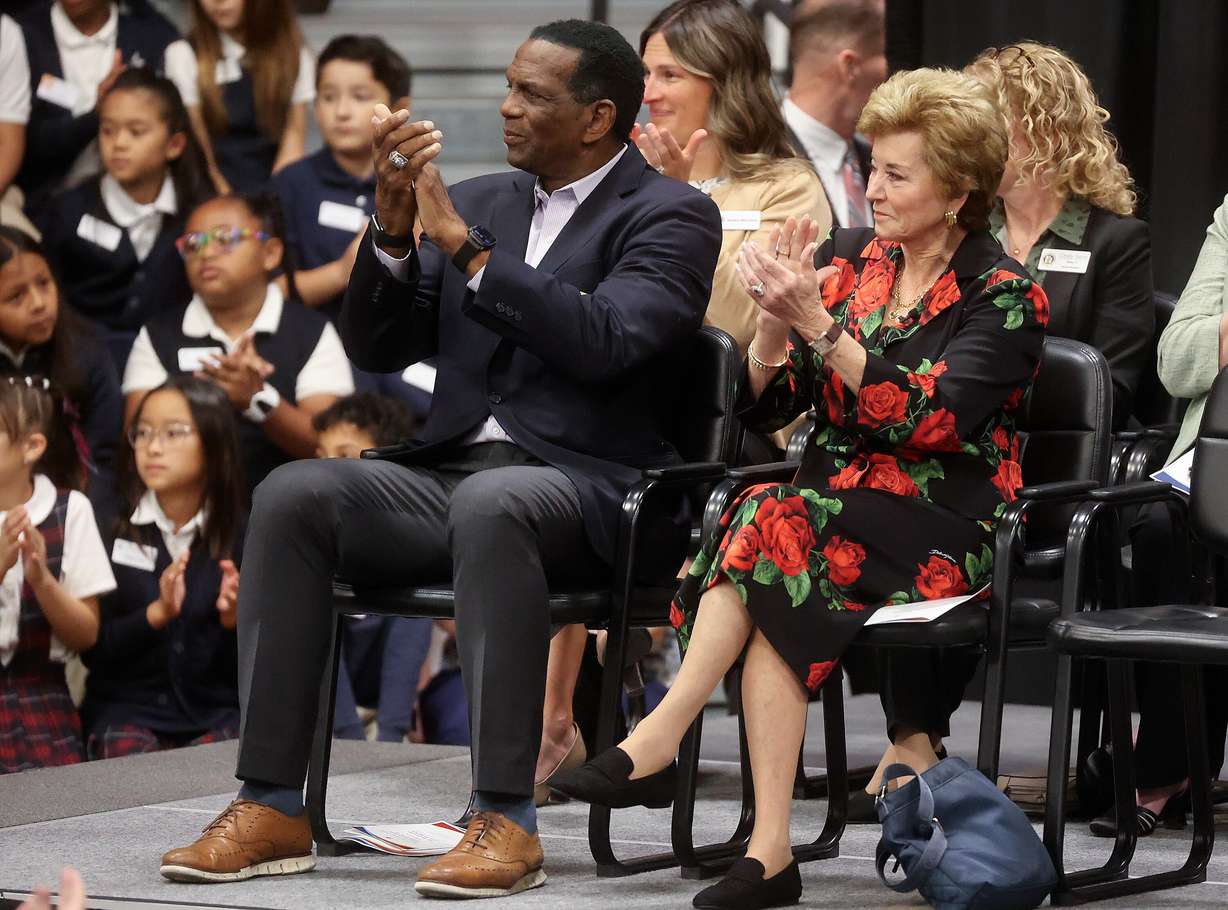
Joining McMahon on stage was outgoing Rep. Burgess Owens, who serves as vice chair of the House Education and Workforce Committee and as chair of the Higher Education and Workforce Development Subcommittee.
Owens, who was raised in Florida, has long been a vocal critic of critical race theory. In an interview with the Deseret News, he said education has an essential role in uniting Americans across differences.
"It doesn't matter what our background is, what our color is," he said. "It has to happen where kids are coming to school, seeing as an example teachers who love our country and the message is simply: We are one."
The main message from McMahon and Owens on Tuesday was that teachers will have more flexibility to do this if the federal government gets out of the way. McMahon has taken dramatic steps to make that happen.
Shrinking the Education Department
McMahon has cut the Education Department workforce in half, shifted parts of its student loan portfolio to the Treasury Department, and moved special education oversight and civil rights enforcement to other agencies.
By doing this, she is fulfilling Trump's orders for the Education Department to eliminate itself, even though many in Congress, including some Republicans, argue legislative authority would be required to do so.
McMahon's underlying argument is that despite $3 trillion being poured into the Education Department over its 46-year lifetime, only about 30% of American students are proficient in reading and math.
The administration has made reforms to give states more control over federal funding streams. Ultimately, student success is not about the quantity of money, McMahon said, but about how it is used by schools.
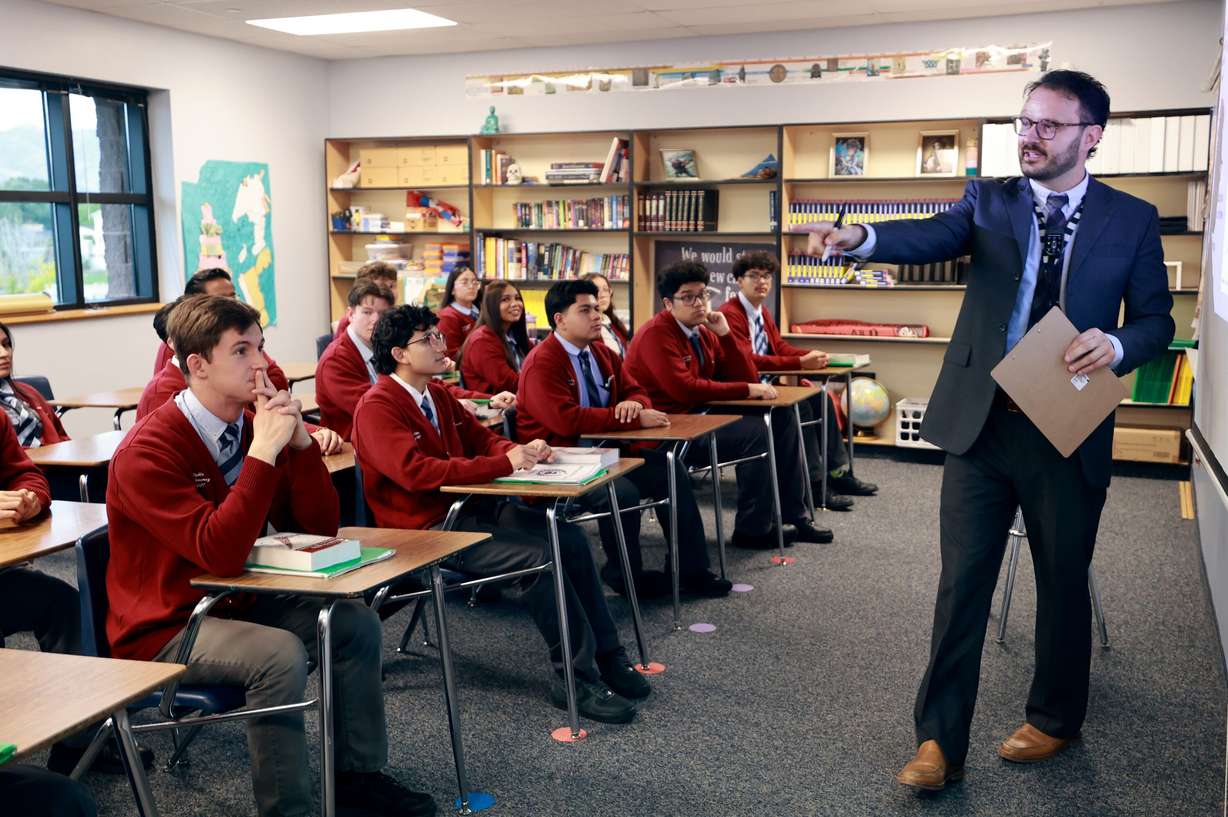
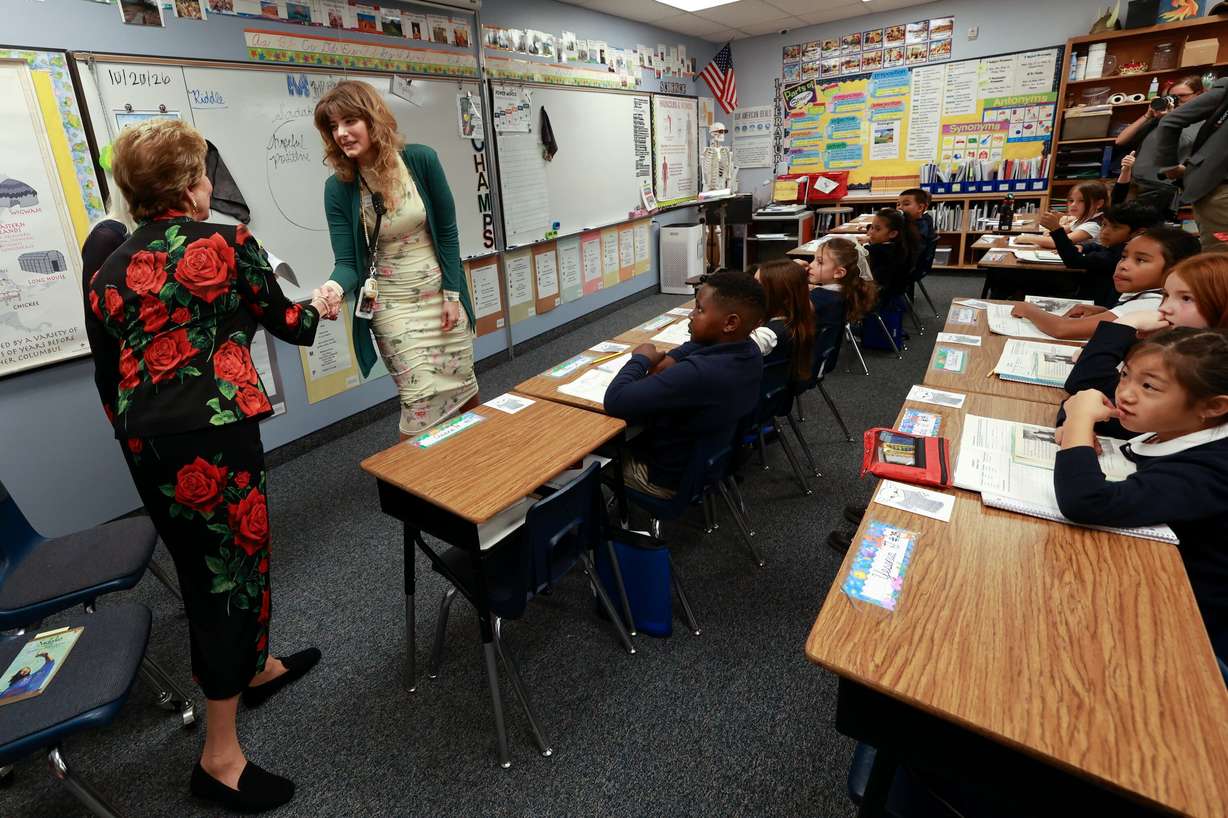
As part of her tour of American Preparatory Academy, McMahon sat in on an Advanced Placement government and politics class for seniors. She nodded approvingly as the teacher discussed the graphic projected on the white board.
While Utah regularly ranks in the bottom two or three for education spending per pupil, the teacher pointed out, it currently ranks in the top two or three nationwide for eighth grade reading and math scores.