'%3e%3cpath%20d='M34.1406%205.85938C30.3906%202.10547%2025.3047%200%2020%200C14.6953%200%209.60938%202.10547%205.85938%205.85938C2.10938%209.61328%200%2014.6953%200%2020C0%2025.3047%202.10547%2030.3906%205.85938%2034.1406C9.61328%2037.8906%2014.6953%2040%2020%2040C25.3047%2040%2030.3906%2037.8945%2034.1406%2034.1406C37.8906%2030.3906%2040%2025.3047%2040%2020C40%2014.6953%2037.8945%209.60938%2034.1406%205.85938ZM37.0117%2023.543H31.1602V13.5391H27.6328V19.9414C28.1211%2020.6914%2028.3711%2021.582%2028.3711%2022.5625V22.625C28.3711%2023.668%2028.1172%2024.6055%2027.6328%2025.4297V26.6094H36.082C33.4883%2032.9375%2027.2891%2037.3789%2020.0039%2037.3789C10.3711%2037.3789%202.62109%2029.6289%202.62109%2020C2.62109%2010.3711%2010.3711%202.62109%2020%202.62109C29.6289%202.62109%2037.3789%2010.3711%2037.3789%2020C37.3789%2021.1484%2037.2617%2022.2656%2037.0508%2023.3477C37.0391%2023.4141%2037.0234%2023.4766%2037.0117%2023.543Z'%20fill='white'/%3e%3cpath%20d='M22.3086%2018.5352C20.4336%2018.125%2019.9531%2017.8398%2019.9766%2017.1836V17.1406C19.9766%2016.6992%2020.3477%2016.2148%2021.4023%2016.2148C22.582%2016.2148%2023.8867%2016.6797%2025.0781%2017.4766L26.8516%2015.0195C25.4453%2013.8906%2023.707%2013.3398%2021.5547%2013.3398C18.5195%2013.3398%2016.4375%2015%2016.4063%2017.4766V17.5352C16.3633%2020.2617%2018.5859%2020.9805%2021.293%2021.6016C23.0391%2021.9766%2023.5703%2022.3164%2023.5703%2022.9609L23.5469%2022.9766C23.5469%2023.3906%2023.2578%2023.7031%2022.7852%2023.8359C22.5742%2023.9062%2022.1289%2023.9727%2021.5156%2023.9727C20.7617%2023.9727%2019.7539%2023.8633%2018.6328%2023.4844C18.0898%2023.2891%2017.4727%2023.0039%2016.8047%2022.6133L20.1406%2026.625C20.2813%2026.6602%2021.0977%2026.8516%2021.7734%2026.8516C25.0039%2026.8516%2027.0859%2025.2461%2027.1094%2022.6328V22.5703C27.1602%2020.1133%2025.2148%2019.1719%2022.3086%2018.5352Z'%20fill='white'/%3e%3cpath%20d='M5.24219%2013.5664V26.6133H8.75391V23.7578L10.2969%2021.9531L14.2031%2026.6133H18.3867L12.3555%2019.5195L17.4023%2013.5664H13.4531L8.75391%2019.0586V13.5664H5.24219Z'%20fill='white'/%3e%3c/g%3e%3cdefs%3e%3cclipPath%20id='clip0_97_2430'%3e%3crect%20width='40'%20height='40'%20fill='white'/%3e%3c/clipPath%3e%3c/defs%3e%3c/svg%3e)


- Utah Rep. Burgess Owens proposes the No Aid for Ghost Students Act.
- The bill mandates identity-fraud detection for FAFSA applicants to prevent financial aid theft.
- The system, requiring verification, aims to be implemented by Oct. 1.
SALT LAKE CITY — So-called "ghost students" are stealing identities, enrolling in schools to qualify for federal financial aid, then disappearing once they can pocket the cash. It's costing taxpayers and the federal government millions of dollars, effectively squeezing money from those who are unaware they're involved in the scheme.
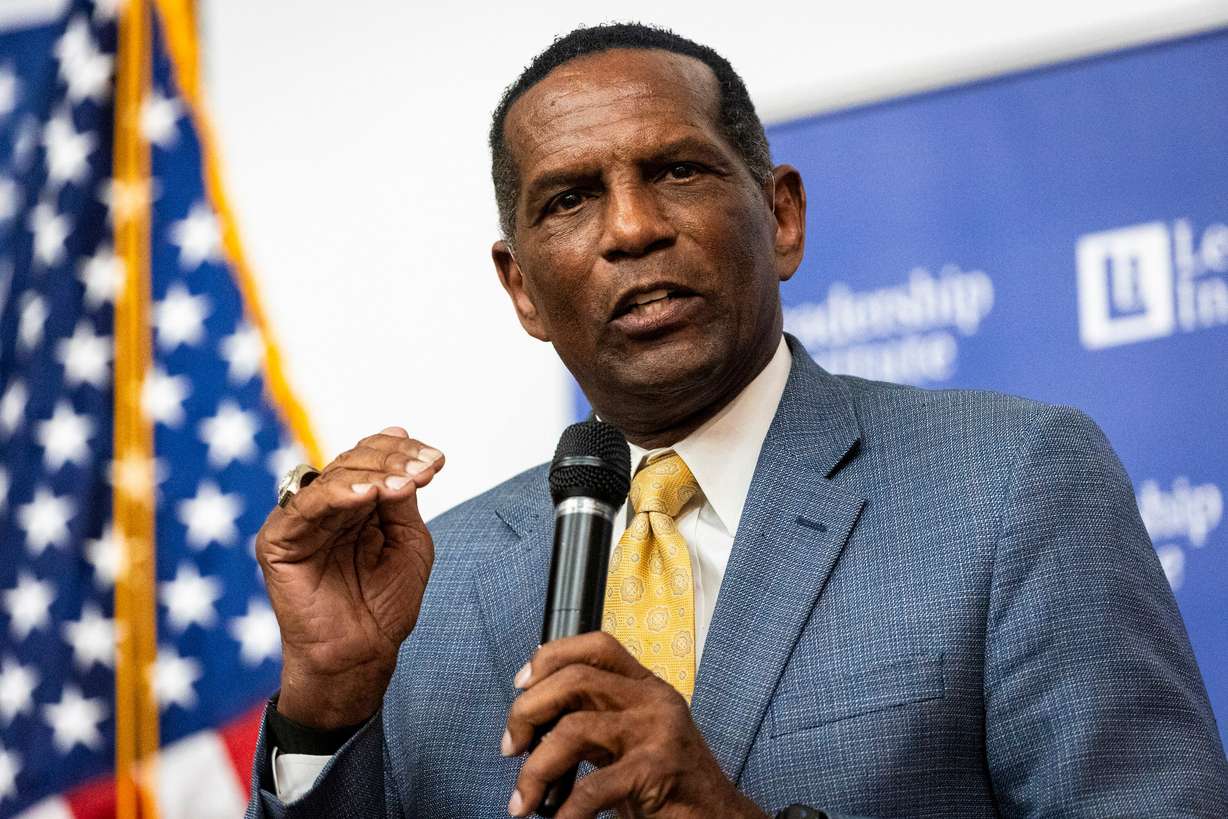
Now, Utah Rep. Burgess Owens wants to put a stop to it.
The House is set to consider the No Aid for Ghost Students Act this week that would require the Department of Education to implement an identity-fraud detection system to screen every applicant seeking aid under the Free Application for Federal Student Aid, or FAFSA. The department would also be required to conduct annual audits of the system to ensure its accuracy and report those findings back to Congress.
"Education is the great equalizer, but for too long, fraudsters have been siphoning federal student aid by using fake identities to take advantage of a system without proper guardrails. That needs to stop," Owens said in a statement. "Every tax dollar stolen is a dollar that does not go to the student who actually needs assistance the most."
The detection system would be designed to flag applications as suspicious, requiring schools to notify the applicant and require him or her to prove their identity through additional means. That could be through in-person verification or "live, synchronous audiovisual verification," according to the bill text.
Federal aid would not be disbursed until that verification is completed.
The proposed system comes as more schools report concerns about ghost students, particularly at community colleges or online schools with open enrollment. Several factors have made student fraud easier, including the rise in online courses, increased availability of federal aid and AI bots making it easier for identity thieves to submit applications on a larger scale.
The identity fraud system would be implemented on or after Oct. 1, 2026, according to the bill. It would required Education Secretary Linda McMahon to establish guidelines for the system before that date.
The Education Department has already been developing a system to detect identity theft for financial aid, although Owens has argued those guardrails must be passed as federal law to be made permanent.

"The Department of Education has started taking efforts to address this fraud and has prevented more than $1 billion in financial aid fraud last year," he said. "But current law does not require the department to maintain these safeguards."
The House is set to vote on the legislation Friday morning, according to the week's voting schedule obtained by the Deseret News.