'%3e%3cpath%20d='M34.1406%205.85938C30.3906%202.10547%2025.3047%200%2020%200C14.6953%200%209.60938%202.10547%205.85938%205.85938C2.10938%209.61328%200%2014.6953%200%2020C0%2025.3047%202.10547%2030.3906%205.85938%2034.1406C9.61328%2037.8906%2014.6953%2040%2020%2040C25.3047%2040%2030.3906%2037.8945%2034.1406%2034.1406C37.8906%2030.3906%2040%2025.3047%2040%2020C40%2014.6953%2037.8945%209.60938%2034.1406%205.85938ZM37.0117%2023.543H31.1602V13.5391H27.6328V19.9414C28.1211%2020.6914%2028.3711%2021.582%2028.3711%2022.5625V22.625C28.3711%2023.668%2028.1172%2024.6055%2027.6328%2025.4297V26.6094H36.082C33.4883%2032.9375%2027.2891%2037.3789%2020.0039%2037.3789C10.3711%2037.3789%202.62109%2029.6289%202.62109%2020C2.62109%2010.3711%2010.3711%202.62109%2020%202.62109C29.6289%202.62109%2037.3789%2010.3711%2037.3789%2020C37.3789%2021.1484%2037.2617%2022.2656%2037.0508%2023.3477C37.0391%2023.4141%2037.0234%2023.4766%2037.0117%2023.543Z'%20fill='white'/%3e%3cpath%20d='M22.3086%2018.5352C20.4336%2018.125%2019.9531%2017.8398%2019.9766%2017.1836V17.1406C19.9766%2016.6992%2020.3477%2016.2148%2021.4023%2016.2148C22.582%2016.2148%2023.8867%2016.6797%2025.0781%2017.4766L26.8516%2015.0195C25.4453%2013.8906%2023.707%2013.3398%2021.5547%2013.3398C18.5195%2013.3398%2016.4375%2015%2016.4063%2017.4766V17.5352C16.3633%2020.2617%2018.5859%2020.9805%2021.293%2021.6016C23.0391%2021.9766%2023.5703%2022.3164%2023.5703%2022.9609L23.5469%2022.9766C23.5469%2023.3906%2023.2578%2023.7031%2022.7852%2023.8359C22.5742%2023.9062%2022.1289%2023.9727%2021.5156%2023.9727C20.7617%2023.9727%2019.7539%2023.8633%2018.6328%2023.4844C18.0898%2023.2891%2017.4727%2023.0039%2016.8047%2022.6133L20.1406%2026.625C20.2813%2026.6602%2021.0977%2026.8516%2021.7734%2026.8516C25.0039%2026.8516%2027.0859%2025.2461%2027.1094%2022.6328V22.5703C27.1602%2020.1133%2025.2148%2019.1719%2022.3086%2018.5352Z'%20fill='white'/%3e%3cpath%20d='M5.24219%2013.5664V26.6133H8.75391V23.7578L10.2969%2021.9531L14.2031%2026.6133H18.3867L12.3555%2019.5195L17.4023%2013.5664H13.4531L8.75391%2019.0586V13.5664H5.24219Z'%20fill='white'/%3e%3c/g%3e%3cdefs%3e%3cclipPath%20id='clip0_97_2430'%3e%3crect%20width='40'%20height='40'%20fill='white'/%3e%3c/clipPath%3e%3c/defs%3e%3c/svg%3e)




- A young bear was tranquilized and removed from Salt Lake City's Avenues.
- Residents reported the bear wandering for days before its capture on Wednesday.
- Biologists are assessing the bear's health to decide on relocation or euthanasia.
SALT LAKE CITY — Utah wildlife biologists captured a young bear in Salt Lake City's Avenues neighborhood Wednesday night, after residents reported it wandering around over the past few days.
Utah Division of Wildlife Resources officials began receiving reports about a bear roaming around the Upper Avenues on Tuesday. The bear was seen moving around a section where homes blend into the foothills.
Lydia Foreman was among the residents who spotted the creature. She and her husband were setting up for dinner on Tuesday when they spotted the bear from their window, sitting near the base of some trees near their home.
They're used to seeing deer and rabbits from the window, as well as cougars and bobcats on rare occasions. This was the first time they encountered a bear.
"He kind of just hung out for a while behind this tree, and just kind of sat there, and my dogs were freaking out, of course," Foreman said. "Here, it was just such a big deal because you just don't see them out on the trails, let alone ... the city."
The bear was eventually seen again climbing a tree at Kay Rees Park, 535 E. 14th Ave., around sunset on Wednesday. This time, Utah Department of Natural Resources officers and state wildlife biologists were called to capture it, said Faith Jolley, a spokeswoman for the Utah Division of Wildlife Resources.
About 9:30 p.m., biologists climbed up a Salt Lake City fire truck ladder, where they tranquilized the bear. Firefighters helped crews remove it from the tree, she added.
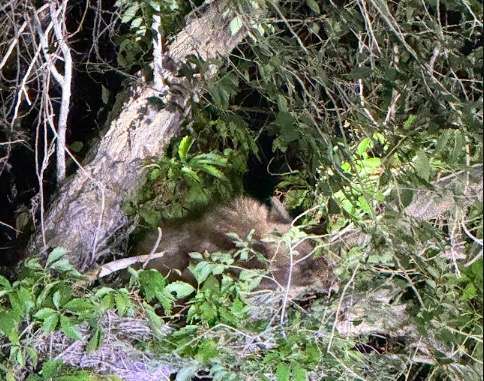
The bear was still being assessed for health Thursday morning before the biologists decided whether to relocate it or euthanize it. That usually depends on whether biologists determine the creature may act aggressively toward people, show little fear of people or will likely continue to return to areas with people, or if it has caused significant property damage.
Utah wildlife biologists have seen an uptick in bear sightings in Utah communities this year. A bear was removed from a Mapleton neighborhood earlier this week, and the state reported last month that bear cases have doubled from 2025.
This year's record-low snowpack and record-warm summer have left less native berries, acorns and root-like vegetation that bears typically rely on for food, Jolley said. Bears often migrate closer to the valleys in search of food during years like it, which is why there's been such a dramatic increase in sightings, she added.
Utah's wildlife education website has more information on how to handle a bear interaction.
In the meantime, Foreman hopes the Avenues bear gets a second chance in another location.
"Hopefully they don't kill him," she said. "He wasn't a problem bear. He was little and wasn't aggressive, obviously, but he wasn't going after the trash or even interested in anybody's trash. I think he somehow got separated from his mom."
Contributing: Cameron Elliott