'%3e%3cpath%20d='M34.1406%205.85938C30.3906%202.10547%2025.3047%200%2020%200C14.6953%200%209.60938%202.10547%205.85938%205.85938C2.10938%209.61328%200%2014.6953%200%2020C0%2025.3047%202.10547%2030.3906%205.85938%2034.1406C9.61328%2037.8906%2014.6953%2040%2020%2040C25.3047%2040%2030.3906%2037.8945%2034.1406%2034.1406C37.8906%2030.3906%2040%2025.3047%2040%2020C40%2014.6953%2037.8945%209.60938%2034.1406%205.85938ZM37.0117%2023.543H31.1602V13.5391H27.6328V19.9414C28.1211%2020.6914%2028.3711%2021.582%2028.3711%2022.5625V22.625C28.3711%2023.668%2028.1172%2024.6055%2027.6328%2025.4297V26.6094H36.082C33.4883%2032.9375%2027.2891%2037.3789%2020.0039%2037.3789C10.3711%2037.3789%202.62109%2029.6289%202.62109%2020C2.62109%2010.3711%2010.3711%202.62109%2020%202.62109C29.6289%202.62109%2037.3789%2010.3711%2037.3789%2020C37.3789%2021.1484%2037.2617%2022.2656%2037.0508%2023.3477C37.0391%2023.4141%2037.0234%2023.4766%2037.0117%2023.543Z'%20fill='white'/%3e%3cpath%20d='M22.3086%2018.5352C20.4336%2018.125%2019.9531%2017.8398%2019.9766%2017.1836V17.1406C19.9766%2016.6992%2020.3477%2016.2148%2021.4023%2016.2148C22.582%2016.2148%2023.8867%2016.6797%2025.0781%2017.4766L26.8516%2015.0195C25.4453%2013.8906%2023.707%2013.3398%2021.5547%2013.3398C18.5195%2013.3398%2016.4375%2015%2016.4063%2017.4766V17.5352C16.3633%2020.2617%2018.5859%2020.9805%2021.293%2021.6016C23.0391%2021.9766%2023.5703%2022.3164%2023.5703%2022.9609L23.5469%2022.9766C23.5469%2023.3906%2023.2578%2023.7031%2022.7852%2023.8359C22.5742%2023.9062%2022.1289%2023.9727%2021.5156%2023.9727C20.7617%2023.9727%2019.7539%2023.8633%2018.6328%2023.4844C18.0898%2023.2891%2017.4727%2023.0039%2016.8047%2022.6133L20.1406%2026.625C20.2813%2026.6602%2021.0977%2026.8516%2021.7734%2026.8516C25.0039%2026.8516%2027.0859%2025.2461%2027.1094%2022.6328V22.5703C27.1602%2020.1133%2025.2148%2019.1719%2022.3086%2018.5352Z'%20fill='white'/%3e%3cpath%20d='M5.24219%2013.5664V26.6133H8.75391V23.7578L10.2969%2021.9531L14.2031%2026.6133H18.3867L12.3555%2019.5195L17.4023%2013.5664H13.4531L8.75391%2019.0586V13.5664H5.24219Z'%20fill='white'/%3e%3c/g%3e%3cdefs%3e%3cclipPath%20id='clip0_97_2430'%3e%3crect%20width='40'%20height='40'%20fill='white'/%3e%3c/clipPath%3e%3c/defs%3e%3c/svg%3e)




- Gov. Spencer Cox defended nuclear energy ads, citing science and positive reception in Utah.
- He aims to double Utah's electricity capacity by 2034 through Operation Gigawatt.
- Cox supports President Donald Trump's monument reduction, emphasizing local input over federal control in land management.
SALT LAKE CITY — During his monthly press conference on Thursday, Utah Gov. Spencer Cox defended President Donald Trump's recent national monument reduction and pushed back against a complaint filed with the Federal Trade Commission against the state's promotion of nuclear energy.
Three Utah-based organizations had found fault with about a dozen billboards that Utah's Office of Energy Development placed along the state's main highways, describing the safety of nuclear energy.
One billboard said, "Nuclear plants emit less radiation than bananas." Another read, "Nuclear waste storage is safer than your leftovers."
Aggravated groups, including Downwinders Inc., Healthy Environment Alliance of Utah, and Utah Physicians for a Healthy Environment, described the campaign as "offensive" and an "insult to logic" on Monday.
On Thursday, Cox responded to these claims.
"I'm really troubled that the people who tell us to follow the science appear to only want us to follow the science that fits their narrative," he said. But the reception of nuclear energy in the state "has been overwhelmingly positive — and it should be."
He added, "In fact, the very groups who were upset about that FTC filing also admitted that nuclear power is really good for the environment and we need more of it."
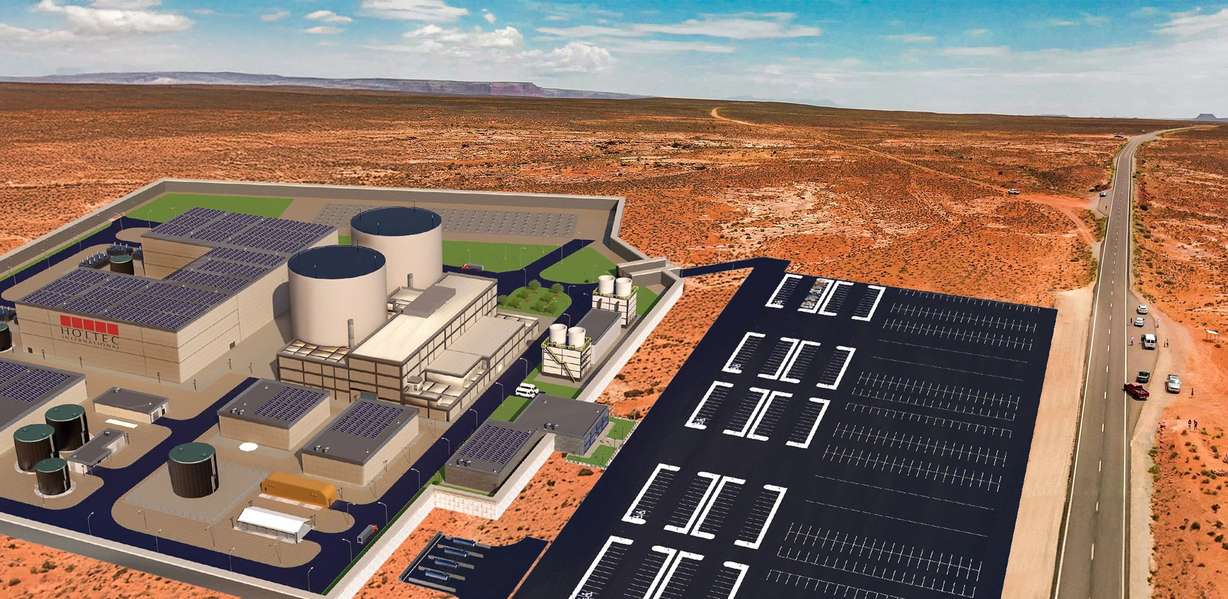
As part of the governor's 2024 initiative, Operation Gigawatt, Cox hopes to double Utah's total electricity generation capacity by 2034, which would add roughly 4 additional gigawatts of new power to the grid.
So far, Utah has drawn in its first nuclear microreactor , announced intentions to build a nuclear fuel recycling facility , and seen a variety of geothermal and solar projects pop up around the state.
"We're not cutting any corners on safety. We're working with the federal nuclear regulatory agencies. Our agencies are engaged. We're going to make sure that we follow the letter of the law; we're going to do everything to protect the health and safety of Utahns and make sure that we have clean, abundant energy," Cox said.
Cox references Utahns' nominal dislike of the monument reduction
The governor referenced polling data from the most recent Deseret News-Hinckley Institute of Politics poll, which found discrepancies between expressed dislike of Trump's recent executive orders to shrink two Utah monuments and how Utahns want land within the state to be managed.
"I think you saw with some of the polling, there are a lot of people who are upset about that announcement, and I understand that. But I think there are also a lot of people who don't understand what that announcement means," Cox said.
On July 13, Trump removed a combined 3 million acres from the two monuments.
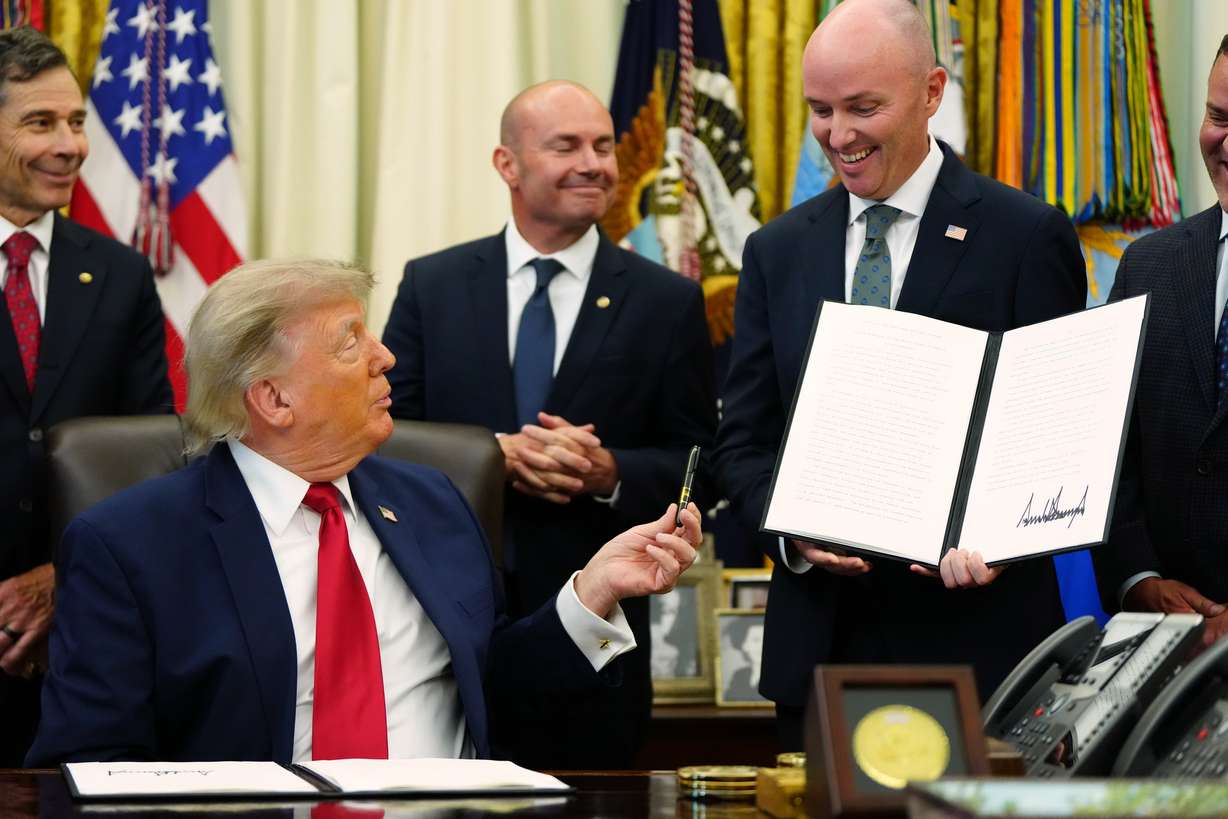
Polling conducted between Aug. 6-11 shows 3 in 10 registered Utah voters supported Trump's decision, 56% opposed it and 15% were unsure.
However, an overwhelming majority (82%) said local, city or state governments should have the most say in deciding how public lands are used. Only 9% supported the federal government having the most say in how public lands are used.
"I think too many people think that this means that we're now selling off those lands or that those lands aren't protected, and that's just not the case at all," Cox said.
"When you actually ask people what they want, this is what they wanted," he said, referencing Trump's monument decision. "They want more local input. They want more state input. They want more county input. They want to be able to access these lands and use them for their enjoyment."
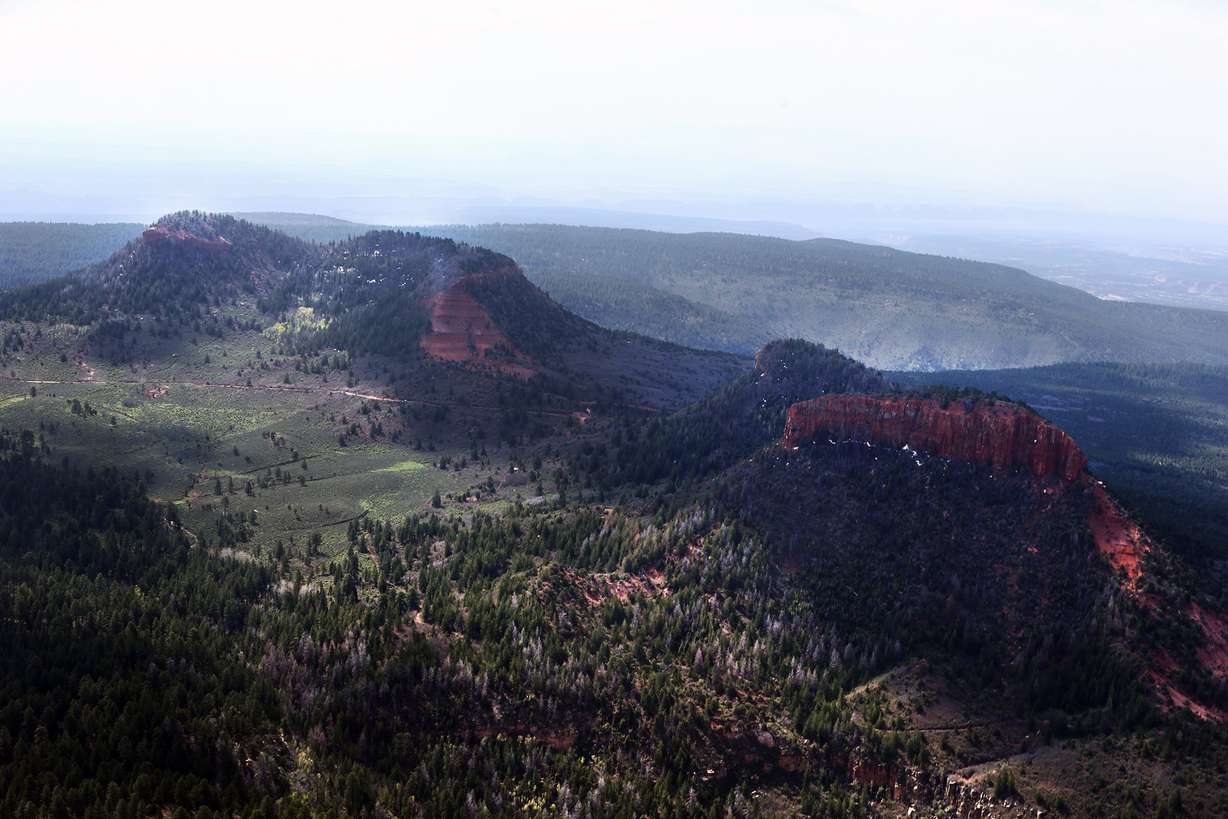
Monument status prohibited the following on Grand Staircase-Escalante, which previously covered 1.87 million acres:
- All commercial and noncommercial forestry and woodland harvesting.
- Off-highway vehicles from traveling on 1.2 million acres in the 1.87 million acre area.
- Cross-country travel.
- The felling or destruction of live or dead old-growth and mature trees.
- Nonstructural range improvements aimed at increasing forage for livestock.
- Utility-scale renewable energy development.
- Oil and gas drilling.
"I feel very strongly about this," Cox said. "I've never shied away from it. There was no secret; we've been asking for this for a long time."