'%3e%3cpath%20d='M34.1406%205.85938C30.3906%202.10547%2025.3047%200%2020%200C14.6953%200%209.60938%202.10547%205.85938%205.85938C2.10938%209.61328%200%2014.6953%200%2020C0%2025.3047%202.10547%2030.3906%205.85938%2034.1406C9.61328%2037.8906%2014.6953%2040%2020%2040C25.3047%2040%2030.3906%2037.8945%2034.1406%2034.1406C37.8906%2030.3906%2040%2025.3047%2040%2020C40%2014.6953%2037.8945%209.60938%2034.1406%205.85938ZM37.0117%2023.543H31.1602V13.5391H27.6328V19.9414C28.1211%2020.6914%2028.3711%2021.582%2028.3711%2022.5625V22.625C28.3711%2023.668%2028.1172%2024.6055%2027.6328%2025.4297V26.6094H36.082C33.4883%2032.9375%2027.2891%2037.3789%2020.0039%2037.3789C10.3711%2037.3789%202.62109%2029.6289%202.62109%2020C2.62109%2010.3711%2010.3711%202.62109%2020%202.62109C29.6289%202.62109%2037.3789%2010.3711%2037.3789%2020C37.3789%2021.1484%2037.2617%2022.2656%2037.0508%2023.3477C37.0391%2023.4141%2037.0234%2023.4766%2037.0117%2023.543Z'%20fill='white'/%3e%3cpath%20d='M22.3086%2018.5352C20.4336%2018.125%2019.9531%2017.8398%2019.9766%2017.1836V17.1406C19.9766%2016.6992%2020.3477%2016.2148%2021.4023%2016.2148C22.582%2016.2148%2023.8867%2016.6797%2025.0781%2017.4766L26.8516%2015.0195C25.4453%2013.8906%2023.707%2013.3398%2021.5547%2013.3398C18.5195%2013.3398%2016.4375%2015%2016.4063%2017.4766V17.5352C16.3633%2020.2617%2018.5859%2020.9805%2021.293%2021.6016C23.0391%2021.9766%2023.5703%2022.3164%2023.5703%2022.9609L23.5469%2022.9766C23.5469%2023.3906%2023.2578%2023.7031%2022.7852%2023.8359C22.5742%2023.9062%2022.1289%2023.9727%2021.5156%2023.9727C20.7617%2023.9727%2019.7539%2023.8633%2018.6328%2023.4844C18.0898%2023.2891%2017.4727%2023.0039%2016.8047%2022.6133L20.1406%2026.625C20.2813%2026.6602%2021.0977%2026.8516%2021.7734%2026.8516C25.0039%2026.8516%2027.0859%2025.2461%2027.1094%2022.6328V22.5703C27.1602%2020.1133%2025.2148%2019.1719%2022.3086%2018.5352Z'%20fill='white'/%3e%3cpath%20d='M5.24219%2013.5664V26.6133H8.75391V23.7578L10.2969%2021.9531L14.2031%2026.6133H18.3867L12.3555%2019.5195L17.4023%2013.5664H13.4531L8.75391%2019.0586V13.5664H5.24219Z'%20fill='white'/%3e%3c/g%3e%3cdefs%3e%3cclipPath%20id='clip0_97_2430'%3e%3crect%20width='40'%20height='40'%20fill='white'/%3e%3c/clipPath%3e%3c/defs%3e%3c/svg%3e)




- Senators unveiled a bipartisan permitting reform deal to expedite project approvals.
- The 417-page framework addresses data center costs but omits wind and solar.
- Senators aim to vote post-midterms; election results could impact legislative progress.
WASHINGTON — A bipartisan group of senators released the long-awaited permitting reform deal aimed toward expediting the approval of certain projects and lowering energy costs, reviving hope that a national framework could be approved after the midterm elections.
The comprehensive reform deal was published on Wednesday after months of negotiations, tackling issues ranging from data center costs, transmission power lines, environmental review deadlines, clearer guidelines for consultations and more. However, there are still some outstanding issues, such as language related to wind and solar projects that have been largely stalled under the Trump administration.
The deal was finalized by the top four energy policy legislators on Capitol Hill: Utah Sen. Mike Lee, West Virginia Sen. Shelley Moore Capito, New Mexico Sen. Martin Heinrich and Rhode Island Sen. Sheldon Whitehouse.
"We cannot meet this moment with a permitting system that is stuck in the past," Capito told reporters on Wednesday. "The status quo will not hold. The agreement we've reached today represents something that has become increasingly rare in Washington: Republicans and Democrats sitting down, identifying a problem — and in this case, a problem that has festered for at least a decade or more — that impacts all Americans, and for us to sit down and work together to solve it."
Permitting reforms meant to speed up approval process
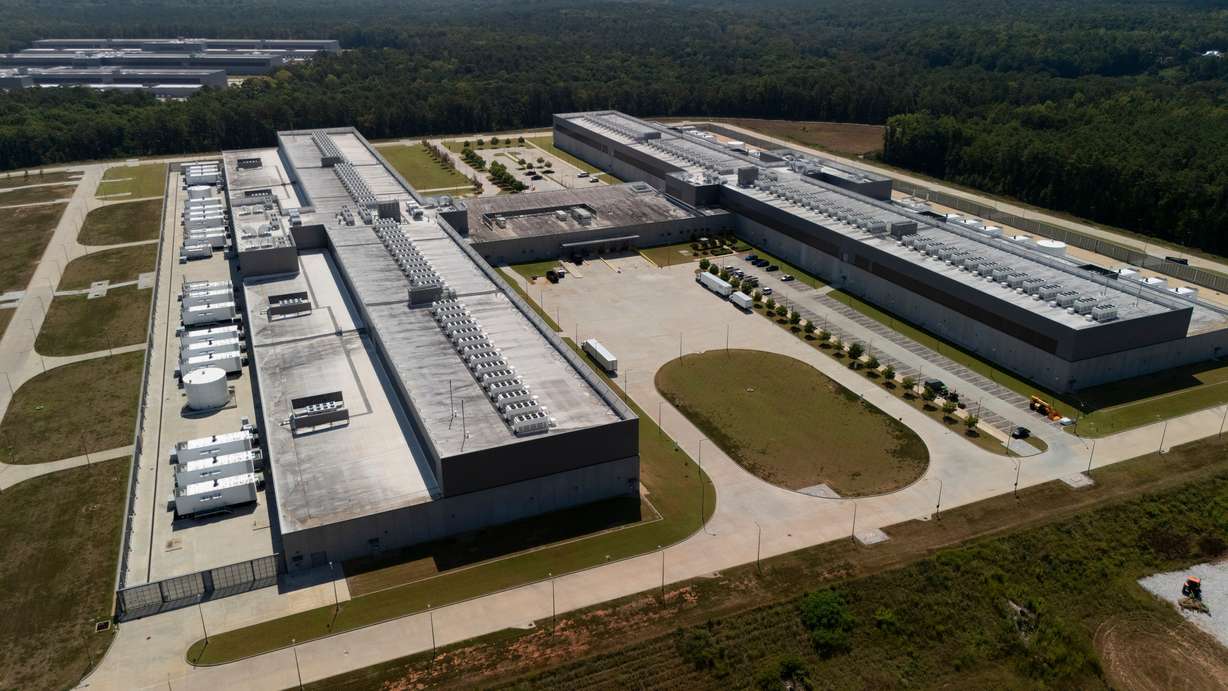
The 417-page framework includes a number of reforms that negotiators say will speed up the permitting process for energy projects without deteriorating environmental regulations. The proposal also includes language that would require data centers to pay for the cost of transmission costs, a stronger proposal that would make those payments mandatory rather than voluntary.
"It takes the incremental additions to the grid that would be necessary to serve those things, and it ascribes those costs to the developers, not to ratepayers in a given utility or geographic area," Heinrich said.
Negotiators are pushing to hold a vote on the bill when the Senate returns after the midterm elections. However, there are questions about whether much can be accomplished legislatively if the election results shift the power dynamic in Congress.
"I understand the question is legitimate because … when there is an intervening election, midterm or otherwise, sometimes a bipartisan deal can be one that might be thrown into a state of uncertainty following that election," Lee said. "I believe that in this case it should not make a difference. We have negotiated this thing in a way that really is good for both sides."
The deal on Wednesday is promising news for lawmakers, especially after talks appeared to break down last week and the certainty of a deal was called into question.
Most of the uncertainty was around concessions from the White House to unfreeze the approval process for wind and solar projects, which was a major sticking point for Democratic negotiators. The Trump administration offered an "opening proposal" to deal with those demands, although proposed language is still under negotiation.
"We need more clarity on that, and when we have more clarity on that, there'll be back and forth to try to resolve those issues," Whitehouse said. "That will happen in parallel with the amendment work, and we look forward to good results on that."