'%3e%3cpath%20d='M34.1406%205.85938C30.3906%202.10547%2025.3047%200%2020%200C14.6953%200%209.60938%202.10547%205.85938%205.85938C2.10938%209.61328%200%2014.6953%200%2020C0%2025.3047%202.10547%2030.3906%205.85938%2034.1406C9.61328%2037.8906%2014.6953%2040%2020%2040C25.3047%2040%2030.3906%2037.8945%2034.1406%2034.1406C37.8906%2030.3906%2040%2025.3047%2040%2020C40%2014.6953%2037.8945%209.60938%2034.1406%205.85938ZM37.0117%2023.543H31.1602V13.5391H27.6328V19.9414C28.1211%2020.6914%2028.3711%2021.582%2028.3711%2022.5625V22.625C28.3711%2023.668%2028.1172%2024.6055%2027.6328%2025.4297V26.6094H36.082C33.4883%2032.9375%2027.2891%2037.3789%2020.0039%2037.3789C10.3711%2037.3789%202.62109%2029.6289%202.62109%2020C2.62109%2010.3711%2010.3711%202.62109%2020%202.62109C29.6289%202.62109%2037.3789%2010.3711%2037.3789%2020C37.3789%2021.1484%2037.2617%2022.2656%2037.0508%2023.3477C37.0391%2023.4141%2037.0234%2023.4766%2037.0117%2023.543Z'%20fill='white'/%3e%3cpath%20d='M22.3086%2018.5352C20.4336%2018.125%2019.9531%2017.8398%2019.9766%2017.1836V17.1406C19.9766%2016.6992%2020.3477%2016.2148%2021.4023%2016.2148C22.582%2016.2148%2023.8867%2016.6797%2025.0781%2017.4766L26.8516%2015.0195C25.4453%2013.8906%2023.707%2013.3398%2021.5547%2013.3398C18.5195%2013.3398%2016.4375%2015%2016.4063%2017.4766V17.5352C16.3633%2020.2617%2018.5859%2020.9805%2021.293%2021.6016C23.0391%2021.9766%2023.5703%2022.3164%2023.5703%2022.9609L23.5469%2022.9766C23.5469%2023.3906%2023.2578%2023.7031%2022.7852%2023.8359C22.5742%2023.9062%2022.1289%2023.9727%2021.5156%2023.9727C20.7617%2023.9727%2019.7539%2023.8633%2018.6328%2023.4844C18.0898%2023.2891%2017.4727%2023.0039%2016.8047%2022.6133L20.1406%2026.625C20.2813%2026.6602%2021.0977%2026.8516%2021.7734%2026.8516C25.0039%2026.8516%2027.0859%2025.2461%2027.1094%2022.6328V22.5703C27.1602%2020.1133%2025.2148%2019.1719%2022.3086%2018.5352Z'%20fill='white'/%3e%3cpath%20d='M5.24219%2013.5664V26.6133H8.75391V23.7578L10.2969%2021.9531L14.2031%2026.6133H18.3867L12.3555%2019.5195L17.4023%2013.5664H13.4531L8.75391%2019.0586V13.5664H5.24219Z'%20fill='white'/%3e%3c/g%3e%3cdefs%3e%3cclipPath%20id='clip0_97_2430'%3e%3crect%20width='40'%20height='40'%20fill='white'/%3e%3c/clipPath%3e%3c/defs%3e%3c/svg%3e)




- Reports highlight food rationing and poor conditions on USS Abraham Lincoln.
- USS George Washington was sent to relieve Lincoln amid ongoing Middle East operations.
- Sen. Blumenthal questions Navy's operational sustainability and demands answers by Aug. 27.
WASHINGTON — Food rationing. Broken plumbing. Moldy showers. And even sailors attempting to jump overboard.
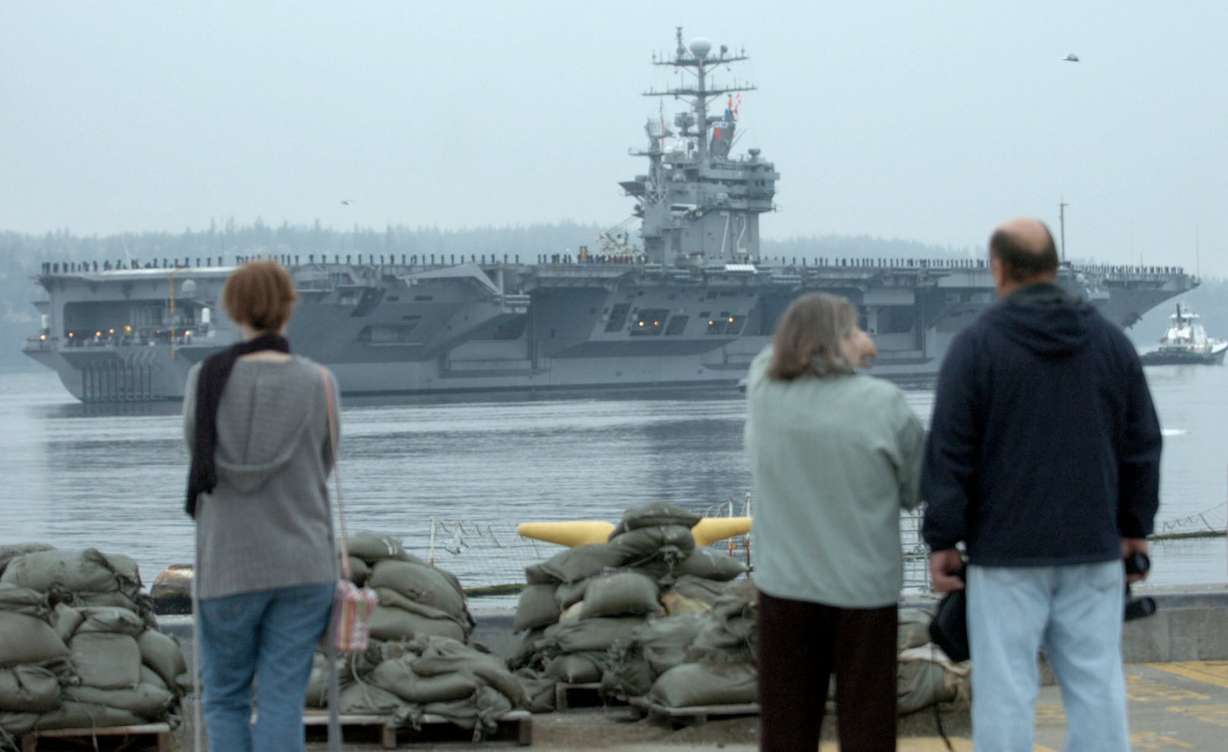
Those are some of the stark challenges being reported in recent weeks aboard the long-deployed USS Abraham Lincoln, a U.S. Navy aircraft carrier carrying approximately 5,000 troops that has been heavily involved in the ongoing war with Iran.
But relief is apparently on the way. The Wall Street Journal first reported Thursday that the supercarrier USS George Washington has been dispatched to the Middle East to relieve the Lincoln.
It could take a week for the Washington to reach the Arabian Sea.
The USS Washington's movement to the Middle East comes even as a member of the Senate's Armed Services Committee is pressing the Pentagon for answers regarding conditions on the Lincoln and the increasing length of U.S. Navy carrier strike group deployments.
In a letter sent Wednesday to Defense Secretary Pete Hegseth and Acting Secretary of the Navy Hung Cao, Sen. Richard Blumenthal, D-Conn., wrote that the Lincoln's extended deployment "raises broader questions" about the Navy's ability to operate optimally, while also preserving the sailors' well-being, fleet readiness "and the capacity to respond to future contingencies."
Since departing San Diego last November, the Lincoln has been deployed more than 250 days despite initially being scheduled for a seven-month deployment.
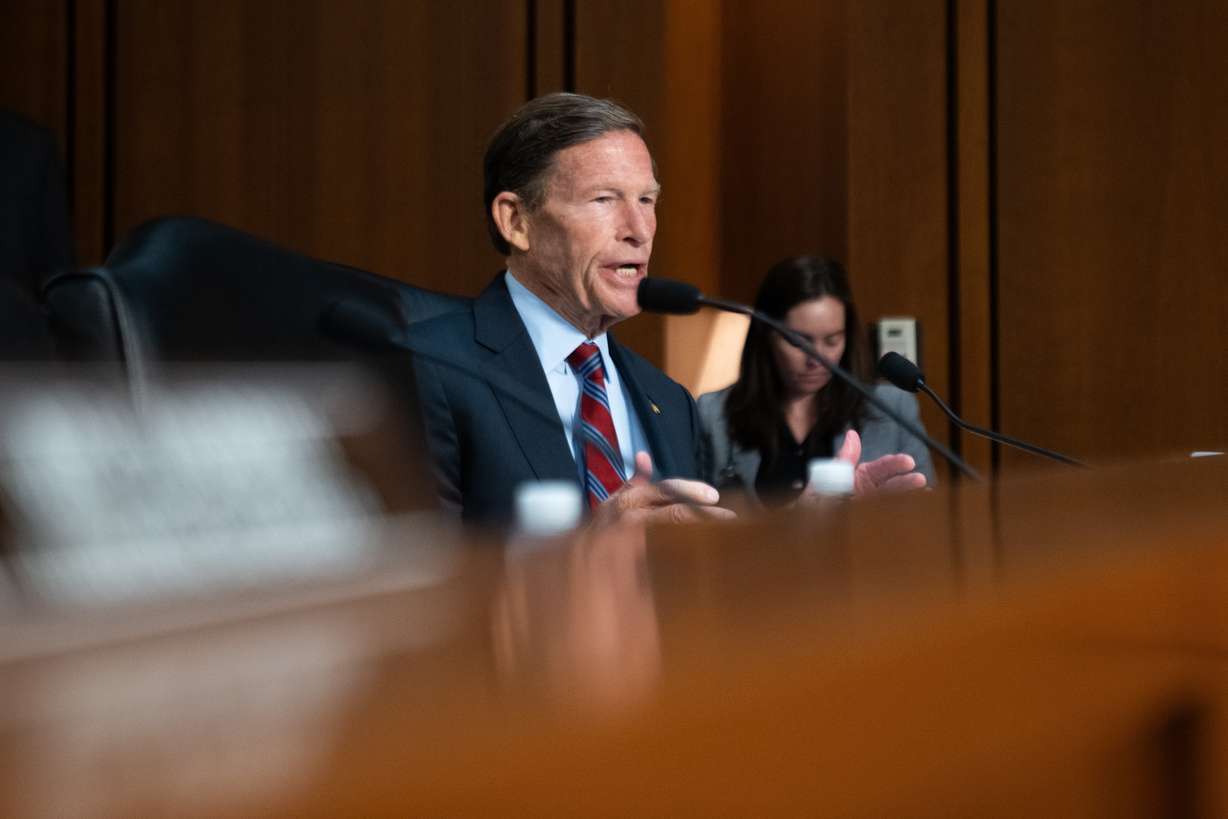
"The flagship of Carrier Strike Group 3 has not made a port call in over 200 days, setting a record for consecutive days at sea," wrote Blumenthal.
The letter also references "widespread reports" of shortages of basic supplies, water contamination, plumbing issues, deteriorating mental health, deck safety concerns and mail disruptions that have prevented care packages from being delivered to sailors.
"These reports warrant immediate attention, but they also raise a broader question: whether the Navy can sustain the operational tempo now being demanded of its carrier force, particularly as this administration repeatedly commits U.S. forces to conflicts of its own choosing and increasingly relies on aircraft carriers to sustain those operations," wrote Blumenthal.
Hegseth on Thursday said reports of poor conditions aboard the Lincoln were "completely misrepresented," Reuters reported.
"We make sure every ship, every crew, every captain has everything we can provide them at every single moment. Some deployments are longer than others, and I have more respect and gratitude for those sailors than anybody. What they do in those high seas in those austere conditions with less port calls, it's incredible," Hegseth told reporters during a visit to Panama.
A Navy spokesperson told Newsweek on Wednesday that the service has not identified an increase in reported suicidal ideation or attempted suicides aboard the Lincoln.
"We take every service member's well-being seriously and have religious, medical and mental health professionals available to assess and address concerns as they arise," they added.
And in April, Hegseth dismissed claims of food shortages aboard the Lincoln as false. "More FAKE NEWS from the Pharisee Press," he posted on his X account.
Congressional letter: Seeking answers to several USS Lincoln questions
The Lincoln situation isn't unique, added Blumenthal. Extended carrier deployments may be "becoming a feature rather than an exception" of Navy operations.
Blumenthal called the Lincoln's prolonged deployment "especially significant" because it is occurring during the continued military operations against Iran.
"The administration has yet to adequately explain the objectives, end state, or anticipated duration of those operations," he wrote.
"If the administration intends to maintain a prolonged military campaign or an elevated carrier presence in the region, it must explain how it intends to ensure today's operational requirements do not create tomorrow's readiness crisis."
Blumenthal gave the Department of the Navy an Aug. 27 deadline to provide answers to several questions, including:
- What is the Navy's plan for sustaining carrier strike group presence in the Middle East over the next 12 to 24 months if current operational requirements continue?
- What was the Lincoln's originally scheduled deployment length, and on what dates has the deployment subsequently been extended? Who authorized each extension, and what operational requirements were cited?
- List significant habitability, supply and quality-of-life problems identified aboard the Lincoln, including shortages of hygiene products, mold, broken toilets or laundry facilities, inadequate water supplies or other deteriorating living conditions.
- What metrics is the Navy using to assess fatigue, morale, mental health and crew readiness aboard the Lincoln? Have commanders identified any increase in safety incidents, medical issues, disciplinary incidents or other readiness indicators associated with the length of the deployment or consecutive days at sea?
- What military objective is the continued deployment of the Lincoln intended to achieve in Iran, and how does the department assess whether the carrier's continued presence is necessary to accomplish that objective?
Blumenthal concludes his letter noting that the sailors aboard the Lincoln are serving their country.
"The department owes them not only adequate supplies, maintenance, and support during this deployment, but a sustainable force-generation model that does not rely on repeatedly extending sailors and ships to meet persistent operational demands."
Defense budget: Tension between the Pentagon and Democrats
Blumenthal's letter to Hegseth and Cao comes amid reported tensions between the Pentagon and congressional Democrats.
As reported by Politico, Hegseth visited Capitol Hill at least twice in recent weeks to make closed-door pitches for his record $1.5 trillion defense budget. But lawmakers in both parties say he followed an increasingly familiar pattern of excluding Democrats.
The reported freeze-out underscores the Trump administration's hyperpartisan approach to Congress, particularly the Pentagon's penchant for secrecy under Hegseth, according to Politico.
Whether keeping lawmakers uninformed about the rationale behind prolonged boat strikes in the Caribbean or a decoy Air Force One flight , the administration risks jeopardizing its main priorities by cutting out key players, added the Politico report.
"He calls himself the secretary of war, but ironically, he doesn't want to go to war and win the argument with nearly half the members of the Senate," said Sen. Thom Tillis, R-N.C. "You got to engage."
Republicans reportedly worry that Hegseth's practice of excluding their across-the-aisle colleagues could undermine his own push to enact President Donald Trump's unprecedented defense budget increase.
Without Democratic support in the Senate, according to Politico, the effort could fail this fall.