'%3e%3cpath%20d='M34.1406%205.85938C30.3906%202.10547%2025.3047%200%2020%200C14.6953%200%209.60938%202.10547%205.85938%205.85938C2.10938%209.61328%200%2014.6953%200%2020C0%2025.3047%202.10547%2030.3906%205.85938%2034.1406C9.61328%2037.8906%2014.6953%2040%2020%2040C25.3047%2040%2030.3906%2037.8945%2034.1406%2034.1406C37.8906%2030.3906%2040%2025.3047%2040%2020C40%2014.6953%2037.8945%209.60938%2034.1406%205.85938ZM37.0117%2023.543H31.1602V13.5391H27.6328V19.9414C28.1211%2020.6914%2028.3711%2021.582%2028.3711%2022.5625V22.625C28.3711%2023.668%2028.1172%2024.6055%2027.6328%2025.4297V26.6094H36.082C33.4883%2032.9375%2027.2891%2037.3789%2020.0039%2037.3789C10.3711%2037.3789%202.62109%2029.6289%202.62109%2020C2.62109%2010.3711%2010.3711%202.62109%2020%202.62109C29.6289%202.62109%2037.3789%2010.3711%2037.3789%2020C37.3789%2021.1484%2037.2617%2022.2656%2037.0508%2023.3477C37.0391%2023.4141%2037.0234%2023.4766%2037.0117%2023.543Z'%20fill='white'/%3e%3cpath%20d='M22.3086%2018.5352C20.4336%2018.125%2019.9531%2017.8398%2019.9766%2017.1836V17.1406C19.9766%2016.6992%2020.3477%2016.2148%2021.4023%2016.2148C22.582%2016.2148%2023.8867%2016.6797%2025.0781%2017.4766L26.8516%2015.0195C25.4453%2013.8906%2023.707%2013.3398%2021.5547%2013.3398C18.5195%2013.3398%2016.4375%2015%2016.4063%2017.4766V17.5352C16.3633%2020.2617%2018.5859%2020.9805%2021.293%2021.6016C23.0391%2021.9766%2023.5703%2022.3164%2023.5703%2022.9609L23.5469%2022.9766C23.5469%2023.3906%2023.2578%2023.7031%2022.7852%2023.8359C22.5742%2023.9062%2022.1289%2023.9727%2021.5156%2023.9727C20.7617%2023.9727%2019.7539%2023.8633%2018.6328%2023.4844C18.0898%2023.2891%2017.4727%2023.0039%2016.8047%2022.6133L20.1406%2026.625C20.2813%2026.6602%2021.0977%2026.8516%2021.7734%2026.8516C25.0039%2026.8516%2027.0859%2025.2461%2027.1094%2022.6328V22.5703C27.1602%2020.1133%2025.2148%2019.1719%2022.3086%2018.5352Z'%20fill='white'/%3e%3cpath%20d='M5.24219%2013.5664V26.6133H8.75391V23.7578L10.2969%2021.9531L14.2031%2026.6133H18.3867L12.3555%2019.5195L17.4023%2013.5664H13.4531L8.75391%2019.0586V13.5664H5.24219Z'%20fill='white'/%3e%3c/g%3e%3cdefs%3e%3cclipPath%20id='clip0_97_2430'%3e%3crect%20width='40'%20height='40'%20fill='white'/%3e%3c/clipPath%3e%3c/defs%3e%3c/svg%3e)




Estimated read time: 3-4 minutes
- President Donald Trump on Friday announced a deal to access Venezuelan oil reserves, promising lower gas prices.
- Experts warn, however, that development of Venezuelan oil fields will take years, delaying price impact.
- Current high prices are driven by U.S.-Iran tensions and Ukraine's attacks on Russian refineries.
SALT LAKE CITY — In a social media posting, President Donald Trump announced a deal last Friday that would open up Venezuelan oil reserves to developers in a move he promised would double U.S. oil supplies and "substantially lower Gas Prices for all Americans, long into the future."
Additional details of that agreement were released Saturday, which includes access to 17 strategic oil fields in Venezuela that hold proven reserves of 65 billion barrels of oil, according to a report from Venezuelan state media.
But petroleum industry experts warn that the timeline to develop those sites to process the extracted heavy crude, which is more difficult to refine into fuel products, is likely years away and not likely to impact record high fuel costs currently facing drivers.
In a Monday blog post, Patrick De Haan, head of petroleum analysis at GasBuddy, noted other market factors could help bring down the average price of gasoline in the U.S., but it wouldn't be from the newly opened Venezuelan oil fields.
"Over the weekend, the Trump administration struck a major deal with Venezuela, a signal that the White House remains concerned about elevated fuel prices — though in reality, any benefits from increased Venezuelan output will take years to fully materialize and are unlikely to move the needle in the near term," De Haan wrote.
"The factors with the most immediate impact on where prices go from here remain the ongoing developments between the U.S. and Iran and continued Ukrainian attacks on Russian oil refineries, both of which continue to exert outsized influence on global fuel markets. Motorists should expect continued volatility in the weeks ahead."
What's going on with gas prices?
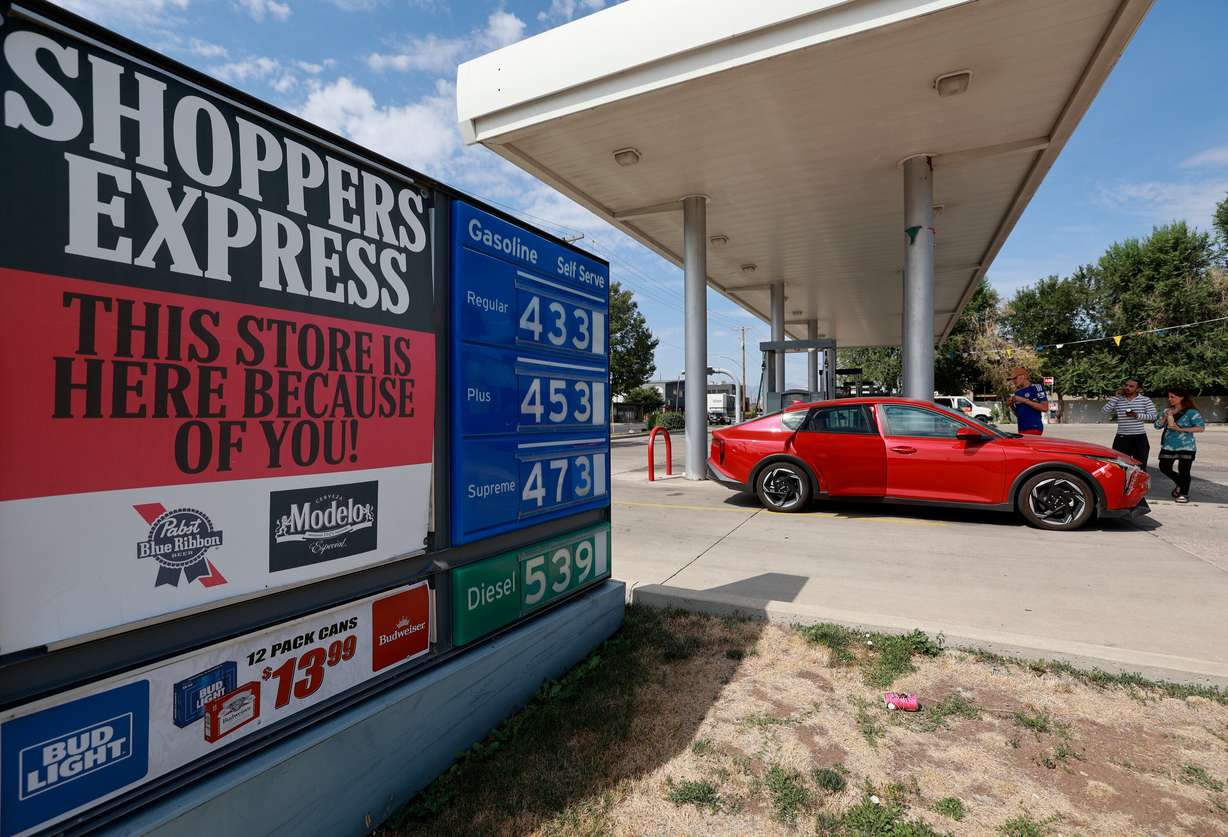
Petroleum industry volatility has led to an extended period of high prices across the country and a new record for the month of August, according to a report from AAA.
"For the first time ever, the national average in August has been above $4 per gallon every day," Aldo Vazquez, spokesperson for AAA Mountain West Group, said in a press statement last week. "This month is poised to set a new record as the most expensive August at the pump, surpassing the previous August record set in 2022. However, Utah has not reached its record high average of $5.26, which was set in July of 2022."
While the average price for Utah drivers this summer has yet to reach the all-time record set four years ago, they're still paying a lot more than they did last year and encountering pump prices that are running well ahead of the national average.
While the national average price for a gallon of regular was at $4.08 per gallon on Monday, Utah motorists started the week paying an average $4.37 across the state, per AAA tracking. Utah prices are up about 10 cents from a month ago and are currently $1.08 per gallon higher than this time last year.
Ongoing high fuel prices are the result of disruptions caused by the Iran war as well as Ukraine's attacks on Russian oil installations. After weeks of stalled peace talks, reports indicate the U.S. renewed attacks on Iranian military targets on Sunday. Following the six-month anniversary of the conflict last week, only a fraction of the usual volume of petroleum tankers are making it through the Strait of Hormuz each day, a narrow passage through which about 20% of the world's total petroleum production travels on its way to international markets.
"Unless we get some sort of magical 20-cent drop, which is next to impossible, it'll be a record-setting Labor Day in terms of the national average," De Haan told CNBC. "Gas prices have never been this high this late into the year, unfortunately."