'%3e%3cpath%20d='M34.1406%205.85938C30.3906%202.10547%2025.3047%200%2020%200C14.6953%200%209.60938%202.10547%205.85938%205.85938C2.10938%209.61328%200%2014.6953%200%2020C0%2025.3047%202.10547%2030.3906%205.85938%2034.1406C9.61328%2037.8906%2014.6953%2040%2020%2040C25.3047%2040%2030.3906%2037.8945%2034.1406%2034.1406C37.8906%2030.3906%2040%2025.3047%2040%2020C40%2014.6953%2037.8945%209.60938%2034.1406%205.85938ZM37.0117%2023.543H31.1602V13.5391H27.6328V19.9414C28.1211%2020.6914%2028.3711%2021.582%2028.3711%2022.5625V22.625C28.3711%2023.668%2028.1172%2024.6055%2027.6328%2025.4297V26.6094H36.082C33.4883%2032.9375%2027.2891%2037.3789%2020.0039%2037.3789C10.3711%2037.3789%202.62109%2029.6289%202.62109%2020C2.62109%2010.3711%2010.3711%202.62109%2020%202.62109C29.6289%202.62109%2037.3789%2010.3711%2037.3789%2020C37.3789%2021.1484%2037.2617%2022.2656%2037.0508%2023.3477C37.0391%2023.4141%2037.0234%2023.4766%2037.0117%2023.543Z'%20fill='white'/%3e%3cpath%20d='M22.3086%2018.5352C20.4336%2018.125%2019.9531%2017.8398%2019.9766%2017.1836V17.1406C19.9766%2016.6992%2020.3477%2016.2148%2021.4023%2016.2148C22.582%2016.2148%2023.8867%2016.6797%2025.0781%2017.4766L26.8516%2015.0195C25.4453%2013.8906%2023.707%2013.3398%2021.5547%2013.3398C18.5195%2013.3398%2016.4375%2015%2016.4063%2017.4766V17.5352C16.3633%2020.2617%2018.5859%2020.9805%2021.293%2021.6016C23.0391%2021.9766%2023.5703%2022.3164%2023.5703%2022.9609L23.5469%2022.9766C23.5469%2023.3906%2023.2578%2023.7031%2022.7852%2023.8359C22.5742%2023.9062%2022.1289%2023.9727%2021.5156%2023.9727C20.7617%2023.9727%2019.7539%2023.8633%2018.6328%2023.4844C18.0898%2023.2891%2017.4727%2023.0039%2016.8047%2022.6133L20.1406%2026.625C20.2813%2026.6602%2021.0977%2026.8516%2021.7734%2026.8516C25.0039%2026.8516%2027.0859%2025.2461%2027.1094%2022.6328V22.5703C27.1602%2020.1133%2025.2148%2019.1719%2022.3086%2018.5352Z'%20fill='white'/%3e%3cpath%20d='M5.24219%2013.5664V26.6133H8.75391V23.7578L10.2969%2021.9531L14.2031%2026.6133H18.3867L12.3555%2019.5195L17.4023%2013.5664H13.4531L8.75391%2019.0586V13.5664H5.24219Z'%20fill='white'/%3e%3c/g%3e%3cdefs%3e%3cclipPath%20id='clip0_97_2430'%3e%3crect%20width='40'%20height='40'%20fill='white'/%3e%3c/clipPath%3e%3c/defs%3e%3c/svg%3e)


- Fervo Energy's 396 MW agreement with Google powers Utah's Cape Station plant.
- Most initial capacity is contracted to California utilities due to clean energy mandates.
- PacifiCorp considers geothermal economic; Utah may benefit from future agreements with Fervo.
SALT LAKE CITY — Fervo Energy announced a 396 megawatt power purchase agreement with Google on Sept. 1 — enabling southwestern Utah's Cape Station geothermal plant development, coming online in 2028.
But Fervo's geothermal giant comes with a catch: None of the energy is going to Utahns ... yet.
California got there first
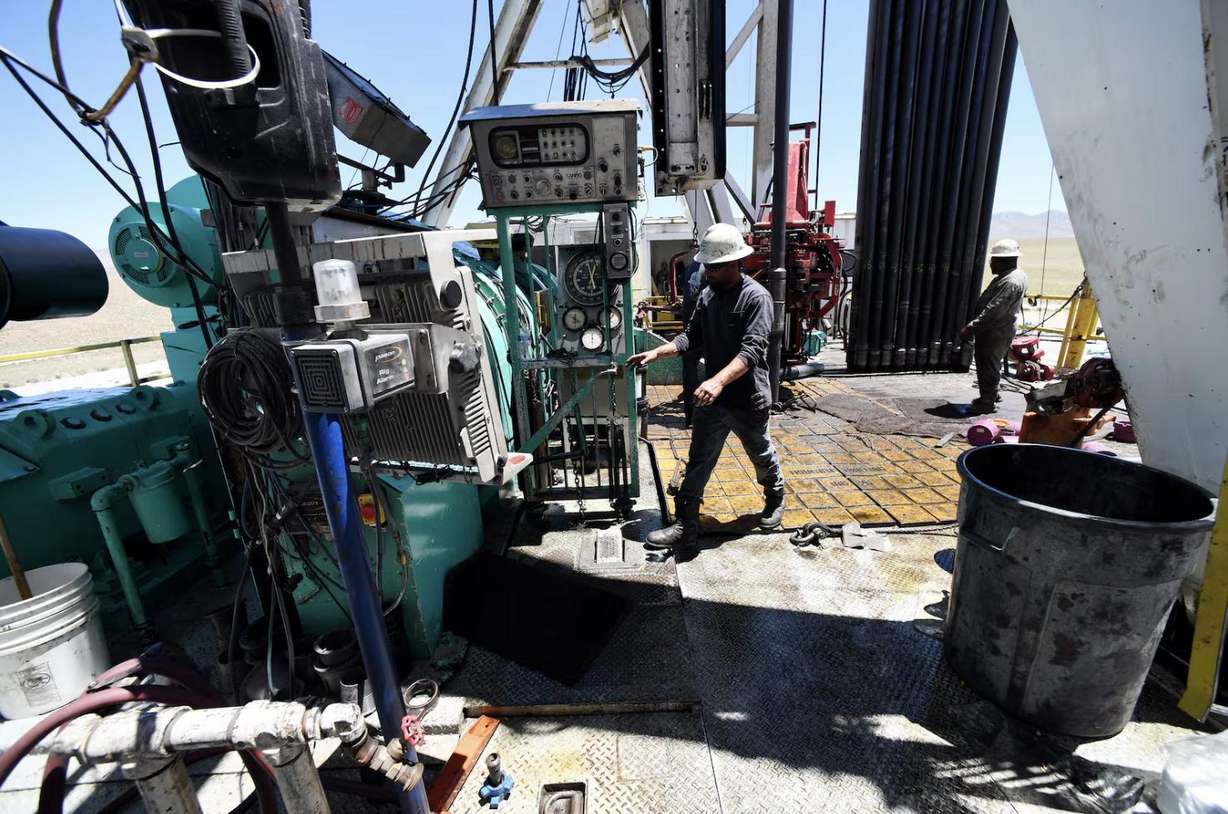
Most of Cape Station's early capacity is contracted under long-term agreements to California power providers, such as Southern California Edison, Clean Power Alliance and Desert Community Energy.
California utilities purchased these initial blocks because the state's regulation explicitly mandates the procurement of "clean firm" renewable energy.
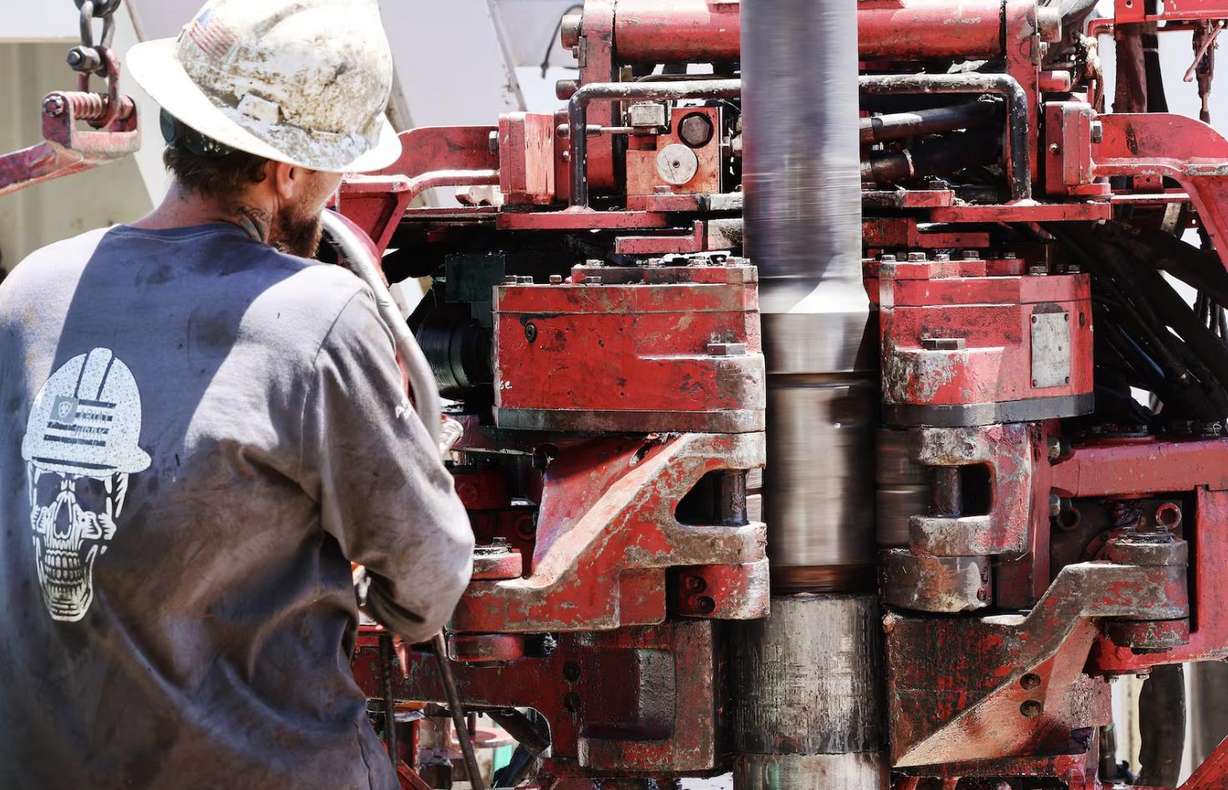
Google is purchasing the almost 400 megawatts of power which, the company hopes, will eventually power a data center on Utah soil.
The agreement also includes an option for Google to scale up its purchase by an additional 600 megawatts, reaching nearly 1 gigawatt by June 2030 — about the same amount of power Utah's Huntington coal plant can generate at any given moment.
Google and Fervo also signed a broader 3 gigawatt non-binding framework agreement to evaluate future data center power arrangements across Fervo's pipeline.
"This agreement reinforces that EGS (enhanced geothermal systems) is ready to power the next generation of computing infrastructure," said Tim Latimer, CEO and co-founder of Fervo Energy, in a press release. "As demand for reliable electricity grows, customers like Google need energy resources that can be deployed at scale, operate around the clock, and deliver where power is needed."
Overall, Fervo predicts Cape Station will be able to deliver 4.3 gigawatts of power at peak — and the rest of the potential power lies unclaimed. The leftover 3.4 gigawatts (after Google and California contracts are fulfilled) is equivalent to running three full-scale legacy coal plants at maximum output.
And Fervo is actively advertising them.
The state's dominant power provider may not be far behind. Pacificorp, which operates as Rocky Mountain Power in Utah, stated in the 2027 Integrated Resource Plan Public Input Meeting Oct. 14 that at the prices stated by Fervo with federal tax credits included, it anticipates geothermal "would be economic" and its model "would select proxy geothermal over other proxy resource options like gas."
Even without tax credits, PacifiCorp said Fervo's pricing "would still make proxy geothermal competitive with proxy gas."
Though no purchase agreement has been signed yet, PacifiCorp's statement signals Utah ratepayers could eventually benefit from the technology being built in their backyard.
Utah's energy appeal
"It checks all the boxes," said Mitchell, referring to Fervo's next-gen technology.
For the "old style" of geothermal generation, Mitchell said it required three things: the heat in the Earth, cracks in the rocks or crust, and a way to harvest the heat out of the Earth — usually water.
"And so you need the cracks to push the water through to harvest the heat, and then that brings the heat to the surface, and then that turns a turbine and creates energy," he explained.
"And that's why geothermal exists in a few spots — and it's great where it exists — but it's not everywhere," Mitchell added.
Utah is third in the nation in installed geothermal capacity, though it only makes up about 3.2%. California and Nevada hold over 90% of the nation's capacity.
But the technology being used differs significantly among the three states.
Nevada and California's geothermal plants are largely conventional — the "old style" Mitchell described. The states are home to geysers and lakes, where the hot fluid necessary for this technique is easy to find.
Though the state may be behind, many emerging Utah projects — like Fervo — use "enhanced" geothermal techniques: drilling deep into hot rock, fracturing it, and circulating water through to build an artificial reservoir.
The federal push
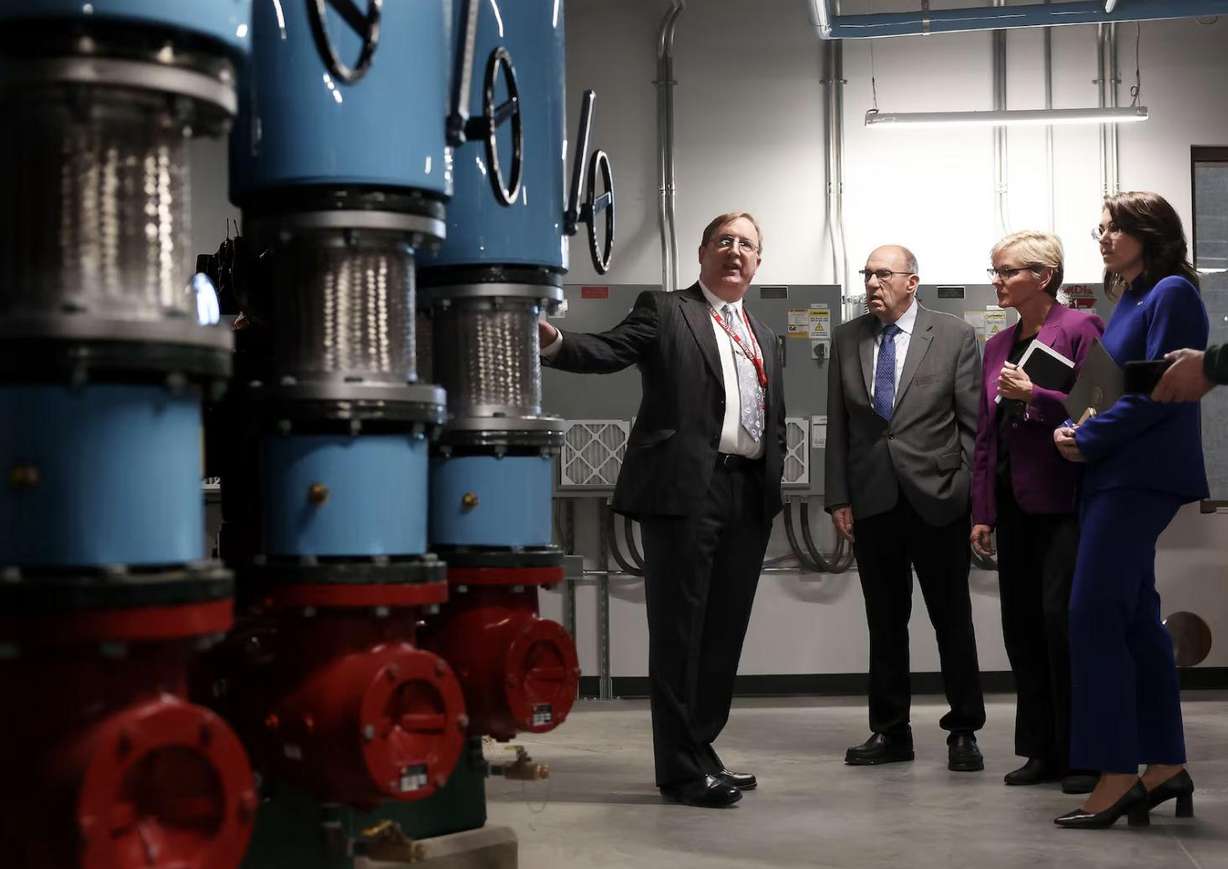
In places like Utah, the ground's permeability is a motivating factor. Other nearby states have similar benefits, leaving geothermal developers looking west to develop the technology.
"Utah already is a model for other states for developing geothermal energy," Mitchell said. "We have a relatively good permitting environment here, and we're seeing geothermal companies work very closely with the Bureau of Land Management offices ..."
Federal agencies — such as BLM — have started to promote geothermal-focused policies.
In August, the bureau authorized the drilling of up to 10 geothermal temperature-gradient holes in Iron County — shallow, lower-cost test wells used to measure how quickly temperatures increase before jumping into expensive, massive wells.
The U.S. Department of Energy is also funding Utah FORGE — an enhanced geothermal research site in Beaver County. Operated by the University of Utah, researchers are testing new techniques to create geothermal energy in other parts of the U.S. where no natural hot water exists.
Utah's opening
"Hopefully, we'll have very, very little water consumption also. We'll have zero air emissions, no air quality impacts, no carbon emissions. It's also dispatchable like natural gas," Mitchell said. "We want our data centers to be investing in the right technologies that are going to be viable for long periods of time."
Mitchell argues that in a world of increasing demand for power, geothermal is a dispatchable, clean energy that can be built quickly.
"What this really means is that we have a pathway for reducing the emissions and water consumption of our energy system into the future," he said.
With 3.4 gigawatts of Cape Station's potential still unclaimed — and California and Google already proving the demand — the question is whether Utah will stake a claim on the clean energy being built in its own backyard.
"At the prices stated by Fervo with tax credits included, PacifiCorp anticipates proxy geothermal would be economic and the model would select proxy geothermal over other proxy resource options like gas. Without tax credits, PacifiCorp anticipates the prices stated by Fervo would still make proxy geothermal competitive with proxy gas in the IRP model."
"For the 2027 IRP, PacifiCorp is planning to model a single proxy near-field enhanced geothermal system (NF EGS) binary resource option limited to 500 MW selectable in both Oregon and Utah for the entirety of the study horizon, first eligible in 2030. The costs for the proxy geothermal resource option would be based on Fervo's cost estimates, beginning with an overnight capital cost of $5,500 per kilowatt in 2030 and declining to $3,000 per kilowatt by 2036."
Crucially, PacifiCorp agreed to update its 2027 IRP model to incorporate Fervo's cost curve—starting at $5,500/kW in 2030 and scaling down to $3,000/kW by 2036, complete with federal tax credits