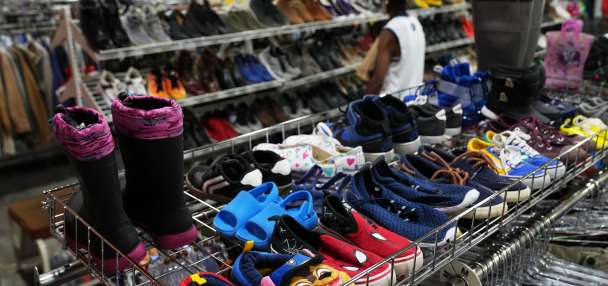
- The Federal Reserve held interest rates steady on Wednesday, maintaining the 3.75%-4.00% range.
- Fed Governor Lisa Cook and Cleveland Fed President Beth Hammack dissented, favoring hikes.
- Investors expect further rate hikes, with inflation still above the Fed's 2% target.
WASHINGTON — The Federal Reserve held interest rates steady on Wednesday, as expected, opting to delay any changes to borrowing costs until after next week's midterm elections and awaiting further data on the path of inflation.
In a 10-2 decision, the central bank said it would maintain its benchmark interest rate within the current 3.75%-4.00% range while acknowledging that inflation "remains elevated," upgrading its assessment of the economy, and hinting that further rate hikes may be coming depending on the performance of inflation.
"The accumulation of more information will help the Committee determine the policy stance appropriate to ensure a timely return of inflation to the committee's 2% goal," the rate-setting Federal Open Market Committee said in its latest policy statement. "The Committee will deliver price stability."
Fed Governor Lisa Cook, currently targeted by President Donald Trump for removal from the central bank, cast her first dissent on a central bank policy decision, favoring a quarter percentage-point rate hike. Cleveland Fed President Beth Hammack, a consistently hawkish voice, also dissented in favor of the same rate increase.
The Fed's latest policy statement is a notable change from the Sept. 15-16 meeting, with a hint of the sort of forward guidance Fed Chair Kevin Warsh has said he wants to avoid.
The central bank's assessment of the economy was upgraded to "strong" from the "solid" expansion seen as of the September meeting, while investment was still described as robust and job gains were viewed as keeping pace with the workforce.
Market reaction was muted, with stocks paring gains slightly after the decision. Treasury yields extended their rise, with the 10-year Treasury note yield at 5.028%. Short-term interest-rate futures rose a bit, as traders pulled back a bit on bets of Fed rate hikes ahead.
"A hold isn't relief," said Kelly Brown, the CEO of deposit management company Ampersand. "It's the Fed telling Main Street to wait. With inflation still at 3.7%, and oil above $100 a barrel, businesses can't count on borrowing costs coming down anytime soon."
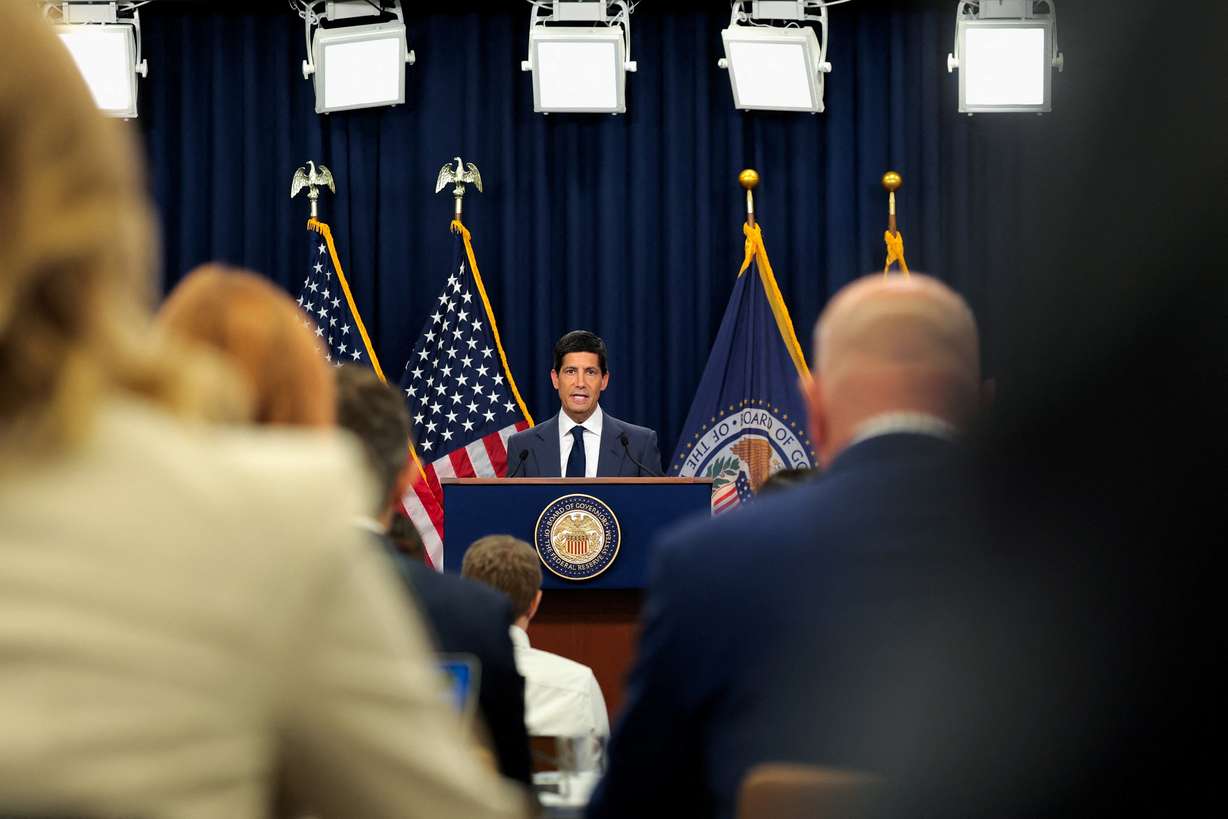
Fears that inflation is broadening
The outcome of this week's meeting was widely expected after top Fed officials indicated they saw no rush to raise rates again following the quarter-percentage-point increase approved last month, despite inflation data in the meantime that was stronger than forecast and concerns that price pressures are broadening across the economy.
Energy costs remain high, including for diesel fuel, which is a key input for shipping, agriculture, and other industries. Inflation and the cost of living in general have been central to the political races that will determine whether Trump's Republican Party remains in control of both houses of Congress on Nov. 3, or whether Democrats move into leadership positions and gain more robust oversight powers, including over the Fed.
Investors continue to expect further rate hikes will be needed, beginning in December and continuing into 2027, to lower inflation that is currently around a percentage point above the Fed's target and has shown little progress in recent months.
The central bank has missed its inflation target for 5 1/2 years, a fact that has left some officials worried that businesses and households are becoming accustomed to faster price increases and may plan for them in ways that will make inflation harder to control.
Contributing: Ann Saphir