Estimated read time: 4-5 minutes
- Pope Leo XIV prayed for peace in Peru amid rising violence and crime.
- He visited his former diocese, advocating prayer over violence to address injustice.
- Indigenous leaders seek justice for land disputes linked to a Peruvian Catholic movement.
CHICLAYO, Peru — Pope Leo XIV prayed Saturday for an end to the violence ravaging Peru, addressing one of his adopted homeland's most pressing concerns during visits to his former cathedral and a remote community in his onetime diocese.
At Chiclayo's cathedral, Leo entrusted his pontificate to the Virgin Mary in a special ceremony before traveling to Santa Cruz de Succhabamba, nestled in lush green mountains near the diocese's outer reaches.
He traveled by helicopter to the city, 93 miles from central Chiclayo and 6,675 feet above sea level. The journey reflected his belief that shepherds must reach the peripheries to minister to their flocks.
Leo, formerly Robert Prevost, is beloved in the region for venturing beyond the sacristy to serve poor, outlying communities. As bishop, he would make the difficult drive to Santa Cruz de Succhabamba himself in his pickup truck.
"We all know the pope's love of cars," the Rev. Kevin Noriega, who oversees pastoral services, said before Mass. "He would drive everywhere."
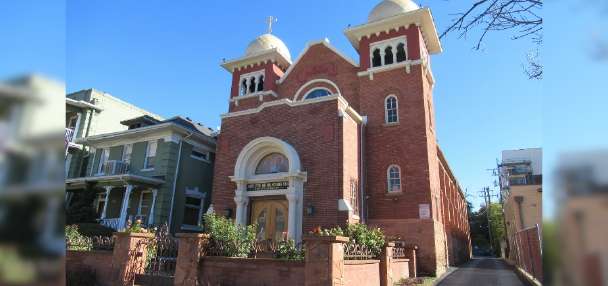
Before leaving, Leo led a special prayer at the Cathedral of St. Mary in Chiclayo, where he served as bishop from 2014 to 2023. He spoke of the "darkness" enveloping Peru, referring to rising crime amid political instability.
The homicide rate has nearly doubled over the past five years, from 5.8 to 10.7 per 100,000 people. Reports of extortion increased from 2,421 in 2019 to 26,734 in 2025, according to official data.
"We feel threatened by the uncertainty of widespread violence and by the unspeakable suffering that continues to afflict so many of our brothers and sisters," Leo said in the cathedral. "Yet, despite this darkness, which so often dims our hope and weakens our trust, God's gift continues to shine before our eyes."
Conservative Keiko Fujimori took office in July after pledging to tackle crime, which has become a top concern for Peruvians. She has since declared states of emergency, including in Lima in August and in prisons holding inmates linked to criminal organizations in September.
Fujimori has also moved to strengthen ties with Washington by bringing Peru into the "Shield of the Americas," a U.S.-led regional coalition formed to conduct joint military operations against drug cartels.
In Santa Cruz de Succhabamba, Leo acknowledged the temptation to respond to injustice with violence but urged a different response.
"Selfishness, injustice and evil are not overcome by brutality, but by prayer, patience and perseverance in denouncing what is wrong, by making our pleas with determination and working diligently to bring about the necessary changes," he said.
The country also faces widespread illegal gold mining and is the world's second-largest producer of coca leaves, the raw material for cocaine, after Colombia, according to the United Nations Office on Drugs and Crime.
Leo, who received a joyous welcome in Chiclayo on Friday, is expected to address those issues when he meets with Amazonian and Indigenous peoples on Sunday.
Indigenous community representatives sought a meeting with Leo in Chiclayo to raise another pressing concern: the loss of ancestral lands to companies linked to the influential Peruvian Catholic movement Sodalitium Christianae Vitae.
Members of the San Juan Bautista de Catacaos community are demanding justice and reparations from the church. They allege that companies linked to the Sodalitium used lawsuits and opaque land-titling arrangements to try to evict them.
Pope Francis, who supported the villagers' campaign, suppressed the Sodalitium last year, shortly before his death. But community members say the group retains economic influence in Peru and want the Vatican to do more.
"We recognize the importance of suppressing the Sodalitium Christianae Vitae. However, we believe that this decision — significant as it may be — cannot mark the end of a process that still has outstanding obligations toward the victims," community representative Fiorella Martínez told a news conference Saturday, reading from a letter addressed to Leo.
The disputes stretch back at least a decade, when Sodalitium-linked companies began legal proceedings to evict farmers from thousands of hectares in Catacaos after a series of property transfers the farmers did not recognize. Dozens were prosecuted for alleged "usurpation," and two community leaders were shot dead during clashes linked to the eviction efforts.
Leo is familiar with the dispute. As bishop of Chiclayo, he served as the Peruvian bishops' point person for dealing with Sodalitium victims.
In May, Peru's Catholic hierarchy held a symbolic reparation ceremony for Indigenous people who had lost their land.
Tania Pariona, secretary of Peru's National Human Rights Commission, called it a "historic gesture," saying the church "is taking the lead over the state, which has failed to protect rural communities."
On Saturday, she called for further action.
"They demand the restitution of their lands, the right to their territory, and protection for those who defend that territory; for our brothers who also suffered sexual abuse by the Sodalicio, we demand that same justice — that same reparation," she said.