'%3e%3cpath%20d='M34.1406%205.85938C30.3906%202.10547%2025.3047%200%2020%200C14.6953%200%209.60938%202.10547%205.85938%205.85938C2.10938%209.61328%200%2014.6953%200%2020C0%2025.3047%202.10547%2030.3906%205.85938%2034.1406C9.61328%2037.8906%2014.6953%2040%2020%2040C25.3047%2040%2030.3906%2037.8945%2034.1406%2034.1406C37.8906%2030.3906%2040%2025.3047%2040%2020C40%2014.6953%2037.8945%209.60938%2034.1406%205.85938ZM37.0117%2023.543H31.1602V13.5391H27.6328V19.9414C28.1211%2020.6914%2028.3711%2021.582%2028.3711%2022.5625V22.625C28.3711%2023.668%2028.1172%2024.6055%2027.6328%2025.4297V26.6094H36.082C33.4883%2032.9375%2027.2891%2037.3789%2020.0039%2037.3789C10.3711%2037.3789%202.62109%2029.6289%202.62109%2020C2.62109%2010.3711%2010.3711%202.62109%2020%202.62109C29.6289%202.62109%2037.3789%2010.3711%2037.3789%2020C37.3789%2021.1484%2037.2617%2022.2656%2037.0508%2023.3477C37.0391%2023.4141%2037.0234%2023.4766%2037.0117%2023.543Z'%20fill='white'/%3e%3cpath%20d='M22.3086%2018.5352C20.4336%2018.125%2019.9531%2017.8398%2019.9766%2017.1836V17.1406C19.9766%2016.6992%2020.3477%2016.2148%2021.4023%2016.2148C22.582%2016.2148%2023.8867%2016.6797%2025.0781%2017.4766L26.8516%2015.0195C25.4453%2013.8906%2023.707%2013.3398%2021.5547%2013.3398C18.5195%2013.3398%2016.4375%2015%2016.4063%2017.4766V17.5352C16.3633%2020.2617%2018.5859%2020.9805%2021.293%2021.6016C23.0391%2021.9766%2023.5703%2022.3164%2023.5703%2022.9609L23.5469%2022.9766C23.5469%2023.3906%2023.2578%2023.7031%2022.7852%2023.8359C22.5742%2023.9062%2022.1289%2023.9727%2021.5156%2023.9727C20.7617%2023.9727%2019.7539%2023.8633%2018.6328%2023.4844C18.0898%2023.2891%2017.4727%2023.0039%2016.8047%2022.6133L20.1406%2026.625C20.2813%2026.6602%2021.0977%2026.8516%2021.7734%2026.8516C25.0039%2026.8516%2027.0859%2025.2461%2027.1094%2022.6328V22.5703C27.1602%2020.1133%2025.2148%2019.1719%2022.3086%2018.5352Z'%20fill='white'/%3e%3cpath%20d='M5.24219%2013.5664V26.6133H8.75391V23.7578L10.2969%2021.9531L14.2031%2026.6133H18.3867L12.3555%2019.5195L17.4023%2013.5664H13.4531L8.75391%2019.0586V13.5664H5.24219Z'%20fill='white'/%3e%3c/g%3e%3cdefs%3e%3cclipPath%20id='clip0_97_2430'%3e%3crect%20width='40'%20height='40'%20fill='white'/%3e%3c/clipPath%3e%3c/defs%3e%3c/svg%3e)




Estimated read time: 7-8 minutes
- Utah's tech scene is evolving beyond Silicon Slopes, focusing on physical innovations.
- Key industries include aerospace, advanced manufacturing, energy and quantum technology.
- Utah's deep-tech growth is driven by increased capital and intersecting industries.
SALT LAKE CITY — For years, technology in Utah has been almost synonymous with Silicon Slopes.
Software. SaaS. Startups built around code, cloud computing and the idea that the next billion-dollar company could be launched from a laptop somewhere between Salt Lake City and Provo.
But Utah's next chapter in tech is looking a lot more physical.
Engineers are building military drones in Bluffdale that can be carried out the back of a factory and test-flown almost immediately. In Emery County, an advanced nuclear reactor recently reached criticality outside the national laboratory system. Across the state, companies and researchers are working in aerospace, advanced manufacturing, energy, quantum technology and other industries where innovation doesn't just live on a screen.
The shift is part of a broader category often called "deep tech," or technology rooted in significant scientific or engineering advances and typically requiring more time, capital and physical infrastructure than traditional software.
And according to those working inside Utah's ecosystem, much of it didn't appear overnight.
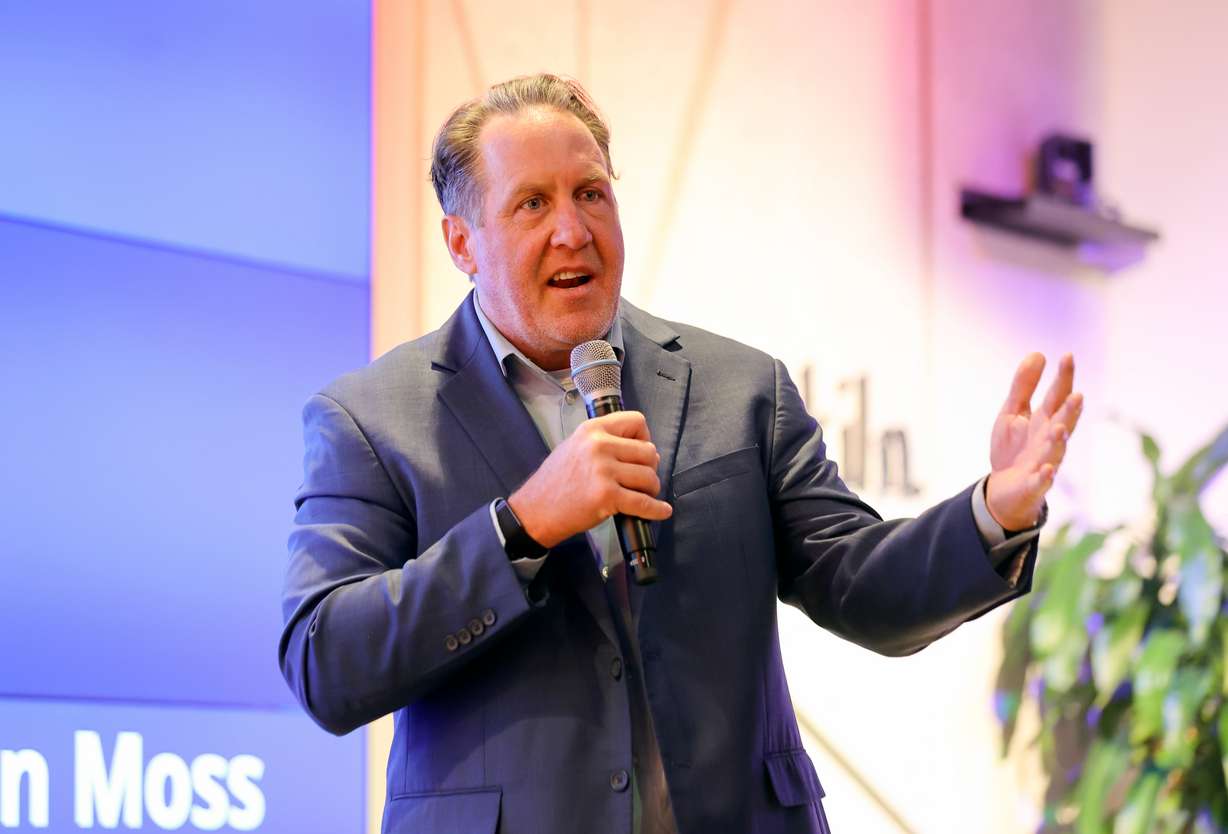
Jefferson Moss, CEO of the Nucleus Institute, said many of these industries have been growing in Utah for years. What's changing is their scale, the capital flowing toward them and the way previously separate industries are beginning to intersect.
The question now isn't whether Utah has a deep-tech economy.
It's whether the rest of the country has noticed.
Why Utah?
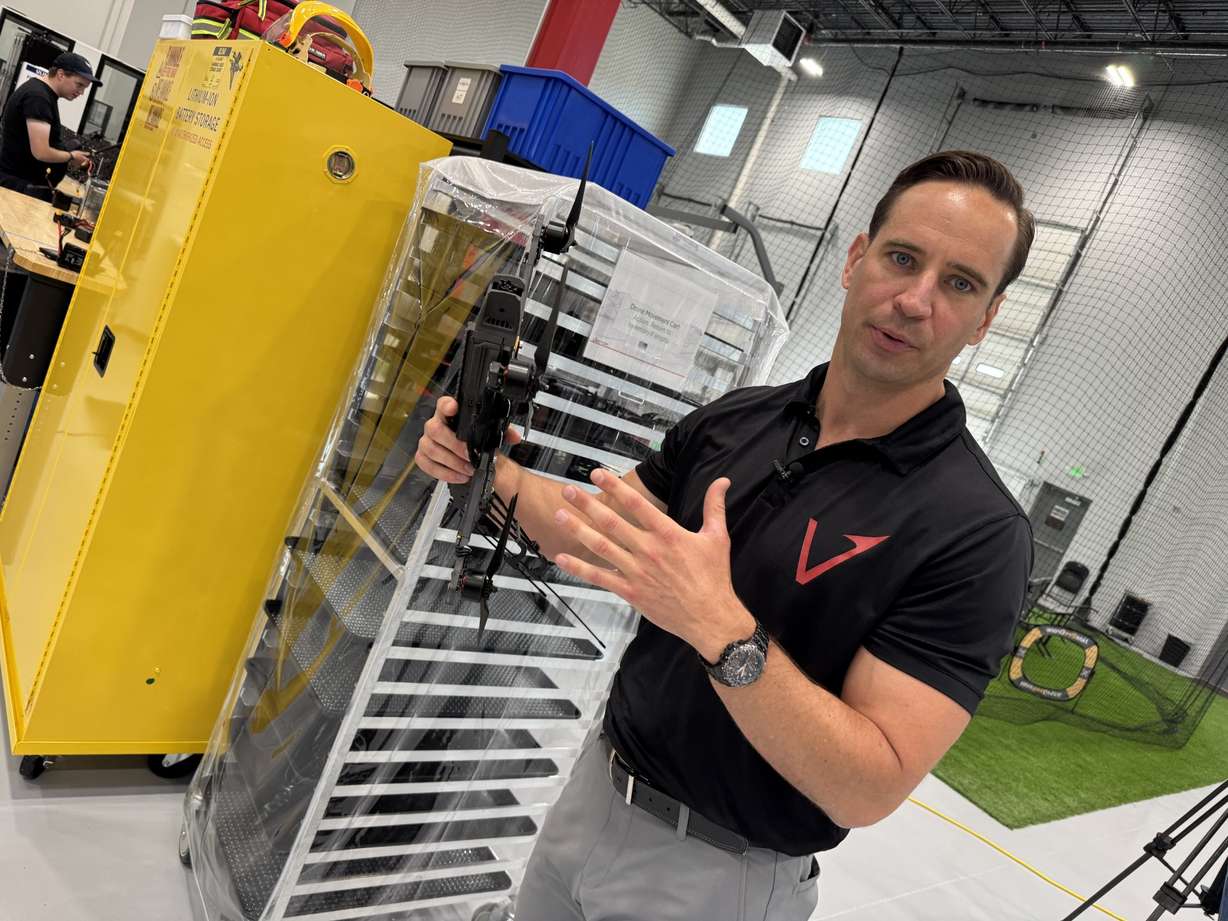
When Andy Yakulis and his co-founders were deciding where to build Vector, their defense technology company, Utah wasn't the obvious choice.
Yakulis had recently left the Army and was living in Northern Virginia, close to the company's primary customer: the U.S. military. The founders also looked seriously at California and Austin, Texas, two established hubs for defense technology.
They chose Utah.
"We looked at Utah and saw this amazing opportunity," Yakulis said.
The reasons were practical: access to engineering talent, military installations, open land and places to test the physical products Vector was building.
For a software company, proximity to open land probably doesn't make the list of site-selection criteria. For a drone manufacturer, it changes the equation entirely.
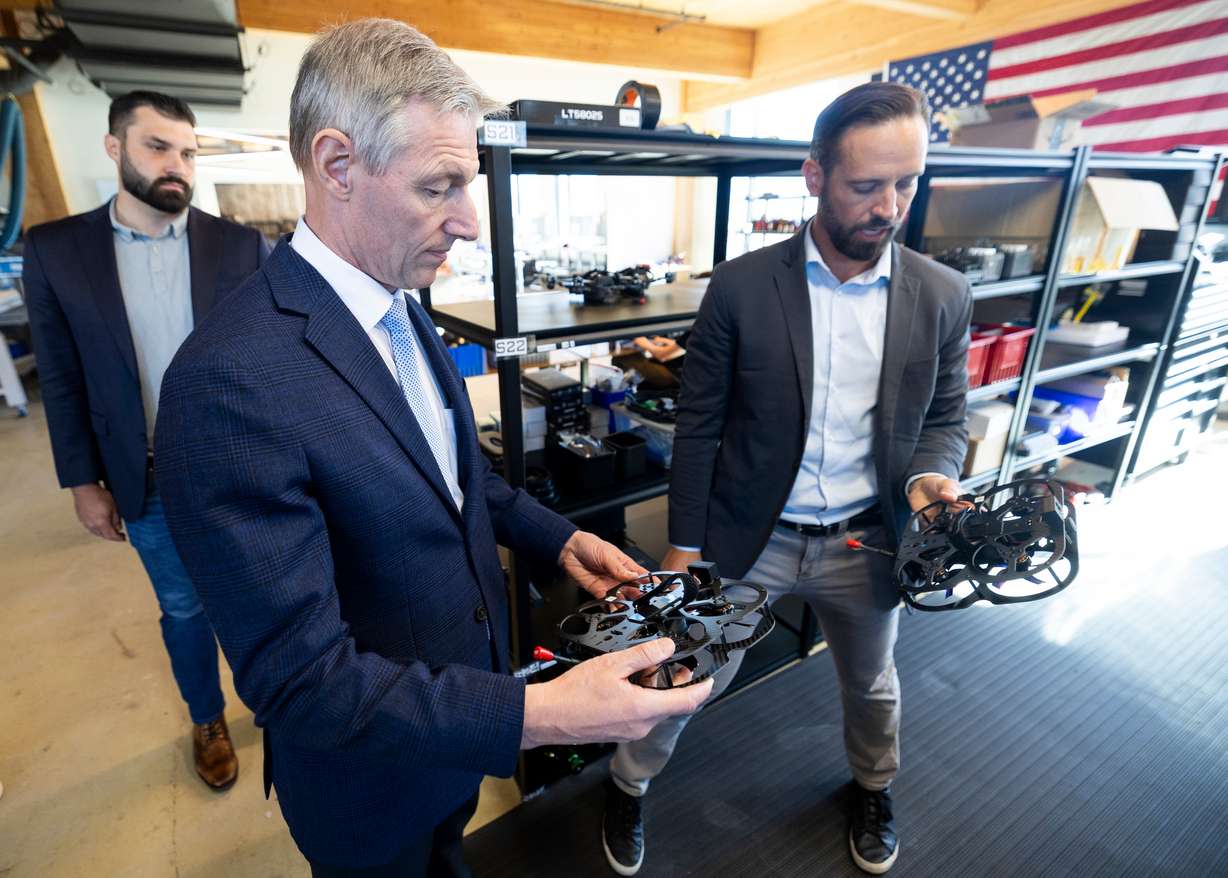
"I can build a drone, I can walk out of the back of our factory, and I can go test-fly it," Yakulis said.
Within about 20 minutes, he said, Vector can access land for longer test flights. Military facilities in the state also provide opportunities for more specialized testing.
But when asked whether he could have built the same company in Utah 10 years ago, Yakulis said the biggest obstacle wouldn't necessarily have been Utah.
It would have been investors.
A decade ago, he said, venture capital was far more interested in software and SaaS than capital-intensive hardware or defense companies. That appetite has changed dramatically in roughly the last five years, both nationally and in Utah.
"There is this momentum," Yakulis said. "There is this shift happening."
From coal country to nuclear testing
About two hours southeast of Provo, another version of Utah's deep-tech economy is taking shape in a place better known for coal than startups.
The Utah San Rafael Energy Lab sits in Emery County, a region that has produced energy for generations.
Today, the lab provides space, equipment and staff for companies developing energy technologies, including advanced nuclear projects.
Emy Lesofski, director of Utah's Office of Energy Development and the governor's energy adviser, describes the lab as something relatively unusual: a state commercialization lab.
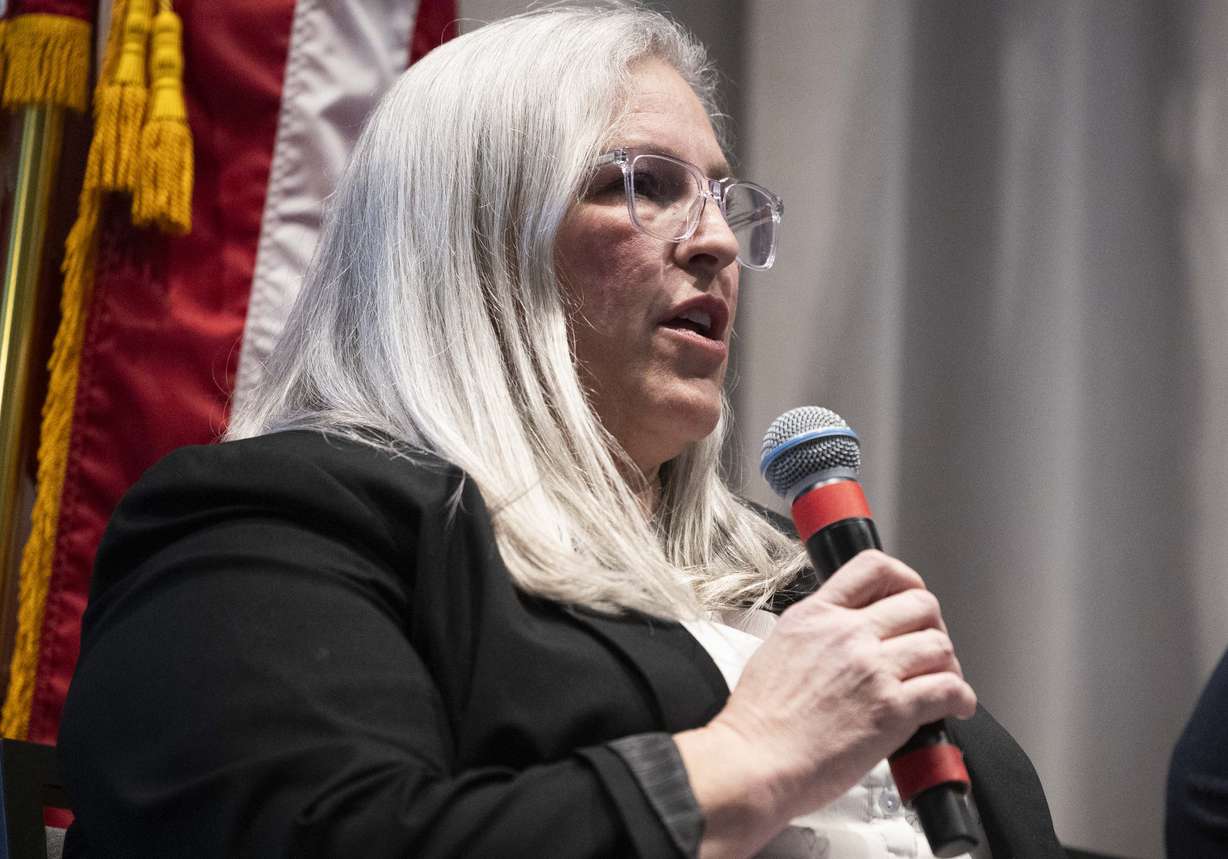
Rather than requiring an early-stage company to build every piece of expensive testing infrastructure itself, companies can use equipment and infrastructure already available at San Rafael.
"We have equipment that requires them to not have to put up the capital expense to buy the equipment," Lesofski said.
The goal is not simply research for research's sake.
Lesofski said the model is designed to give technologies a place to prove themselves, move toward commercialization and, ideally, eventually create companies and long-term jobs in Utah. The lab's work spans advanced nuclear technology, lithium-ion battery recycling and other energy research.
One project has already given the lab national attention.
In June, Valar Atomics' Ward 250 reactor completed a zero-power fueled criticality demonstration at San Rafael, becoming the first Department of Energy-authorized reactor built outside a national laboratory.
For Lesofski, the milestone was bigger than one reactor.
"It helps underscore that we're serious and that we can deliver," she said.
The location matters, too.
Emery County already has generations of energy workers and an established culture around energy production. As coal and other traditional energy assets evolve, Lesofski said the hope is that new technologies can allow families to continue building careers without leaving the communities where they already live.
In other words, deep tech in Utah doesn't always look like a shiny startup campus.
Sometimes it looks like coal country building its next chapter.
When industries stop staying in their lanes
That overlap may be one of the more important parts of Utah's deep-tech story.
Aerospace, defense, energy, advanced manufacturing, life sciences, AI and quantum computing can sound like unrelated industries. Increasingly, they aren't.
Moss' Nucleus Institute was created to connect some of those pieces, bringing universities, industry, government and capital together to help move research toward commercial companies. The organization describes its role around three functions: convening, educating and funding Utah innovation.
From Vector's perspective, that convergence can be as mundane as a supply chain.
Yakulis pointed to carbon fiber. A Utah supplier producing it for one industry might also serve a bicycle manufacturer, an aerospace company or Vector's drones.
The same is true of talent.
Vector has relocated roughly 20 to 25 people to Utah, Yakulis said, while also recruiting locally. Its hiring includes engineers, program managers and manufacturing technicians who physically assemble the company's products.
Existing defense employers and Hill Air Force Base have already helped build a pool of workers that younger companies can recruit from.
Energy sits underneath much of the growth, too.
"None of that is possible without energy, right?" Lesofski said, noting that many advanced manufacturing and deep-tech industries require significant amounts of power.
The result is less a collection of isolated industries and more an ecosystem where one sector's workforce, suppliers, research or infrastructure can become another's advantage.
The part Utah hasn't solved
For all the momentum, Yakulis thinks Utah still has a problem.
Too many people are still asking him the same question: Why Utah?
"I have to speak on this point too much, and I think that's a problem," he said. "It should be obvious."
Yakulis said Utah needs to do a better job marketing itself nationally as a place to build hard technology, particularly as engineers and entrepreneurs leave California and look toward other tech hubs.
In his view, too many of them are skipping Utah and heading straight for places like Austin.
Lesofski sees the remaining hurdle somewhat differently.
Asked what is still standing between Utah and becoming a major advanced-energy and deep-tech hub, her answer was simple: "Just time."
The infrastructure is being built. Companies are arriving. Research is moving toward commercialization. Capital is becoming more comfortable with technologies that may take years, rather than months, to reach the market.
Now, Utah has to prove that those pieces can compound.
A different kind of Silicon Slopes
None of this means Utah's software economy is disappearing.
If anything, the state's next technology chapter may depend on it.
AI increasingly powers advanced manufacturing. Software controls drones. Data centers create new energy demands. Quantum research depends on advanced materials, computing and engineering. The boundaries between "tech" and everything else are getting harder to draw.
For decades, Silicon Slopes helped put Utah on the national technology map.
The next wave may look less like another app and more like a reactor in Emery County, a drone leaving a factory in Bluffdale or a piece of university research becoming a company before it has a chance to leave the state.
Yakulis believes that within five years, Utah will be much more widely recognized as a place to build deep-tech companies.
"The investment is here, the companies are here, the talent is here, the opportunity is here," he said.
Utah spent years becoming known as a place where people build software.
The bigger story now may be everything else they're learning to build.