'%3e%3cpath%20d='M34.1406%205.85938C30.3906%202.10547%2025.3047%200%2020%200C14.6953%200%209.60938%202.10547%205.85938%205.85938C2.10938%209.61328%200%2014.6953%200%2020C0%2025.3047%202.10547%2030.3906%205.85938%2034.1406C9.61328%2037.8906%2014.6953%2040%2020%2040C25.3047%2040%2030.3906%2037.8945%2034.1406%2034.1406C37.8906%2030.3906%2040%2025.3047%2040%2020C40%2014.6953%2037.8945%209.60938%2034.1406%205.85938ZM37.0117%2023.543H31.1602V13.5391H27.6328V19.9414C28.1211%2020.6914%2028.3711%2021.582%2028.3711%2022.5625V22.625C28.3711%2023.668%2028.1172%2024.6055%2027.6328%2025.4297V26.6094H36.082C33.4883%2032.9375%2027.2891%2037.3789%2020.0039%2037.3789C10.3711%2037.3789%202.62109%2029.6289%202.62109%2020C2.62109%2010.3711%2010.3711%202.62109%2020%202.62109C29.6289%202.62109%2037.3789%2010.3711%2037.3789%2020C37.3789%2021.1484%2037.2617%2022.2656%2037.0508%2023.3477C37.0391%2023.4141%2037.0234%2023.4766%2037.0117%2023.543Z'%20fill='white'/%3e%3cpath%20d='M22.3086%2018.5352C20.4336%2018.125%2019.9531%2017.8398%2019.9766%2017.1836V17.1406C19.9766%2016.6992%2020.3477%2016.2148%2021.4023%2016.2148C22.582%2016.2148%2023.8867%2016.6797%2025.0781%2017.4766L26.8516%2015.0195C25.4453%2013.8906%2023.707%2013.3398%2021.5547%2013.3398C18.5195%2013.3398%2016.4375%2015%2016.4063%2017.4766V17.5352C16.3633%2020.2617%2018.5859%2020.9805%2021.293%2021.6016C23.0391%2021.9766%2023.5703%2022.3164%2023.5703%2022.9609L23.5469%2022.9766C23.5469%2023.3906%2023.2578%2023.7031%2022.7852%2023.8359C22.5742%2023.9062%2022.1289%2023.9727%2021.5156%2023.9727C20.7617%2023.9727%2019.7539%2023.8633%2018.6328%2023.4844C18.0898%2023.2891%2017.4727%2023.0039%2016.8047%2022.6133L20.1406%2026.625C20.2813%2026.6602%2021.0977%2026.8516%2021.7734%2026.8516C25.0039%2026.8516%2027.0859%2025.2461%2027.1094%2022.6328V22.5703C27.1602%2020.1133%2025.2148%2019.1719%2022.3086%2018.5352Z'%20fill='white'/%3e%3cpath%20d='M5.24219%2013.5664V26.6133H8.75391V23.7578L10.2969%2021.9531L14.2031%2026.6133H18.3867L12.3555%2019.5195L17.4023%2013.5664H13.4531L8.75391%2019.0586V13.5664H5.24219Z'%20fill='white'/%3e%3c/g%3e%3cdefs%3e%3cclipPath%20id='clip0_97_2430'%3e%3crect%20width='40'%20height='40'%20fill='white'/%3e%3c/clipPath%3e%3c/defs%3e%3c/svg%3e)


Estimated read time: 4-5 minutes
- Shawn Slaugh, owner of Mountain Man Meats in Cedar City, emphasizes proper game care post-harvest.
- He highlights the importance of timely processing to prevent meat spoilage and waste.
- Slaugh advocates for teaching respect for animals and maximizing their use post-hunt.
CEDAR CITY — Shawn Slaugh grew up hunting in the mountains of southern Utah and was taught far more than hunter safety; he learned how to properly care for the animal that had just given its life to feed their family.
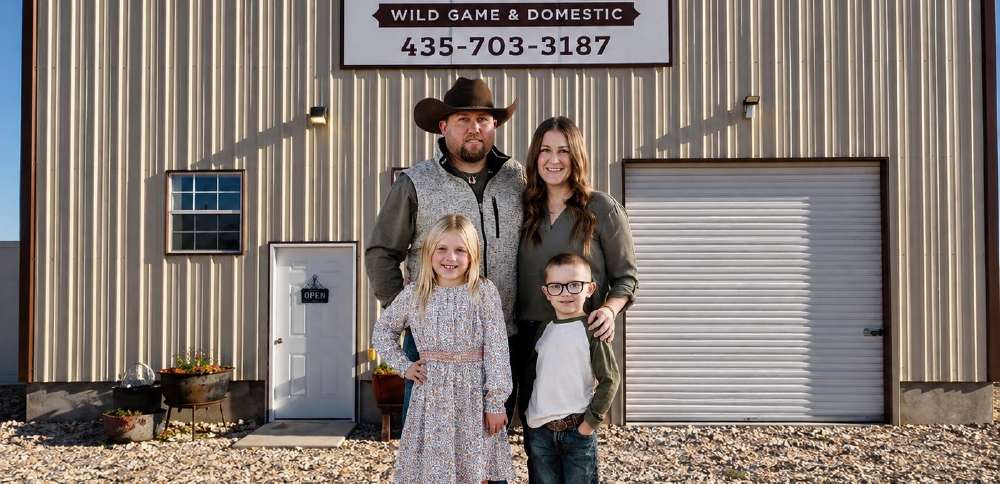
Today, Slaugh is the owner of Mountain Man Meats, which is a custom butcher shop in Cedar City, and he hopes to instill that same care of animals to those he serves.
"A lot of people just go out for the hunt and don't know the things that they need to know," Slaugh told KSL. "A lot is focused on hunter safety in order to get your blue card to apply for hunts, but it's really lacking as far as how to properly take care of your game after you've harvested it in the field."
Slaugh is a licensed butcher, preparing domestic and wild game, and is one of few in the state who butchers wild game. In fact, since his shop opened in 2022, he said he does close to 1,000 wild game per year and blocks off the months of August through February to prepare the meat for his customers.
"Every year, I see both ends of the gamut," he said. "I get really great hunters who will take their time fine tuning their equipment and their guns and bows and they shoot often and have the confidence to get a clean shot. Then I get those who will bring their animal in after dragging it behind a 4-wheeler and keeping it at their camp for a while before bringing it to me and expect some good quality cuts out of it."
Slaugh said that part of caring for the harvested animal is getting it processed in a timely manner, adding that there is also a balance between rushing through prepping the animal for processing and taking extra time needed to do it correctly.
"Everyone gets what they call, 'the buck fever,'" he said. "But, I see hunters that take the extra time who are not only prepping ahead and practicing, but they are watching the animals and learning scouting, and they're taking time to go through their gear. They'll go as far as taking tarps that they can lay out for when they start to skin out an animal so there's a barrier between the ground and the animal so it doesn't get contaminated."
He mentioned other things like following the hairline when cutting so that the hair doesn't slip and get caught in the meat and not going too deep as to accidentally puncture the intestines.
"Once you take your animal down, calm your nerves and go in with thought and mind of what you're doing," he said. "Once it's down, you have a minute to do this.
"I know it's the warmer season and it's a little more stress to get them to the shop," he added. "The biggest thing I see with larger animals like elk, is they'll lay them down and keep them on their side and that heat will remain inside those quarters of the body and that heat can't escape because the ground is insulating that heat in the carcass. I get a lot of meat spoil from that."
He also urged hunters not to spray down the meat with water before it's cut. Doing so, he said, can spread contamination.
Slaugh is also an official member of The American Mountain Men, which is a group trained survival to live outdoors as early settlers did. As a certified butcher, he also went through years of vigorous training and apprenticeship that added to his years growing up and now owning a business.
He said that a lot of times, families will go hunting for the experience, but neglect to take time to really ensure that it is done with all considerations in mind.
"I understand that things can go wrong," he said. "There's a variety of issues that can happen out there because you're in the mountains. But too often parents aren't taking the time to show their kids how to properly take care of an animal. We really need to get back to making sure we're completely prepared for the hunt, and that means understanding what to do after."
Along with education on how to properly hunt and prepare an animal, Slaugh said that respect for animals also needs to be taught.
"You should treat it with pride and humanity because you just harvested an animal that is supposed to supply food," he said. "If you're dragging it behind a side-by-side ... if you're letting it sit in up to 70-degree weather for two days and then trying to bring it in and it's spoiled — that's not valuing that animal.
"There's so much anti-slaughtering and anti-hunting, and we get a bad name because of issues like these."
Slaugh also tans animal hides to make clothing and other items — because valuing the animal is really about using as much of it as possible, he said.
"Think thoroughly about what you're doing and be aware of how you're going about doing it before bringing your animal to the processor," he said. "This is the biggest key in making sure you yield back the highest amount of meat."