'%3e%3cpath%20d='M34.1406%205.85938C30.3906%202.10547%2025.3047%200%2020%200C14.6953%200%209.60938%202.10547%205.85938%205.85938C2.10938%209.61328%200%2014.6953%200%2020C0%2025.3047%202.10547%2030.3906%205.85938%2034.1406C9.61328%2037.8906%2014.6953%2040%2020%2040C25.3047%2040%2030.3906%2037.8945%2034.1406%2034.1406C37.8906%2030.3906%2040%2025.3047%2040%2020C40%2014.6953%2037.8945%209.60938%2034.1406%205.85938ZM37.0117%2023.543H31.1602V13.5391H27.6328V19.9414C28.1211%2020.6914%2028.3711%2021.582%2028.3711%2022.5625V22.625C28.3711%2023.668%2028.1172%2024.6055%2027.6328%2025.4297V26.6094H36.082C33.4883%2032.9375%2027.2891%2037.3789%2020.0039%2037.3789C10.3711%2037.3789%202.62109%2029.6289%202.62109%2020C2.62109%2010.3711%2010.3711%202.62109%2020%202.62109C29.6289%202.62109%2037.3789%2010.3711%2037.3789%2020C37.3789%2021.1484%2037.2617%2022.2656%2037.0508%2023.3477C37.0391%2023.4141%2037.0234%2023.4766%2037.0117%2023.543Z'%20fill='white'/%3e%3cpath%20d='M22.3086%2018.5352C20.4336%2018.125%2019.9531%2017.8398%2019.9766%2017.1836V17.1406C19.9766%2016.6992%2020.3477%2016.2148%2021.4023%2016.2148C22.582%2016.2148%2023.8867%2016.6797%2025.0781%2017.4766L26.8516%2015.0195C25.4453%2013.8906%2023.707%2013.3398%2021.5547%2013.3398C18.5195%2013.3398%2016.4375%2015%2016.4063%2017.4766V17.5352C16.3633%2020.2617%2018.5859%2020.9805%2021.293%2021.6016C23.0391%2021.9766%2023.5703%2022.3164%2023.5703%2022.9609L23.5469%2022.9766C23.5469%2023.3906%2023.2578%2023.7031%2022.7852%2023.8359C22.5742%2023.9062%2022.1289%2023.9727%2021.5156%2023.9727C20.7617%2023.9727%2019.7539%2023.8633%2018.6328%2023.4844C18.0898%2023.2891%2017.4727%2023.0039%2016.8047%2022.6133L20.1406%2026.625C20.2813%2026.6602%2021.0977%2026.8516%2021.7734%2026.8516C25.0039%2026.8516%2027.0859%2025.2461%2027.1094%2022.6328V22.5703C27.1602%2020.1133%2025.2148%2019.1719%2022.3086%2018.5352Z'%20fill='white'/%3e%3cpath%20d='M5.24219%2013.5664V26.6133H8.75391V23.7578L10.2969%2021.9531L14.2031%2026.6133H18.3867L12.3555%2019.5195L17.4023%2013.5664H13.4531L8.75391%2019.0586V13.5664H5.24219Z'%20fill='white'/%3e%3c/g%3e%3cdefs%3e%3cclipPath%20id='clip0_97_2430'%3e%3crect%20width='40'%20height='40'%20fill='white'/%3e%3c/clipPath%3e%3c/defs%3e%3c/svg%3e)



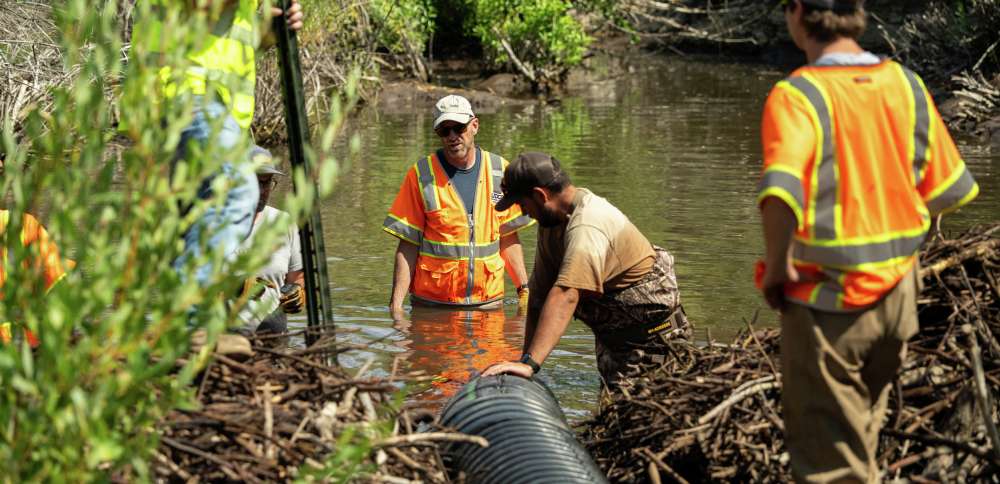
- UDOT recently installed pond levelers in Logan Canyon to manage beaver-related road issues.
- The levelers allow beavers to build dams without affecting U.S. 89's road base.
- UDOT aims to monitor effectiveness and possibly expand use statewide for similar challenges.
LOGAN — Utah transportation officials have long dealt with road issues tied to beavers in Logan Canyon.
The critters love to build dams that help them access food and new habitat, which provides significant ecological benefits to the canyon but also impacts U.S. 89 cutting through it. When water levels become high enough, it seeps underneath roads and erodes the road base, creating safety hazards, said Matt Howard, natural resources manager for the Utah Department of Transportation.
UDOT used to trap the beavers and relocate them, only to find new beavers moving into their native habitat.
Rather than continuing to remove the animals or their dams, Howard believes a recently completed project to install three pond levelers along Beaver Creek in the canyon will let beavers keep building dams as they naturally do without raising the water table to a level that affects the road.
"We're hoping this can break that cycle," he said in a video that UDOT posted on Thursday.
Beavers have long been a part of Logan Canyon, which also helped attract European settlers. Trapping was initially established in the early 1800s, and the canyon and nearby city are each named after Ephraim Logan, one of the well-known early trappers, as noted by Wild About Utah.
They wiped out a large chunk of the beaver population to meet fashion trends of the time, nearly bringing the species to the brink of extinction. Those trends died, and the resilient creature recovered with time.
Then came the challenges to U.S. 89. UDOT began asking around for potential road solutions that also allow beavers to continue building dams, ultimately connecting them to the Utah Division of Wildlife Resources, Sageland Collaborative and Utah State University's Beaver Ecology and Relocation Collaborative.
They settled on levelers, which are large black plastic tubes that run across the dam, quietly moving excess water before it reaches the level that would impact the roadway.
"It creates a passageway for water to flow through a beaver without piling up and raising the water table," Howard explained. "The beavers don't recognize it's happening, so they can happily build their dam up over the top of that pipe and — as far as they're concerned — everything is working great. They stay here and don't go try to find a new place, a new culvert to clog."
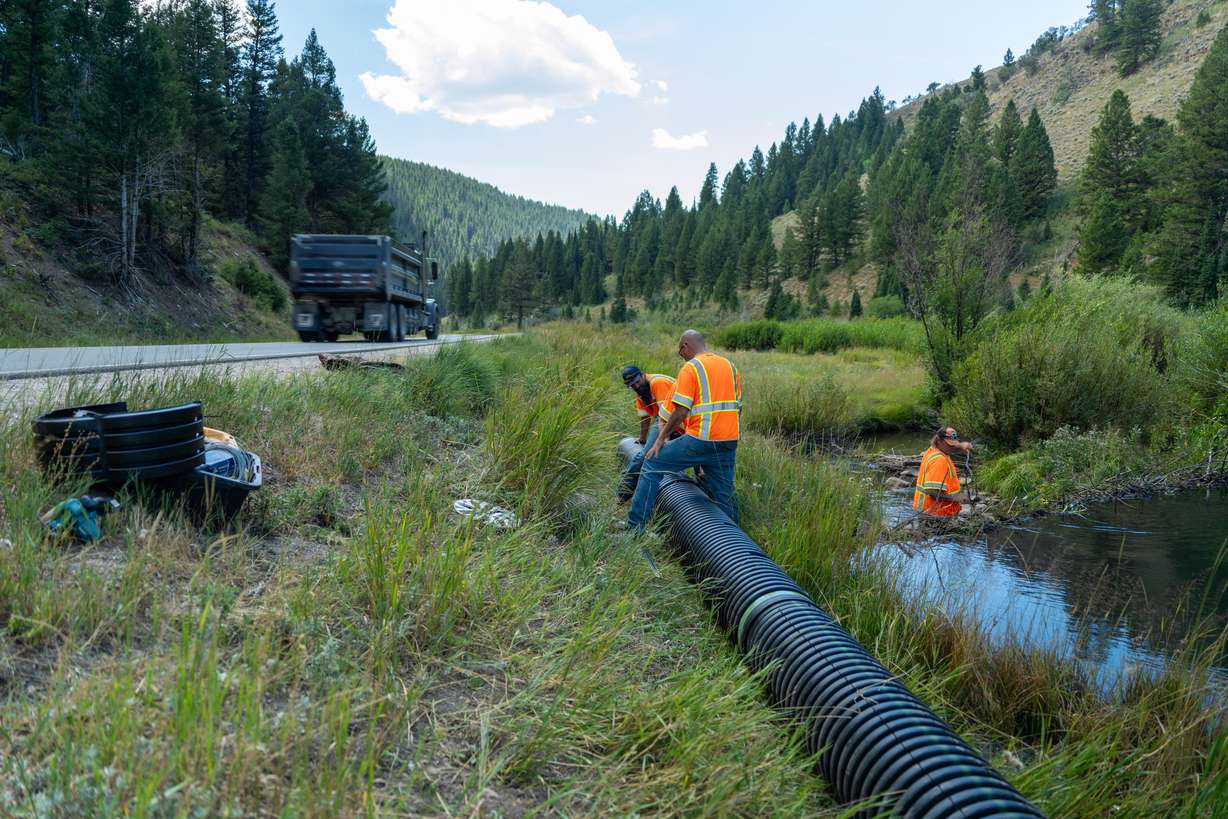
Wildlife experts say it allows key infrastructure to exist with beavers, which they say is important for the reasons that draw people to the canyon.
It can expand wildlife habitat within the canyon while also solving UDOT's predicament. In holding more water, it can also improve water quality and make the canyon more resistant to fire, said Shane Hill, restoration program manager for the Sageland Collaborative, a Utah nonprofit that focuses on wildlife and land conservation.
The exact project cost was not immediately made available. However, UDOT plans to monitor the levelers to see how effective they are.
If it works, the agency could install more of them in the canyon or elsewhere where it might be useful. Hill hopes it creates a blueprint for other parts of the state that have beaver-related infrastructure challenges.
"If we can keep (beavers) in the area, we'll keep them," added Joshua Butcher, a restoration biologist for the Utah Division of Wildlife Resources. "In the future, it's going to be more coexistence stuff because we can't just trap remove beavers. ... We're going to have to learn to coexist with them."