'%3e%3cpath%20d='M34.1406%205.85938C30.3906%202.10547%2025.3047%200%2020%200C14.6953%200%209.60938%202.10547%205.85938%205.85938C2.10938%209.61328%200%2014.6953%200%2020C0%2025.3047%202.10547%2030.3906%205.85938%2034.1406C9.61328%2037.8906%2014.6953%2040%2020%2040C25.3047%2040%2030.3906%2037.8945%2034.1406%2034.1406C37.8906%2030.3906%2040%2025.3047%2040%2020C40%2014.6953%2037.8945%209.60938%2034.1406%205.85938ZM37.0117%2023.543H31.1602V13.5391H27.6328V19.9414C28.1211%2020.6914%2028.3711%2021.582%2028.3711%2022.5625V22.625C28.3711%2023.668%2028.1172%2024.6055%2027.6328%2025.4297V26.6094H36.082C33.4883%2032.9375%2027.2891%2037.3789%2020.0039%2037.3789C10.3711%2037.3789%202.62109%2029.6289%202.62109%2020C2.62109%2010.3711%2010.3711%202.62109%2020%202.62109C29.6289%202.62109%2037.3789%2010.3711%2037.3789%2020C37.3789%2021.1484%2037.2617%2022.2656%2037.0508%2023.3477C37.0391%2023.4141%2037.0234%2023.4766%2037.0117%2023.543Z'%20fill='white'/%3e%3cpath%20d='M22.3086%2018.5352C20.4336%2018.125%2019.9531%2017.8398%2019.9766%2017.1836V17.1406C19.9766%2016.6992%2020.3477%2016.2148%2021.4023%2016.2148C22.582%2016.2148%2023.8867%2016.6797%2025.0781%2017.4766L26.8516%2015.0195C25.4453%2013.8906%2023.707%2013.3398%2021.5547%2013.3398C18.5195%2013.3398%2016.4375%2015%2016.4063%2017.4766V17.5352C16.3633%2020.2617%2018.5859%2020.9805%2021.293%2021.6016C23.0391%2021.9766%2023.5703%2022.3164%2023.5703%2022.9609L23.5469%2022.9766C23.5469%2023.3906%2023.2578%2023.7031%2022.7852%2023.8359C22.5742%2023.9062%2022.1289%2023.9727%2021.5156%2023.9727C20.7617%2023.9727%2019.7539%2023.8633%2018.6328%2023.4844C18.0898%2023.2891%2017.4727%2023.0039%2016.8047%2022.6133L20.1406%2026.625C20.2813%2026.6602%2021.0977%2026.8516%2021.7734%2026.8516C25.0039%2026.8516%2027.0859%2025.2461%2027.1094%2022.6328V22.5703C27.1602%2020.1133%2025.2148%2019.1719%2022.3086%2018.5352Z'%20fill='white'/%3e%3cpath%20d='M5.24219%2013.5664V26.6133H8.75391V23.7578L10.2969%2021.9531L14.2031%2026.6133H18.3867L12.3555%2019.5195L17.4023%2013.5664H13.4531L8.75391%2019.0586V13.5664H5.24219Z'%20fill='white'/%3e%3c/g%3e%3cdefs%3e%3cclipPath%20id='clip0_97_2430'%3e%3crect%20width='40'%20height='40'%20fill='white'/%3e%3c/clipPath%3e%3c/defs%3e%3c/svg%3e)



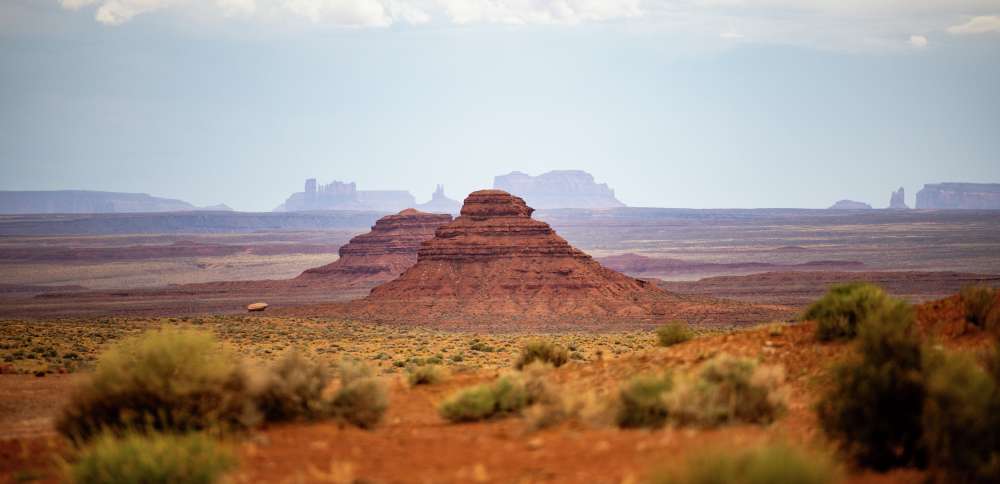
- Conservation groups filed lawsuits challenging Trump's reduction of Utah national monuments.
- They argue Trump's orders violate the Antiquities Act by reducing monument protections.
- Utah leaders supported the reduction, citing manageability; conversation groups fear mining interests.
SALT LAKE CITY — The legal fight over a pair of national monuments in Utah is resuming once again after President Donald Trump directed earlier this summer that they be reduced beyond what he had ordered in 2017.
Several conservation groups filed a series of lawsuits in U.S. District Court on Wednesday that essentially ask federal courts to reactivate litigation tied to the sizes of Bears Ears and Grand Staircase-Escalante national monuments, largely since a stay was ordered within existing cases.
It's in response to Trump's July order to reduce the sizes of Bears Ears and Grand Staircase-Escalante to about 121,000 acres and 182,000 acres, respectively. The order effectively shrank the size of the monuments at the time to a tenth of their original sizes, but also to a quarter of what he had issued in 2017, which had previously ignited lawsuits.
Conservation groups are seeking a federal court decision that voids both the 2017 and 2026 orders, which they argue are illegal and unconstitutional.
"With the filing of these lawsuits, we intend to make sure Trump doesn't have the final word over the fate of these treasured landscapes," said Steve Bloch, legal director at the Southern Utah Wilderness Alliance, one of the groups that joined the lawsuit.
Wednesday's decision wasn't much of a surprise. Several groups said they intended to fight the order after it was issued, and hundreds of people packed the sidewalk outside of the Utah Governor's Mansion to protest the order a week after it was signed.
It's the latest development in a political saga that's played out over the past decade. Trump, a Republican, ordered a reduction of the two Utah monuments in 2017, shrinking the sizes of monuments that Presidents Bill Clinton and Barack Obama, each a Democrat, had ordered in 1996 and 2016, respectively.
The groups behind the lawsuits assert that a president has the authorization to create new monuments under the Antiquities Act of 1906, but not to eliminate monument protections or override boundaries that Congress confirmed, which they say both of Trump's proclamations violated.
"President Trump cannot erase America's national monuments with the stroke of a pen. The Antiquities Act gives presidents the authority to protect places like Grand Staircase-Escalante and Bears Ears, not dismantle them for mining and other industrial interests," said Athan Manuel, director of the Sierra Club's Lands Protection Program, another one of the groups that joined the lawsuit.
Related:
Trump shrinks sizes of Bears Ears, Grand Staircase-Escalante monuments — again
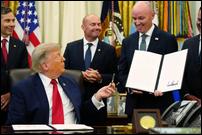
President Donald Trump has once again ordered the sizes of two monuments in southern Utah to be reduced, but his new order will shrink them beyond his first order nearly a decade ago.Utah leaders, who are Republicans, have lauded Trump's orders, even joining him in the Oval Office in July after the president traveled to Utah in 2017 to sign the first order.
The state had filed its own lawsuit after President Joe Biden, also a Democrat, reversed Trump's initial order, arguing that the monuments — at over 3 million acres combined — were a "glaring misuse of the Antiquities Act." That lawsuit was dismissed by a federal judge in 2023, although the state appealed the decision later in the year.
The latest order split Grand Staircase-Escalante National Monument into Escalante and Kaiparowits Horizon units, and Bears Ears National Monument into the Shash Jáa Unit and the Indian Creek units, calling it "the smallest area compatible with the proper care and management of the objects to be protected."
"We need to rightsize these monuments," said Utah Gov. Spencer Cox in July. "This does not remove the other protections that already exist in those areas. (It's) just making the monuments more manageable."
Kate MacGregor, deputy secretary of the Interior, agreed with Utah's argument at the time, noting the first monument, approved by President Theodore Roosevelt, was only 1,300 acres, far less than either Grand Staircase-Escalante and Bears Ears national monuments. However, conservation groups pointed out that Roosevelt also designated over 800,000 acres of public land for Grand Canyon National Monument while in office.
It's unclear how Wednesday's lawsuits affect the recent changes. There's no timeline for it to go through the legal system.
Many of the groups suing over the order reported that signs were immediately removed after the order was signed. They also reported in August that at least nine mining claims were filed on areas that lost monument status within a month of the order, although they noted that mining claims cannot be staked until later this month.
While they seek to reverse Trump's orders, they say they will also watch over any potential damage to the original monument sites.
"We'll be watching closely for on-the-ground mischief like new mining claims and illegal vehicle use and are ready to swing into action to protect the monuments from any activities that can leave lasting damage," Bloch said.