'%3e%3cpath%20d='M34.1406%205.85938C30.3906%202.10547%2025.3047%200%2020%200C14.6953%200%209.60938%202.10547%205.85938%205.85938C2.10938%209.61328%200%2014.6953%200%2020C0%2025.3047%202.10547%2030.3906%205.85938%2034.1406C9.61328%2037.8906%2014.6953%2040%2020%2040C25.3047%2040%2030.3906%2037.8945%2034.1406%2034.1406C37.8906%2030.3906%2040%2025.3047%2040%2020C40%2014.6953%2037.8945%209.60938%2034.1406%205.85938ZM37.0117%2023.543H31.1602V13.5391H27.6328V19.9414C28.1211%2020.6914%2028.3711%2021.582%2028.3711%2022.5625V22.625C28.3711%2023.668%2028.1172%2024.6055%2027.6328%2025.4297V26.6094H36.082C33.4883%2032.9375%2027.2891%2037.3789%2020.0039%2037.3789C10.3711%2037.3789%202.62109%2029.6289%202.62109%2020C2.62109%2010.3711%2010.3711%202.62109%2020%202.62109C29.6289%202.62109%2037.3789%2010.3711%2037.3789%2020C37.3789%2021.1484%2037.2617%2022.2656%2037.0508%2023.3477C37.0391%2023.4141%2037.0234%2023.4766%2037.0117%2023.543Z'%20fill='white'/%3e%3cpath%20d='M22.3086%2018.5352C20.4336%2018.125%2019.9531%2017.8398%2019.9766%2017.1836V17.1406C19.9766%2016.6992%2020.3477%2016.2148%2021.4023%2016.2148C22.582%2016.2148%2023.8867%2016.6797%2025.0781%2017.4766L26.8516%2015.0195C25.4453%2013.8906%2023.707%2013.3398%2021.5547%2013.3398C18.5195%2013.3398%2016.4375%2015%2016.4063%2017.4766V17.5352C16.3633%2020.2617%2018.5859%2020.9805%2021.293%2021.6016C23.0391%2021.9766%2023.5703%2022.3164%2023.5703%2022.9609L23.5469%2022.9766C23.5469%2023.3906%2023.2578%2023.7031%2022.7852%2023.8359C22.5742%2023.9062%2022.1289%2023.9727%2021.5156%2023.9727C20.7617%2023.9727%2019.7539%2023.8633%2018.6328%2023.4844C18.0898%2023.2891%2017.4727%2023.0039%2016.8047%2022.6133L20.1406%2026.625C20.2813%2026.6602%2021.0977%2026.8516%2021.7734%2026.8516C25.0039%2026.8516%2027.0859%2025.2461%2027.1094%2022.6328V22.5703C27.1602%2020.1133%2025.2148%2019.1719%2022.3086%2018.5352Z'%20fill='white'/%3e%3cpath%20d='M5.24219%2013.5664V26.6133H8.75391V23.7578L10.2969%2021.9531L14.2031%2026.6133H18.3867L12.3555%2019.5195L17.4023%2013.5664H13.4531L8.75391%2019.0586V13.5664H5.24219Z'%20fill='white'/%3e%3c/g%3e%3cdefs%3e%3cclipPath%20id='clip0_97_2430'%3e%3crect%20width='40'%20height='40'%20fill='white'/%3e%3c/clipPath%3e%3c/defs%3e%3c/svg%3e)


- BYU Wheatley Institute reports highlight religion's positive impact on health including mental, physical and social health.
- The report looked at hundreds of studies that were found to be the most scientifically sound.
- The authors suggest voluntary participation in religion could be considered as a way to improve public health.
PROVO — After years of effort, the BYU Wheatley Institute is publishing three reports this summer highlighting the positive impact of religion on health. The analysis shows that consistent religious practices can really make a difference.
Going to church frequently could help people live an average of 7.6 years longer — 13.7 years longer when specifically considering African Americans.
The combination of studies also showed that those who are religious are less likely to smoke or have a stroke and more likely to have good immune function and hormone balances.
Loren Marks, BYU professor and author of the report, said the goal was to find what the "best science" communicates about how religion impacts health.
A team at Duke University gathered the studies that were most scientifically rigorous from over 60,000 studies on religion and health, narrowing it down to 3,000. Then teams at BYU analyzed the findings of those more limited reports to pull together a larger picture.
The team considered hundreds of studies and found that 10 out of every 11 studies on mental health showed religion would have a positive impact. Seven out of every eight studies showed that religion will have a positive impact on physical health.
The results for social and relational health were even more clearly positive — with 33 of every 34 studies showing improved health. Each of the three categories will have its own report, and the mental health and physical health reports are already published.
Because they drew from hundreds of studies, the results represent studies with a variety of populations and religions around the world.
"The science makes clear that these benefits recur across faith traditions," Marks said.
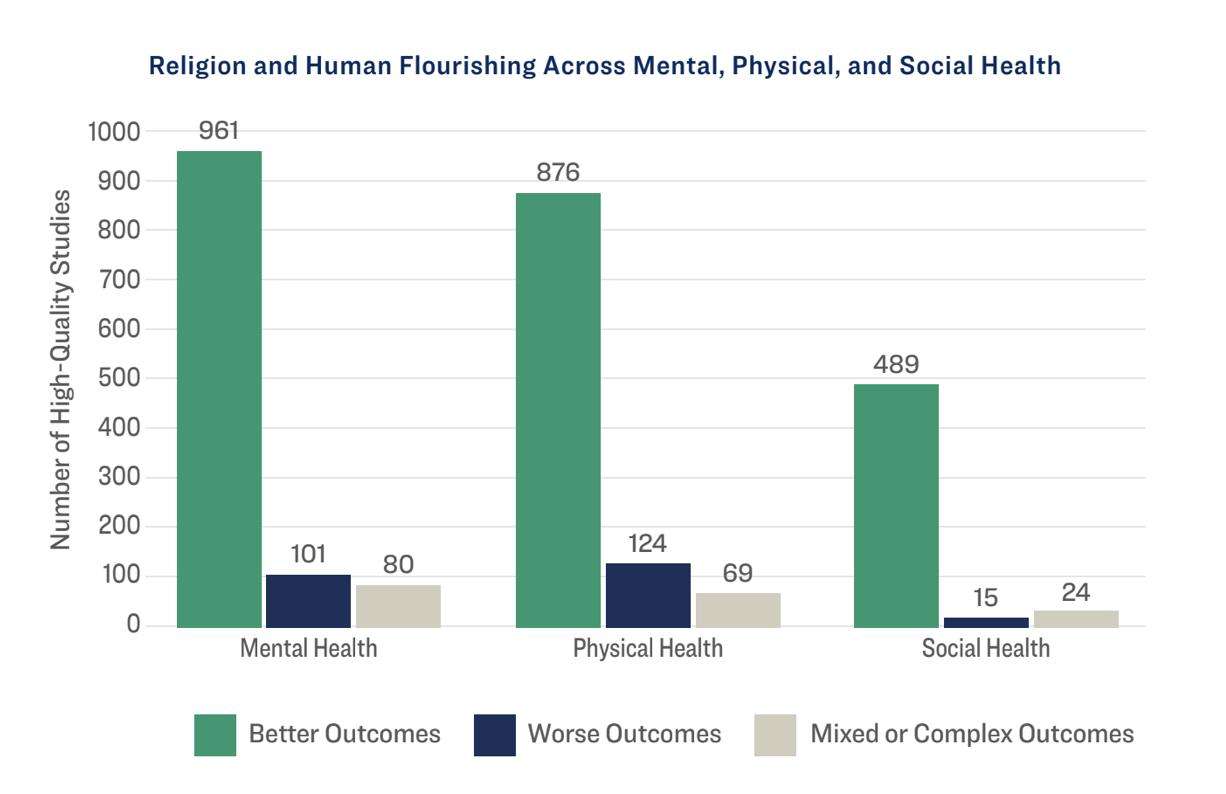
Overall, the studies showed health benefits for those who attend a house of worship at least weekly. Marks said, "It is highly consistent worship that seems to make the difference."
After spending three decades studying the connection between religion and health, Marks said he would have expected maybe three positive studies for every negative study — but realized, through creating these reports, that in well-conducted studies, benefits from religion become even more prevalent.
Like a doctor could tell patients that exercise is good, Marks said studies seem to show that a similar recommendation could be made about religion.
"Knowledge is potential power," Marks said. "Great science can lead to better personal decisions (and) promote more healthy decisions."
The report does show that religion is "not all good or all bad" in its impact on health, according to Marks, but a closer look at differences among the studies may help people participate in religion in ways that benefit their health.
In the future, Marks is interested in looking at how to apply the data shown in the reports to help religions and communities benefit from these findings.

Of the studies looking at religion and depression, 183 showed a positive connection, while 27 showed a negative connection.
Perhaps the most striking benefit that was shown in the studies was for substance abuse and addiction; 256 studies showed that being active in a religion can help prevent addiction and help recover from addiction, whereas only six studies showed a negative impact.
"The effectiveness of religion in preventing substance abuse and addiction is perhaps, for me, the landmark finding among all others that deserves careful and thoughtful consideration," Marks said.
The report recommended that public health and social service frameworks consider involvement in religion as a voluntary way to improve well-being in the community. It also encouraged providing opt-in support based on faith as part of care and having partnerships between health systems and religious organizations.
"As societies confront rising rates of mental illness, addiction, social fragmentation, and family instability, the evidence suggests that religion remains a consequential and often underrecognized contributor to human flourishing. Understanding how, when, and why religion promotes well-being is therefore not only an academic concern but a matter of broad social importance," the report concludes.