'%3e%3cpath%20d='M34.1406%205.85938C30.3906%202.10547%2025.3047%200%2020%200C14.6953%200%209.60938%202.10547%205.85938%205.85938C2.10938%209.61328%200%2014.6953%200%2020C0%2025.3047%202.10547%2030.3906%205.85938%2034.1406C9.61328%2037.8906%2014.6953%2040%2020%2040C25.3047%2040%2030.3906%2037.8945%2034.1406%2034.1406C37.8906%2030.3906%2040%2025.3047%2040%2020C40%2014.6953%2037.8945%209.60938%2034.1406%205.85938ZM37.0117%2023.543H31.1602V13.5391H27.6328V19.9414C28.1211%2020.6914%2028.3711%2021.582%2028.3711%2022.5625V22.625C28.3711%2023.668%2028.1172%2024.6055%2027.6328%2025.4297V26.6094H36.082C33.4883%2032.9375%2027.2891%2037.3789%2020.0039%2037.3789C10.3711%2037.3789%202.62109%2029.6289%202.62109%2020C2.62109%2010.3711%2010.3711%202.62109%2020%202.62109C29.6289%202.62109%2037.3789%2010.3711%2037.3789%2020C37.3789%2021.1484%2037.2617%2022.2656%2037.0508%2023.3477C37.0391%2023.4141%2037.0234%2023.4766%2037.0117%2023.543Z'%20fill='white'/%3e%3cpath%20d='M22.3086%2018.5352C20.4336%2018.125%2019.9531%2017.8398%2019.9766%2017.1836V17.1406C19.9766%2016.6992%2020.3477%2016.2148%2021.4023%2016.2148C22.582%2016.2148%2023.8867%2016.6797%2025.0781%2017.4766L26.8516%2015.0195C25.4453%2013.8906%2023.707%2013.3398%2021.5547%2013.3398C18.5195%2013.3398%2016.4375%2015%2016.4063%2017.4766V17.5352C16.3633%2020.2617%2018.5859%2020.9805%2021.293%2021.6016C23.0391%2021.9766%2023.5703%2022.3164%2023.5703%2022.9609L23.5469%2022.9766C23.5469%2023.3906%2023.2578%2023.7031%2022.7852%2023.8359C22.5742%2023.9062%2022.1289%2023.9727%2021.5156%2023.9727C20.7617%2023.9727%2019.7539%2023.8633%2018.6328%2023.4844C18.0898%2023.2891%2017.4727%2023.0039%2016.8047%2022.6133L20.1406%2026.625C20.2813%2026.6602%2021.0977%2026.8516%2021.7734%2026.8516C25.0039%2026.8516%2027.0859%2025.2461%2027.1094%2022.6328V22.5703C27.1602%2020.1133%2025.2148%2019.1719%2022.3086%2018.5352Z'%20fill='white'/%3e%3cpath%20d='M5.24219%2013.5664V26.6133H8.75391V23.7578L10.2969%2021.9531L14.2031%2026.6133H18.3867L12.3555%2019.5195L17.4023%2013.5664H13.4531L8.75391%2019.0586V13.5664H5.24219Z'%20fill='white'/%3e%3c/g%3e%3cdefs%3e%3cclipPath%20id='clip0_97_2430'%3e%3crect%20width='40'%20height='40'%20fill='white'/%3e%3c/clipPath%3e%3c/defs%3e%3c/svg%3e)


Estimated read time: 8-9 minutes
This archived news story is available only for your personal, non-commercial use. Information in the story may be outdated or superseded by additional information. Reading or replaying the story in its archived form does not constitute a republication of the story.
Editor's note: This article is published through the Great Salt Lake Collaborative, a solutions journalism initiative that partners news, education and media organizations to help inform people about the plight of the Great Salt Lake.
OGDEN — The Great Salt Lake has long been an undeniable asset to the region.
However, this asset has been under threat.
Between the ravages of climate change and increasing interception of source water, the lake has gone through a long period of shrinkage, despite a bit of a reprieve in 2023.
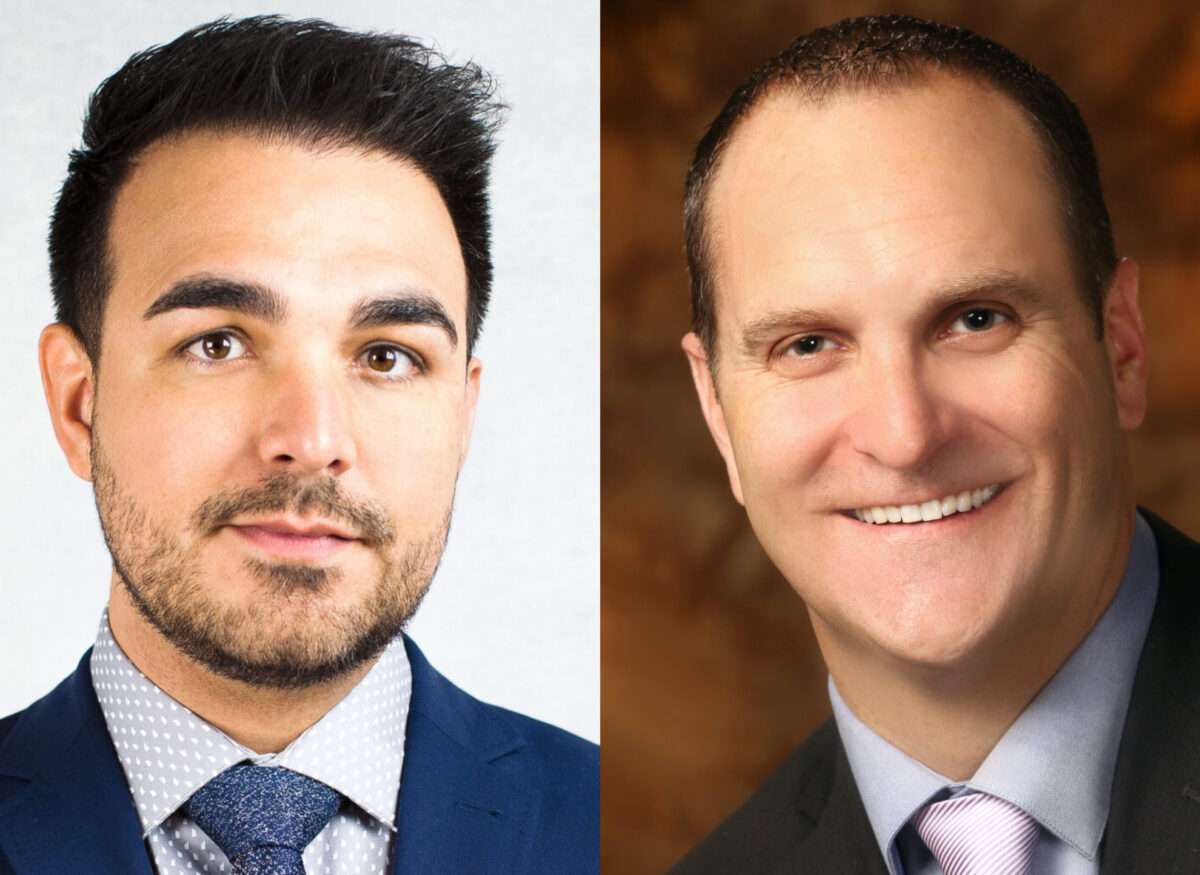
Recently, the Great Salt Lake Collaborative posed 10 questions to Ogden mayoral candidates Taylor Knuth and Ben Nadolski about how their administrations will deal with the lake. Below are their responses as they were received:
On a scale of 1 to 10 (10 represents most important and 1 is least), with the many city priorities you will face as mayor, where do you rank the Great Salt Lake and why?
Knuth: 10. The Great Salt Lake is a terminal body of water fed by three tributaries, one of which is the Weber River that runs through the heart of Ogden City. Ensuring the long-term success of the Lake should be an urgent priority for every municipality along the Wasatch Front, but should be especially prioritized with those entities responsible for these tributaries.
To say that Ogden City's long-term economic and ecological success relies heavily on the water levels and overall health of the Lake would be a gross understatement. I believe saving the Great Salt Lake is a generational investment and any and all high-level decisions made in a Knuth administration would be filtered through this priority to ensure our best possible future for the residents and visitors of Ogden City.
Nadolski: I have been a natural resource professional and practitioner for the past 21 years, specifically in wildlife management and conservation. I supervise operations throughout all of northern Utah, including the Great Salt Lake Ecosystem Program. Our team collects and analyzes various environmental data from the lake and manages the brine shrimp population and its commercial harvest, and surveys and manages waterfowl and shorebird populations and their wetland habitats.
The Great Salt Lake is THE number one priority issue in my work every day, and that will not change as mayor. While I'd certainly have less influence over the day-to-day management of the wetlands and wildlife that inhabit the Lake, I'd also be in a unique position as a partner to every stakeholder, with real solutions to help fill the Great Salt Lake.
As mayor, the Great Salt Lake would continue to be my number on environmental priority and issue, so it would remain a 10 for me.
What's your plan for assisting in saving the Great Salt Lake — what actions will you take to ensure more water makes it to the lake in the future?
Knuth: (Salt Lake City Mayor Erin Mendenhall) laid the policy groundwork for municipalities to donate treated storm and sewer water back to the Great Salt Lake. In 2020 alone, Ogden City was delivering (about) 18.4 million gallons of treated water a day, which consequently equates to (about) 6.8 billion gallons of wastewater a year, not including our storm refuse.
A Knuth administration would donate our treated storm and sewer water back to the Great Salt Lake and more. This also includes the creation of a Sustainability Solution Center, in partnership with Weber State University. Such a center would aid in the conversion and enhancement of residential assets related to water delivery such as high-efficiency taps and toilets, as well as xeriscaping and water-tolerant lawns, services offered at low or no cost to residents.
Additionally, much of Ogden's water delivery systems are aged and beyond their useful life, with some elements exceeding 130 years in age. Our last bond, passed as a city and related to our infrastructure, was passed in 2008 for (about) 50 million dollars and accomplished a lot of capital improvement projects in our city.
Within our first term, I would propose to the voters of Ogden City a municipal bond dedicated to improving city infrastructure, with a priority on our water infrastructure.
Nadolski: Ogden City is in a unique and powerful position to help fill the Great Salt Lake. Ogden City owns very senior and excess water rights that are intended to provide for future growth. The more water we conserve now, the more water we can send directly to the Great Salt Lake through water leasing tools recently approved by the legislature.
We have a waterline that runs from our well field, all the way down the canyon and to our delivery systems in the city. That waterline is more than 100 years old and it leaks millions of gallons of water every day. A catastrophic failure is imminent and dangerous for our citizens. It's also wasteful of precious water that could be better used to help fill the lake.
I will propose that we partner with the Utah Department of Natural Resources, the legislature and various nonprofits to fund the replacement of the waterline, and use the water conserved through leakage, combined with leasing our excess water rights, to help fill the Great Salt Lake.
What actions have you taken in the past to help protect the lake?
Knuth: In my current role as deputy director of the Salt Lake City Arts Council, I lead our capital city in an effort to receive $1 million from Bloomberg Philanthropies, with some matching funds, to raise awareness about the importance, both economically and ecologically speaking, of the Great Salt Lake.
Currently, Salt Lake City is a finalist to receive this funding. Should Salt Lake City receive these funds, a monumental public awareness campaign will be launched as soon as 2024, with public art and other creative endeavors being leveraged to maximize our impact.
Personally speaking, I have invested in the xeriscaping of our property, the conversion of our taps to high-efficiency ones, and more.
Nadolski: I have spent 21 years as a natural resource professional. In that time, I have partnered with countless water users, water managers, communities, nonprofits and landowners on irrigation diversion optimization projects and river restoration projects that improved water quality. Those projects saved water and we coordinated leases that sent that water to the Great Salt Lake.
I now supervise the team of professionals that continues to do that work every day. I was also a founding member of the Weber River Partnership, which is a nonprofit that coordinates watershed-scale projects and actions that conserves water and helps fill the lake. For the past three years, I have also supervised the Great Salt Lake Ecosystem Program.
How do you view the inland port projects and the impact they may have on the lake?
Knuth: As recently as August of 2023, Weber County Commissioners have laid the legal foundation for a Weber County inland port, similar to that of the Salt Lake Inland port currently under construction.
This project is envisioned to be more than 6,000 acres, but will like be started on a 903-acre site located directly west of Ogden City; parcels which are presently owned by a private developer out of Arizona and are adjacent to crucial ecosystems that support the lake, especially the millions of migratory birds who rely on these habitats. While I support efforts to grow and enhance the economies of Weber County, especially Ogden City, we must do so in ways which guarantee the ecological success of the Great Salt Lake. A Knuth administration would not support a Weber County inland port which compromises the long-term success of the Great Salt Lake.
Nadolski: The proposed projects are in the conceptual phases right now, so there aren't any details to evaluate yet. I have a deep appreciation for what the local communities are trying to accomplish economically, and I also have a deep appreciation for the lake and its natural resources.
The potential for serious impacts to the lake are very real, however. But there may also be potential for mitigation measures to minimize or even eliminate those impacts. I have a deep background in environmental impact analysis and now supervise the team of experts that will be formally analyzing these projects. That work cannot begin in earnest until more details become available, but I have been involved in countless compensatory mitigation projects that have minimized and even eliminated the impacts of developments like these.
If given the chance and a seat at the table, we can evaluate the proposed projects and provide mitigation measures that will protect the lake and its natural resources. I have done it countless times before, and I'm certain we can do it here.
What do you want residents under your watch to do to help save the lake?
Knuth: As mentioned earlier, there are many personal decisions that can contribute to the success of the Great Salt Lake, but many Ogdenites lack sufficient resources to accomplish some of these personal decisions. A Sustainability Solutions Center would lead our residents toward accomplishing these goals.
I also believe that Ogden City-owned assets can and should lead the way and set a good example for residents in how to go about these changes. A Knuth administration would commit to a phased conversion of water delivery systems within city-owned buildings that prioritize efficiency and minimize waste.
We would also focus on converting underutilized greenspace to xeriscaping and utilized green space to (water-wise) turf or lawn.
Nadolski: Residents can join me in using less water on their lawns, for starters. They can also take advantage of our conservation incentive program, which I helped draft and pass, that reimburses residents for converting their park strip from grass to appropriate drought-tolerant landscapes. They can also support my proposals to expand that program to include non-park strip sod areas.
Finally, the lake is often a distant and unrecognized issue for many. Our residents can take the time to learn more about the lake. When they do, I am confident they will recognize its importance to their daily lives and will be more willing to support its protection and conservation.
All of the questions and complete answers can be found on the Great Salt Lake Collaborative website.