'%3e%3cpath%20d='M34.1406%205.85938C30.3906%202.10547%2025.3047%200%2020%200C14.6953%200%209.60938%202.10547%205.85938%205.85938C2.10938%209.61328%200%2014.6953%200%2020C0%2025.3047%202.10547%2030.3906%205.85938%2034.1406C9.61328%2037.8906%2014.6953%2040%2020%2040C25.3047%2040%2030.3906%2037.8945%2034.1406%2034.1406C37.8906%2030.3906%2040%2025.3047%2040%2020C40%2014.6953%2037.8945%209.60938%2034.1406%205.85938ZM37.0117%2023.543H31.1602V13.5391H27.6328V19.9414C28.1211%2020.6914%2028.3711%2021.582%2028.3711%2022.5625V22.625C28.3711%2023.668%2028.1172%2024.6055%2027.6328%2025.4297V26.6094H36.082C33.4883%2032.9375%2027.2891%2037.3789%2020.0039%2037.3789C10.3711%2037.3789%202.62109%2029.6289%202.62109%2020C2.62109%2010.3711%2010.3711%202.62109%2020%202.62109C29.6289%202.62109%2037.3789%2010.3711%2037.3789%2020C37.3789%2021.1484%2037.2617%2022.2656%2037.0508%2023.3477C37.0391%2023.4141%2037.0234%2023.4766%2037.0117%2023.543Z'%20fill='white'/%3e%3cpath%20d='M22.3086%2018.5352C20.4336%2018.125%2019.9531%2017.8398%2019.9766%2017.1836V17.1406C19.9766%2016.6992%2020.3477%2016.2148%2021.4023%2016.2148C22.582%2016.2148%2023.8867%2016.6797%2025.0781%2017.4766L26.8516%2015.0195C25.4453%2013.8906%2023.707%2013.3398%2021.5547%2013.3398C18.5195%2013.3398%2016.4375%2015%2016.4063%2017.4766V17.5352C16.3633%2020.2617%2018.5859%2020.9805%2021.293%2021.6016C23.0391%2021.9766%2023.5703%2022.3164%2023.5703%2022.9609L23.5469%2022.9766C23.5469%2023.3906%2023.2578%2023.7031%2022.7852%2023.8359C22.5742%2023.9062%2022.1289%2023.9727%2021.5156%2023.9727C20.7617%2023.9727%2019.7539%2023.8633%2018.6328%2023.4844C18.0898%2023.2891%2017.4727%2023.0039%2016.8047%2022.6133L20.1406%2026.625C20.2813%2026.6602%2021.0977%2026.8516%2021.7734%2026.8516C25.0039%2026.8516%2027.0859%2025.2461%2027.1094%2022.6328V22.5703C27.1602%2020.1133%2025.2148%2019.1719%2022.3086%2018.5352Z'%20fill='white'/%3e%3cpath%20d='M5.24219%2013.5664V26.6133H8.75391V23.7578L10.2969%2021.9531L14.2031%2026.6133H18.3867L12.3555%2019.5195L17.4023%2013.5664H13.4531L8.75391%2019.0586V13.5664H5.24219Z'%20fill='white'/%3e%3c/g%3e%3cdefs%3e%3cclipPath%20id='clip0_97_2430'%3e%3crect%20width='40'%20height='40'%20fill='white'/%3e%3c/clipPath%3e%3c/defs%3e%3c/svg%3e)







Estimated read time: 2-3 minutes
This archived news story is available only for your personal, non-commercial use. Information in the story may be outdated or superseded by additional information. Reading or replaying the story in its archived form does not constitute a republication of the story.
SALT LAKE CITY — Getting dinner on the table was rarely simple before high inflation hit the economy, but for millions of families, it has become a downright financial struggle.
The cost of food has jumped 10.8% over the past year. According to the U.S. Bureau of Labor Statistics' Consumer Price Index, the cost of meat, poultry, fish and eggs jumped even higher – 14.3%.
Many beleaguered shoppers have turned to dollar stores. Those stores have lots of options to make a hearty meal, but the question from a KSL viewer: Does shopping there actually save any money?
Shopping dollar stores
One such store where consistent pricing is built into its brand is Dollar Tree. Step inside and most items are the same price, though not a dollar anymore. It is now $1.25.
While dollar stores are not known for fresh produce, there is stuff on the shelves that can make a meal. We found spaghetti noodles and sauce, boxed mac and cheese, Hot Pockets, soups, all sorts of drinks, snacks, and desserts. There was even some real cheese and real, albeit frozen, produce.
Enough for a meal, sure, but is it a better way to bust inflation than the supermarket?
The KSL Investigators did a little investigative shopping. We purchased exactly $40 worth of food at Dollar Tree that you might find at any grocery store. Then we shopped the same list at six other stores: Target, Walmart, Smith's, Harmons, Winco and Macey's.
The first thing we noticed was Dollar Tree's unique sizes. Its block of pepper jack cheese was about half the volume of similarly priced cheeses we found at other stores. The frozen waffles came six to a box – a smaller quantity than we found at the other stores.
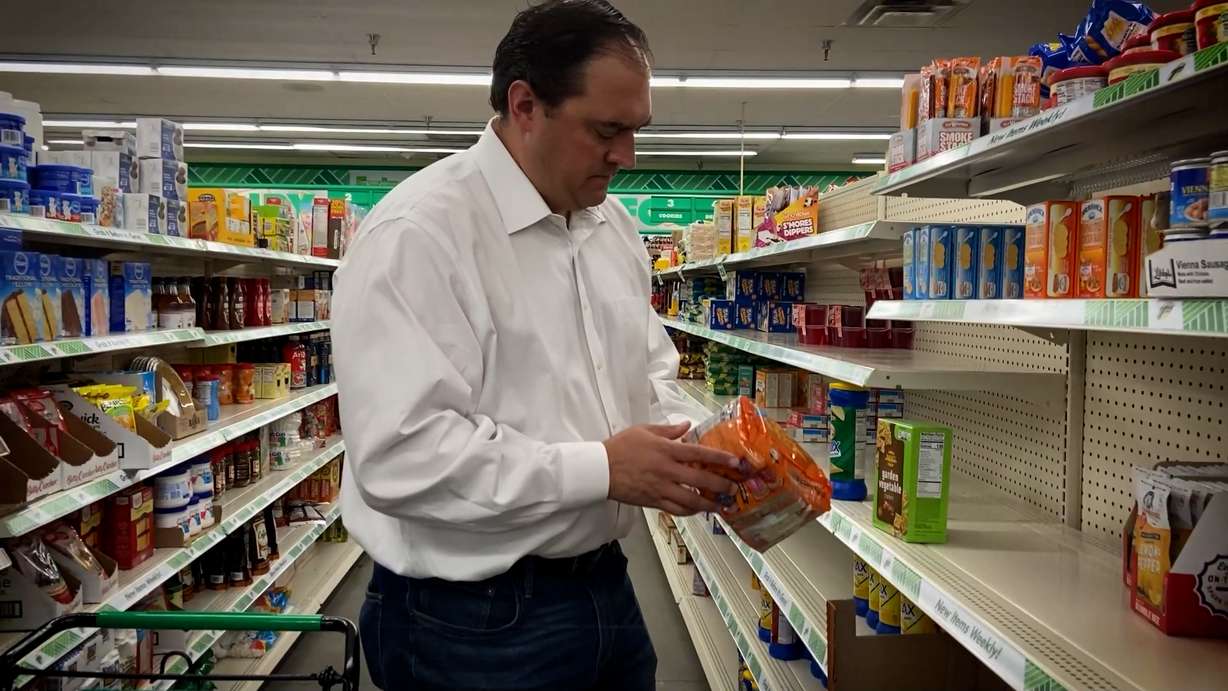
After a little cross multiplying and dividing to compensate for differences in sizes for an apples-to-apples comparison, we found there were deals to be had and not to be had at each store.
Stretching the dollar
Dollar Tree carried the cheapest taco shells ($1.25) but the taco seasoning, also $1.25, was the most expensive of any store. Dollar Tree's cost for waffles, $1.25 for a box of six, was also higher than what we paid at the other stores.
Walmart sold the cheapest canned tuna ($0.78) and canned beets ($0.58).
Harmons carried the priciest pepper jack cheese ($1.75).
Winco sold the cheapest white rice ($0.94).
Macey's offered our list's priciest toothpaste ($2.88) while Harmons sold the priciest toothbrush ($1.69). Not exactly dinner, but you need it after eating, so it made our list.
Smith's prices were smack dab in the middle – no single item was the cheapest nor the most expensive at the grocery store.
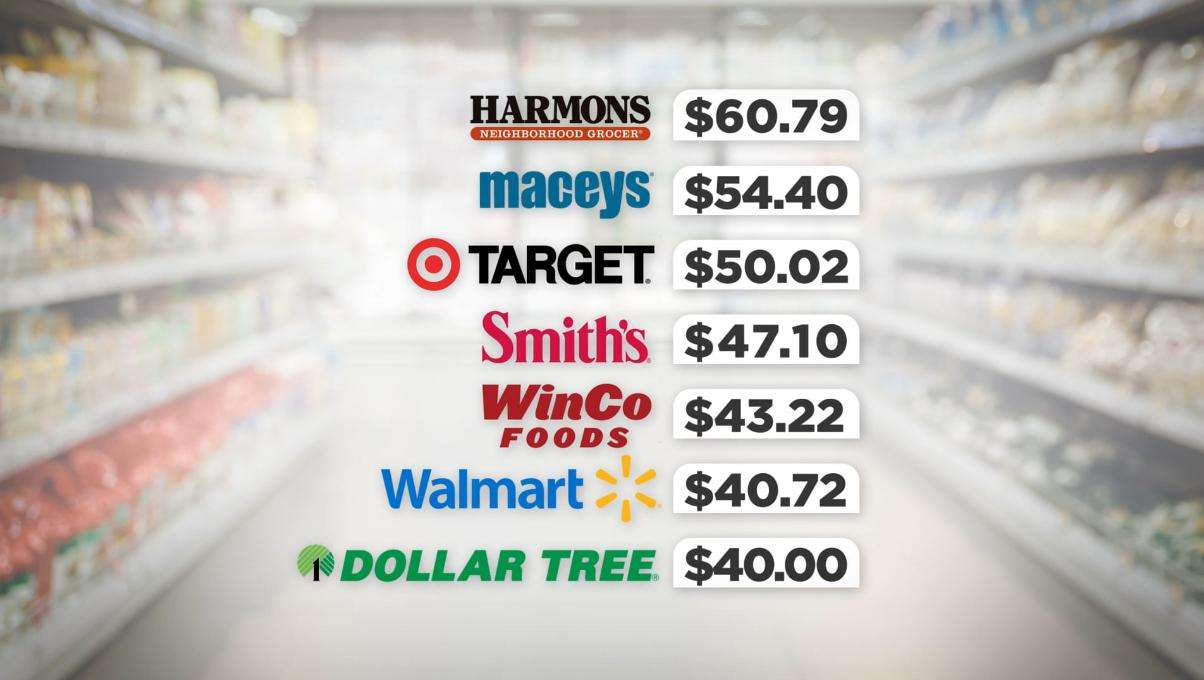
In the end, the 32 items that cost us $40 at Dollar Tree were, pound-for-pound, more expensive (even if only slightly) everywhere else we shopped.
Bottom line: Shopping the dollar store for dinner maybe can save you a few bucks.