'%3e%3cpath%20d='M34.1406%205.85938C30.3906%202.10547%2025.3047%200%2020%200C14.6953%200%209.60938%202.10547%205.85938%205.85938C2.10938%209.61328%200%2014.6953%200%2020C0%2025.3047%202.10547%2030.3906%205.85938%2034.1406C9.61328%2037.8906%2014.6953%2040%2020%2040C25.3047%2040%2030.3906%2037.8945%2034.1406%2034.1406C37.8906%2030.3906%2040%2025.3047%2040%2020C40%2014.6953%2037.8945%209.60938%2034.1406%205.85938ZM37.0117%2023.543H31.1602V13.5391H27.6328V19.9414C28.1211%2020.6914%2028.3711%2021.582%2028.3711%2022.5625V22.625C28.3711%2023.668%2028.1172%2024.6055%2027.6328%2025.4297V26.6094H36.082C33.4883%2032.9375%2027.2891%2037.3789%2020.0039%2037.3789C10.3711%2037.3789%202.62109%2029.6289%202.62109%2020C2.62109%2010.3711%2010.3711%202.62109%2020%202.62109C29.6289%202.62109%2037.3789%2010.3711%2037.3789%2020C37.3789%2021.1484%2037.2617%2022.2656%2037.0508%2023.3477C37.0391%2023.4141%2037.0234%2023.4766%2037.0117%2023.543Z'%20fill='white'/%3e%3cpath%20d='M22.3086%2018.5352C20.4336%2018.125%2019.9531%2017.8398%2019.9766%2017.1836V17.1406C19.9766%2016.6992%2020.3477%2016.2148%2021.4023%2016.2148C22.582%2016.2148%2023.8867%2016.6797%2025.0781%2017.4766L26.8516%2015.0195C25.4453%2013.8906%2023.707%2013.3398%2021.5547%2013.3398C18.5195%2013.3398%2016.4375%2015%2016.4063%2017.4766V17.5352C16.3633%2020.2617%2018.5859%2020.9805%2021.293%2021.6016C23.0391%2021.9766%2023.5703%2022.3164%2023.5703%2022.9609L23.5469%2022.9766C23.5469%2023.3906%2023.2578%2023.7031%2022.7852%2023.8359C22.5742%2023.9062%2022.1289%2023.9727%2021.5156%2023.9727C20.7617%2023.9727%2019.7539%2023.8633%2018.6328%2023.4844C18.0898%2023.2891%2017.4727%2023.0039%2016.8047%2022.6133L20.1406%2026.625C20.2813%2026.6602%2021.0977%2026.8516%2021.7734%2026.8516C25.0039%2026.8516%2027.0859%2025.2461%2027.1094%2022.6328V22.5703C27.1602%2020.1133%2025.2148%2019.1719%2022.3086%2018.5352Z'%20fill='white'/%3e%3cpath%20d='M5.24219%2013.5664V26.6133H8.75391V23.7578L10.2969%2021.9531L14.2031%2026.6133H18.3867L12.3555%2019.5195L17.4023%2013.5664H13.4531L8.75391%2019.0586V13.5664H5.24219Z'%20fill='white'/%3e%3c/g%3e%3cdefs%3e%3cclipPath%20id='clip0_97_2430'%3e%3crect%20width='40'%20height='40'%20fill='white'/%3e%3c/clipPath%3e%3c/defs%3e%3c/svg%3e)


- Utahns are increasingly turning to resale hustles for extra income, buying low.
- Kristen Ingham's Salt Lake Resellers finds profit in storage auctions, earning 400% returns.
- B-Stock and Deseret Industries report growth in excess goods and resale interest.
SALT LAKE CITY — When your budget feels squeezed, the math is pretty simple: You can spend less, or you can earn more.
Or, as a growing number of Utahns are discovering, you can do both.
From storage auctions and liquidation pallets to thrift store finds, people are buying low and selling high. But turning castoffs into cash takes research, patience and a willingness to take risks.
For people willing to dig, clean, research and negotiate, somebody else's castoffs can become real money.
One storage unit at a time
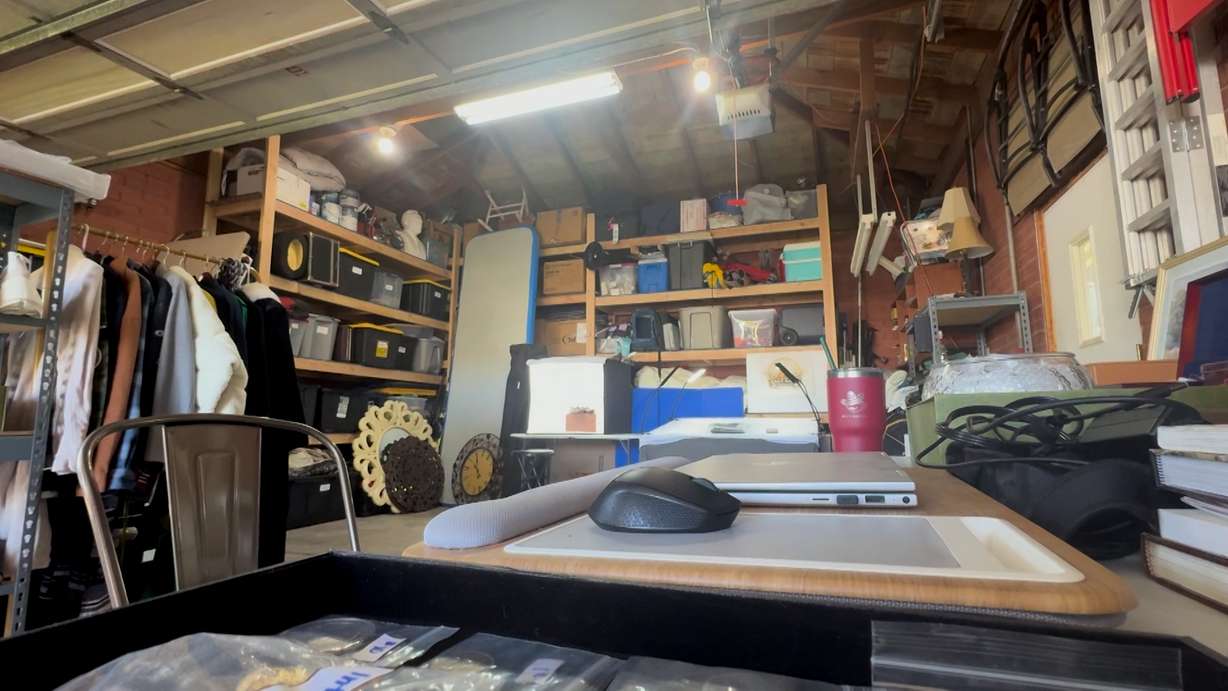
"You never know what you're going to find," said Kristen Ingham.
Ingham calls it treasure hunting.
"We found furniture, clothes (and) vintage artwork," she said.
Ingham and her husband started buying storage units after watching the television show "Storage Wars." They figured they could try it for fun.
That experiment became Salt Lake Resellers.
"It has turned into a full-on business," Ingham said.
Ingham buys storage units through online auctions. Then comes the sorting, cleaning and researching.
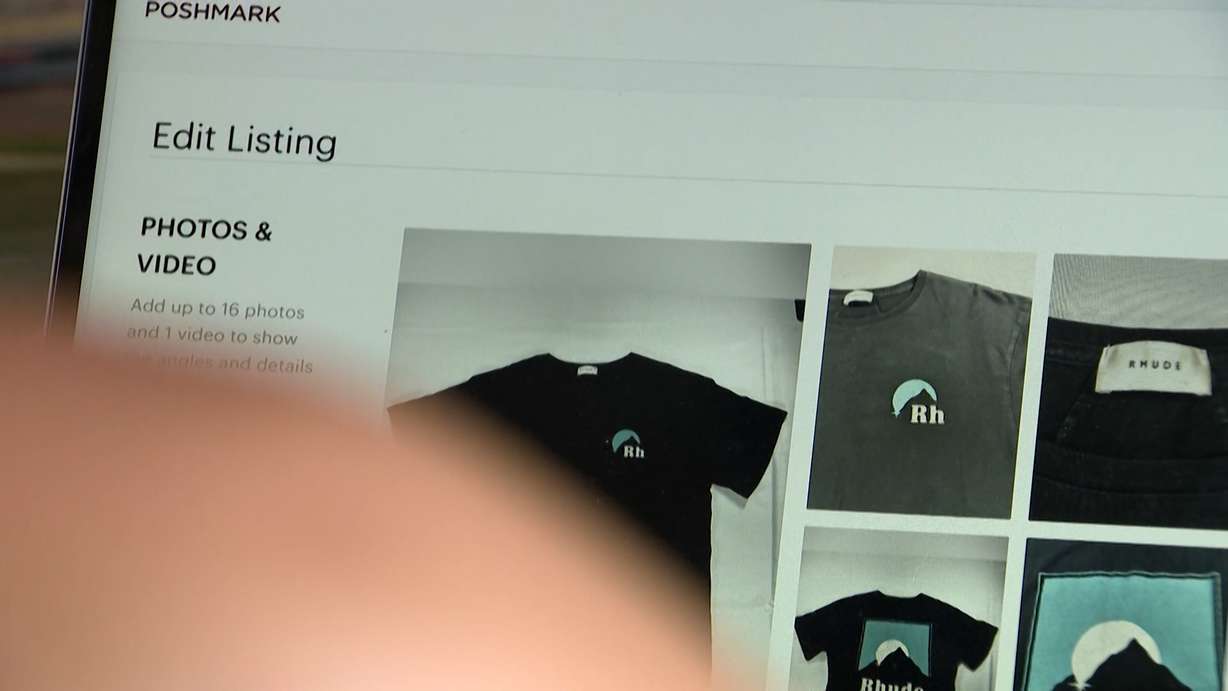
She photographs the merchandise and lists it on KSL Classifieds, Facebook Marketplace, Poshmark, Depop, eBay and the company's own website.
"It's a little bit of a gamble," she said.
Like gambling, it can be a bust.
"Like, just bags of dirt," Ingham said with a laugh.
Other times, it is winner, winner, chicken dinner.
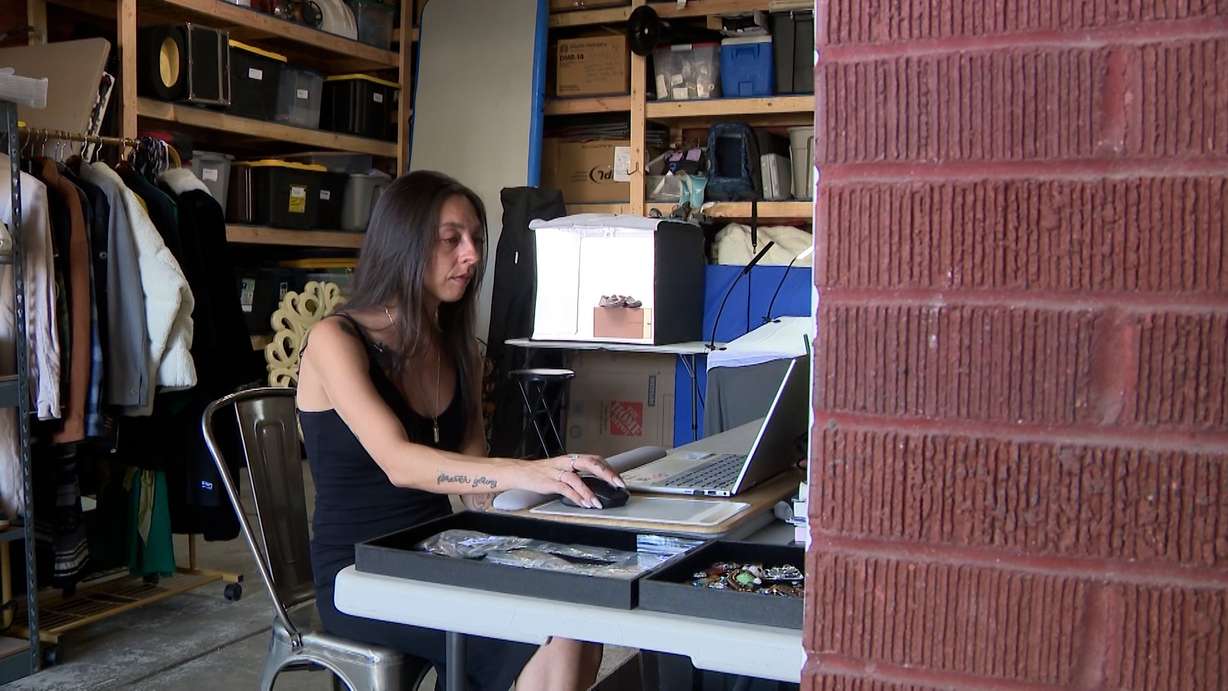
"We found probably, like, $20,000 worth of stuff," she said of one storage unit.
Asked whether she has lost money, Ingham responded, "Over time, no."
Since starting last year, she estimates the business has generated about a 400% return.
"As time has gone on, we have learned that things that we were like, 'Oh, that's not really a big-ticket item. It's not going to make much money.' It always ends up making us money in a way that we didn't expect," she said.
Truckloads of products
The resale hustle can be much bigger than storage auctions.
"The world of excess or returned goods has just grown exponentially," said Kylee Hall of B-Stock.
B-Stock is an online marketplace that helps retailers and manufacturers unload returned, overstocked and excess merchandise.
Instead of bidding on one television or one pair of shoes, buyers can bid on pallets, and sometimes truckloads, of goods.
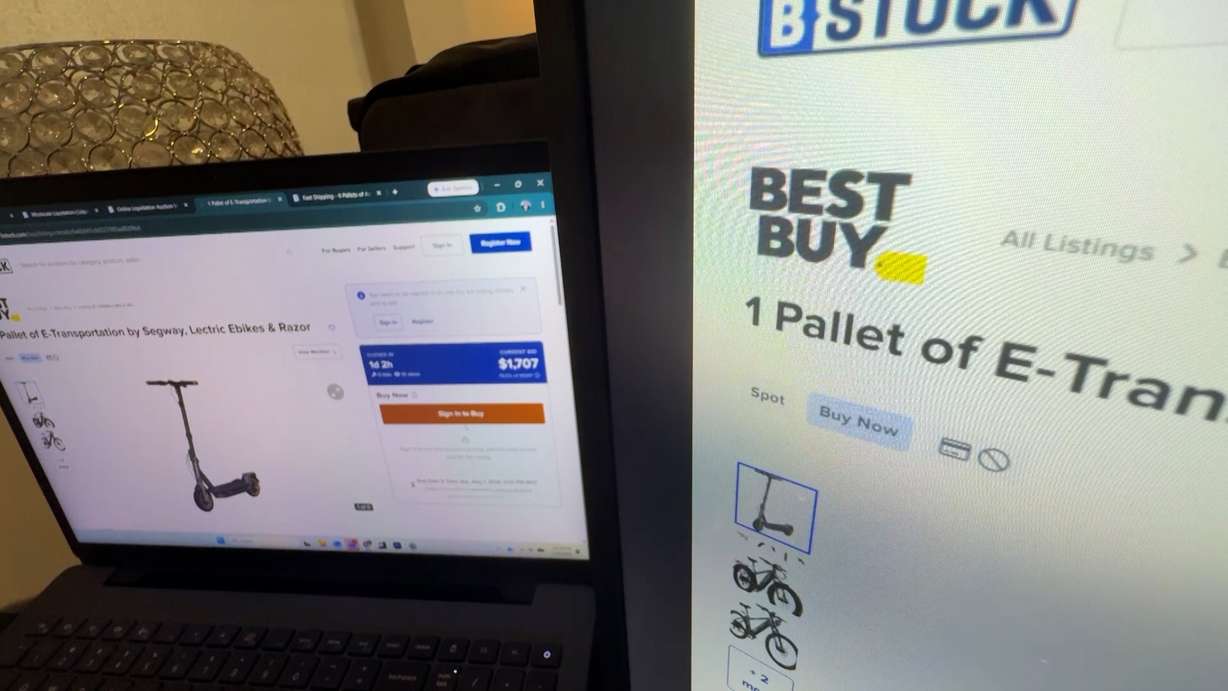
There is a lot of it these days.
"Because consumers are feeling the pinch. I'm feeling the pinch," Hall said.
Hall said inflation and shrinking discretionary income have resulted in shoppers saying "no" more often to full-price merchandise. That, in turn, has left retailers with more excess inventory.
"There's a lot more excess out there, and so retailers are trying to find ways to get rid of that inventory," she said.
B-Stock has existed for 16 years, largely serving as a middleman between businesses. But Hall said the company has noticed a shift in recent years, with more individual buyers purchasing pallets from its website.
"There were a lot of people who lost their jobs or couldn't go into the office, picked up a side hustle, if you will, and would buy a pallet and resell it," Hall said.
Bigger purchases also mean bigger risks.
Products may be broken, incomplete, out of season or simply something nobody wants. Shipping, storage, sales fees and customer returns can quickly eat into the profit.
"There's just some math and research that folks should do to make sure that the items they are buying are able to be sold," Hall said.
Thrift stores offer 'just the treasures' approach to resellers
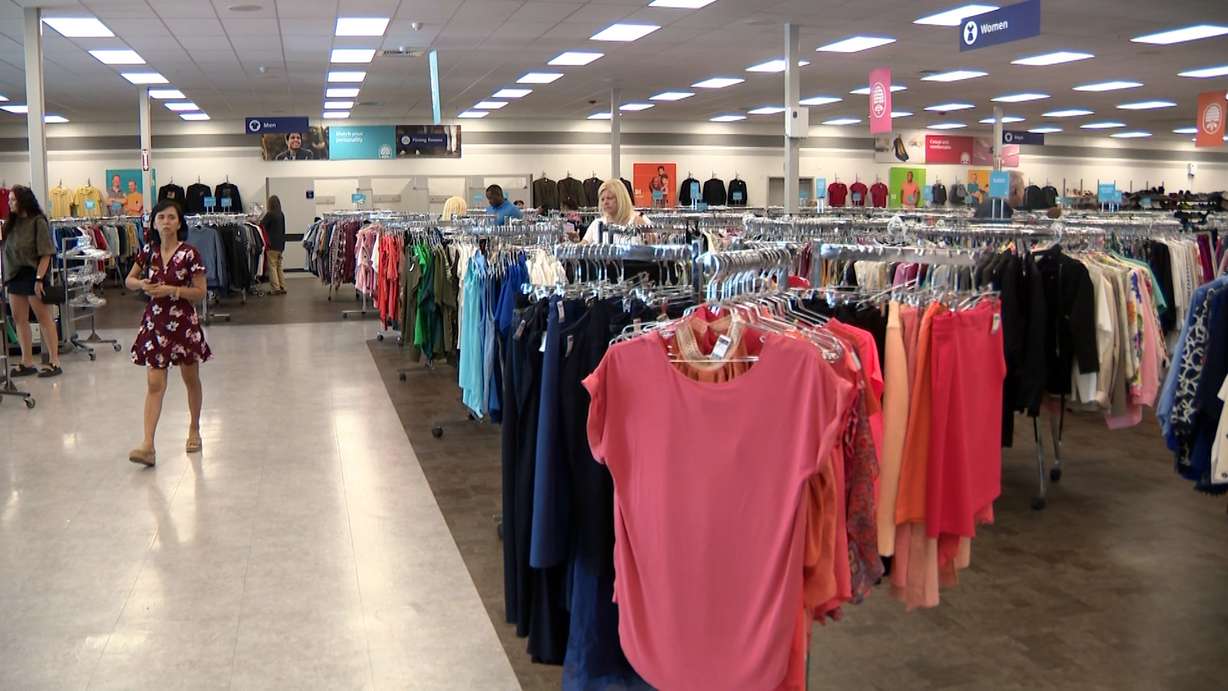
Prospective sellers do not have to buy an entire pallet or storage unit to get into the game.
At Deseret Industries, "It's kind of like Black Friday every day," said Megan Burt, the director of Deseret Industries Division for Welfare and Self Reliance Services Department at The Church of Jesus Christ of Latter-day Saints.
The hustle begins every morning when workers unlock the doors.
"We have a line of people, and they all rush in," Burt said.
When the doors open, shoppers head for their favorite sections: shoes, collectibles, women's clothing and anything else they believe they can flip online.
"If they choose to then resell the product later, more power to them," Burt said.
Deseret Industries said its donations have increased about 22% over the past couple of years. The number of shoppers coming through its doors has climbed about 26%.
"I think people are looking to stretch the dollar further," Burt said.
DI is also seeing younger customers, including college students furnishing apartments and shoppers hunting for vintage clothing.
Price is part of the appeal. So are quality, sustainability and the thrill of finding something nobody else has.
"There's always a good deal to be found if you're willing to put in the work and look for it," Burt said.
Advice from a 'new' reseller
Asked what she knows now that she did not know six months earlier, Ingham sighed before answering.
"People like to buy a lot of interesting things," she said.
For people considering starting their own resale hustle, Ingham's advice is to start small.
Before buying pallets or storage units, look around the garage, basement and closets.
When researching prices, sellers should look at what similar items have actually sold for, not just what hopeful sellers are asking.
They should also count every cost, including the purchase price, cleaning, repairs, shipping, platform fees and the value of their time.
"Photographs matter a lot," Ingham said.
Photographs, and honesty.
Sellers should include measurements, disclose any damage and choose the sales platform that best fits the product.
Local sales also come with safety concerns.
"We meet in, like, public places or at our storage unit," Ingham said.
Sellers should also watch for scammers, including supposed buyers who send suspicious links, offer to overpay or ask for verification codes.
"We've learned to look at everything as being valuable," Ingham said.
Valuable to someone, perhaps.
The hustle is figuring out who, and whether that person will pay enough to make all that digging worthwhile.
"There is someone out there who wants to buy it," Ingham said.
Ingham said reselling does not always feel like a job, but it is one. In the months she has been hustling, she has learned about business licenses, insurance and how to avoid paying sales tax on merchandise she is buying strictly for resale.
She has also found a business that allows her to be her own boss, work when she chooses and remain present for her family.