Estimated read time: 2-3 minutes
- Spring frost and dry summer led to reduced honey harvest in northern Utah.
- Beekeepers produced 65-70% of normal honey due to environmental challenges.
- Bee health shows improvement with new treatments despite ongoing colony collapse concerns.
LOGAN — The spring frost that damaged Utah's fruit crops also created challenges for honeybees and the beekeepers who depend on them.
The repeated spring frost had a major impact on Utah produce this year, affecting farmers in the fields and creating challenges for honeybees. For beekeepers across northern Utah, it turned into a below-normal honey harvest.
"Challenging year. Yep," said Jeremiah Johnson, owner and beekeeper at Cox's Honey and Miss Bee Haven Apiary.

Northern Utah beekeepers produce less honey
Johnson said beekeepers across northern Utah produced considerably less honey than they typically would.
"Overall, beekeepers in northern Utah probably produced about 65 to 70% of what they would on a normal year," Johnson said.
He points to three major reasons contributing to the decline.
"The frost in the spring, the dry summer and the fact the beekeepers are getting kicked off public lands, making it harder to find places to put bees," Johnson said.
Despite those factors, Johnson said his operation was able to supply most of the honey needed for the shop, and with help from other local beekeepers.
Honeybee health remains a concern
Beyond the challenges of the honey harvest, overall bee health remains another area of focus.
In recent years, there have been concerns about a decline in the honeybee population because of disease. Johnson said there are positive signs of a bounce back the necessary treatments.
"We're starting to recover. There's some new medications for managing mites and some other diseases, that we're starting to build back up," Johnson said. Colony Collapse, however, still remains a major concern for beekeepers.
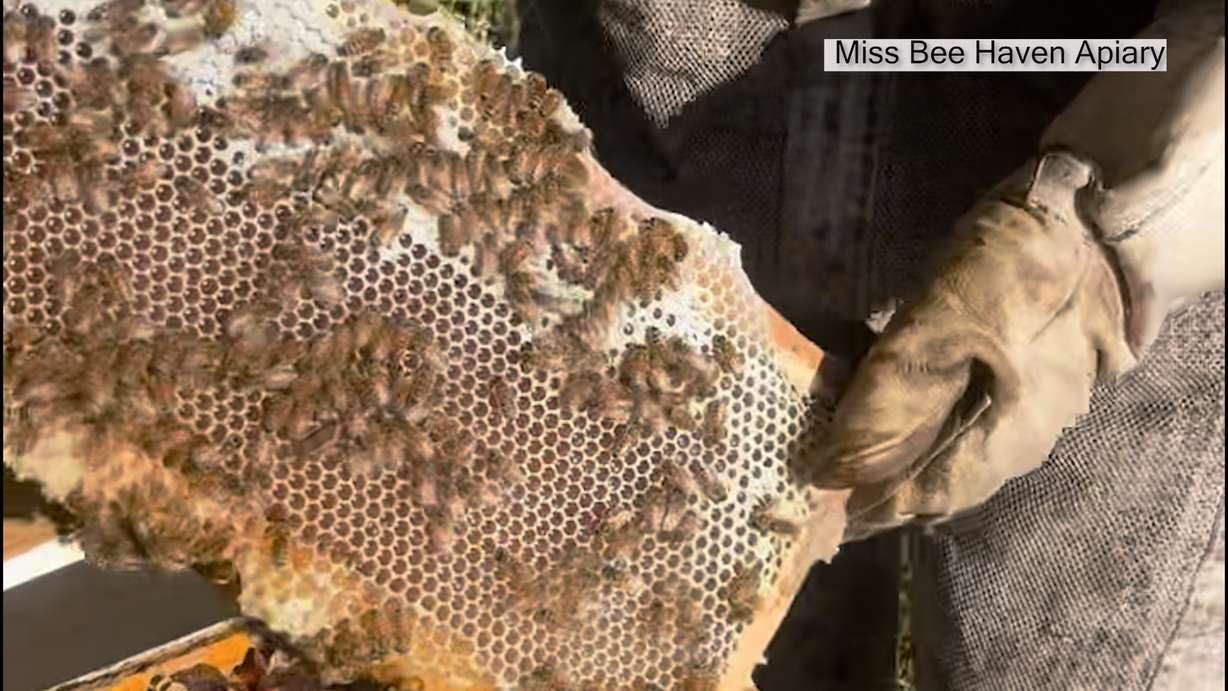
Bees head to California for the winter
For now, the bees are getting ready for their next job. They will be trucked to California, where they will pollinate orchards with almonds, cherries, plums and other crops that feed the entire country, not just Utah.
"Yep, the bees are the original snowbirds, I guess. Before the snow hits in Utah, we ship them down to California. They don't get a vacation. We go put them to work," Johnson said, laughing.
Like farmers and produce growers, Johnson is hoping for a good winter snowpack this season.
More snow means more water, which helps produce better blossoms and, hopefully, a better honey harvest next year.