

Estimated read time: 2-3 minutes
This archived news story is available only for your personal, non-commercial use. Information in the story may be outdated or superseded by additional information. Reading or replaying the story in its archived form does not constitute a republication of the story.
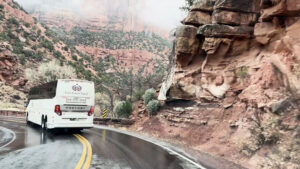
SPRINGDALE, Washington County — One of the most scenic drives in any national park is about to see a major change. Beginning in mid-2026, large vehicles will no longer be allowed on the Zion-Mt. Carmel Highway, a historic route known for its tight turns, steep switchbacks and narrow tunnels that runs through Zion National Park. The new restrictions apply to vehicles over 11 feet 4 inches tall, 7 feet 10 inches wide, 35 feet 9 inches long, or weighing more than 50,000 pounds. Officials say the change is necessary to improve safety and preserve the nearly 100-year-old highway, which was originally built for much smaller vehicles. The Zion-Mt. Carmel Highway and its tunnels were constructed in the 1920s, long before modern RVs, tour buses and heavy trucks became common. Park managers say studies have shown larger vehicles frequently cross the centerline, creating a higher risk of collisions on sharp turns.“The goal here is really to reduce the likelihood of a collision,” said Amanda Rowland, a spokesperson for Zion National Park. In addition to traffic safety concerns, the park is also working to protect historic infrastructure. Bridges along the highway were not designed to support the weight of modern oversized vehicles, raising concerns about potential structural damage over time. “When the road was designed, we have to think back to the 1920s,” Rowland said. “Our vehicles were a lot smaller than they are now.” Drivers of large vehicles will still be able to visit Zion National Park but will need to use alternate routes. Depending on their starting point, detours through Panguitch or Kanab will add anywhere from 23 to 63 miles to their trip. “They can still come to the park, they just have to take a different route,” Rowland said. “The other thing we’re trying to protect is the history of that scenic road.” While park officials say the change is necessary for safety, some surrounding communities are worried about potential economic impacts. Tour buses frequently pass through small towns in Kane and Garfield counties and rerouting them could mean fewer visitors stopping at local restaurants, gas stations and shops. Zion National Park officials are working to spread the word about the upcoming restrictions so drivers and tour operators can prepare for the change.