'%3e%3cpath%20d='M34.1406%205.85938C30.3906%202.10547%2025.3047%200%2020%200C14.6953%200%209.60938%202.10547%205.85938%205.85938C2.10938%209.61328%200%2014.6953%200%2020C0%2025.3047%202.10547%2030.3906%205.85938%2034.1406C9.61328%2037.8906%2014.6953%2040%2020%2040C25.3047%2040%2030.3906%2037.8945%2034.1406%2034.1406C37.8906%2030.3906%2040%2025.3047%2040%2020C40%2014.6953%2037.8945%209.60938%2034.1406%205.85938ZM37.0117%2023.543H31.1602V13.5391H27.6328V19.9414C28.1211%2020.6914%2028.3711%2021.582%2028.3711%2022.5625V22.625C28.3711%2023.668%2028.1172%2024.6055%2027.6328%2025.4297V26.6094H36.082C33.4883%2032.9375%2027.2891%2037.3789%2020.0039%2037.3789C10.3711%2037.3789%202.62109%2029.6289%202.62109%2020C2.62109%2010.3711%2010.3711%202.62109%2020%202.62109C29.6289%202.62109%2037.3789%2010.3711%2037.3789%2020C37.3789%2021.1484%2037.2617%2022.2656%2037.0508%2023.3477C37.0391%2023.4141%2037.0234%2023.4766%2037.0117%2023.543Z'%20fill='white'/%3e%3cpath%20d='M22.3086%2018.5352C20.4336%2018.125%2019.9531%2017.8398%2019.9766%2017.1836V17.1406C19.9766%2016.6992%2020.3477%2016.2148%2021.4023%2016.2148C22.582%2016.2148%2023.8867%2016.6797%2025.0781%2017.4766L26.8516%2015.0195C25.4453%2013.8906%2023.707%2013.3398%2021.5547%2013.3398C18.5195%2013.3398%2016.4375%2015%2016.4063%2017.4766V17.5352C16.3633%2020.2617%2018.5859%2020.9805%2021.293%2021.6016C23.0391%2021.9766%2023.5703%2022.3164%2023.5703%2022.9609L23.5469%2022.9766C23.5469%2023.3906%2023.2578%2023.7031%2022.7852%2023.8359C22.5742%2023.9062%2022.1289%2023.9727%2021.5156%2023.9727C20.7617%2023.9727%2019.7539%2023.8633%2018.6328%2023.4844C18.0898%2023.2891%2017.4727%2023.0039%2016.8047%2022.6133L20.1406%2026.625C20.2813%2026.6602%2021.0977%2026.8516%2021.7734%2026.8516C25.0039%2026.8516%2027.0859%2025.2461%2027.1094%2022.6328V22.5703C27.1602%2020.1133%2025.2148%2019.1719%2022.3086%2018.5352Z'%20fill='white'/%3e%3cpath%20d='M5.24219%2013.5664V26.6133H8.75391V23.7578L10.2969%2021.9531L14.2031%2026.6133H18.3867L12.3555%2019.5195L17.4023%2013.5664H13.4531L8.75391%2019.0586V13.5664H5.24219Z'%20fill='white'/%3e%3c/g%3e%3cdefs%3e%3cclipPath%20id='clip0_97_2430'%3e%3crect%20width='40'%20height='40'%20fill='white'/%3e%3c/clipPath%3e%3c/defs%3e%3c/svg%3e)


Estimated read time: 2-3 minutes
This archived news story is available only for your personal, non-commercial use. Information in the story may be outdated or superseded by additional information. Reading or replaying the story in its archived form does not constitute a republication of the story.
Randall Jeppesen reportingA convoy in Fallujah, Iraq was suddenly rocked by an attack from below.
"An IED (improvised explosive device) blew up underneath us as we ran over it," says Zachery Dunn. He says his life then turned dark. "When I woke up, I knew I was missing my helmet. So I kind of reached up where it hit and brought down a handful of blood. That's when I knew something had happened," Dunn says.
He won the physical fight to survive. He says, "[There was] shrapnel to the head, my legs, my arms. That blast really knocked my world around."
Veterans' counselor Michael Ogle says troops like Dunn face battles that may never go away. He says, "[It's] a product of war. They are dealing with their own demons. You know, we are working with people with post-traumatic stress [disorder] every day, and it's real."
A study published in the Journal of the American Medical Association says almost a third of returning troops, after six months, had signs of depression, P.T.S.D. (post-traumatic stress disorder) or other personal conflicts.
For Dunn, even two years after coming home, the problems didn't get better, they got worse. He says, "[I had] anxiety attacks, a lot of depression, [and] guilt because I wasn't able to go for a second tour with my buddies."
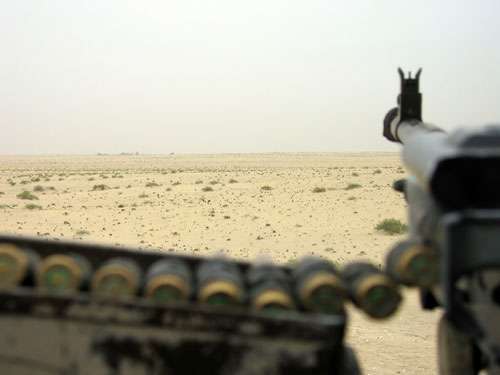
"In the military when you are there every day you trust in people, and you know they got your back. When you come back to civilian life that trust is not there," says Ray Baxter from Illinois. He says his problems didn't start with a direct attack. He says, "We are being mortared every day or every other day. So you got this constant trauma of stuff coming in and not knowing what's going to happen."
He says after returning home he would fight with his family. "It's not even something you see. It's something everyone around you sees. And then they start saying that, you know, you just aren't the same person," Baxter says.
Some days he wishes he was back at war. Baxter says, "I feel it's tougher for me to be out here then it is to be back over there."
Dunn says, "I exploded at work. [I] pretty much ripped my shirt off and walked out because I was stressing so much I just finally snapped."
So both men want a new start and a better life. Michael Ogle says it won't come easily. He says, "Hypervigilant really never goes away. It's like a fawn in hunting season. They are very friendly, but after that first hunting season, they are always hypervigilant."
But Baxter and Dunn have started to see changes. They loosen up, smile and even tell jokes. These are simple things they haven't felt like doing for a long time.
Tomorrow in part 2 of our Wounded Warrior series, we'll take a look at how families are dealing with post-traumatic stress disorder.
E-mail: rjeppesen@ksl.com