'%3e%3cpath%20d='M34.1406%205.85938C30.3906%202.10547%2025.3047%200%2020%200C14.6953%200%209.60938%202.10547%205.85938%205.85938C2.10938%209.61328%200%2014.6953%200%2020C0%2025.3047%202.10547%2030.3906%205.85938%2034.1406C9.61328%2037.8906%2014.6953%2040%2020%2040C25.3047%2040%2030.3906%2037.8945%2034.1406%2034.1406C37.8906%2030.3906%2040%2025.3047%2040%2020C40%2014.6953%2037.8945%209.60938%2034.1406%205.85938ZM37.0117%2023.543H31.1602V13.5391H27.6328V19.9414C28.1211%2020.6914%2028.3711%2021.582%2028.3711%2022.5625V22.625C28.3711%2023.668%2028.1172%2024.6055%2027.6328%2025.4297V26.6094H36.082C33.4883%2032.9375%2027.2891%2037.3789%2020.0039%2037.3789C10.3711%2037.3789%202.62109%2029.6289%202.62109%2020C2.62109%2010.3711%2010.3711%202.62109%2020%202.62109C29.6289%202.62109%2037.3789%2010.3711%2037.3789%2020C37.3789%2021.1484%2037.2617%2022.2656%2037.0508%2023.3477C37.0391%2023.4141%2037.0234%2023.4766%2037.0117%2023.543Z'%20fill='white'/%3e%3cpath%20d='M22.3086%2018.5352C20.4336%2018.125%2019.9531%2017.8398%2019.9766%2017.1836V17.1406C19.9766%2016.6992%2020.3477%2016.2148%2021.4023%2016.2148C22.582%2016.2148%2023.8867%2016.6797%2025.0781%2017.4766L26.8516%2015.0195C25.4453%2013.8906%2023.707%2013.3398%2021.5547%2013.3398C18.5195%2013.3398%2016.4375%2015%2016.4063%2017.4766V17.5352C16.3633%2020.2617%2018.5859%2020.9805%2021.293%2021.6016C23.0391%2021.9766%2023.5703%2022.3164%2023.5703%2022.9609L23.5469%2022.9766C23.5469%2023.3906%2023.2578%2023.7031%2022.7852%2023.8359C22.5742%2023.9062%2022.1289%2023.9727%2021.5156%2023.9727C20.7617%2023.9727%2019.7539%2023.8633%2018.6328%2023.4844C18.0898%2023.2891%2017.4727%2023.0039%2016.8047%2022.6133L20.1406%2026.625C20.2813%2026.6602%2021.0977%2026.8516%2021.7734%2026.8516C25.0039%2026.8516%2027.0859%2025.2461%2027.1094%2022.6328V22.5703C27.1602%2020.1133%2025.2148%2019.1719%2022.3086%2018.5352Z'%20fill='white'/%3e%3cpath%20d='M5.24219%2013.5664V26.6133H8.75391V23.7578L10.2969%2021.9531L14.2031%2026.6133H18.3867L12.3555%2019.5195L17.4023%2013.5664H13.4531L8.75391%2019.0586V13.5664H5.24219Z'%20fill='white'/%3e%3c/g%3e%3cdefs%3e%3cclipPath%20id='clip0_97_2430'%3e%3crect%20width='40'%20height='40'%20fill='white'/%3e%3c/clipPath%3e%3c/defs%3e%3c/svg%3e)


- NASA Administrator Isaacman visited Idaho National Laboratory to celebrate nuclear space advancements.
- INL's microreactor will power NASA's SR-1 Freedom mission to Mars in 2028.
- Leaders praised INL's role in the space race and nuclear technology achievements.
IDAHO FALLS — The administrator for NASA visited Idaho National Laboratory on Friday to celebrate the nuclear age in space.
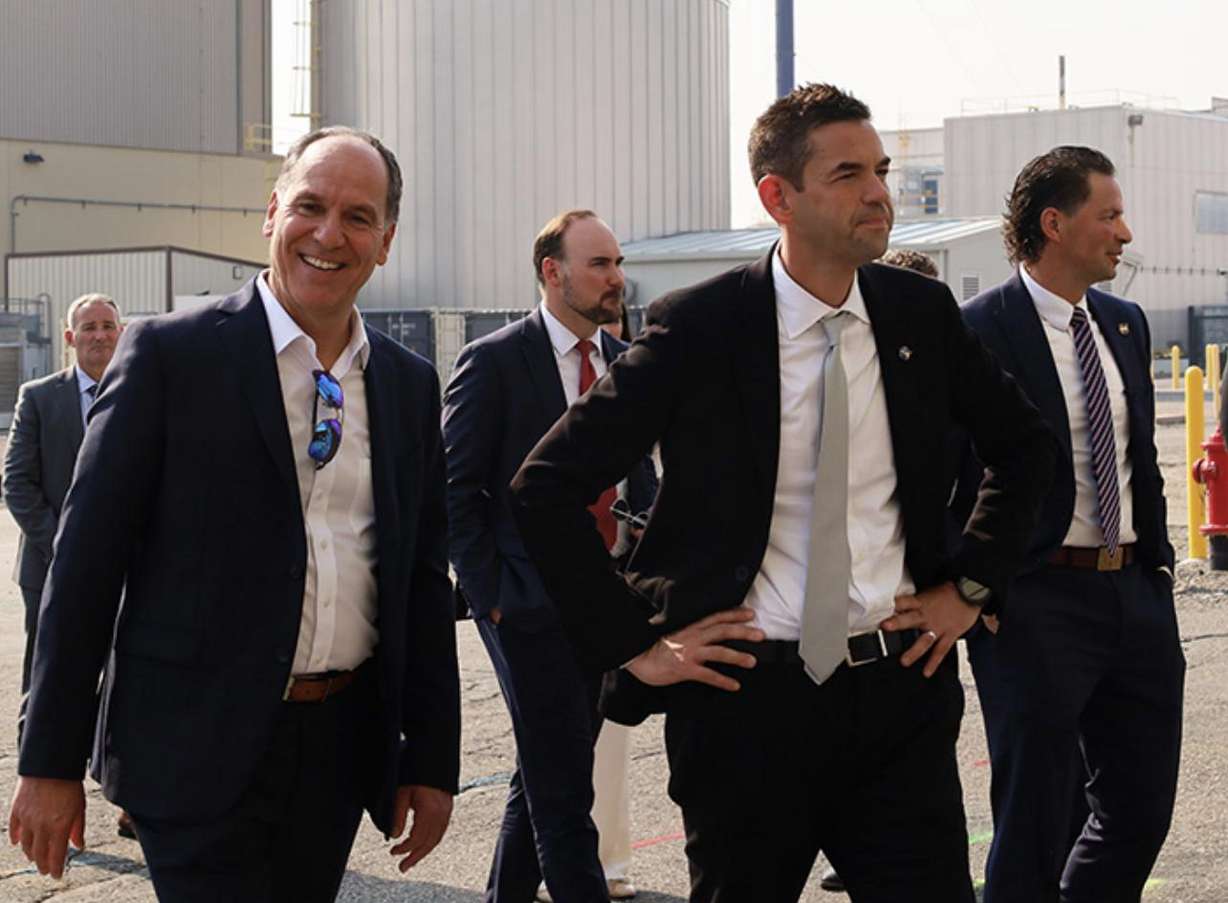
NASA Administrator Jared Isaacman and a team of executives traveled to INL's Materials and Fuel's Complex, where they met with the very minds who are making nuclear power in space possible.
"It's an absolute honor to work alongside the Department of Energy and the great team at Idaho National Laboratory, as we take the next giant leap together and finally get America underway under nuclear power in space," said Isaacman.
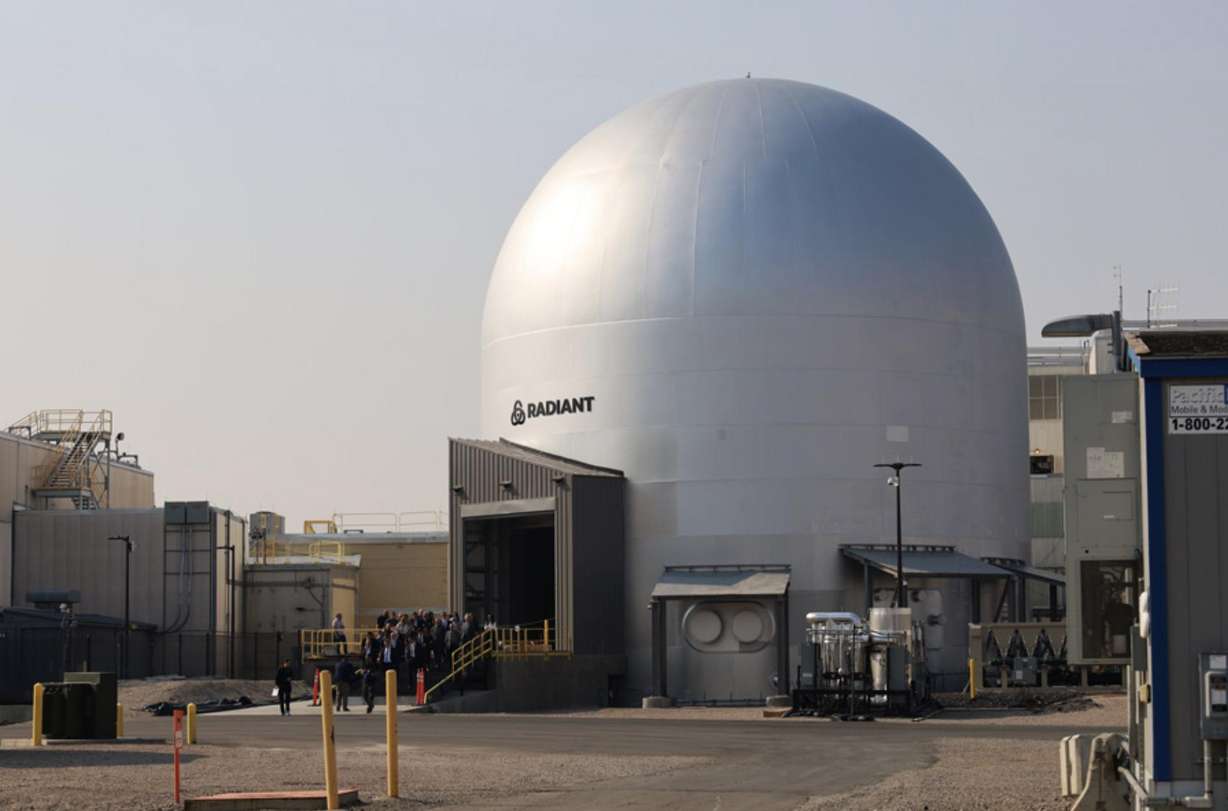
The tour group explored a microreactor test bed created at INL that will soon be used by Radiant, a nuclear energy technology company, to test Kaleidos, their own microreactor.
NASA executives also got to be face-to-face with groundbreaking science happening in eastern Idaho, including Deployable Energy's Unity Nuclear Battery demonstration and the Fuel Cycle Facility, where INL is reprocessing used nuclear fuel.
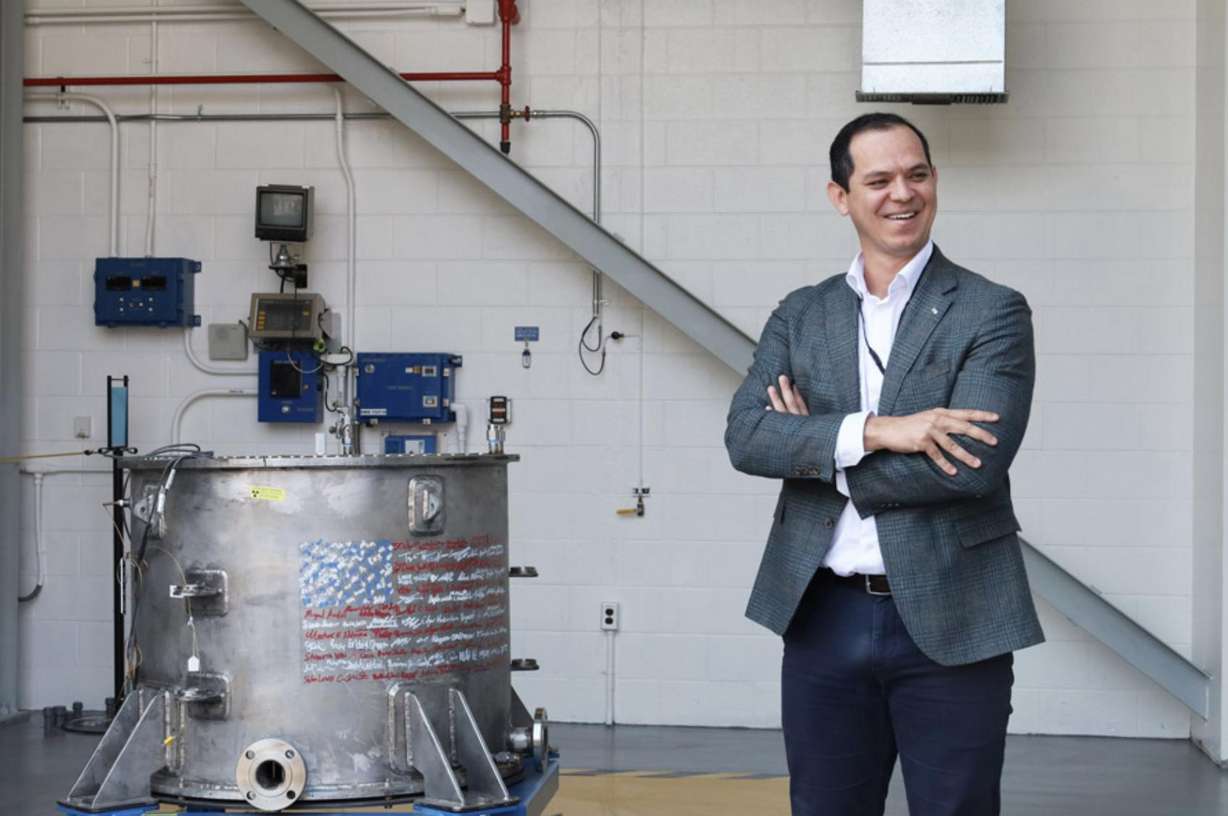
Later in the afternoon, the group traveled to the Energy Security Research Laboratory for what they'd all been waiting for: to learn more about Space Reactor 1 Freedom (SR-1), America's first nuclear reactor that will power an interplanetary spacecraft.
INL's plan is to build this compact nuclear reactor, which will be small enough to fit on the spacecraft, and have it fly to Mars on NASA's SR-1 Freedom mission in 2028.
"When you think about the partnership that the Department of Energy has had with NASA over the years, it couldn't be closer," said Isaacman. "The Department of Energy powers NASA's missions, not the rocket part, but the other part, the electric part. And then NASA … explores the universe for the benefit of all humanity … the stars are for everyone."
In May 2025, President Donald Trump signed an executive order, calling for at least three nuclear power criticalities before July 4, 2026. To mark the nation's 250th birthday, three of these four reactors, tested by Antares, Deployable Energy, and Aalo Atomics, went critical at INL right on schedule.
Part of Isaacman's stop in Idaho Falls was to celebrate this monumental achievement, as the Trump Administration continues to tout nuclear power and its recent advancements.
The day's last stop was the Aero Mark aviation hangar, where the celebration really took off.
Antique planes sat sparkling, balloons flew near the ceiling, and rock music blared as INL employees, interns, and experts listened as Isaacman, Idaho Gov. Brad Little, Congressman Mike Simpson, and U.S. Department of Energy Deputy Secretary James Danly spoke about the space race and how much work is being put into it in eastern Idaho.
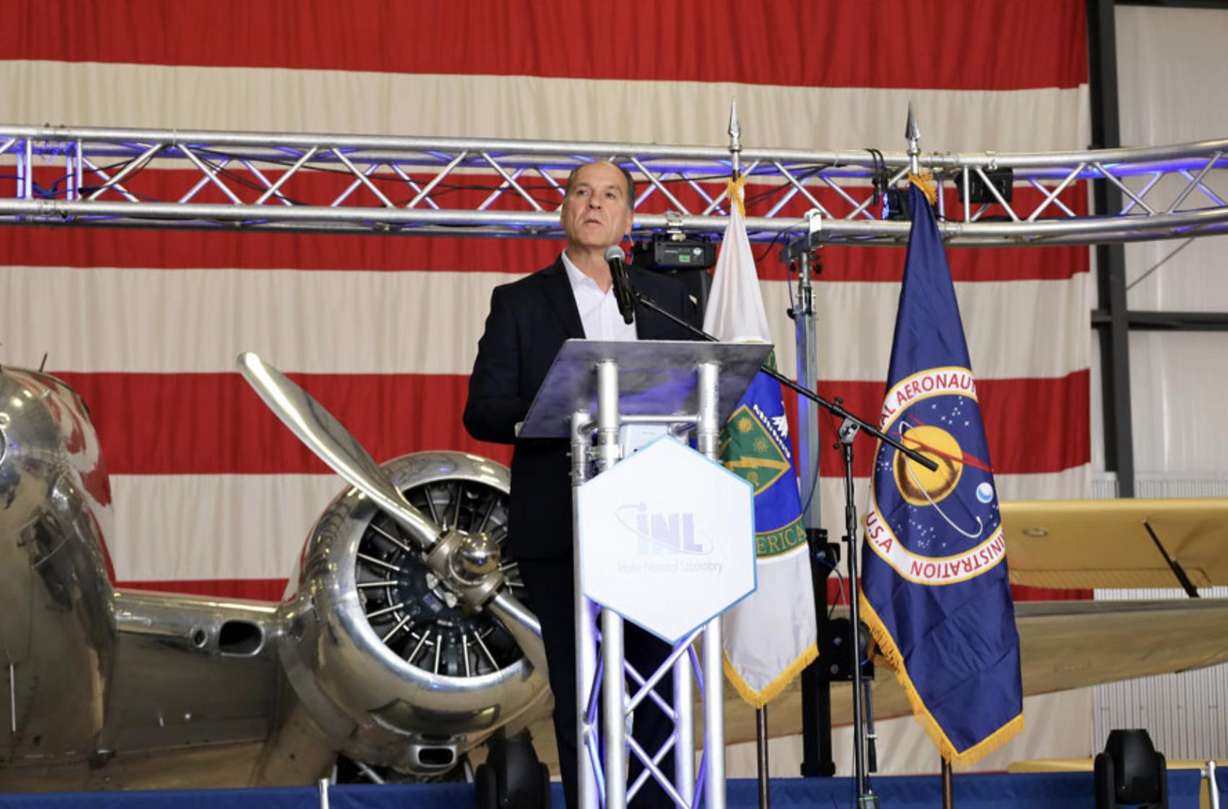
"A few weeks ago, I found myself standing in the Oval Office with President Trump," said Wagner during his remarks at the celebration. "To my knowledge, an INL director has never been in the Oval Office, in the 77 years of this laboratory. That's the kind of attention, that's the kind of momentum that we've established."
Wagner detailed the excitement behind the "nuclear renaissance," and reminded them that it's happening right here in our backyard.
"The country now knows what Idaho National Laboratory is capable of. It now knows that … INL is proving America can get back to putting a reactor in space," said Wagner. "I'm not describing a hope, I'm describing a track record — one that just got confirmed in the highest room, the most storied room in the country, and in the world."
Simpson walked up to the stage to the tune of "Fly Me To The Moon" by Frank Sinatra, and told the audience that Isaacman had completed the "trifecta."
"You came to the greatest state in the nation — maybe I'm a little biased," Simpson said. "One of the greatest communities in that state, and the greatest national lab in the country and in the world."
Speaking of SR-1 Freedom, Simpson noted his excitement about one day watching its landing on Mars on TV.
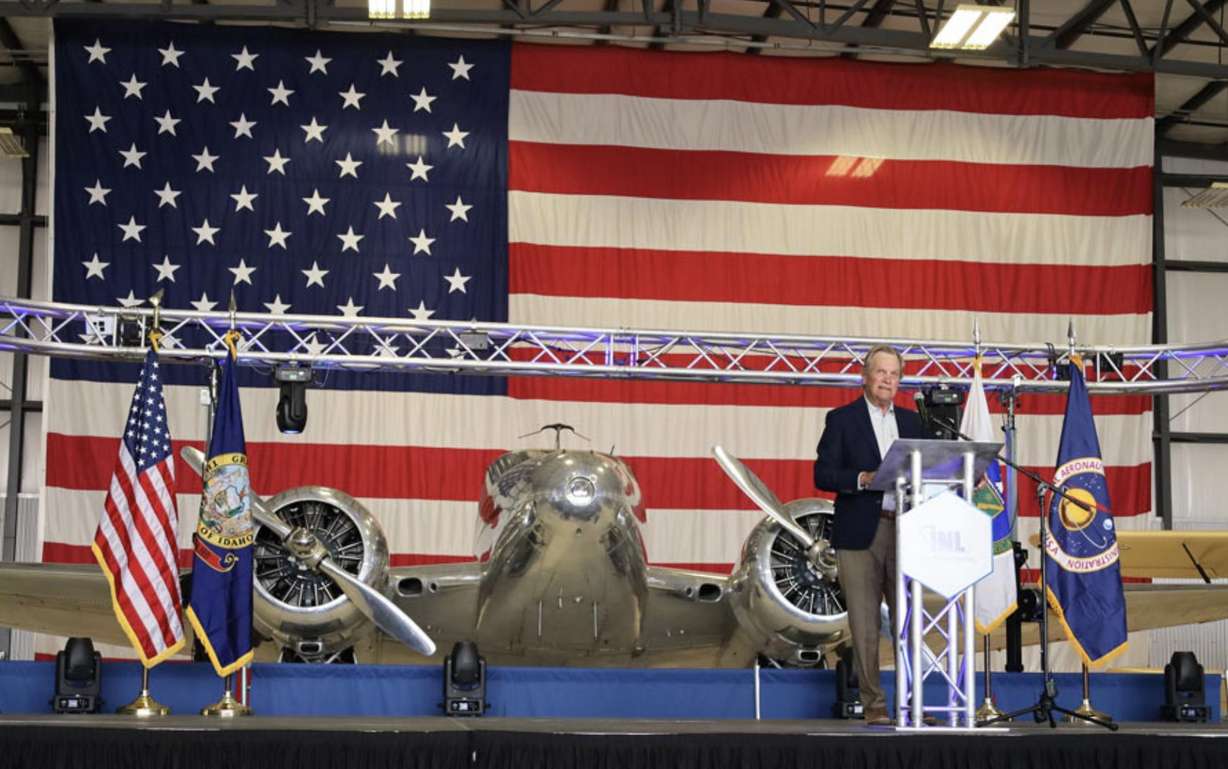
"You're gonna turn on your TV in the not-too-distant future, and you're gonna see this rover land on Mars," said Simpson. "How cool is that?"
Little echoed this, explaining that Idaho itself has proved that the impossible is possible.
"Right here at INL, our nation proved what was possible by generating the first usable electricity of nuclear power," said Little. "The work happening at INL reminds us that America's never been afraid of our biggest challenges."
All the speakers touched on their commitment to the space race, adding that not everyone can say the future of space exploration is being built in their own home.
"NASA, the Department of Energy, the laboratory, and other private sector partners (are) standing on the same stage, proving that American science can still do the things people once thought were impossible," said Wagner. "Idaho is where the proof lives, has lived for 60 years, and will keep living for the next 60."






