'%3e%3cpath%20d='M34.1406%205.85938C30.3906%202.10547%2025.3047%200%2020%200C14.6953%200%209.60938%202.10547%205.85938%205.85938C2.10938%209.61328%200%2014.6953%200%2020C0%2025.3047%202.10547%2030.3906%205.85938%2034.1406C9.61328%2037.8906%2014.6953%2040%2020%2040C25.3047%2040%2030.3906%2037.8945%2034.1406%2034.1406C37.8906%2030.3906%2040%2025.3047%2040%2020C40%2014.6953%2037.8945%209.60938%2034.1406%205.85938ZM37.0117%2023.543H31.1602V13.5391H27.6328V19.9414C28.1211%2020.6914%2028.3711%2021.582%2028.3711%2022.5625V22.625C28.3711%2023.668%2028.1172%2024.6055%2027.6328%2025.4297V26.6094H36.082C33.4883%2032.9375%2027.2891%2037.3789%2020.0039%2037.3789C10.3711%2037.3789%202.62109%2029.6289%202.62109%2020C2.62109%2010.3711%2010.3711%202.62109%2020%202.62109C29.6289%202.62109%2037.3789%2010.3711%2037.3789%2020C37.3789%2021.1484%2037.2617%2022.2656%2037.0508%2023.3477C37.0391%2023.4141%2037.0234%2023.4766%2037.0117%2023.543Z'%20fill='white'/%3e%3cpath%20d='M22.3086%2018.5352C20.4336%2018.125%2019.9531%2017.8398%2019.9766%2017.1836V17.1406C19.9766%2016.6992%2020.3477%2016.2148%2021.4023%2016.2148C22.582%2016.2148%2023.8867%2016.6797%2025.0781%2017.4766L26.8516%2015.0195C25.4453%2013.8906%2023.707%2013.3398%2021.5547%2013.3398C18.5195%2013.3398%2016.4375%2015%2016.4063%2017.4766V17.5352C16.3633%2020.2617%2018.5859%2020.9805%2021.293%2021.6016C23.0391%2021.9766%2023.5703%2022.3164%2023.5703%2022.9609L23.5469%2022.9766C23.5469%2023.3906%2023.2578%2023.7031%2022.7852%2023.8359C22.5742%2023.9062%2022.1289%2023.9727%2021.5156%2023.9727C20.7617%2023.9727%2019.7539%2023.8633%2018.6328%2023.4844C18.0898%2023.2891%2017.4727%2023.0039%2016.8047%2022.6133L20.1406%2026.625C20.2813%2026.6602%2021.0977%2026.8516%2021.7734%2026.8516C25.0039%2026.8516%2027.0859%2025.2461%2027.1094%2022.6328V22.5703C27.1602%2020.1133%2025.2148%2019.1719%2022.3086%2018.5352Z'%20fill='white'/%3e%3cpath%20d='M5.24219%2013.5664V26.6133H8.75391V23.7578L10.2969%2021.9531L14.2031%2026.6133H18.3867L12.3555%2019.5195L17.4023%2013.5664H13.4531L8.75391%2019.0586V13.5664H5.24219Z'%20fill='white'/%3e%3c/g%3e%3cdefs%3e%3cclipPath%20id='clip0_97_2430'%3e%3crect%20width='40'%20height='40'%20fill='white'/%3e%3c/clipPath%3e%3c/defs%3e%3c/svg%3e)


- Jump Aero's Pulse electric aircraft aims to revolutionize emergency response in Utah's rural areas and beyond.
- CEO Carl Dietrich highlights the aircrafts rapid deployment capabilities and 288 mph speed dash speed for emergencies.
- A 2023 agreement with the Utah Department of Transportation is exploring potential statewide implementation of this technology.
WEST JORDAN — When the future of flight is discussed, the conversation usually centers around transportation, commerce and moving people and packages.
But the reality is that advanced air mobility is likely to take on many different forms. For California-based Jump Aero and its CEO and founder Carl Dietrich, emergency services are the in.
Dietrich made a stop in the Beehive State Wednesday to showcase the Jump Aero Pulse, the company's high-speed, all-electric aircraft "designed to help get first-responders to the scene of rural or hard-to-reach emergencies faster than anything else," Dietrich told KSL.
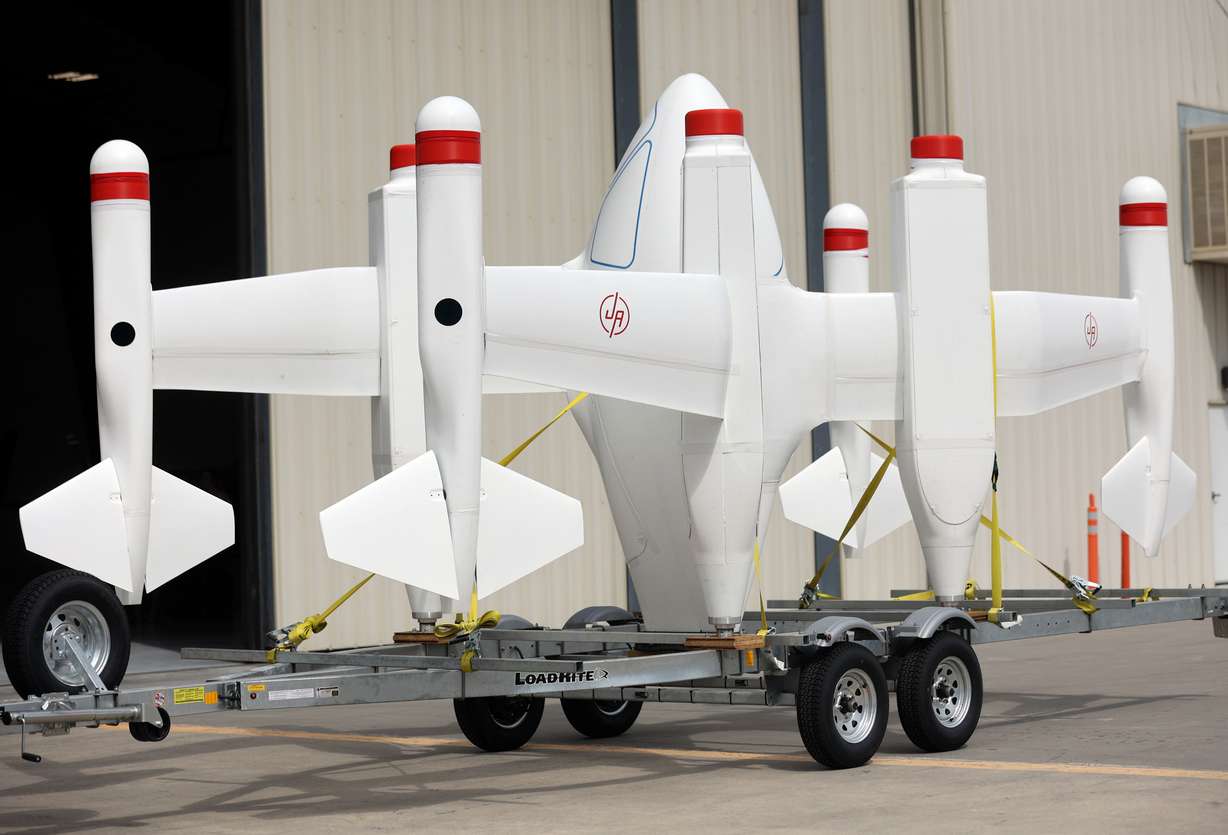
The one-person aircraft is intended to be operated by a trained professional (in this case, a paramedic or other first responder) and transport them and their gear to the scene of an emergency.
Being electric rather than gas-powered, the Pulse can also be deployed faster than a helicopter, with Dietrich saying it can be in the air within a minute.
Once airborne, it covers ground extremely efficiently, capable of reaching 250 kts, or approximately 288 mph. Under the company's design assumptions, the Pulse could reach a location within about 31 miles in less than eight minutes.
Much of the appeal of Jump Aero's Pulse, Dietrich explained, lies in its ability to service rural areas.
"When you put all that together — faster deployment, faster flight, land closer to the emergency — you get better response ... and that's what really makes the difference," Dietrich said. "Get professional help to the scene ... get them there as fast as possible and you're going to improve outcomes dramatically."
Dietrich clarified that Jump Aero isn't intending to replace first-response operations, but to act complementarily to them by getting qualified medical personnel to the scene of an incident as fast as possible before conventional emergency vehicles arrive to continue care and transport the patient, if necessary.
But could these aircraft come to Utah?
In 2023, Jump Aero signed a memorandum of understanding with the Utah Department of Transportation to assess how the technology could work in the state.
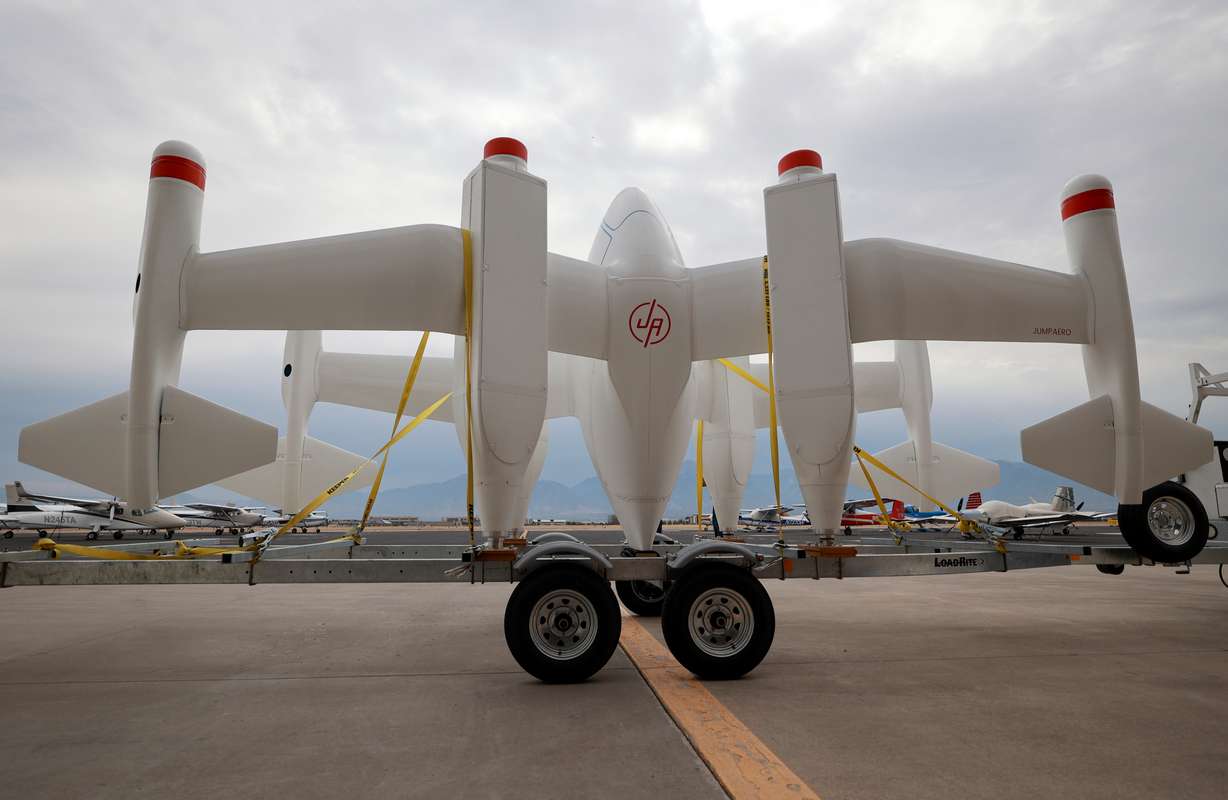
"We found that with a relatively small fleet of aircraft, you could potentially cover all rural areas of Utah with first response that would take less than eight minutes. And that has the potential of saving thousands of lives every year," Dietrich said.
So far, Jump Aero has received funding from private investors and the U.S. Air Force. Individual aircraft, Dietrich said, will be priced around $2 million.
Dietrich said he envisions Jump Aero working with various agencies across the state, including sheriff's offices, emergency response organizations, private companies, and more.
"It really depends on the county. A lot of times, emergency response is done on a county-by-county basis. We're here to just promote the concept right now and try to make the early connections so we can see who wants it the most and who should we be talking to first to get it out there?" Dietrich said.