'%3e%3cpath%20d='M34.1406%205.85938C30.3906%202.10547%2025.3047%200%2020%200C14.6953%200%209.60938%202.10547%205.85938%205.85938C2.10938%209.61328%200%2014.6953%200%2020C0%2025.3047%202.10547%2030.3906%205.85938%2034.1406C9.61328%2037.8906%2014.6953%2040%2020%2040C25.3047%2040%2030.3906%2037.8945%2034.1406%2034.1406C37.8906%2030.3906%2040%2025.3047%2040%2020C40%2014.6953%2037.8945%209.60938%2034.1406%205.85938ZM37.0117%2023.543H31.1602V13.5391H27.6328V19.9414C28.1211%2020.6914%2028.3711%2021.582%2028.3711%2022.5625V22.625C28.3711%2023.668%2028.1172%2024.6055%2027.6328%2025.4297V26.6094H36.082C33.4883%2032.9375%2027.2891%2037.3789%2020.0039%2037.3789C10.3711%2037.3789%202.62109%2029.6289%202.62109%2020C2.62109%2010.3711%2010.3711%202.62109%2020%202.62109C29.6289%202.62109%2037.3789%2010.3711%2037.3789%2020C37.3789%2021.1484%2037.2617%2022.2656%2037.0508%2023.3477C37.0391%2023.4141%2037.0234%2023.4766%2037.0117%2023.543Z'%20fill='white'/%3e%3cpath%20d='M22.3086%2018.5352C20.4336%2018.125%2019.9531%2017.8398%2019.9766%2017.1836V17.1406C19.9766%2016.6992%2020.3477%2016.2148%2021.4023%2016.2148C22.582%2016.2148%2023.8867%2016.6797%2025.0781%2017.4766L26.8516%2015.0195C25.4453%2013.8906%2023.707%2013.3398%2021.5547%2013.3398C18.5195%2013.3398%2016.4375%2015%2016.4063%2017.4766V17.5352C16.3633%2020.2617%2018.5859%2020.9805%2021.293%2021.6016C23.0391%2021.9766%2023.5703%2022.3164%2023.5703%2022.9609L23.5469%2022.9766C23.5469%2023.3906%2023.2578%2023.7031%2022.7852%2023.8359C22.5742%2023.9062%2022.1289%2023.9727%2021.5156%2023.9727C20.7617%2023.9727%2019.7539%2023.8633%2018.6328%2023.4844C18.0898%2023.2891%2017.4727%2023.0039%2016.8047%2022.6133L20.1406%2026.625C20.2813%2026.6602%2021.0977%2026.8516%2021.7734%2026.8516C25.0039%2026.8516%2027.0859%2025.2461%2027.1094%2022.6328V22.5703C27.1602%2020.1133%2025.2148%2019.1719%2022.3086%2018.5352Z'%20fill='white'/%3e%3cpath%20d='M5.24219%2013.5664V26.6133H8.75391V23.7578L10.2969%2021.9531L14.2031%2026.6133H18.3867L12.3555%2019.5195L17.4023%2013.5664H13.4531L8.75391%2019.0586V13.5664H5.24219Z'%20fill='white'/%3e%3c/g%3e%3cdefs%3e%3cclipPath%20id='clip0_97_2430'%3e%3crect%20width='40'%20height='40'%20fill='white'/%3e%3c/clipPath%3e%3c/defs%3e%3c/svg%3e)




SALT LAKE CITY — The Zion Evangelical Lutheran Church, the fifth oldest Lutheran Church west of the Rocky Mountains, wasn't always nestled near Foothill Drive in Salt Lake City.
Founded in 1882, the church has known three different homes while in the Beehive state, including a sod hut when it first started out.
According to Paul Mogren, a member of the Zion Evangelical Lutheran Church and the church's unofficial historian, five people first met on July 11, 1882, in St. Mark's Cathedral and organized a church.
Two of the original members, the pastor and his wife, had traveled from Denver on a missionary trip to Utah. All five members had immigrated to America from Sweden.
In 1885, the second church was built on the corner of 400 East and 200 South, where a restaurant now sits. A plaque honoring the original building still resides in the parking lot.
The church continued to attract Swedish immigrants who had been Lutheran before traveling to America. It became a place for them to gather and worship God in their own language.
In the early years, the congregation worshiped in Swedish, but as time passed and new generations were born, the church held a second service in English. By the mid-1930s, Mogren says the Swedish service ended.
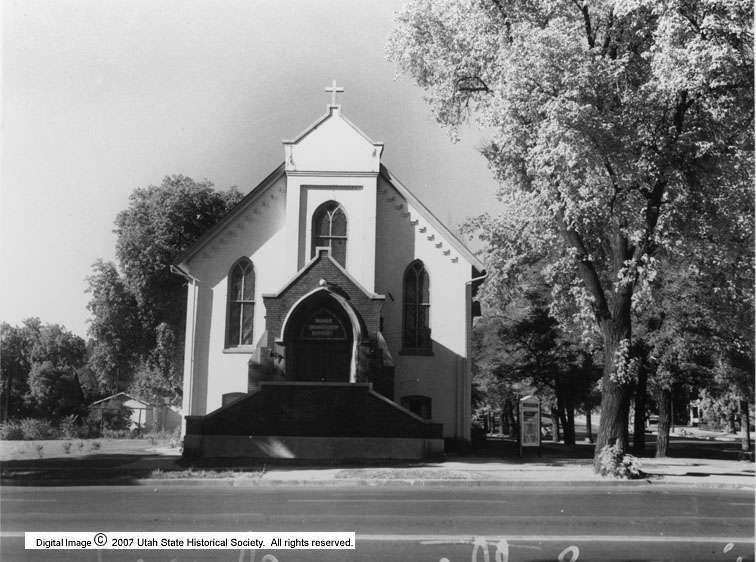
For the next 70 years, the church continued to serve the Lutheran community in Salt Lake City. In the 1930s, the church remodeled the interior of the building, removing the church's steeple, which had become unstable. By 1955, the congregation had outgrown the building, prompting them to search for a new location.
Mogren said two different designs were submitted for the new building. One harkened back to traditional Gothic-style churches, but Mogren said the congregation chose a more Scandinavian-inspired design called "Swedish Modern," reflecting the church's Swedish heritage.
The new building brought over several original artifacts from the 1885 building, including the original bell, which was shipped from Sweden and installed in 1890. The blue bell tower in the 1957 building currently holds the original bell, while also doubling as a cellphone tower for the area.
In the late 1940s, the church custodian's son tried to make a little extra money by taking the bell to the local scrap yard, according to Mogren. Thankfully, the scrapyard owner called the church and returned the bell before it was smelted down.
Another item installed in the new building took a longer journey to get there. A large painting entitled "The Consoling Christ" hung beside the organ in the second church in 1905. In the 1930s, it was removed and likely donated to the Bethlehem Lutheran Church in Bingham Canyon.
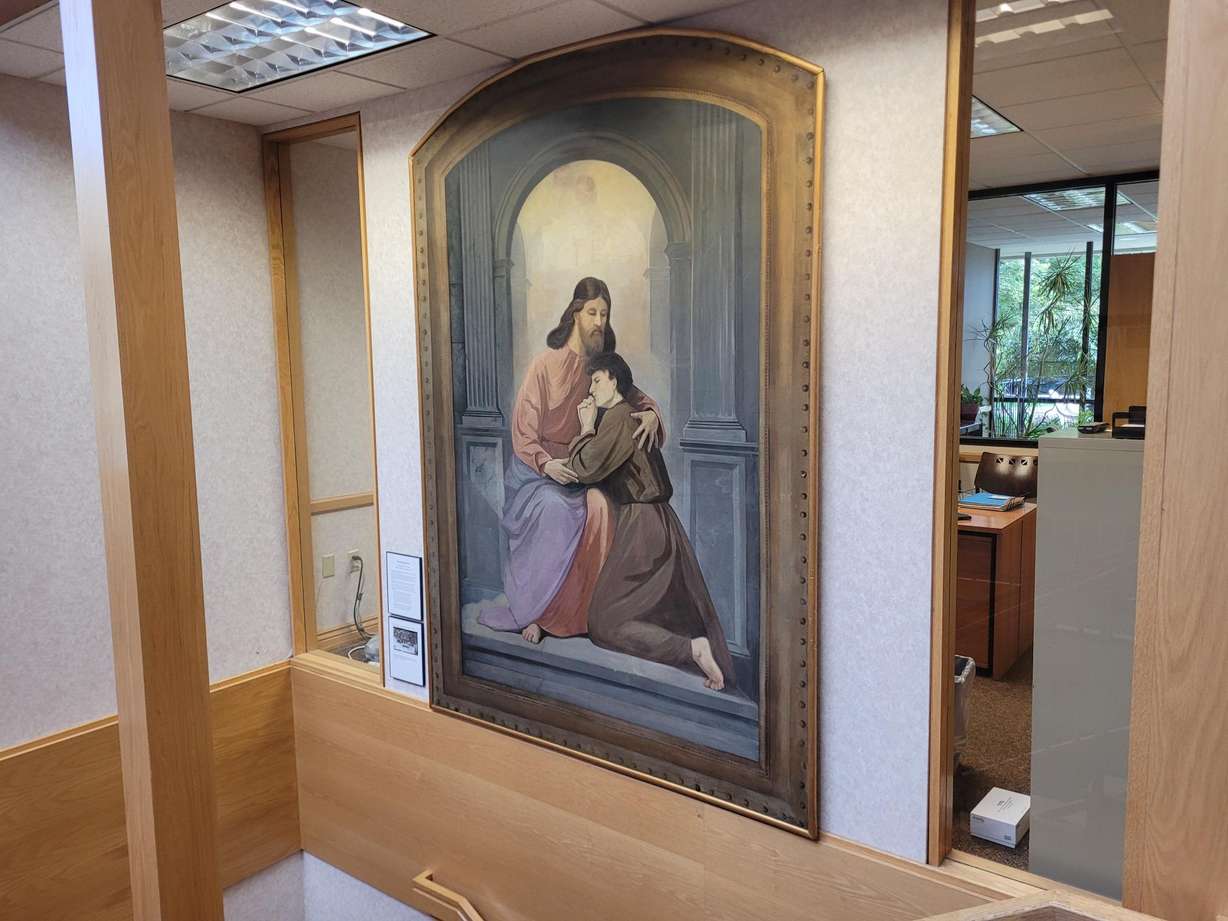
The painting was lost until 2024, when someone called Zion Evangelical Lutheran Church officials and told them that they had found the mural at an estate sale.
"It was a historically Lutheran family who found it in the garage sale," Mogren said. The painting was restored and placed in front of the church offices in 2025, hanging over the stairwell to classrooms and a large meeting room in the basement.
The sanctuary seats between 200 and 250 attendees under a roof shaped like a ship, with wooden planking along the ceiling. The ribs of the ship line the roof and turn into pillars that support it, along with starburst-shaped lights hanging from the ceiling.
An altar made of solid marble was installed before the walls were erected, and the original organ was also transferred over from the 1885 building. Beginning in 2020, a camera system was integrated into the balcony near the back of the sanctuary, allowing attendees to view Sunday worship services from home.
In 1998, the church building underwent a renovation, adding two new sections to the building. One wing was focused on childcare, while the front entrance of the church was expanded to include a small atrium area where congregants and visitors gather after services.
The childcare services offered by Zion Evangelical Lutheran Church are mainly focused for children of the congregation, but they also host camps for children and youth in the neighborhood. Mogren said the camps, which focus on music, have waiting lists for children to join.
"Everyone is welcome," Mogren said, adding that the congregation tries "to be as open as we possibly can."