'%3e%3cpath%20d='M34.1406%205.85938C30.3906%202.10547%2025.3047%200%2020%200C14.6953%200%209.60938%202.10547%205.85938%205.85938C2.10938%209.61328%200%2014.6953%200%2020C0%2025.3047%202.10547%2030.3906%205.85938%2034.1406C9.61328%2037.8906%2014.6953%2040%2020%2040C25.3047%2040%2030.3906%2037.8945%2034.1406%2034.1406C37.8906%2030.3906%2040%2025.3047%2040%2020C40%2014.6953%2037.8945%209.60938%2034.1406%205.85938ZM37.0117%2023.543H31.1602V13.5391H27.6328V19.9414C28.1211%2020.6914%2028.3711%2021.582%2028.3711%2022.5625V22.625C28.3711%2023.668%2028.1172%2024.6055%2027.6328%2025.4297V26.6094H36.082C33.4883%2032.9375%2027.2891%2037.3789%2020.0039%2037.3789C10.3711%2037.3789%202.62109%2029.6289%202.62109%2020C2.62109%2010.3711%2010.3711%202.62109%2020%202.62109C29.6289%202.62109%2037.3789%2010.3711%2037.3789%2020C37.3789%2021.1484%2037.2617%2022.2656%2037.0508%2023.3477C37.0391%2023.4141%2037.0234%2023.4766%2037.0117%2023.543Z'%20fill='white'/%3e%3cpath%20d='M22.3086%2018.5352C20.4336%2018.125%2019.9531%2017.8398%2019.9766%2017.1836V17.1406C19.9766%2016.6992%2020.3477%2016.2148%2021.4023%2016.2148C22.582%2016.2148%2023.8867%2016.6797%2025.0781%2017.4766L26.8516%2015.0195C25.4453%2013.8906%2023.707%2013.3398%2021.5547%2013.3398C18.5195%2013.3398%2016.4375%2015%2016.4063%2017.4766V17.5352C16.3633%2020.2617%2018.5859%2020.9805%2021.293%2021.6016C23.0391%2021.9766%2023.5703%2022.3164%2023.5703%2022.9609L23.5469%2022.9766C23.5469%2023.3906%2023.2578%2023.7031%2022.7852%2023.8359C22.5742%2023.9062%2022.1289%2023.9727%2021.5156%2023.9727C20.7617%2023.9727%2019.7539%2023.8633%2018.6328%2023.4844C18.0898%2023.2891%2017.4727%2023.0039%2016.8047%2022.6133L20.1406%2026.625C20.2813%2026.6602%2021.0977%2026.8516%2021.7734%2026.8516C25.0039%2026.8516%2027.0859%2025.2461%2027.1094%2022.6328V22.5703C27.1602%2020.1133%2025.2148%2019.1719%2022.3086%2018.5352Z'%20fill='white'/%3e%3cpath%20d='M5.24219%2013.5664V26.6133H8.75391V23.7578L10.2969%2021.9531L14.2031%2026.6133H18.3867L12.3555%2019.5195L17.4023%2013.5664H13.4531L8.75391%2019.0586V13.5664H5.24219Z'%20fill='white'/%3e%3c/g%3e%3cdefs%3e%3cclipPath%20id='clip0_97_2430'%3e%3crect%20width='40'%20height='40'%20fill='white'/%3e%3c/clipPath%3e%3c/defs%3e%3c/svg%3e)




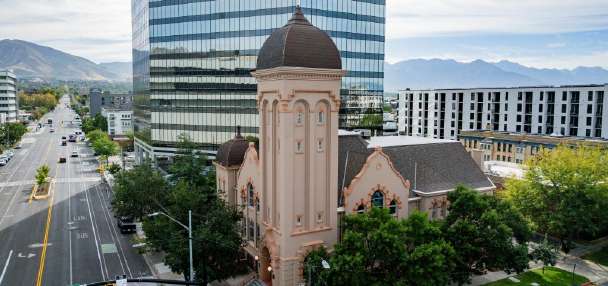
- The B'nai Israel Temple, built in 1891, now houses the Salt Lake Art Museum.
- The building, originally a synagogue, has served various purposes over the years.
- Congregation Kol Ami, formed in 1970, continues to serve Utah's Jewish community.
SALT LAKE CITY — While Salt Lake City has a rich tradition of religious affiliation dating back to the 1800s, not every structure built by those early worshippers remains as a dedicated worship space. The former B'nai Israel Temple is one such building.
The Jewish roots of Utah reach back to 1854, when Fanny Brooks and her husband briefly visited Salt Lake City while traveling to California. A decade later, the Brooks family returned to Utah and settled on Third and Main Street in Salt Lake City.
Brooks, who immigrated from Germany, became an accepted member of the Salt Lake community and sent her children to a Sunday School for The Church of Jesus Christ of Latter-day Saints until the first Jewish synagogue was built in the city.
In 1873, a new Jewish congregation called Congregation B'nai Israel was formed in Salt Lake City. A synagogue for the congregation was built on the corner of 300 South and West Temple a decade later.
In 1885, the congregation split into two different groups: Congregation B'nai, which transitioned to Reform Judaism; and Congregation Montefiore, which began as Orthodox Judaism before transitioning into Conservative Judaism.
In 1889, Congregation B'nai Israel sold the synagogue and began building a new building at 249 S. 400 East. On July 12, 1891, the building was dedicated and served the Jewish Community for more than 80 years.
Changing ownership
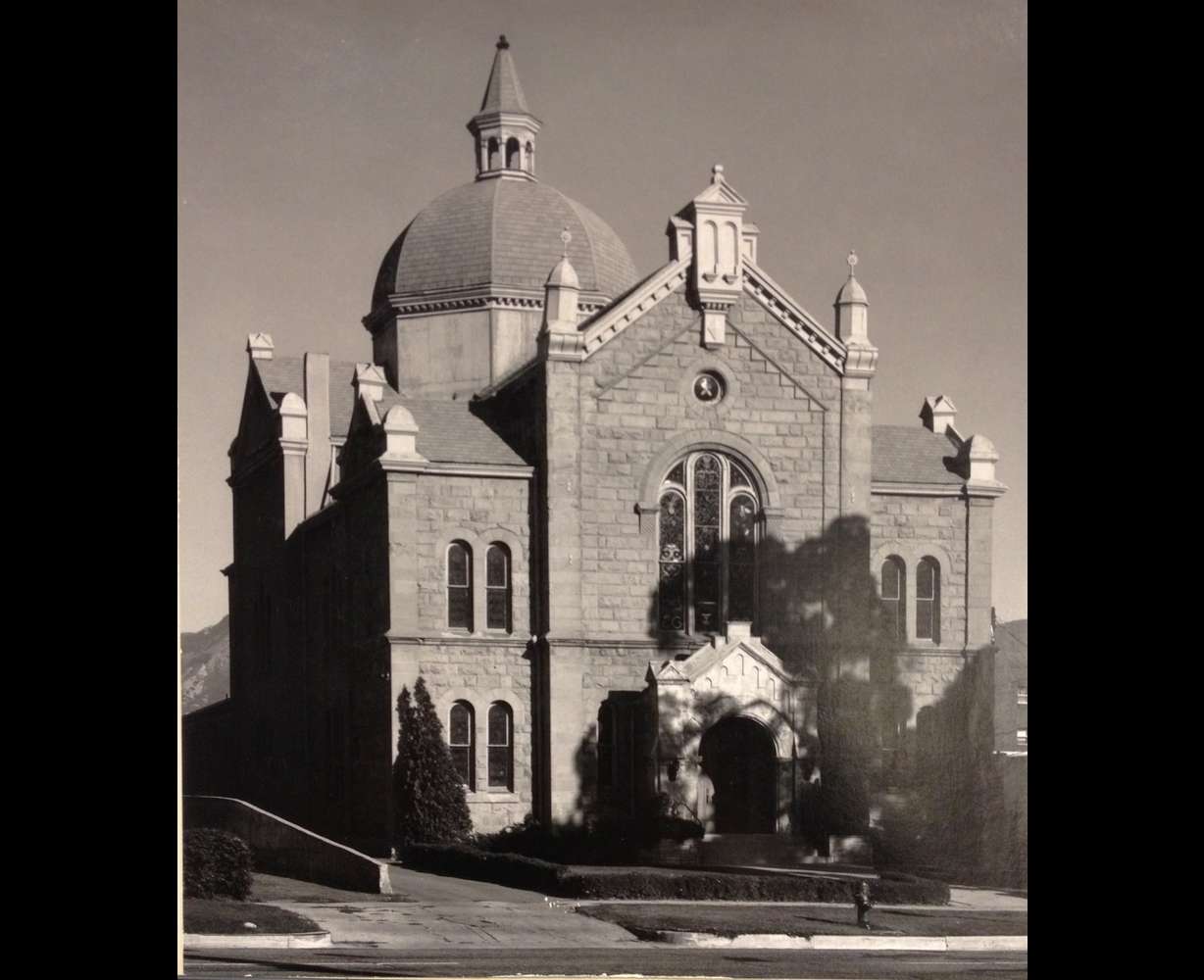
In 1970, the two Jewish groups decided to merge into Congregation Kol Ami, selling the synagogue building in 1976. The building was turned into a restaurant in 1977, and later became an office furniture showroom and business headquarters for Henriksen Butler.
Henriksen Butler built an addition onto the back of the former synagogue, according to Kevin Earl, a tour guide who has researched historical churches in Salt Lake City. Earl said the additions were added to bring the building up to ADA accessibility standards without removing the original staircases.
In 2024, Henriksen Butler left the building, which was turned into the Salt Lake Art Museum. The museum opened on July 24, with an opening exhibit dedicated to the history of the synagogue.
Earl said that while the interiors had been changed by the different owners of the building, the exposed trusses above the gallery and most of the windows were original, except for one of the glass panels in the skylight illuminating the center of the gallery.
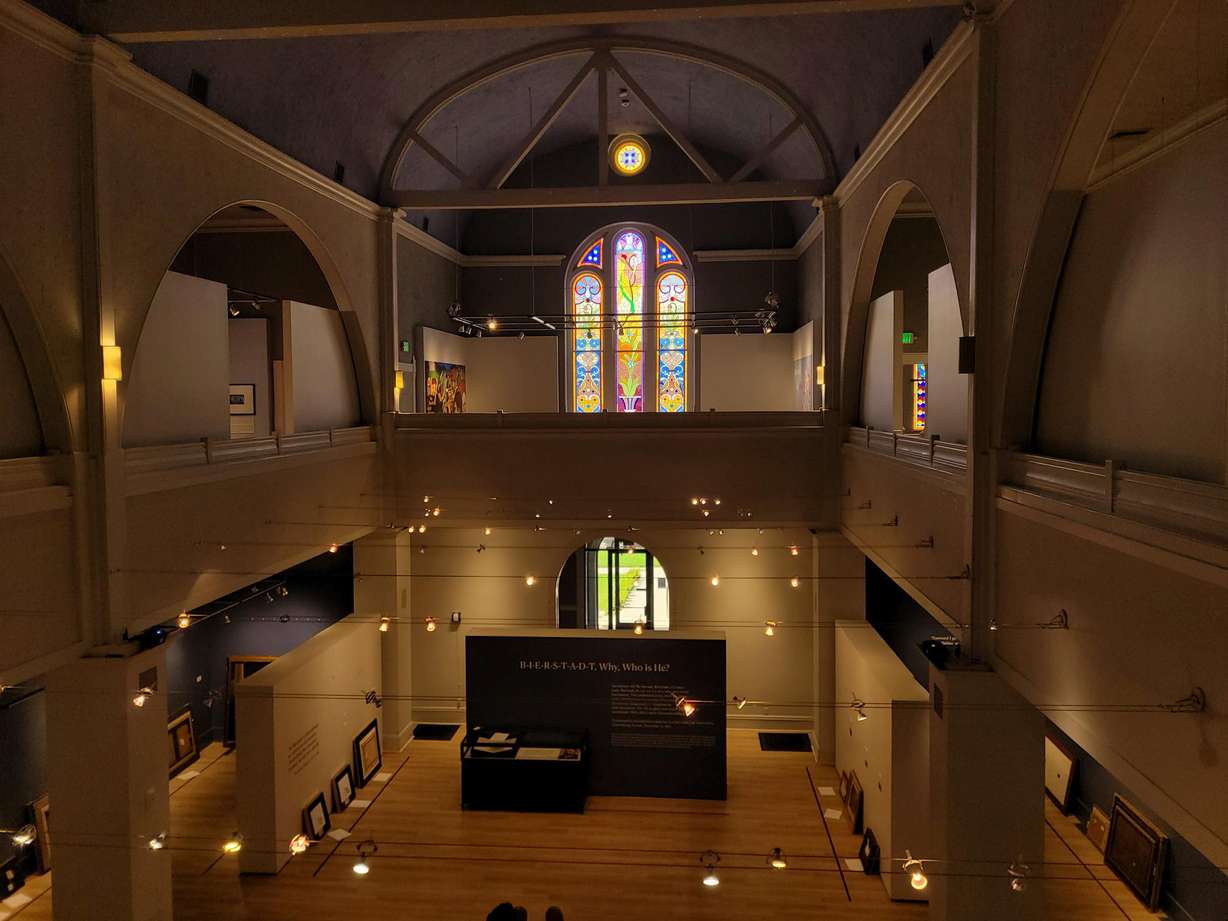
"While they were doing restoration work, someone actually dropped a wrench through the window," Earl said.
Even though the Jewish community sold the synagogue, Earl said the building still welcomes them to come and perform some services there.
Congregation Kol Ami currently meets at a synagogue located at 2425 E. Heritage Way in Salt Lake City, serving roughly a quarter of the Jewish population in the state. While no longer a dedicated worship site, it joins the mosaic of different religions that help make up the history of Utah.
"We have synagogues, we have mosques, we have Buddhist temples and Hindu temples and all kinds of other religious worship spaces throughout Salt Lake Valley, throughout the state," Earl said. "And that just makes us stronger and more beautiful as a community, in our history and our state."