'%3e%3cpath%20d='M34.1406%205.85938C30.3906%202.10547%2025.3047%200%2020%200C14.6953%200%209.60938%202.10547%205.85938%205.85938C2.10938%209.61328%200%2014.6953%200%2020C0%2025.3047%202.10547%2030.3906%205.85938%2034.1406C9.61328%2037.8906%2014.6953%2040%2020%2040C25.3047%2040%2030.3906%2037.8945%2034.1406%2034.1406C37.8906%2030.3906%2040%2025.3047%2040%2020C40%2014.6953%2037.8945%209.60938%2034.1406%205.85938ZM37.0117%2023.543H31.1602V13.5391H27.6328V19.9414C28.1211%2020.6914%2028.3711%2021.582%2028.3711%2022.5625V22.625C28.3711%2023.668%2028.1172%2024.6055%2027.6328%2025.4297V26.6094H36.082C33.4883%2032.9375%2027.2891%2037.3789%2020.0039%2037.3789C10.3711%2037.3789%202.62109%2029.6289%202.62109%2020C2.62109%2010.3711%2010.3711%202.62109%2020%202.62109C29.6289%202.62109%2037.3789%2010.3711%2037.3789%2020C37.3789%2021.1484%2037.2617%2022.2656%2037.0508%2023.3477C37.0391%2023.4141%2037.0234%2023.4766%2037.0117%2023.543Z'%20fill='white'/%3e%3cpath%20d='M22.3086%2018.5352C20.4336%2018.125%2019.9531%2017.8398%2019.9766%2017.1836V17.1406C19.9766%2016.6992%2020.3477%2016.2148%2021.4023%2016.2148C22.582%2016.2148%2023.8867%2016.6797%2025.0781%2017.4766L26.8516%2015.0195C25.4453%2013.8906%2023.707%2013.3398%2021.5547%2013.3398C18.5195%2013.3398%2016.4375%2015%2016.4063%2017.4766V17.5352C16.3633%2020.2617%2018.5859%2020.9805%2021.293%2021.6016C23.0391%2021.9766%2023.5703%2022.3164%2023.5703%2022.9609L23.5469%2022.9766C23.5469%2023.3906%2023.2578%2023.7031%2022.7852%2023.8359C22.5742%2023.9062%2022.1289%2023.9727%2021.5156%2023.9727C20.7617%2023.9727%2019.7539%2023.8633%2018.6328%2023.4844C18.0898%2023.2891%2017.4727%2023.0039%2016.8047%2022.6133L20.1406%2026.625C20.2813%2026.6602%2021.0977%2026.8516%2021.7734%2026.8516C25.0039%2026.8516%2027.0859%2025.2461%2027.1094%2022.6328V22.5703C27.1602%2020.1133%2025.2148%2019.1719%2022.3086%2018.5352Z'%20fill='white'/%3e%3cpath%20d='M5.24219%2013.5664V26.6133H8.75391V23.7578L10.2969%2021.9531L14.2031%2026.6133H18.3867L12.3555%2019.5195L17.4023%2013.5664H13.4531L8.75391%2019.0586V13.5664H5.24219Z'%20fill='white'/%3e%3c/g%3e%3cdefs%3e%3cclipPath%20id='clip0_97_2430'%3e%3crect%20width='40'%20height='40'%20fill='white'/%3e%3c/clipPath%3e%3c/defs%3e%3c/svg%3e)


Estimated read time: 5-6 minutes
PROVO — The preliminary hearing for Tyler Robinson will be delayed for about a month and a half, but cameras and microphones will continue to be allowed in the courtroom during his proceedings. Fourth District Judge Tony Graf on Friday announced two rulings regarding Robinson's capital murder case, agreeing to postpone his preliminary hearing scheduled to begin in less than two weeks and to continue to allow electronic media coverage in the courtroom. Robinson, 23, is accused of shooting and killing political activist Charlie Kirk at Utah Valley University on Sept. 10, 2025. He is charged with capital murder and faces a potential death sentence if convicted. The preliminary hearing, originally scheduled to begin on May 18, will now be held July 6-10. During a preliminary hearing, a judge determines if there is enough probable cause to order a defendant to stand trial on the charges levied against him or her. The bar that prosecutors have to meet to establish probable cause is extremely low during the preliminary hearing stage, and the state typically does not present all of its evidence at that time. The Utah County Attorney's Office had argued because of the low threshold it had to meet during a preliminary hearing that it should proceed as scheduled because of the overwhelming amount of evidence already collected. Prosecutors have said they would not present any DNA evidence at the preliminary hearing if that would help avoid a delay, contending they have plenty of other evidence for the case to be bound over for trial even without it.
Prosecution witnesses for preliminary hearing
Prior to Graf's rulings on Friday, both the state and Robinson's defense team had already made several court filings in preparation for the hearing. This week, the Utah County Attorney's Office has identified six witnesses it intends to call to the stand during the preliminary hearing and the exhibits the prosecutors plan to introduce, including:
- Lance Twiggs, who was Robinson's roommate at the time Kirk was killed. According to court documents, prosecutors will show a recorded interview with Twiggs rather than have him testify in person. After Robinson allegedly shot Kirk, investigators believe he messaged Twiggs and confessed.
- Four agents from the Utah State Bureau of Investigation.
- A Utah Valley University police officer.
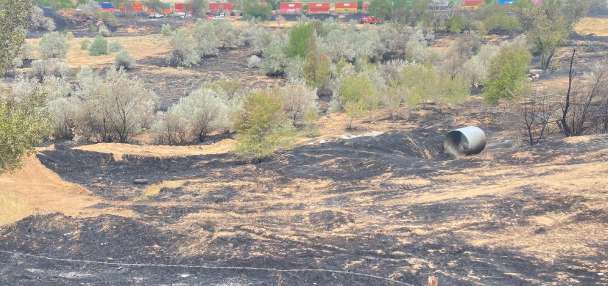
- Photos and videos from UVU — including exhibits described as "photo of sniper perch" and "photo of rifle in bushes."
- Text messages between Robinson and Twiggs.
- Photographs of notes.
Robinson, who has already filed a motion asking for portions of the preliminary hearing to be closed to the public, also filed a motion this week "to sanction the admissibility of hearsay evidence." "This motion is made on the ground that the use of hearsay evidence to establish probable cause at a preliminary hearing in a capital case violates the Fourth, Sixth, Eighth and 14th Amendments to the United States Constitution, and separation of powers principles," according to court documents. Those amendments protect Robinson's due process rights and right to a fair trial and from unreasonable search and seizure. The state, prior to Graf's rulings on Friday, objected to Robinson's requests to close portions of the preliminary and not allow hearsay evidence. "Yet again, (Robinson) has ignored the procedural rules and filed a motion regarding a soon-to-be-held hearing that does not allow enough time for the motion to be fully briefed and for the court to adequately consider the motion. The court should not continue to countenance this abusive practice. Rather, it should deny the motion as untimely," prosecutors argued in their opposition. As for his second ruling, Graf denied Robinson's motion requesting "television cameras and microphones, still photographers, radio microphones and other similar implements of the electronic or broadcast media" be kept out of the courtroom during his legal proceedings. Robinson contends that "highly sensational" electronic media coverage threatens his due process and his rights to a fair and impartial jury. Prosecutors, however, argued that the publicity surrounding the case is exactly why the proceedings need to remain transparent. In his ruling, Graf noted that during an April 17 hearing on the issue, the defense's own witness testified that only 25% of Utah County residents polled actually watched a livestream of the hearings. The majority of people got their news after on social media or television after the hearing, which sometimes included a panel of people providing commentary "to discuss out-of-court commentary by public figures, opine on the relevance or existence of evidence that has not been admitted or presented in court, and generally vilify the defendant," Graf stated in his ruling. Despite this, Graf said the court "is not so cynical as to conclude that just because the parties did not present evidence of responsible journalism, none exists. Members of the news media, like members of the public, have the constitutional right to access criminal proceedings."
The judge denied a "blanket" finding to ban all electronic media coverage and said restricting media access can be argued on a case by case basis. However, Graf also on Friday ordered that all requests for media coverage now have to be made 14 days prior to any hearing. With Friday's decisions, there are now three outstanding motions Graf has yet to rule on: whether the Utah County Attorney's Office should be held in contempt of court; whether portions of the preliminary hearing should be closed to the public and evidence sealed; and whether hearsay can be presented as evidence during the preliminary hearing. Graf scheduled a hearing on May 19, one of the original preliminary hearing dates, to argue the motion to close portions of the new preliminary hearing and the contempt of court issue. Attorneys say they will likely need more time to prepare for the hearsay issue.