'%3e%3cpath%20d='M34.1406%205.85938C30.3906%202.10547%2025.3047%200%2020%200C14.6953%200%209.60938%202.10547%205.85938%205.85938C2.10938%209.61328%200%2014.6953%200%2020C0%2025.3047%202.10547%2030.3906%205.85938%2034.1406C9.61328%2037.8906%2014.6953%2040%2020%2040C25.3047%2040%2030.3906%2037.8945%2034.1406%2034.1406C37.8906%2030.3906%2040%2025.3047%2040%2020C40%2014.6953%2037.8945%209.60938%2034.1406%205.85938ZM37.0117%2023.543H31.1602V13.5391H27.6328V19.9414C28.1211%2020.6914%2028.3711%2021.582%2028.3711%2022.5625V22.625C28.3711%2023.668%2028.1172%2024.6055%2027.6328%2025.4297V26.6094H36.082C33.4883%2032.9375%2027.2891%2037.3789%2020.0039%2037.3789C10.3711%2037.3789%202.62109%2029.6289%202.62109%2020C2.62109%2010.3711%2010.3711%202.62109%2020%202.62109C29.6289%202.62109%2037.3789%2010.3711%2037.3789%2020C37.3789%2021.1484%2037.2617%2022.2656%2037.0508%2023.3477C37.0391%2023.4141%2037.0234%2023.4766%2037.0117%2023.543Z'%20fill='white'/%3e%3cpath%20d='M22.3086%2018.5352C20.4336%2018.125%2019.9531%2017.8398%2019.9766%2017.1836V17.1406C19.9766%2016.6992%2020.3477%2016.2148%2021.4023%2016.2148C22.582%2016.2148%2023.8867%2016.6797%2025.0781%2017.4766L26.8516%2015.0195C25.4453%2013.8906%2023.707%2013.3398%2021.5547%2013.3398C18.5195%2013.3398%2016.4375%2015%2016.4063%2017.4766V17.5352C16.3633%2020.2617%2018.5859%2020.9805%2021.293%2021.6016C23.0391%2021.9766%2023.5703%2022.3164%2023.5703%2022.9609L23.5469%2022.9766C23.5469%2023.3906%2023.2578%2023.7031%2022.7852%2023.8359C22.5742%2023.9062%2022.1289%2023.9727%2021.5156%2023.9727C20.7617%2023.9727%2019.7539%2023.8633%2018.6328%2023.4844C18.0898%2023.2891%2017.4727%2023.0039%2016.8047%2022.6133L20.1406%2026.625C20.2813%2026.6602%2021.0977%2026.8516%2021.7734%2026.8516C25.0039%2026.8516%2027.0859%2025.2461%2027.1094%2022.6328V22.5703C27.1602%2020.1133%2025.2148%2019.1719%2022.3086%2018.5352Z'%20fill='white'/%3e%3cpath%20d='M5.24219%2013.5664V26.6133H8.75391V23.7578L10.2969%2021.9531L14.2031%2026.6133H18.3867L12.3555%2019.5195L17.4023%2013.5664H13.4531L8.75391%2019.0586V13.5664H5.24219Z'%20fill='white'/%3e%3c/g%3e%3cdefs%3e%3cclipPath%20id='clip0_97_2430'%3e%3crect%20width='40'%20height='40'%20fill='white'/%3e%3c/clipPath%3e%3c/defs%3e%3c/svg%3e)


Estimated read time: 2-3 minutes
This archived news story is available only for your personal, non-commercial use. Information in the story may be outdated or superseded by additional information. Reading or replaying the story in its archived form does not constitute a republication of the story.
Ed Yeates reporting Two distinguished Utah researchers--one a biologist, the other a geologist--are helping Salt Lake County track a murder that happened eight years ago. The new technology analyzes human hair and can identify where the person took their last drink of water.
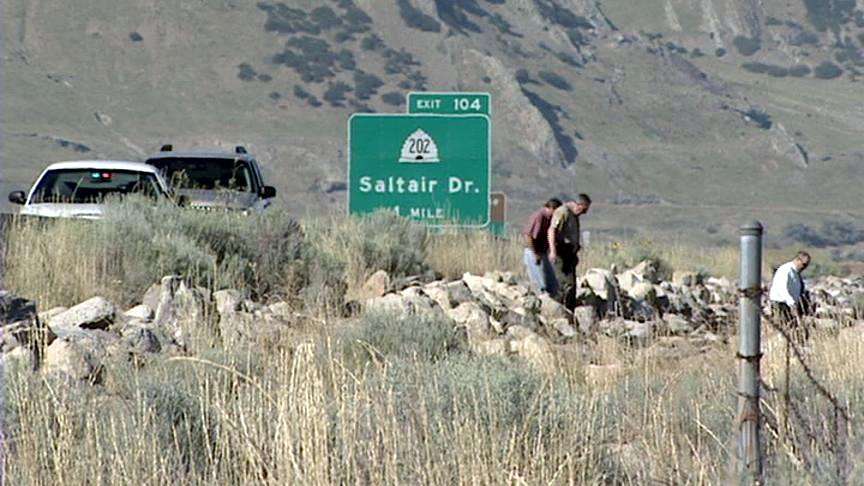
Eight years ago, detectives from the Salt Lake County Sheriff's Office found the remains of an unidentified murdered woman on the shores of the Great Salt Lake. Though they've used 3-D modeling to recreate what she may have looked like, the cold case remains elusive.

Now, Detective Todd Park has turned to a University of Utah research team and a spin-off company called IsoForensics for some new technology that analyzes human hair to track its host.
"We know that she spent the last couple of months of her life in and around the Salt Lake City area, and before that she had been in areas we believe to the north of Salt Lake City," explained Dr. James Ehleringer, ecologist at the University of Utah.
The woman moved around in the northwest--mainly in Idaho, Montana, Wyoming and perhaps into Oregon and Washington. All this info shows up from a sample of her hair that identifies when and where she last drank water. "Drinking water gets translated into body-water signals, and that gets permanently recorded inside the amino acids of hair molecules," Ehleringer said.
The technology distinguishes the signature of isotopes in water from different states and cities, thus identifying where the person was years, or even a week, before they died.
Hair lingers a long time after death. "The carbon in hydrogen and oxygen atoms are preserved until the hair completely decays away so that it is no longer recognizable as hair," explained Dr. Thure Cerling, geochemist at the University of Utah.
In addition to victims, the technology can track criminals, the migration of animals, or the historical movements say of Native Americans, Mormon pioneers, and others.
In the Great Salt Lake cold case, Utah researchers are also testing isotopes in the woman's teeth to reveal when and where her teeth formed, thus where she grew up.