'%3e%3cpath%20d='M34.1406%205.85938C30.3906%202.10547%2025.3047%200%2020%200C14.6953%200%209.60938%202.10547%205.85938%205.85938C2.10938%209.61328%200%2014.6953%200%2020C0%2025.3047%202.10547%2030.3906%205.85938%2034.1406C9.61328%2037.8906%2014.6953%2040%2020%2040C25.3047%2040%2030.3906%2037.8945%2034.1406%2034.1406C37.8906%2030.3906%2040%2025.3047%2040%2020C40%2014.6953%2037.8945%209.60938%2034.1406%205.85938ZM37.0117%2023.543H31.1602V13.5391H27.6328V19.9414C28.1211%2020.6914%2028.3711%2021.582%2028.3711%2022.5625V22.625C28.3711%2023.668%2028.1172%2024.6055%2027.6328%2025.4297V26.6094H36.082C33.4883%2032.9375%2027.2891%2037.3789%2020.0039%2037.3789C10.3711%2037.3789%202.62109%2029.6289%202.62109%2020C2.62109%2010.3711%2010.3711%202.62109%2020%202.62109C29.6289%202.62109%2037.3789%2010.3711%2037.3789%2020C37.3789%2021.1484%2037.2617%2022.2656%2037.0508%2023.3477C37.0391%2023.4141%2037.0234%2023.4766%2037.0117%2023.543Z'%20fill='white'/%3e%3cpath%20d='M22.3086%2018.5352C20.4336%2018.125%2019.9531%2017.8398%2019.9766%2017.1836V17.1406C19.9766%2016.6992%2020.3477%2016.2148%2021.4023%2016.2148C22.582%2016.2148%2023.8867%2016.6797%2025.0781%2017.4766L26.8516%2015.0195C25.4453%2013.8906%2023.707%2013.3398%2021.5547%2013.3398C18.5195%2013.3398%2016.4375%2015%2016.4063%2017.4766V17.5352C16.3633%2020.2617%2018.5859%2020.9805%2021.293%2021.6016C23.0391%2021.9766%2023.5703%2022.3164%2023.5703%2022.9609L23.5469%2022.9766C23.5469%2023.3906%2023.2578%2023.7031%2022.7852%2023.8359C22.5742%2023.9062%2022.1289%2023.9727%2021.5156%2023.9727C20.7617%2023.9727%2019.7539%2023.8633%2018.6328%2023.4844C18.0898%2023.2891%2017.4727%2023.0039%2016.8047%2022.6133L20.1406%2026.625C20.2813%2026.6602%2021.0977%2026.8516%2021.7734%2026.8516C25.0039%2026.8516%2027.0859%2025.2461%2027.1094%2022.6328V22.5703C27.1602%2020.1133%2025.2148%2019.1719%2022.3086%2018.5352Z'%20fill='white'/%3e%3cpath%20d='M5.24219%2013.5664V26.6133H8.75391V23.7578L10.2969%2021.9531L14.2031%2026.6133H18.3867L12.3555%2019.5195L17.4023%2013.5664H13.4531L8.75391%2019.0586V13.5664H5.24219Z'%20fill='white'/%3e%3c/g%3e%3cdefs%3e%3cclipPath%20id='clip0_97_2430'%3e%3crect%20width='40'%20height='40'%20fill='white'/%3e%3c/clipPath%3e%3c/defs%3e%3c/svg%3e)


- Kaeli Madsen, a Utah teacher, overcame vocal-cord paralysis after heart surgery.
- Madsen uses her renewed voice to teach storytelling and write family history songs.
- She emphasizes the importance of preserving family stories through music and education.
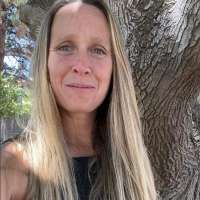
CEDAR CITY — Just one year ago, Kaeli Madsen didn't know if she'd ever speak again, let alone sing. And as a high school English teacher by day, singer by night and weekend, it was a scary thought.
"I had to start thinking about how I love teaching, and I love storytelling through my songs, but all of those things rely on my vocal cords pretty heavily," she said.
Last summer, Madsen had her third open-heart surgery stemming from a condition she was born with, called aortic stenosis, where the aortic valve narrows and cannot open fully, reducing blood flow from the heart to the rest of the body. During that surgery, doctors had to repair an aneurysm and were working pretty close to some nerves that control vocal cords. Due to this, Madsen woke up with her vocal cords paralyzed.
"When my voice did come back and heal, I realized how much I took it for granted," she said. "I've been so much more grateful for being able to have a voice."
Over the past year, not only has Madsen been strengthening her vocal cords, but she said she has had a renewed desire to write music and show her students the importance of using your voice to share stories.
"When we talk about storytelling or poetry in class, I'll tell them that they may not love poetry, but they might love music," she said. "We talk about the songwriting process and about storytelling through music, and a lot of times, my goal is to help them understand that even though English may not be their favorite subject, these skills often cross with other things that you might enjoy doing."
Madsen says that there are times when she shares her music with her students, adding that much of what she writes falls into an interesting category — family history.
'Singing' family history
"One day, I was at a family reunion in Pioche, Nevada, where my grandma is from, and we were at the gravesite of one of my ancestors named Martha Craw," Madsen recalled. "My dad started telling me the story about how she burned someone's barn down once.
"I went home and did some research, and it turned out that Martha had burned a guy's barn down because he had gotten two of her daughters pregnant out of wedlock and then didn't marry either of them. So, she rode out to his barn and burned it down. ... I believe it happened in 1894. There are lawsuits and records that the barn burned down, but according to the newspaper clippings, it doesn't say it was my grandma."
Hearing that story sparked something in Madsen, and she said she knew there needed to be a song written about it.
"I was able to find newspaper clippings that documented different parts of the story, and I thought it was so interesting and that it would make such a good country song," she said. "So, I wrote that out and then after that, I was like, 'This is super fun.' Now I have like five or six of them right now."
In the song titled "Martha," Madsen sings, "He might have gotten away with it if Martha hadn't been their mother."
Madsen acknowledged that many of the stories she hears and researches about her family may have a sliver of untruthfulness, but she said that learning about her family and putting the stories into country music songs has helped her realize how important it is to document family history.
"It's really cool because it gives you this connection to people that are in your ancestry line that maybe you wouldn't really know anything about otherwise," she said. "People, especially in Utah, are really good at keeping family history, but when you go through those records, a lot of times, it says they were born here, moved here, or baptized into this church here. You have timelines and events, but you don't see as many stories about the people in their day-to-day lives.
"I started looking into it, and I was like, 'That makes me sad that we have the records, but we don't get to know these people well," she added. "I think that's what made me really passionate about digging in and trying to find things and preserve these stories and learn more about these people in that way."
Madsen has been singing and teaching professionally for about 10 years and said that as she's looked back on all that she's experienced just this last year alone, she has realized how important having a voice really is.
"Stories and your voice — all those things are so important, and I think all kind of connects together to why storytelling is so important," she said. "Losing my voice and getting it back made me less afraid to share it because you never know when these things can be taken from you."